Chapter 10 — Teacher’s Guide Answers
Answers and teaching commentary for Chapter 10: Similarity, transcribed from the scanned Teacher’s Guide. Diagrams are cropped from the same page scans.
OCR note. The text was recognized automatically and has not been corrected line by line; formulas and symbols may be imperfect. Check the original PDF for exact wording.
Homework: Chapter 10 exercises · Selected answers · Teacher’s answers PDF
Lesson 1
Set I (pages 380-382)
According to Benno Artmann in Euclid—The Creation of Mathematics (Springer, 1999), the architects of the Parthenon, Ictinos and Callikrates, based its dimensions on the square numbers 4 and
9. Starting with a height of 42, they chose 4.-9 for the width and 92 for the length, so that the width was the geometric mean between the height and the length.
Euclid developed the theory of proportion with a series of 25 theorems in Book V of the Elements. His definition of ratio as “a sort of relation in respect of size between two magnitudes of the same kind” is, as one commentator remarked, unusual for Euclid because it is so vague as to be of no practical use.
The numbers connected with the Turtles Forever picture illustrate the fact that any three consecutive terms of a geometric sequence are proportional (as are any three evenly spaced terms). The term in the middle is consequently the geometric mean between the other two terms.
Parthenon Architecture.
1. 225
2. 2.25.
3. 81x16=1,296 and 36 x 36 = 1,296.
*4. The geometric mean.
5. 28 6 4
6. 1.5=1.5.
1
7. 101 - ft. 3
8. h =45 ft. (Example proportion: 2278 = %,) 2 2d
9. 7 (or 0.285714 … ). ( = )
8,
4
10. = (or 0.8). ( 10
1. ? (or 10). (%.)
Turtles Forever.
Top o 32 64 2 _ 16 16 128”
14. 4 and 16,2 and 32, 1 and 64. Ratio.
*15. Division.
16. The second.
17. Euclid referred to “magnitudes of the same kind,” which suggests that numbers of the same kind of units are being compared.
Four Rectangles.
18. Rectangle 1, ab; rectangle 2, ad; rectangle 3, cd; rectangle 4, bc.
#19. Rectangles 2 and 4. (ad = bc because E = 1.) a ¢
20. Rectangles 1 and 3. (E = g because ad = bc.) G
21. Rectangles 1 and 3. Enlargement.
*22. 30.
23. 36.
24. Correct. (Both ratios are equal to g‘)
25. Correct. (1—26 = 2 = 3 =1.5.) 84 28 2
L 39,
26. Correct. [2——— =225 and (==)*=2.25] 1 26 5282
Set II
The official design of the current United States flag was signed into law by President Eisenhower in 1959, soon after Alaska became the soth state. The first chapter of Slicing Pizzas, Racing Turtles, and Further Adventures in Applied Mathematics (Princeton University Press, 1999), by Robert Banks, deals with the geometry of the flag.
Concerning the ratlo Banks writes: “Why the
relative length of the flag is precisely 1.9—or indeed why the relative length of the union is exactly 0.76 (could it be 1776 ?)—is not known. It justis.”
As Thomas Rossing remarks in The Science of Sound (Addison Wesley, 1990), “the word scale is derived from a Latin word (scala) meaning ladder or staircase. A musical scale is a succession of notes arranged in ascending or descending order.” In chapter ¢ of his book, Rossing includes complete discussions of the scales based on just intonation and equal temperament as well as the Pythagorean scale on which exercises 41 through 47 are based. Another good reference on the structure of musical scales is Connections— The Geometric Bridge between Art and Science, by Jay Kappraff (McGraw-Hill, 1991). It is interesting to see from the relative lengths of the strings producing the notes of the Pythagorean scale that they are all derived from the primes 2 and 3:
238 g gt 97
3 3¢ 22 3 F ¥ 2
In the currently used even-tempered scale, the F G
C D . ratios D’ — E’ G A,and—are(w/_) =~1.122, in
contrast with the Pythagorean ratio of B 2 =1.125.
E B The “even tempered” ratios F and ; are
%2 =1.059 in contrast with the Pythagorean
ratio, 250 =— ~1.053. 243
The fact that the means of a proportion can be interchanged is proved in Book V of the Elements as Proposition 16: “If four magnitudes be proportional, they will also be proportional alternately.” The addition property proved in exercises 51and 52 appears in the Elements as Proposition 18 of the same book.
Arm Spans.
27. No. The units of length being compared are not the same; so the result is meaningless.
36
28. in; — =24,
028. 36in i 24,
29. 125ft; 5 =24, 125
30. No. United States Flag. 19 10° s 13°
e31.
&%
7 g8 = 6
34. The length of the flag.
35. 304 feet.
#36. The width of one stripe.
#37. Approximately 12.3 ft. (% =123.)
38. Approximately 86 ft. (7 x 12.3 = 86.)
©39. Approximately 122 ft. (— =0.76, b=1216.) AoR Mo and % - 10 _oss) b 121 6 19
Pythagorean Tuning.
8 oy, DleL S O E 64 964 8 81
64 .42,_=fl=§.é=fi. 3 813 243 4
3 F 3 33 9 A= IR O S G 2 42 8 3
2
w S_3_227_9 A 16 316 s 27
16
PG, e L e
B 128 27128 8 243
Lesson 2
128 46 B _243 1282 25 ¢ 1 2431 243 2
47. G is the geometric mean between F and A; A is the geometric mean between G and B. F_ G 9 G A 9 ( and —=—=2>))
G A 8 ATB B Geometric Proportions.
#48. The means are interchanged.
49. Multiplication (or, in a proportion, the product of the means is equal to the product of the extremes).
~*50. Division.
5\1 Addition.
52. Substitution (and algebra). Sinker or Floater.
53. Alice is a floater because her density is 120 pounds
195 cubic feet 61.5 pounds per cubic foot. e &l i 2
54. Let x = Ollie’s weight in pounds. His x pounds 2.3 cubic feet
density is . Because heis a
gm@n§%>6z4mux>1n5zome
weighs more than 143 pounds.
Lesson 1
Set III
The White Horse of Uffington was created by removing sod from the chalky rock lying underneath. A book written as far back as the fourteenth century ranked it second only to Stonehenge among the tourist attractions of Britain. The horse is in excellent condition owing to its being maintained by the National Trust. The White Horse.
1. (Student answer.) (The length of the horse in the photograph is about 95 mm and its 1 xm 95mm height is about 24 mm: — = = , - h 28m 24mm
x=110.8. The horse is about 110 meters long.)
2. (Student answer.) (The scale is about
1,200 2dmm 1 28,000 mm 1,167
)
Set I (pages 387-389)
According to Robert Bauval and Adrian Gilbert (The Orion Mystery, Crown, 1994), the apparent relative positions of the three pyramids at Giza not only match those of the three stars in Orion’s belt but their orientation with respect to the Nile matches Orion’s apparent orientation with respect to the Milky Way! The arrangement of the pyramids and their relative sizes (seemingly based on the apparent sizes of the stars) seem to indicate that the Egyptians were trying to build a replica of heaven on Earth.
A“plane table” is a drawing board and ruler mounted on a tripod, used by surveyors in the field to sight and map data. More details on how it works can be found in J. L. Heilbron’s Geometry Civilized (Clarendon Press, 1998).
According to Robert C. Yates in The Trisection Problem (Franklin Press, 1942; N.C.T.M., 1971), Alfred Kempe was “one of the cleverest amateur mathematicians of the [eighteenth] century.” Kempe gave a historic lecture on linkages to a group of science teachers in London in the summer of 1876. This lecture, titled “How to Draw a Straight Line,” and published in 1877, was reprinted by N.C.T.M. in 1977. The linkage invented by Kempe for trisecting angles is also discussed by Yates in the chapter on mechanical trisectors in The Trisection Problem and by Martin Gardner in the chapter titled “”How to Trisect an Angle” in Mathematical Carnival (Knopf, 1975). As Kempe himself observed, his idea can be extended to produce a linkage that can divide an angle into any number of equal parts.
The Pyramids and Orion. o1. They are proportional.
2. They are equal.
Plane Table. e3. Z/DAC = ZFBC.
4, ZAEC = ZBGC.
5. ZGCB = ZECA.
AD DC e, — == BF FCg, E€_BC ” EC AC g SC_BG ” AC AE- Kempe’s Linkage. 12 OE : - 2~ %~ o6’
9. OE=4and0OG=8.(- = —=—.
10. They are always equal. Corresponding angles of similar triangles are equal.
11. It trisects ZAOG. Billboards.
12. Their corresponding angles are equal because billboards are rectangular and all right angles are equal. Their corresponding sides, however, are not proportional, because
) = E As a calculator shows, S 0.45, 1 23 11
whereas . 0.47826…. 28
*13. 24.2. (i = -1—1, 5x=121,x=24.2.) 1 x
14. (or5 % or approximately 5.26).
121 23 121
2o o301 2121 _56 x 11 6 ST e *=2 5%
Dilation Problem.
¢15. The center of the dilation.
16. AB=5BC=4,AC=6A’B’=25BC =2, and A’C’ = 3.
17. They are half as long.
1
*18. —. 2
19. They are their midpoints. Quadrilateral Conclusions.
*20. Corresponding sides of similar polygons are proportional.
21. Multiplication. (In a proportion, the product of the means is equal to the product of the extremes.)
22. They have equal areas.
23. They also have equal areas. oADGH = aAEFH + oEDGF and oEDCI = aEDGF + aFGCIL Because t ADGH = oEDCI (exercise 22), oAEFH + oEDGF = aEDGF + aFGCI (substitution); so tAEFH = aFGCI (subtraction).
Set II (pages 389-391)
A good article on the instruments of the violin family is “The Physics of Violins” by Carleen Maley Hutchins, published in the November 1962 issue of Scientific American and reprinted in the Scientific American Resource Library (W. H. Freeman and Company, 1978).
The International Standard of paper sizes is now in common use in Europe. As the exercises reveal, they are based on a sheet with an area of 1square meter that can be cut in half to produce a second sheet similar in shape. Further sizes are produced in the same way. As the exercises also reveal, this pattern requires that all sizes have the
ratio # The sequence beginning with size Ao
continues to size A10 (a tiny 26 mm by 37 mm sheet). Computer programs usually offer sizes A4 and As in their menus of choices for printing formats.
Similar-Triangles Proof.
*24. A midsegment of a triangle is parallel to the third side.
25. Parallel lines form equal corresponding angles.
26. Reflexive.
27. A midsegment of a triangle is half as long as the third side.
©28. Division.
29. The midpoint of a line segment divides it into two equal segments.
*30. Betweenness of Points Theorem.
31. Substitution.
32. Division.
33. Substitution (they are all equal to —;—).
*34. Two triangles are similar if their corresponding angles are equal and their corresponding sides are proportional.
Violin Family.
35. OC =56 mm.56 =7,28;s07,= % =20
36. OD =87 mm. 87 =r;28;s07, = % =3.1.
*37. BF=24mm. oF _ 24 7. AE 21
38. CG =42 mm. E = iZ_ =2.0. AE 21 ORI — ey, ol SR AE 21
40. Viola: 1.1 x 24 = 26 inches. Cello: 2.0 x 24 = 48 inches. Bass: 3.1 x 24 = 74 inches.
Paper Sizes. 1188 _ x_ x 5%
*42. Approximately 840 mm. (x? = 1188 x 594, x = 840.)
41.
43. The geometric mean.
*44. Approximately 1 m?2. (1188 mm x 840 mm = 997,920 mm?2 = 1 m2)
45. Approximately 420 mm. (; NEa 420).
2 46 11 1 r 2
2
®47. % =1,r=2r= /5; so the exact ratio of the length to width is 2.
Picture Frames.
28+2w 20+ 2w
48. = a s 28 20
g, = 1, 140+ 100~ 140 + 14w 0=4w, w=0.
ld+w 10+w
49. 1 _ y
50, A2 e
a 2bw = 2aw, bw = aw. lif w= 0, thena =b.
51. They mean that it is only possible for a rectangular picture to be surrounded by a frame of constant width whose outer edge is similar to it if the picture is square.
Set 11l (page 391)
The Villa Foscari, also called “La Malcontenta,” is located on the Brenta River near Venice. It was commissioned by the brothers Nicolo and Alvise Foscari and is still in the possession of the Foscari family.
Similar Rectangles.
1. Ratio 1:2.
Dimensions 1 x 2: HION, JKQP, NOUT, PQWV.
Dimensions 1.5 x 3: ACIG, BDJH, CEK], DFLJ.
Dimensions 2 x 4: GHTS, [JVU, KLXW, HKQN, NQWT.
Dimensions 4 x 8: GLXS.
2. Ratio 1:4.
Dimensions 1 x 4: HIUT, JKWV.
Dimensions 1.5 x 6: AEKG, BFLH.
Dimensions 2 x 8: GLRM, MRXS.
3. Ratio 2:3.
Dimensions 1 x 1.5: BCIH, DEK].
Dimensions 2 x 3:
GIOM, HJPN, IKQO, JLRP, MOUS, NPVT, OQWU, PRXV. Dimensions 4 X 6:
GKWS, HLXT.
4. Ratio 3:4.
Dimensions 1.5 x 2: ABHG, BDJI, CEKI, DFL]J.
Dimensions 3 x 4: GIUS, HJVT, IKWU, JLXV.
Lesson 3
Set I (pages 394-396)
Mathematics is truly a universal language. Although the words in the Turkish version of the Side-Splitter Theorem are incomprehensible to someone who does not know Turkish, the figure and symbolic statements about it are recognizable everywhere.
Descartes’s method for multiplying two numbers geometrically appeared in Book I, “Problems the Construction of Which Requires Only Straight Lines and Circles,” of his Géométrie, published as Appendix | to his Discours de la méthode (1637). As Descartes described the construction: “Taking one line which | shall call the unit in order to relate it as closely as possible to numbers, and which can in general be chosen arbitrarily, and having given two other lines, to find a fourth line which shall be to one of the given lines as the other is to the unit (which is the same as multiplication).” More on this subject can be found in A Source Book in Mathematics, 1200-1800, edited by D. J. Struik (Harvard University Press, 1969).
In his book titled Perspective in Perspective (Routledge & Kegan Paul, 1983), Lawrence Wright describes the various ways in which artists have drawn a cube, ranging from a mere square to “spherical perspective.” Although the “two-point perspective” version used for exercises 22 through 25 was the basis for perspective drawings in the Renaissance, Wright observes: “None of the three faces shown is square, the overall shape is not even partly square, none of the twelve angles seen is a right angle, and of the three sets of parallels only the verticals are shown as such.”
Turkish Theorem.
1. “Paralel” and “hipotez” obviously mean “parallel” and “hypothesis.” “Distan” seems to mean “distance.” (“Hiikiim” evidently means “conclusion,” but it is unrecognizable as such.)
«2. If aline parallel to one side of a triangle intersects the other two sides in different points.
3. It divides the sides in the same ratio. Errors of Omission.
4. Example answer: —p
AN
5. Example answer:
2
6. Example answer:
s
Picturing Products.
7. The area of the rectangle.
*8. Aslengths: AC=3,AD=2,and AE=6.
o 1.8 a ¢
10. c=ab.
11.
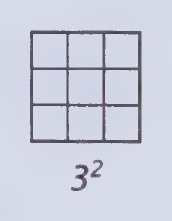
Diagram from page 142.
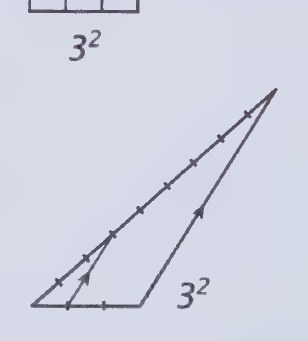
Diagram from page 142.
32 12.
32
Supply and Demand. 13 AC AP
” CO” PB
CO PB
14 —=” AO AB oD _ AP “’ DB PB oD _ AP
” OB AB’
*17. Substitution. (Both are equal to 1;—:;.)
Side-Splitter Practice.
018, x=24. (X =3 5¢-12,x=24) 1 5
19. 2=8.(5=10 2 _64 x=3) 4 x
20. x=75.(3 = 2 4x=30,x=75) x 10
21 x=10. (X = 13 36y =360, x = 10)) 24 3
Two-Point Perspective.
®22. Reasonable because BE || CF in AOCF (the Side-Splitter Theorem).
23. Not reasonable, because lines AD and BC intersect in O.
24. Reasonable because of division (BC = CD and EF = FG).
25. Reasonable because DG || CF in APCF (the corollary to the Side-Splitter Theorem).
Set II (pages 396-398)
The Dames Point Bridge is the longest cable-stayed bridge in the United States and the only one to feature the “harp,” or parallel-stay, arrangement on two vertical planes. Completed in 1989, it is 2 miles long.
Parallelogram Exercise.
26. Itis a parallelogram because DF || EB and DEF = EB.
27. XE|| YB in AAYB and FY || DX in ACDX. If a line parallel to one side of a triangle intersects the other two sides in different points, it divides the sides in the same ratio.
28. AX =XY =YC. Because AE = EB, % =1l
) éxé =1 and AX = XY. Because DF = FC,
E(}; 1;s0 i(%-l and XY = YC. Corollary to Theorem 44.
*29. If aline parallel to one side of a triangle intersects the other two sides in different points, it divides the sides in the same ratio.
30. Multiplication. (In a proportion, the product of the means is equal to the product of the extremes.)
31. Addition.
32. Substitution (factoring).
33. Division (and substitution). Patrallels Path.
34. If aline parallel to one side of a triangle intersects the other two sides in different points, it cuts off segments proportional to the sides.
AM _BM _CN _DN _EO
&3, === = = = MN MO NO MN MO FO GM NO MN
¢36. EO. (Because NG —— MO) BM EO. (B
CN FO (Because NO NO)
37. FO. (B —_— =
AM GM
ecause -0 = oo y
38. B — =——,AM=GMb
multiplication.
*39. Point G is the same point as point A.
40. It would retrace itself. Bridge Cables.
*41. EF =FG; so % =1 by division.
42. % =1. In AIEG, HF || IG; so, by the
EH EF Side-Splitter Theorem, H-¥TG —
*43. In a plane, two lines perpendicular to a third line are parallel.
44. ABHI and BCEH are parallelograms (both pairs of their opposite sides are parallel).
#45. The opposite sides of a parallelogram are equal. BC
46. B 1. Because %}11 =1,BC=EH and
AB =H]J, —[% =1 by substitution.
47. Because -;:% =1, AB = BC by multiplication.
Original Proofs.
48. Proof. (One possibility.)
In AABC, AD bisects Z/BAC. (Given.)
£BAD = ZDAC. (If an angle is bisected, itis divided into two equal angles.)
AE =ED. (Given.)
ZEDA = £ZDAC. (If two sides of a triangle are equal, the angles opposite them are equal.)
£ZBAD = ZEDA. (Substitution.)
ED || AB. (Equal alternate interior angles mean that lines are parallel.)
AE BD
@ %= e of a triangle intersects the other two sides in different points, it divides them in the same ratio.)
. (If a line parallel to one side
49. Proof.
- InAABC, AB = AC and DE || BC. (Given.)
- £:0) N A—E (If a line parallel to one side AB AC
of a triangle intersects the other two sides in different points, it cuts off segments proportional to the sides.)
AD AE o (3 AB - AP (Substitution.)
- AD = AE. (Multiplication.)
Set II (page 398)
According to an article on the reproducing pantograph by Jack W. Jacobsen (www.carousels.com), “the reproducing pantograph first saw use as an early copying machine, making exact duplicates of written documents. Artists soon adopted its
use to duplicate drawings. It is known that da Vinci used one to make duplicates of his drawings and possibly to duplicate those drawings onto canvas. … It was not long before sculptors and carvers adapted the pantograph’’s use for tracing drawings onto blocks of marble or wood. They would then use the reproduced lines as guidelines for carving. True advancement in the pantograph design came about late in the 18th century with the advent of typeset printing. A pantograph was used to cut out the typeset letters. .. .”
Pantograph. - B A
el U
& E
2. ABCD is always a parallelogram because both pairs of its opposite sides are equal.
3. £2, /4, and Z6.
180~x
X )° or ( 2) P 90 - =)°.
5. 180°.
4, L1=13=15=1LT=( )
6. 180°. (L4 = £2 and £5 = £1;so 43+ Z4 + £5= /3 + £2 + /1 by substitution).
7. ltis always a straight angle.
8. They are always collinear.
9. % always stays the same because PD PA BC 2 = 28 _ 2= 4nd PA, AB, BC, OE = AR~ CE ang B, BC, and CE are fixed lengths.
10, PE_PB_35cm
PD PA 20cm
Lesson 4
Set I (pages 401—403)
It is a remarkable thing that, if two similar triangles are in any position but have the same orientation, the “average” triangle formed by taking the midpoints of the line segments
connecting their corresponding vertices is similar to them. David Wells points out in The Penguin Dictionary of Curious and Interesting Geometry (Penguin Books, 1991) that “the same is true of polygons in general. It is also true if, instead of taking the midpoints of the lines, they are just divided in the same ratio.”
The apple on the stamp honoring Sir Isaac Newton symbolizes the story that an apple falling from a tree led Newton to the idea of universal gravitation by getting him to thinking that, if the earth pulls on an apple, it also pulls on more distant objects such as the moon. (The moon doesn’t fall as does the apple, because it falls around the earth. Its sideways motion makes it miss.) The geometric figure on the stamp is from Newton’’s Principia Mathematica. As William Dunham remarks in The Mathematical Universe (Wiley, 1994), “This work presented Newtonian mechanics in a precise, careful, and mathematical fashion. In it he introduced the laws of motion and the principle of universal gravitation and deduced, mathematically, everything from tidal flows to planetary orbits. Principia Mathematica is regarded by many as the greatest scientific book ever written.”
The figure for exercises 9 through 11 is more remarkable than it might seem. As recently as 1972, C. Stanley Ogilvy observed in Tomorrow’s Math (Oxford University Press) that, although a way to dissect a right triangle into five triangles similar to itself was known, a way to do this for nonright triangles was not. The division of the 30°-30°-120° triangle on which exercises ¢ through 11 are based was discovered soon afterward and has been proved to be the only such solution. Zalman Usiskin and S. G. Wayment reported this result in an article published in Mathematics Magazine titled “Partitioning a Triangle into Five Triangles Similar to It.” All of this is reported by Martin Gardner in Wheels, Life and Other Mathematical Amusements (W. H. Freeman and Company, 1983).
The chessboard puzzle was first introduced in the Set 1l exercises of Chapter 9, Lesson 4.
Two entire chapters of J. V. Field’s The Invention of Infinity (Oxford University Press, 1997) deal with Piero della Francesca’s mathematics and his treatise on perspective, a work strongly influenced by Euclid.
Thales’ Method.
1. Parallel lines form equal corresponding angles.
2. All right angles are equal.
*3. AA.
4. Corresponding sides of similar triangles are proportional. Triangle Average.
5. They appear to be their midpoints.
*6. Yes. Two triangles similar to a third triangle are similar to each other.
Newton’’s Figure.
7. APRI ~ APDF and APQI ~ APES. (Also, APDF ~ ASEF, from which it follows that APRI ~ ASEF.)
8. AA. (All these triangles are right triangles. The triangles in the first two pairs share acute angles at P. The triangles in the third pair have equal vertical angles at F. The fourth pair follows from the fact that two triangles similar to a third triangle are similar to each other.)
Nine Triangles.
9. AABC, AADC, ABCE, ACDEF, ACEF, ADEF.
©10. 30°, 30°, and 120°. (It is easiest to see this by starting with the three equal angles at F.)
11. ACDE is equiangular (and equilateral). AACE and ABCD are right triangles with acute angles of 30° and 60°.
Chessboard Puzzle.
12. The square has an area of 64 units and the other arrangement seems to have an area of 65 units.
13. AA. [£CAE = £DAF (reflexive), and ZAEC = ZAFD (all right angles are equal.]
#14. Corresponding sides of similar triangles are proportional.
15. EC=3and FD =5.
16. No. i# é ISENNS
#17. They are not collinear.
18. Indirect.
Piero’s Theorem.
*19. That they are parallel.
20. That lines contain the same point.
¢21. AAHK ~ AABD and AAKL ~ AADE. HK _ AK _ AK _KL
22, — = — —_— = . BD AD ’ AD DE o3 HK KL BD DE e IM_MN NI
EF FG GC Set Il (pages 403—405)
Students who have solved “work problems” in algebra may be interested in knowing that the figure illustrating two electrical resistances in parallel also illustrates problems with two workers R,R. working simultaneously. The equation R = fi ! . ) 1 1 1 is equivalent to the equation R + R, “R form more familiar in the work-problem context: R, and R, become the times needed for the two workers to complete the job individually and R the time for them to complete it working together.
a
Exercises 31 through 36 are based on an interesting fact that is not well known. Although the angles of a 3-4-5 triangle are not related in any interesting way, the largest angle of a 4-5-6 triangle is exactly twice as farge as its smallest angle.
Mascheroni’s work Geometria del Compasso, in which he proved that every straightedge and compass construction can be done with an adjustable compass alone, was published in 1797. For more on Mascheroni constructions, see chapter 17 of Martin Gardner’s Mathematical Circus (Knopf, 1979).
Electrician’s Formula.
25. AA.
26. Corresponding sides of similar triangles are proportional.
¢27. Addition.
*28. Multiplication.
29. Substitution (factoring).
30. Division.
Sides and Angles.
*31. AABD ~ ACBA.
AB_BD _AD
32.
CB BA CA
33, % = % = 1—y5
¢34, x=8,y=10,andz=10.(z=18-x.)
35. £L2=/C.(y=10=2z)
36. Z/BAC =2/C.(£BAC=/1+ 22, £1=LC, £2=/C;s0 ZBAC = £C+ £C.)
Mascheroni Construction.
37. Fc D K‘
G
38. Isosceles.
©39. AA (LA = ZEFA and £ZFHA = ZA).
40. Corresponding sides of similar triangles are proportional.
41. Itis equal to % FH=FA=AB= %AE; S0
(i AE 2
42. % = g = % (exercises 40 and 41); so AH 1 1 A “2 and AH = EFA’ Because FA = AB,
AH= %AB by substitution.
Deja Vu.
43. AA (LA =ZA and £C = ZADE). BC_ AC ED AD’ a b
44.
45, — = —, s b-s
Lesson 5
46. ab —as =bs; so ab = as + bs; s0 s(a + b) = ab; ab
SO0Ss= ——.
47. Tt represents a single resistance to which resistances a and b are equivalent.
Original Proofs.
48. Proof.
AACD with BE || CD. (Given.)
£ZABE = £C and ZAEB = ZD. (Parallel lines form equal corresponding angles.)
AABE ~ AACD. (AA.)
49. Proof.
Trapezoid ABCD with bases AB and DC and diagonals AC and BD meeting at E. (Given.)
AB || DC. (The bases of a trapezoid are parallel.)
ZBAC = ZACD and ZABD = /BDC. (Parallel lines form equal alternate interior angles.)
AAEB ~ ACED. (AA.)
- % = % (Corresponding sides of
similar triangles are proportional.)
- AE x ED =BE x EC. (Multiplication.)
50. Proof.
AABC with midsegments MN, MO, and NO. (Given.)
MN || AB, NO || BC, and MO || AC.
(A midsegment of a triangle is parallel to the third side.)
ANMO and BMNO are parallelograms. (A quadrilateral is a parallelogram if both pairs of opposite sides are parallel.)
ZOMN = ZA and ZONM = /B.
(The opposite angles of a parallelogram are equal.)
- AMNO ~ AABC. (AA))
Set II (page 406) Dividing Line.
1. 4.5 square units each.
2. The area of the purple region is %(4 % 2) + 1 = 5 square units; so the area of
the yellow region is 9 — 5 = 4 square units.
3. AA (£DBQ = £CBA and ZQDB = £C).
4. Corresponding sides of similar triangles are proportional.
&, Qb= 1.Because QD: DB, o0 = 1_ 4 AC CB 1 4
6. The area of the purple region is %(4 % 1.75) + 1 = 4.5 square units.
7. Yes.
Set I (pages 409-410)
Exercises 25 through 30 are a good basis for further exploration. After confirming the answers to exercises 29 and 30, it might be fun to experiment with other linear transformations of the coordinates; that s, (a, b) = (ca + e, db + f), to see what choices of ¢, d, e, and f produce dilations and what sorts of transformations are produced when ¢ # d.
Fish Story.
*1. CGand CF.
2. Inaplane, two lines perpendicular to a third line are parallel.
3. ACDE ~ ACAB by AA (£CDE = ZA and ZCED = £B because parallel lines form equal corresponding angles.)
*4. Corresponding altitudes.
5 RG] ” CF AB’
6. Corresponding altitudes of similar triangles have the same ratio as that of the corresponding sides.
¢7. CG, the distance of the fish from the camera.
8. The fish is 1 foot long. (l = E, DE=1) 12 6
9. The center.
¢10. 7.5 cm.
11. 3 cm.
BE 75 n=pg=3”
12. 25.(rj= —=—.
13. It indicates that the larger fish is 2.5 times as long as the smaller fish.
AB 5 cm cm D” 3
14. AB=5cm.CD=2cm. — = — =25.
DE_ 3, BE 75
16. It indicates that the smaller fish is 0.4 times as long as the larger fish.
*15. 0.4.(r,=
Ch 2
17. —===04. AB 5
*18. 7, is the reciprocal of r;.
Drawing Conclusions.
19. No. AAGB appears to be larger than ADGE. Also, we do not know that any sides are equal.
20. Yes. The triangles are similar by AA. (The right angles at G and the alternate interior angles formed by AB and ED.)
*21. Yes. Corresponding sides of similar triangles are proportional.
AG GB
22. Yes. Be — =, GE =GB . ‘es. Because DG~ GE AG x GB x DG
#23. No. These areas cannot be equal if AAGB is larger.
24. Yes. Adding aADGE to each side of 0AGEF = aBGDC gives 0t ADEF = aBEDC.
Grid Exercise. 25.
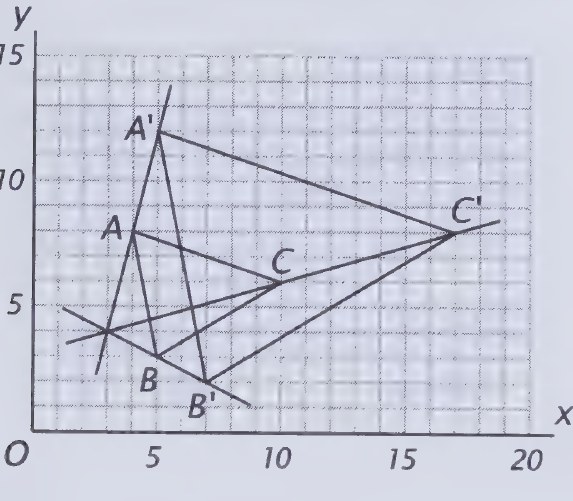
Diagram from page 148.
(0] 5 10 15 20
#26. B(5,3) > B’(2:5-3,2-3-4),0r B’(7, 2). C(10,6) » C’(2-10-3,2- 6-4), or C’(17, 8).
«27. AA’B’C’ appears to be an enlargement of AABC. (Also, the corresponding sides of the two triangles appear to be parallel.)
28. Adilation.
29. (3,4).
30. 2.
Set II (pages 410-413)
The story of the Washington Monument is told by former engineering professor Robert Banks in Slicing Pizzas, Racing Turtles, and Further Adventures in Applied Mathematics (Princeton University Press, 1999). A summary of the story follows: The monument, sss feet 5 inches in height, is made of marble and granite. The cornerstone for its construction was laid on July 4, 1848, when James Polk was president. As originally planned, the tower was not tapered and would have had a star rather than a pyramid at its top. After s years, it had risen to a height of 152 feet, but then the money ran out and construction didn’t start up again until 188o0. It was completed in 1884. As Banks points out, if the monument were not capped with the pyramid but extended until the tapered sides of the main column met at a point, it would be more than twice as tall, taller than the Empire State Building. The rest of the exercises in Set Il consider the SAS and SSS similarity theorems, which are nice to know but have been omitted from the main sequence of theorems. In most applications of similar triangles, it is angles that we know to be equal rather than sides being proportional. It is unfortunate that the proofs of these theorems are so cumbersome with so many algebraic steps. As is often the case with proofs of this nature, after the stage has been set with the extra line forming the third triangle, it is probably easier to construct the proofs rather than to read them.
Washington Monument.
*31. 555.4 ft.
32. AAGF ~ AEHE, ABGF ~ ACHF, and AABF ~ AECE. FG AB x 55
” FH EC’ x-5004 344’ 34.4x = 55x — 27,522, 20.6x = 27,522, x =1,336 ft.
Lesson 6
*34. Corresponding altitudes of similar triangles have the same ratio as that of the corresponding sides.
Congruence and Similarity.
*35. ASA.
*36. AA.
37. AAS.
38. AA.
39. Yes. If % = %:l,thena:bandc:d. The triangles are congruent by SAS. SAS Similarity Theorem.
*40. Ruler Postulate.
*41. Through a point not on a line, there is exactly one line parallel to the given line.
42. A line parallel to one side of a triangle cuts off segments on the other two sides proportional to the sides.
43. Substitution.
44. Multiplication.
45. SAS.
46. Corresponding parts of congruent triangles are equal.
#47. Parallel lines form equal corresponding angles.
48. Substitution. 49, AA.
50. Yes. 1t £ = £ = £ 1, thena=b,c=d, and b d_ f
e = f. The triangles are congruent by SSS. SSS Similarity Theorem.
51. Ruler Postulate.
52. Two points determine a line.
®53. Reflexive.
54. If an angle of one triangle is equal to an angle of another triangle and the sides including these angles are proportional, then the triangles are similar.
#55. Corresponding sides of similar triangles are proportional.
56. Substitution.
57. Multiplication.
*58. SSS Congruence Theorem.
59. Corresponding parts of congruent triangles are equal.
60. AA Similarity Theorem.
61. Two triangles similar to a third triangle are similar to each other.
Set II (page 413) Camera Experiment.
1. It gets larger.
2. 1 AAHB ~ ACHD, = = 2B soxCD = yAB, y CD
and CD = Y AB. X
3. It gets bigger.
4. It gets smaller.
5. It gets bigger.
6. It gets bigger.
]
Set I (pages 416-417)
Judo, which means “gentle way” in Japanese, didn’t become an Olympic sport until 1972. The three regions of its competition area, although square in shape, are covered with “tatami,” rectangular mats 1 meter wide and 2 meters long. (Tatami are the same mats used by Japanese architects in creating floor plans.) A consequence of the use of these mats is that, when the judo competition area was first designed, its inner space, the “contest area,” had to have sides that were an even number of meters. Interested students might enjoy exploring this requirement and explaining why.
Lewis Carroll included whimsical references to maps in two of his books. In The Hunting of the Snark (1876), he wrote: “He had brought a large map representing the sea, Without the least vestige of land: And the crew were much pleased
when they found it to be A map they could all understand.” Martin Gardner remarks in Lewis Carroll’s The Hunting of the Snark— Centennial Edition (William Kaufman, Inc.,1981): “In contrast, a map in Carroll’s Sylvie and Bruno Concluded, Chapter 11, has everything on it.
The German Professor explains how his country’s cartographers experimented with larger and larger maps until they finally made one with a scale of a mile to the mile.”
S
Triangle Ratios.
el. —.
2. —.
9. The ratio of the areas of two similar polygons is equal to the square of the ratio of the corresponding sides.
Judo Mat.
¢10. sideof1=8m.
*11. pl =32m.
*12. al =64 m2
13. side of 2=10m.
14. p2=40m.
15. o2 =100 m2
16. side of 16 m.
17. p3=64m.
18. 03 =256 m2
4 sideof1 8 19 5 (Ggeof2 ~ 107
20. %.(g—; = ) a1 25 i 0
23. g. (fi—; = g.)
2. g. (g-g A 12;2.)
Map Scaling.
2
25, They must be proportional.
26. They must be equal.
27. They must be proportional to the square of the ratio of the corresponding distances.
1
,and so 1inch
28, 440. (The scale is 5.280
5,280 in
represents 5,280 inches;
1 ” Mof)
29. 193,600. [(440 ft)2 = 193,600 £t2.] 1 1inch 63,360 ” ” 5,280 % 12 inches
*30.
31. L orl. 1
Set II (pages 417-419)
The question asked in the SAT problem of exercises 32 through 36 is the area of AADE, for which four numerical choices were listed, followed by the choice, “it cannot be determined from the information given.” This choice, though incorrect, is somewhat tempting in that there is no way to know the lengths of AADE’s sides.
Cranberries are grown commercially in level bog areas that can be drained. When the berries are ready to harvest, the bog is flooded and they are shaken loose from the vines by tractors. They then float to the surface where they are corralled as shown in the photograph before being transported.
The pattern used by Barbara Dean in designing her quilt is called the “Virginia Reel.” Copies of it are turned through 90°, 180°, and 270° to form the four-fold rotation-symmetric design shown above. Jinny Beyer presents this design and others in Chapter ¢, ““Creating Geometric Tessellations,” of her beautiful book titled Designing Tessellations (Contemporary Books, 1998).
SAT Problem.
*32. Yes. AADE ~ AABC by AA.
33. Yes. Corresponding sides of similar triangles are proportional.
*34. No.
35. No.
36. Yes. The ratio of the areas of two similar polygons is equal to the square of the ratio of the corresponding sides; so
GAADE _ 1, oAABC 3 OAADE - GAABC - 69 =6.
Quilt Pattern.
©37. Six.
38. —.
39. 5.
40, —.
41. % or 2.
2
43. T or
Cranberry Circles.
¢44. Because all circles have the same shape.
45. 45 ftand 60 ft.
*46. 90m =283 ft and 120n ~ 377 ft.
47. 2,025m = 6,362 ft? and 3,600m = 11,310 ft2.
i 71 5(120) 3
8. 3075 (=
3 45 4 (60 )
49. —=0.75.(—.
9 90m 4 (1207( )
50. = =0.75.(—
51. 2 _ 05625 [ 2020
30 16 3.600n * (7)1
Pentagon Measurements.
52. 108°.
1 11,052 represents 11,052 in; %fl =921 ft.)
©53. 921 ft. (The scale is 7=—=5; so 1 inch
54. 4,605 ft. (5x 921.)
55, Approximately 29 acres. 1.5in? [ xin? =( 11, 052 183,220,056 in? 144 1,272,361.5 ft? 43,560
)2, x = 183,220,056 in?,
=1,272,361.5 ft2,
=29 acres.]
Set I1l (page 419)
This exercise is based on Proposition 31 of Book VI of the Elements. Euclid stated it as follows:
“In right-angled triangles the figure on the side subtending the right angle is equal to the similar and similarly described figures on the sides containing the right angle.”
Pythagoras on the Sides.
1. The ratio of the areas of two similar polygons is equal to the square of the ratio of the corresponding sides.
. aPya a., oPyb b
2. Adding aI;yy.C = (GPand T2 =(D o Pya N o Pyb _(u)2+(b)z, or aPyc aPyc ¢ c aPya+aPyb a’+b
gives
. Because 4, b, and
o Py.c 2 c are the lengths of the sides of the right aPyat+aPyb 1
triangle, @+ =c%s0
oPy.c Multiplying, oPy.a + o.Py.b = aPy.c.
Review
Set I (pages 421-423)
J. L. Heilbron describes Galileo’s figure for objects in free fall in Geometry Civilized (Clarendon Press, 1998): ““After many false starts, he [Galileo] discovered that the fundamental characteristic of free fall is constant acceleration, which means that the velocity with which the body moves at any time is proportional to the elapsed time. . .. Galileo derived his rule relating distance and time using geometry. . .. The angle EOF is drawn so that AC = gOA [where g is a constant number that measures the pull of gravity]. … Ina moment of great insight, he identified the areas of the triangles AOC, BOD, with the distances covered by the falling body in the times t,, t;.” Heilbron goes on to explain the rest of Galileo’s argument. By associating distances covered with areas of triangles, Galileo reasoned that, because
OA = t,and AC = gOA = gt,,
d,= aAAOC = LOA-AC= Lt (gt) = Lgt,2 2 2 2 Because A is an arbitary constant, it follows that
d= lgt’l. 2
Body Ratios. i .2 2 (4) ol. —.(=.
1
2. —_
5
1,2
5 %5
Perspective Law.
5. If a line parallel to one side of a triangle intersects the other two sides in different points, it cuts off segments proportional to the sides.
6. AA. (LA = ZA and the corresponding angles formed by BC and DE with AD and AE are equal.)
7. AC=2cm, AE=5cm, DE=4cm. AC BC _ 2 BC
g 2= _ 5%.50 2 _ 2% 5BC=8,BC=16. AE DE’ 5 4
0. 25(PE_4m _,5) BC 1.6am
#10. Itis 6.25 times as great. (2.52 = 6.25.)
Proportion Practice.
1. 8 (% =10 15:-120,x=8) 12 15
012, 64 (X=8 5x-32 x=64) 4 5
x 7
13. 56. (= = —, 10x =56, x =5.6. (8 1o’ 10 56, x =5.6.)
x 8
*14. 128. (== —-,5x=64,x=1238, (8 - X x=128)
Similar Triangles.
15. Nine. 16.
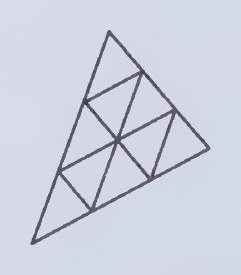
Diagram from page 152.
Reptiles.
*17. Concave pentagons.
*18. ABHIG = EKJGL
19. AFEDC ~ GABHIL
*20. GFElis a parallelogram. Both pairs of its opposite sides are equal because GFEK] = EIGJK.
21. 0AFEDC = 40ABHIG.
22. pAFEDC = 2pABHIG.
2
23. ’i-, or 2.
Free Fall,
24. In a plane, two lines perpendicular to a third line are parallel.
#25. It increases. (For example, BD > AC.)
26. AA. (£0 = Z0 and ZOAC and ZOBD are right angles.)
27. Corresponding sides of similar triangles are proportional.
28. The ratio of the areas of two similar triangles is equal to the square of the ratio of their corresponding sides.
Type Transformations.
29. Dilations.
48 Q (39 BORON(E=3
3 72 Sl i or 0.75. (96 )
32. They are multiplied by 3. (%.)
33. They do not change.
Set II (pages 423-424)
The crossed-ladders problem on which exercises 45 through 5o are based is a famous puzzle in recreational mathematics. The puzzle concerns two crossed ladders of unequal length that lean against two buildings as shown in the figure: given the lengths of the ladders and the height of their crossing point, the problem is to find the distance between the two buildings. The puzzle i famous because the solution, based on similar triangles, leads to a difficult quartic equation. Different numbers appear in various versions of the puzzle and the solution is generally not an integer. The simplest set of numbers for which all
is
of the distances in the figure are integers was reported in the American Mathematical Monthly in 1941, and these numbers are used in the version of the puzzle presented in the exercises. More on the crossed-ladders problem can be found in Chapter 5 of Martin Gardner’s Mathematical Circus (Knopf, 1979).
Trick Card. 34, % = %,x1=50,x= V50 = 542 ~7.1.
The width of the original card is approximately 7.1 cm.
35. 5042 =71 cm?.
/%)2501 1
37. (
100 2
38. Yes. The second card is formed by folding the first card in half.
Catapult.
39. AB=108. (ACFD ~ ACAB by AA; so CF FD 60 40
2 %Y 2 60AB = 6,480,
CA AB 162 AB
AB =108.)
Leg Splitter.
40. A D
E F
B ©
*41. Inaplane, two lines parallel to a third line are parallel to each other. (EF || BC and AD || BC.)
42. If a line parallel to one side of a triangle intersects the other two sides in different points, it divides the sides in the same ratio.
43. Substitution.
44. They prove that the line divides the legs of the trapezoid in the same ratio.
Crossed Ladders. 45. A
85
U 20]c ez [—34 D 40 EIl6 B
PE 40
46. 30 ft. (A so e 56) 046, . (APED ~ ACBD;s0 — = —.
AD 56
47. 105 ft. (AADB ~ APEB;so — = —) 30 16
*48. 70 ft. (CD2 =562+ 42% so CD = /4,900 =70.)
49. 119 ft. (AB?= 105”+ 562 50 AB = /14,161 = 119.)
50. PA =85, PB = 34, PC =20, PD = 50. (PD2 = 302 + 402 so PD = 2,500 = 50. PB2 =302 + 16% so PB = /1,156 =34,
In AADB, PE || AD; so 53{41 .
E’ 16PA = 1,360, PA = 85. In ACBD, PE || CB; so e E, 40PC = 800, 50 40
PC =20.)
Seven Triangles.
51. AABD ~ ADEEF, AABC ~ ADEC, ABDC ~ AEFC.
524
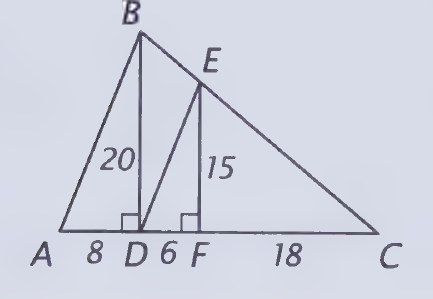
Diagram from page 154.
A 8D6F 18 C
#53. 15. (AEFD ~ ABDA; so %—g 8EF =120,
EF=15)
FC 15 6+FC 20’ 20FC = 90 + 15FC, 5FC = 90, FC = 18.)
54. 18. (AEFC ~ ABDC;s0 ———
20 8 4 *55 ( S0 . ) . —. (AABD ~ADEF;s0 — = — = —.
*56. 80. [0AABD = 5(8-20).]
57. 45. [aADEF = %(6 -15).]
058, E (@)
59. L (InABCD EF||BD;s0 LE - S _ 1, EC 18 3
60. 60. [0ABED — %(20 -6).]
61. 180. [0ADEC = %(24 -15)]
1 60 3 (180)
62. . (—==.
Algebra Review 1 (p
ol. (x+7)x—-4)= x+7=0o0r x-4=0, x=-7 or x=4,
4 and -7.
2. 5x+1)(x-1)=0, S5x+1=0o0r x-1=0,
x=—l or x=1, 5 1a.nd—l. 5
®3. x2-8x+5=0, (-8)+4(-8)*4(1)(5) _ 8++/64-20 2(1) h 2 - 8+r B
X =
A
4+w/—and4 V11.
Algebra Review 1 (page 425)
1. 4 and −7.
2. 1 and .
3. and .
4. 7 and −7.
5. and .
6. .
7. and −3.
8. 2 and 5.
9. −1 and −8.
10. and .
Algebra Review 2 (page 426)
1. .
2. .
3. .
4. .
5. .
6. .
7. .
8. or .
9. .
10. .
11. or .
12. or .
13. .
14. .
15. .
16. or .
17. .
18. .
19. .
20. .
21. .
22. .
23. or or or .
24. .
25. .