p. 297
Chapter 8: Transformations
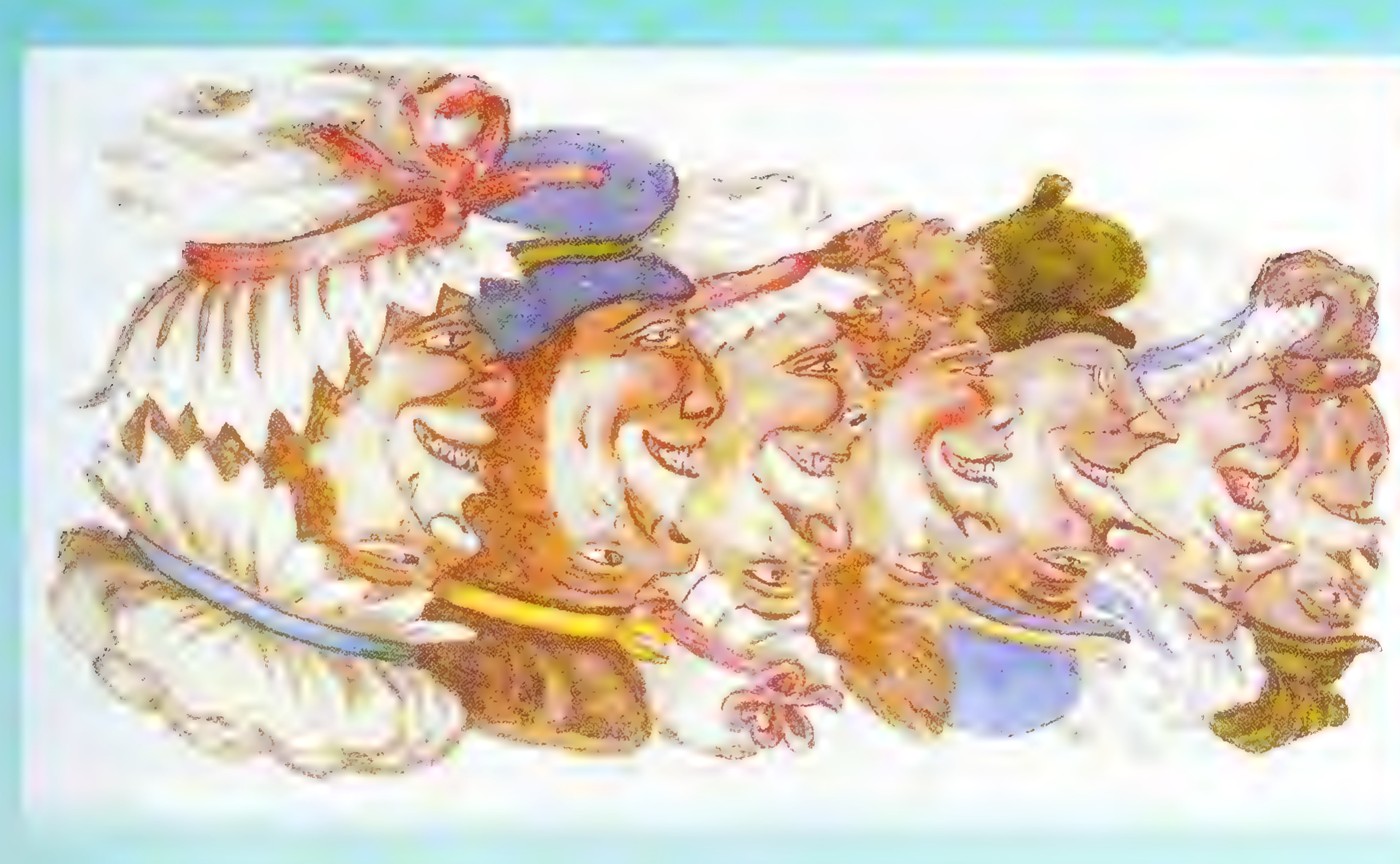
How does this picture illustrate both laughing and crying?
Mathematics has been described as the “science of patterns.” Geometry concerns patterns of shape and form. You are already familiar with the pattern of form called line symmetry. In this chapter, we will explore other types of symmetry and become acquainted with their relation to the subject of transformations, including reflections, translations, rotations, and glide reflections. We will also apply these ideas to widen our notion of congruence.
p. 298
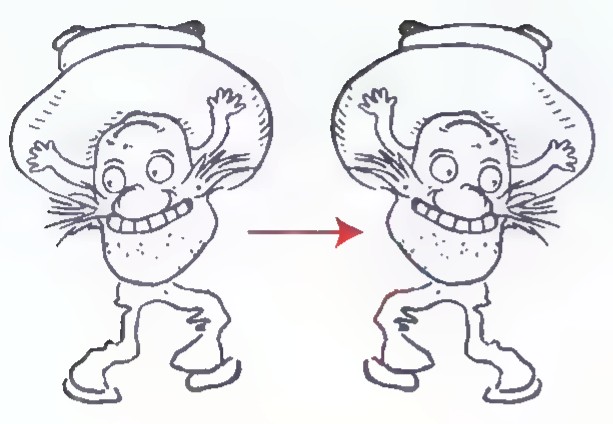
A reflection
Lesson 1: Transformations
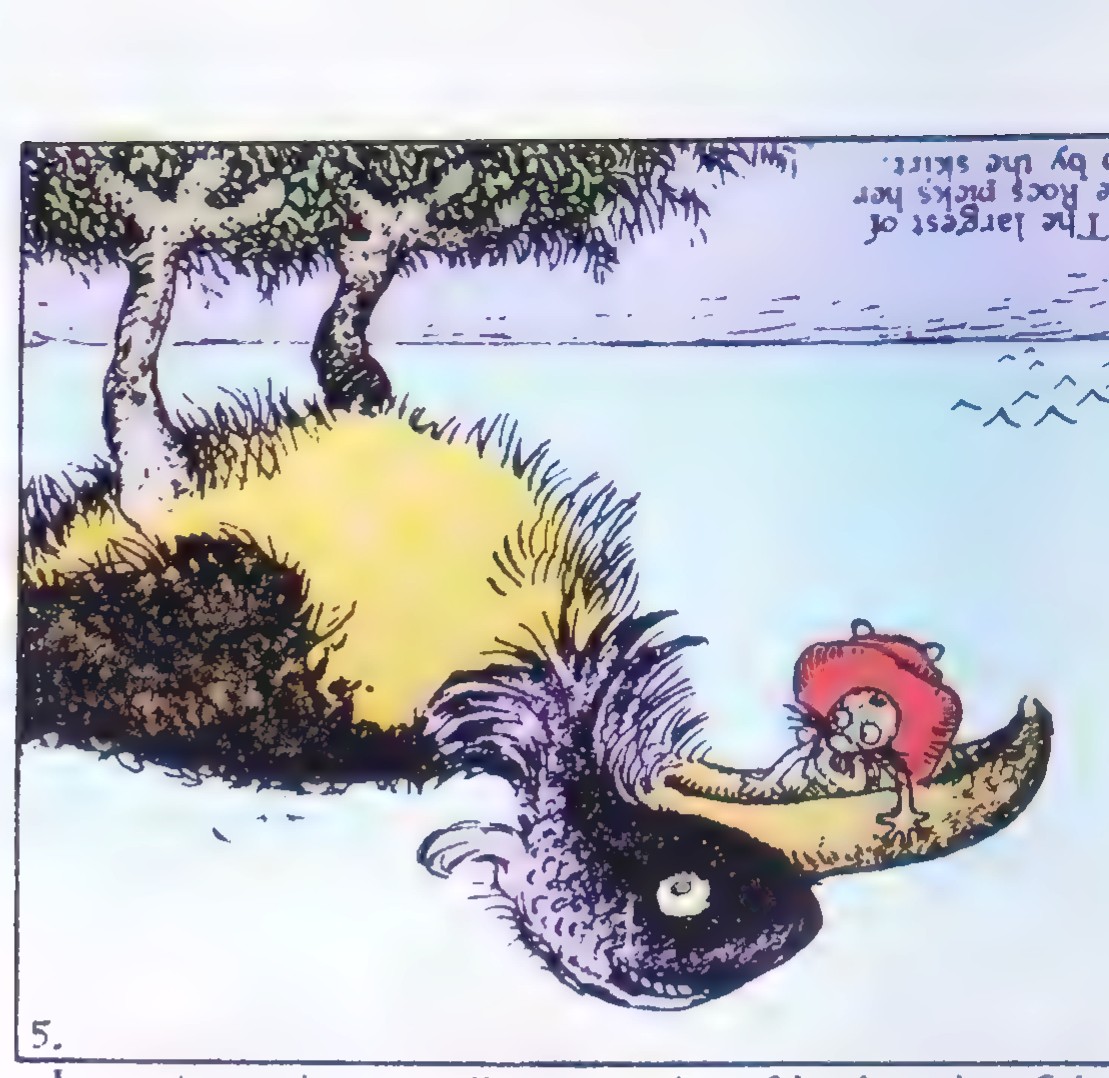
Perhaps the most remarkable comic strip ever drawn appeared in the New York Herald from 1903 to 1905. A panel from one of the strips is shown above.
The other figures on this page show how several transformations important in geometry would affect one of the strip’s characters, Old Man Muffaroo. The rotation is remarkable in that it turns Muffaroo into the strip’s other character, Little Lady Lovekins. After the six panels of the comic strip were read in the usual way, the strip had to be turned upside down to read the rest of the story.
The word “transformation” has a special meaning in geometry. It refers to a rule for getting one set of points from another. When the rule is applied to a point in the first set, it produces exactly one point in the second set. Going backward, we find that, for each point in the second set, there corresponds exactly one point in the first set.
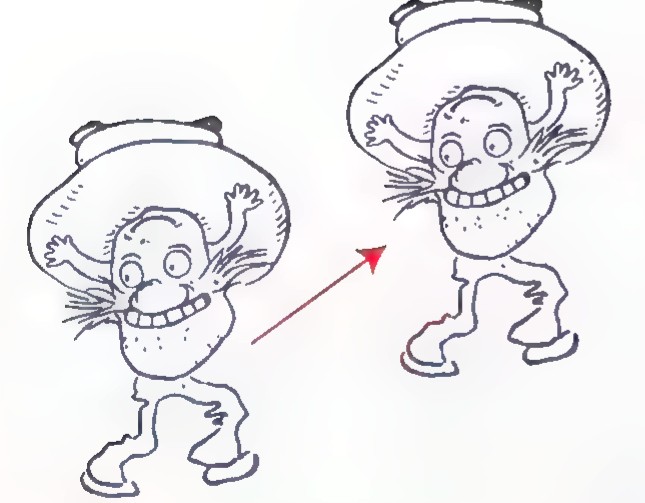
A translation
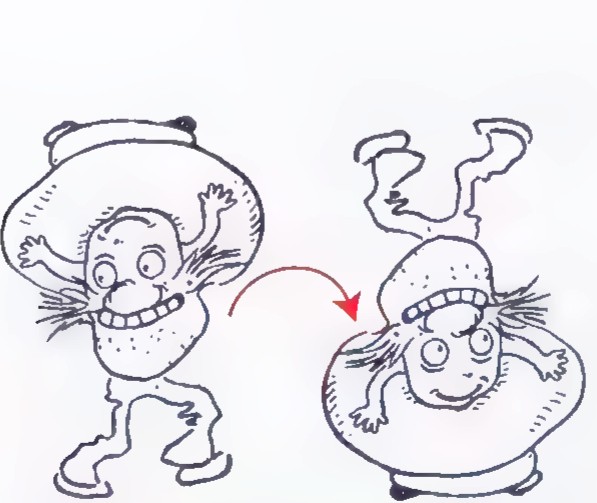
A rotation
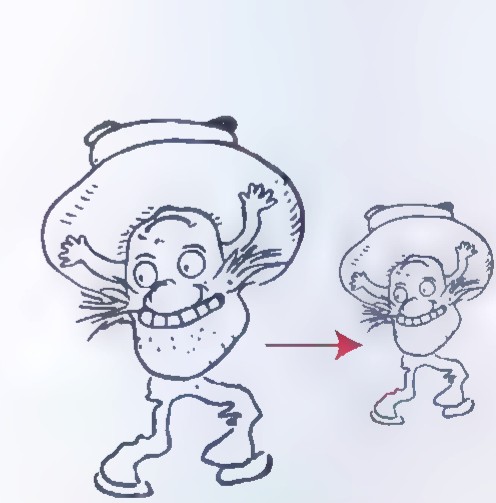
A dilation
p. 299
Definition
A transformation is a one-to-one correspondence between two sets of points.
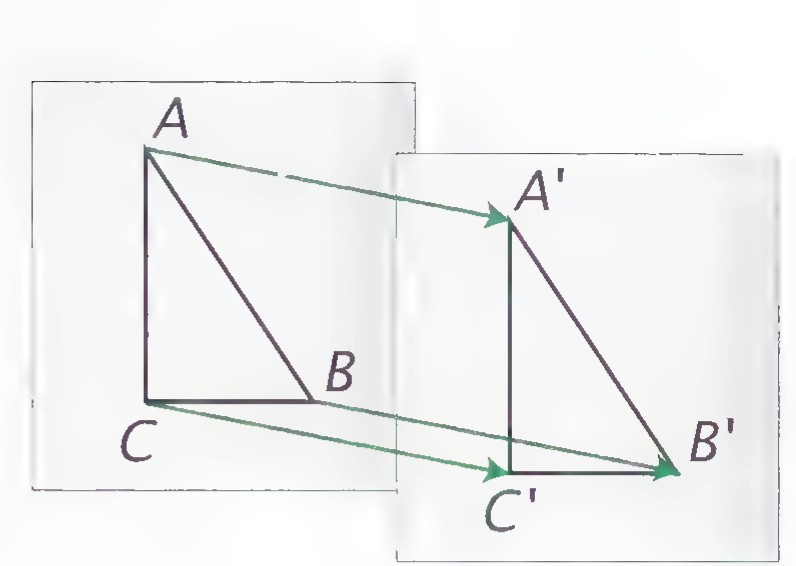
A translation
Transformations can be applied to triangles. First, imagine tracing △ABC on a sheet of transparent paper and then sliding the paper a certain distance in a given direction without turning it, as shown at the right.
The result is a translation of △ABC. Each point in the new figure, △A′B′C′, corresponds to a point in the original figure, △ABC, and is called its image. Point A′ (read as “A prime”), for example, is the image of point A.
Next, imagine taking the sheet of paper with the drawing of △ABC, folding the paper, tracing △ABC to produce △A′B′C′, and then unfolding the paper, as shown in the three figures below.
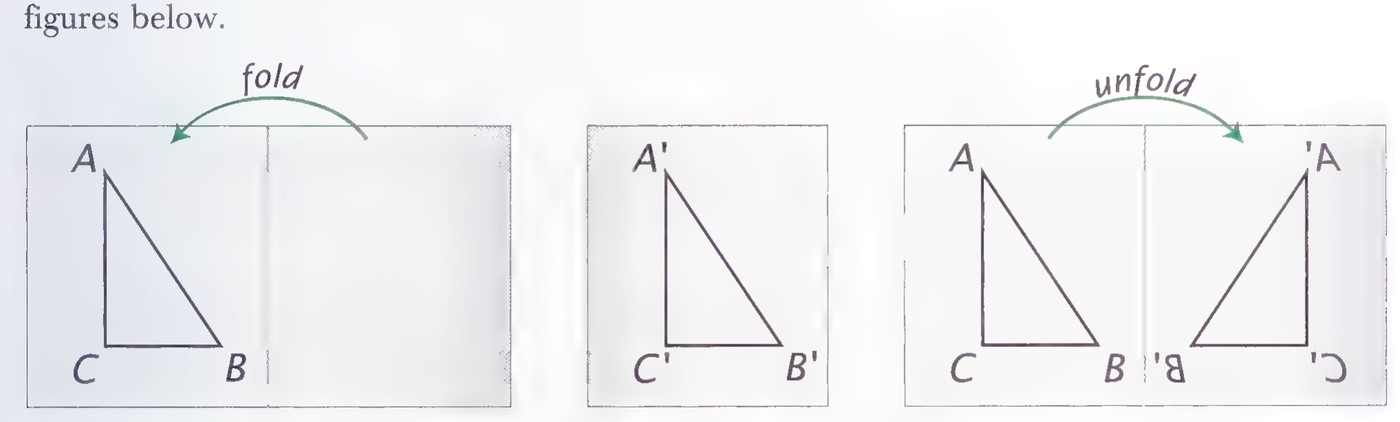
A reflection
The result is a reflection of △ABC, and the line along which the paper is folded is called the mirror of the reflection.
Now imagine taking the paper with the tracing of △ABC and rotating it a certain number of degrees about a fixed point, P, as shown below.
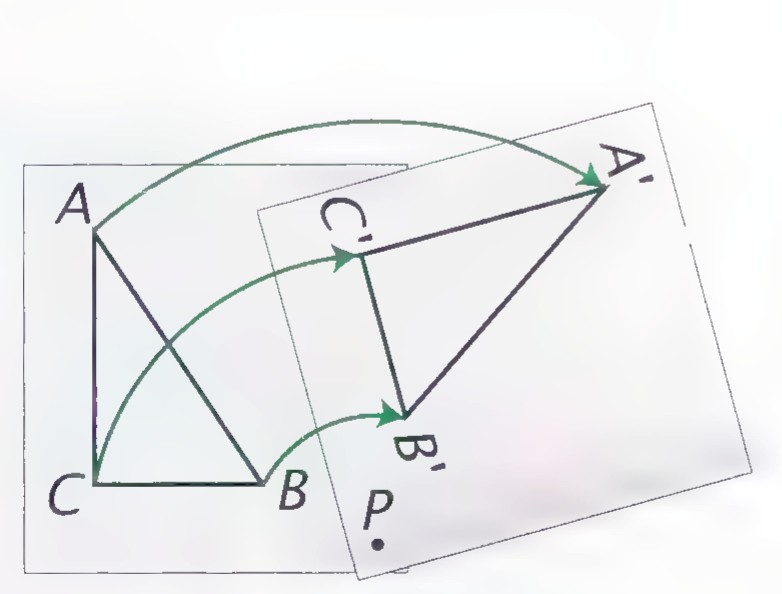
A rotation
This time the result is a rotation of △ABC. The fixed point, P, about which the figure is rotated is called the center of the rotation.
p. 300
Finally, imagine taking the paper with the drawing of △ABC and making a photocopy of it by either enlarging it or reducing it, as shown below.
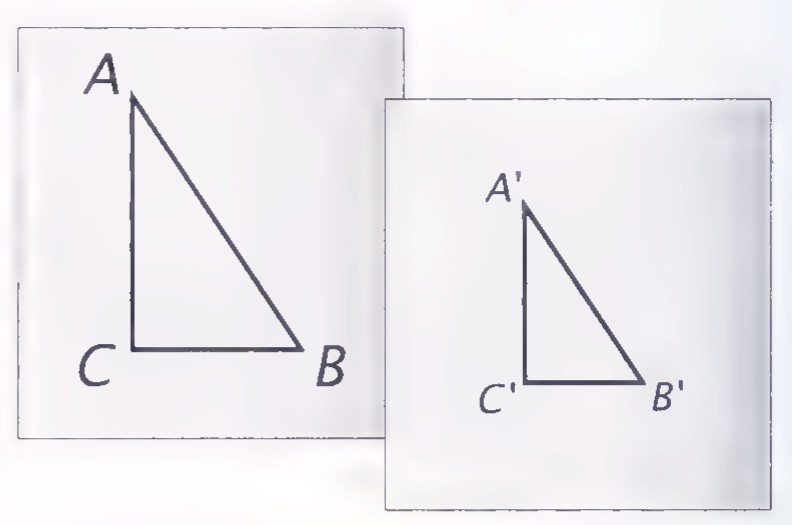
A dilation
The result is a dilation of △ABC. An obvious but significant difference between this transformation and the preceding ones is that △ABC and its image, △A′B′C′, are not congruent. Although the corresponding angles of the two triangles seem to be equal, the corresponding sides clearly are not. Transformations in which neither distances nor angle measures change are called isometries.
Definition
An isometry is a transformation that preserves distance and angle measure.
From our descriptions, it is evident that the transformations called translations, reflections, and rotations are examples of isometries. Dilations are not.
Exercises
Set I
Transformations in Art. The figure by Maurits Escher at the right consists of fish of four colors swimming in four directions.
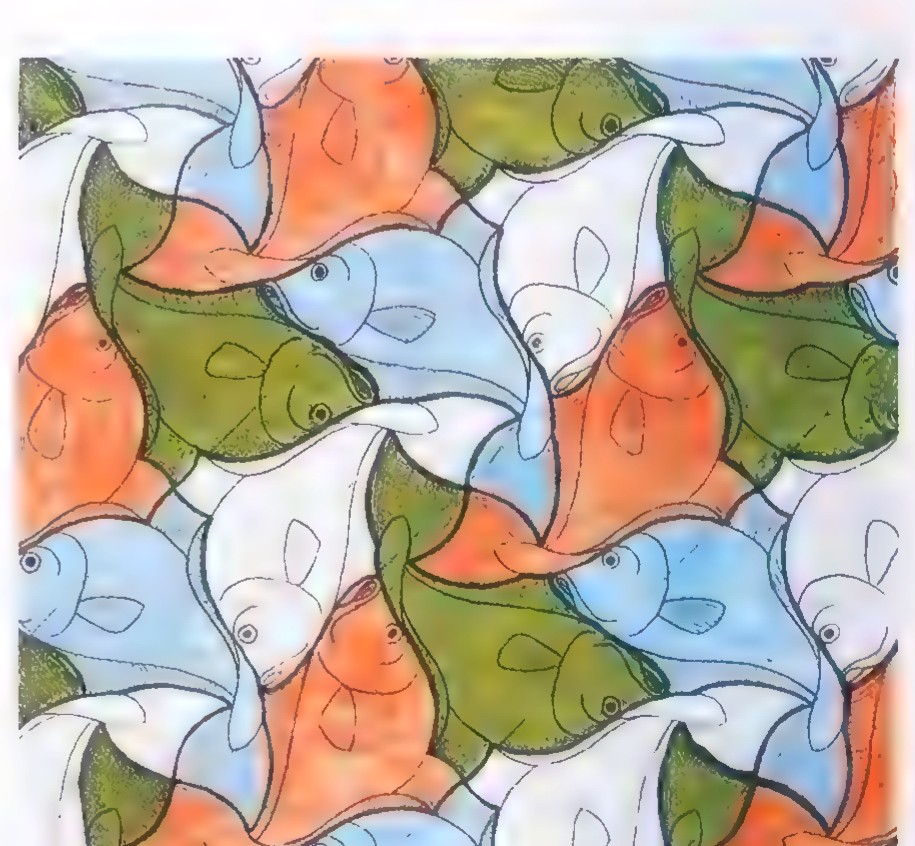
What type of transformation seems to relate
- two fish of the same color?
- a pair of red and white fish?
- a pair of blue and white fish?
Are there any pairs of fish in the figure for which one fish of the pair seems to be
- a dilation of the other?
- a reflection of the other?
p. 301
Mirror Molecules. The two hands in the figure below are shown holding models of a pair of amino acid molecules. Of the two molecules, L-alanine and D-alanine, only the one on the left is present in natural protein.*
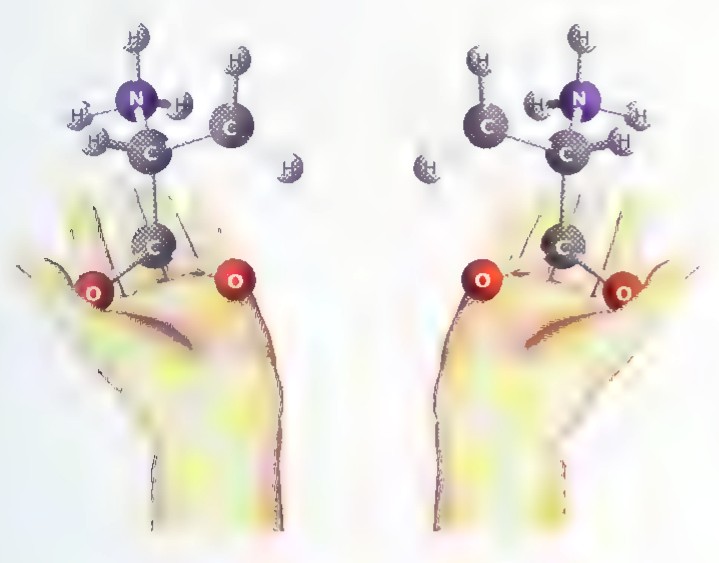
- Under what transformation is the one hand the image of the other?
- L and D stand for “levo-” and “dextro-.” What do you think these prefixes mean?
Reflections. Children sometimes write the mirror image Я when they mean to write an R. This mistake has been used in the trademark of a toy store.
The figure below shows an R and its reflection through a mirror line.
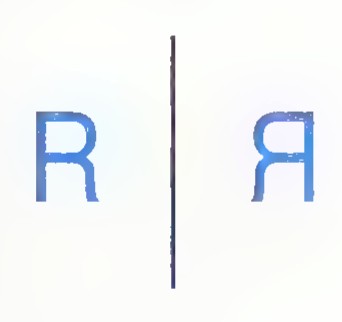
On your paper, copy and complete each of the following figures by including the reflection image of the object on the left through the mirror line.
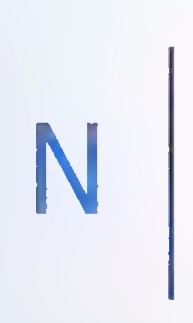
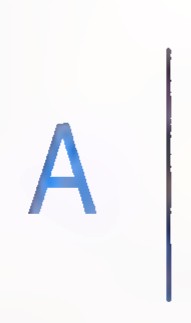
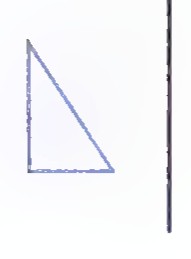
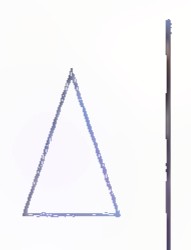
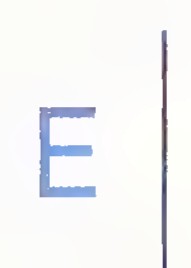
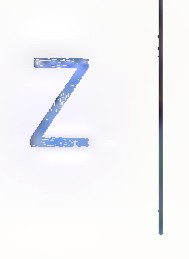
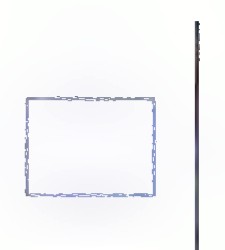
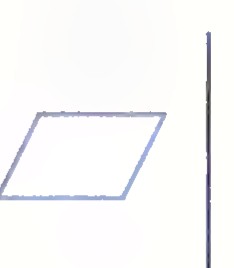
In which of exercises 8 through 15 do the figure and its mirror image look the same?
What is it about these figures that causes them and their mirror images to look the same?
Down the Stairs. The figure below illustrates a transformation.†
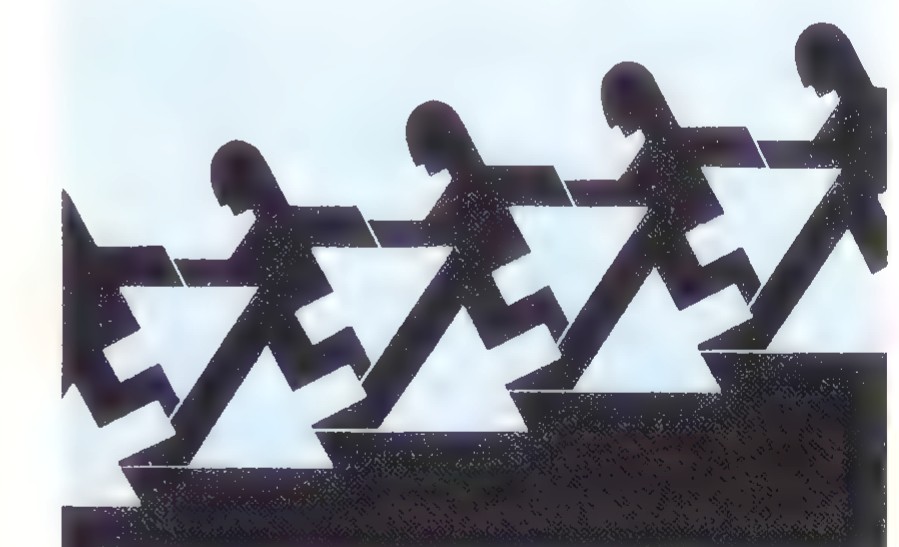
- What transformation is it?
- What does the word “transformation” mean in geometry?
- Is this transformation an example of an isometry?
- What does the word “isometry” mean?
* The Galactic Club, by Ronald N. Bracewell (W. H. Freeman and Company, 1975).
† Mind Sights, by Roger N. Shepard (W. H. Freeman and Company, 1990).
p. 302
Peter Jones. In this remarkable design by Douglas Hofstadter, the part shown in red is the image of the part shown in blue.
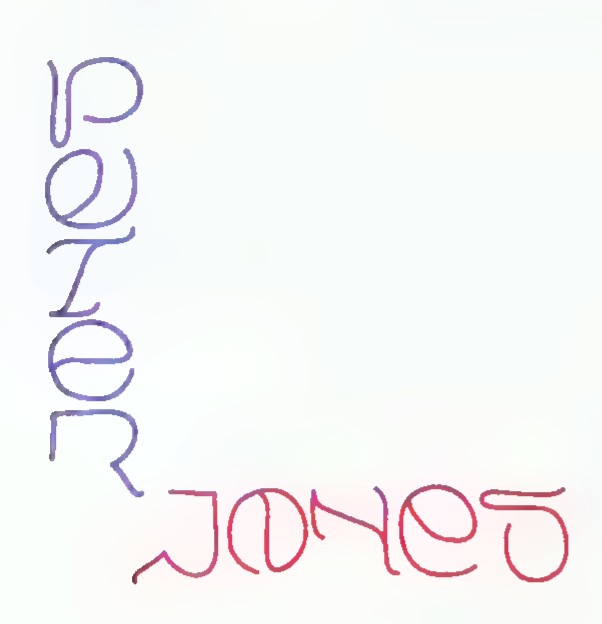
- What transformation does the figure illustrate?
- Describe how the image is produced from the original figure.
- What letter is the image of P?
Set II
Escalator Transformations. The diagram below illustrates how an escalator works.*
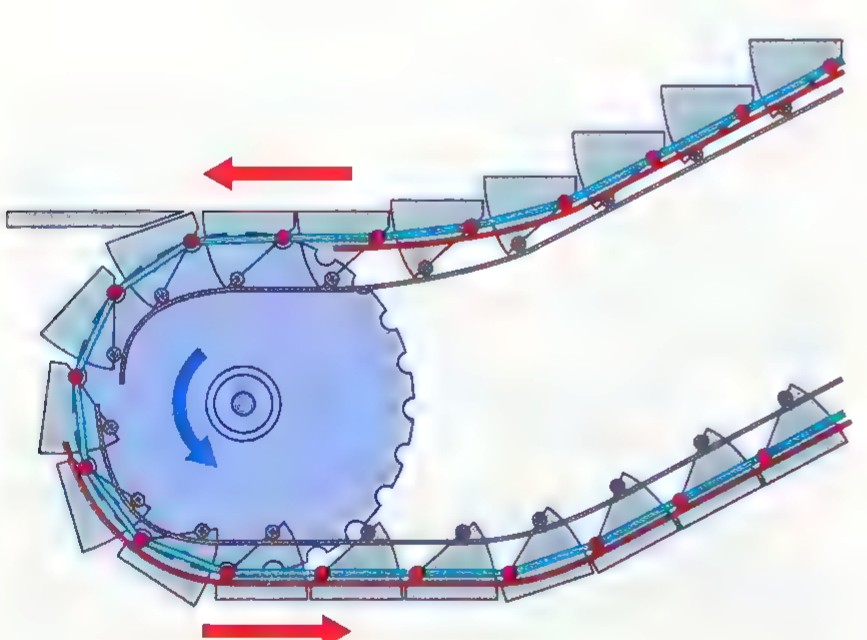
What type of transformation is illustrated by the steps as
- they descend?
- they move around the return wheel?
The figure below represents a translation of one step of an escalator; AA′ ∥ BB′ ∥ CC′ and AA′ = BB′ = CC′.
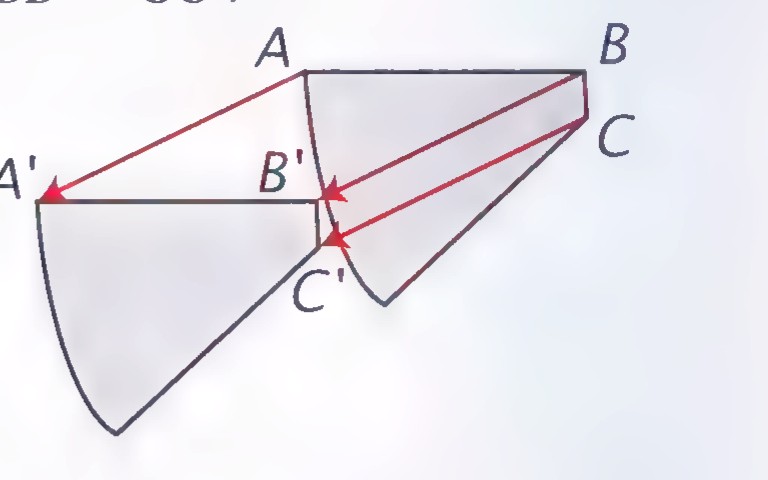
Let’s see how this transformation affects distances and angles.
- Copy the figure and mark it as needed to do each of the following exercises.
- What can you conclude about quadrilaterals AA′B′B and BB′C′C? Why?
- Why is A′B′ ∥ AB?
- (continued) Draw AC and A′C′.
- What can you conclude about quadrilateral AA′C′C?
- Why is AB = A′B′, BC = B′C′, and AC = A′C′?
- Why is △ABC ≅ △A′B′C′?
- Why is ∠ABC = ∠A′B′C′?
The answers to exercises 31 and 33 establish that the translation part of the escalator motion is an isometry.
- What is an isometry?
The figure below represents the rotation of one step; PA = PA′, PB = PB′, and ∠APA′ = ∠BPB′.
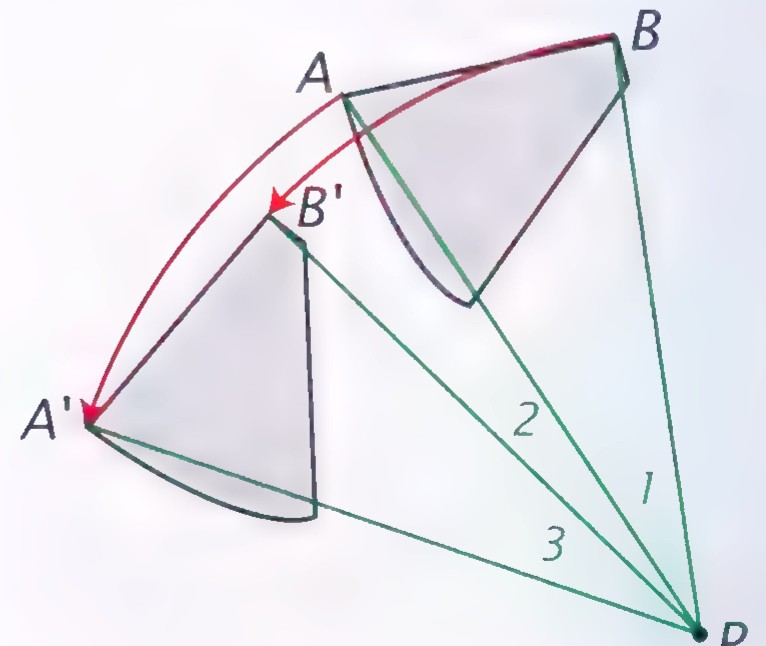
* Scientific American: How Things Work Today, edited by Michael Wright and M. N. Patel (Crown, 2000).
p. 303
Let’s see how this transformation affects distances.
- Copy the figure and mark it as needed to answer each of the following questions.
- Why is ∠APA′ = ∠2 + ∠3 and ∠BPB′ = ∠1 + ∠2?
- Why is ∠2 + ∠3 = ∠1 + ∠2?
- Why is ∠3 = ∠1?
- Why is △ABP ≅ △A′B′P?
- Why is AB = A′B′?
- What have we shown to be preserved by this rotation?
Triangle Construction. The figure below can be used to construct a transformation of △ABC.
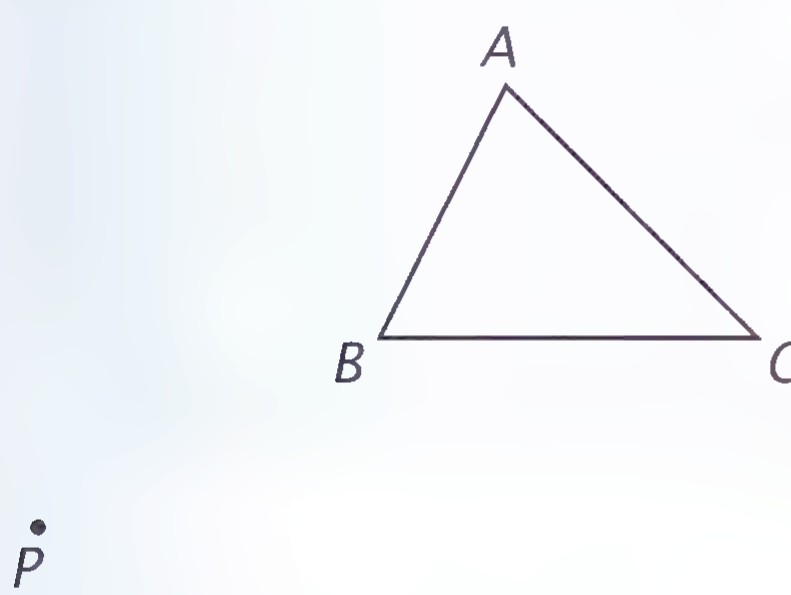
- Make a large copy of the figure. Draw ray PA. Use your compass to mark a point A′ on PA such that AA′ = PA. Draw ray PB and find point B′ on it so that BB′ = PB. Draw ray PC and find point C′ on it so that CC′ = PC. Draw △A′B′C′.
- What type of transformation does your drawing seem to illustrate?
- How do the sides of △A′B′C′ seem to compare in length with the sides of △ABC?
- How do the angles of △A′B′C′ seem to compare in size with the angles of △ABC?
- Is this transformation an isometry? Explain.
Computer Geometry. Transformations are used in computer drawing programs. The following figures appear in the Adobe Illustrator User Guide.* Name the transformation illustrated in each figure.
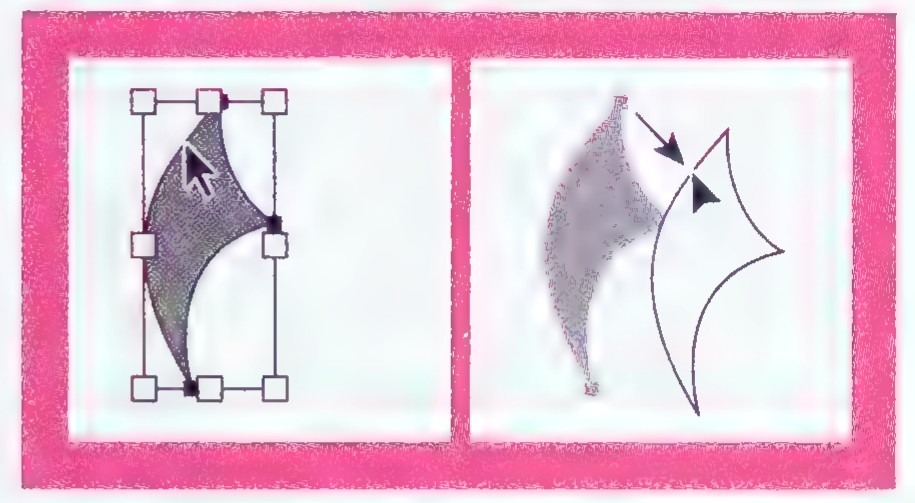
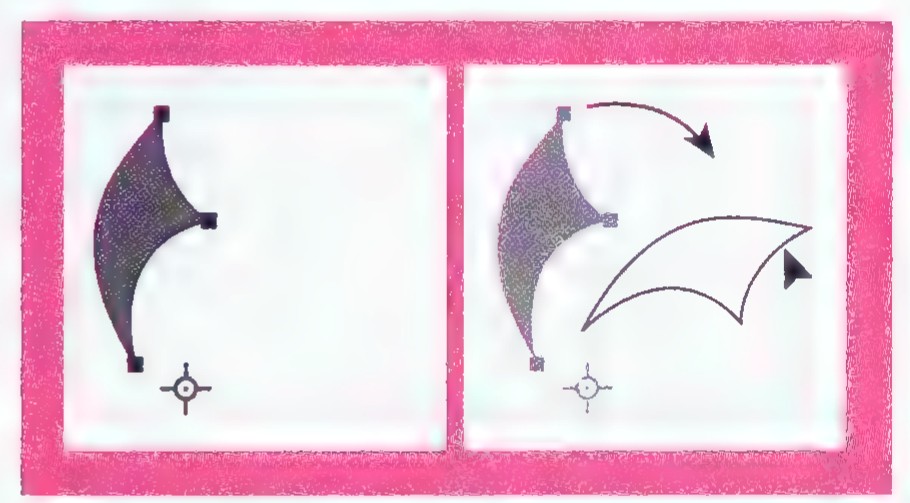
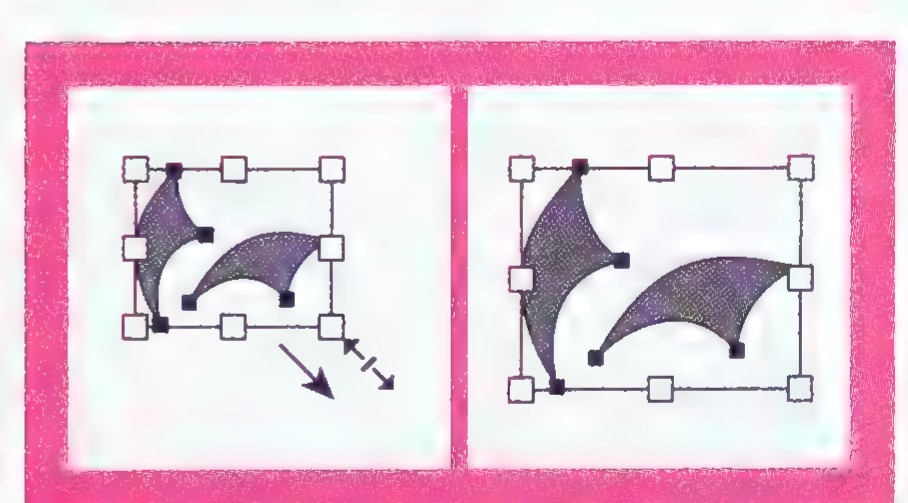
(In this figure, the drawing on the right is the transformation image of the drawing on the left.)
* Adobe Illustrator 9.0 User Guide (Adobe Systems, 2000).
p. 304
Computer drawing programs transform objects by changing their coordinates. To show, for example, that the coordinates of each point of an object are to be reversed to get the coordinates of each point of its image, we can write .
- On graph paper, draw a pair of axes extending 10 units in each direction from the origin. Plot the following points and connect them to form △ABC: A(3, 1), B(5, 2), C(2, 6).
- Use the transformation on the coordinates of △ABC to find the coordinates of △DEF. For example, A(3, 1) → D(3 + 2, 1 − 7), or D(5, −6).
- (continued) Draw △DEF.
- For what type of transformation is △DEF the image of △ABC?
- Use the transformation on the coordinates of △ABC to find the coordinates of △GHI. For example, A(3, 1) → G(−3, 1).
- (continued) Draw △GHI.
- For what type of transformation is △GHI the image of △ABC?
- Use the transformation on the coordinates of △ABC to find the coordinates of △JKL.
- (continued) Draw △JKL.
- For what type of transformation is △JKL the image of △ABC?
- Use the transformation on the coordinates of △ABC to find the coordinates of △MNO.
- (continued) Draw △MNO.
- For what type of transformation is △MNO the image of △ABC?
Set III
Toothpick Puzzle. A puzzle thought to have originated in Japan uses eight toothpicks and a matchhead.*
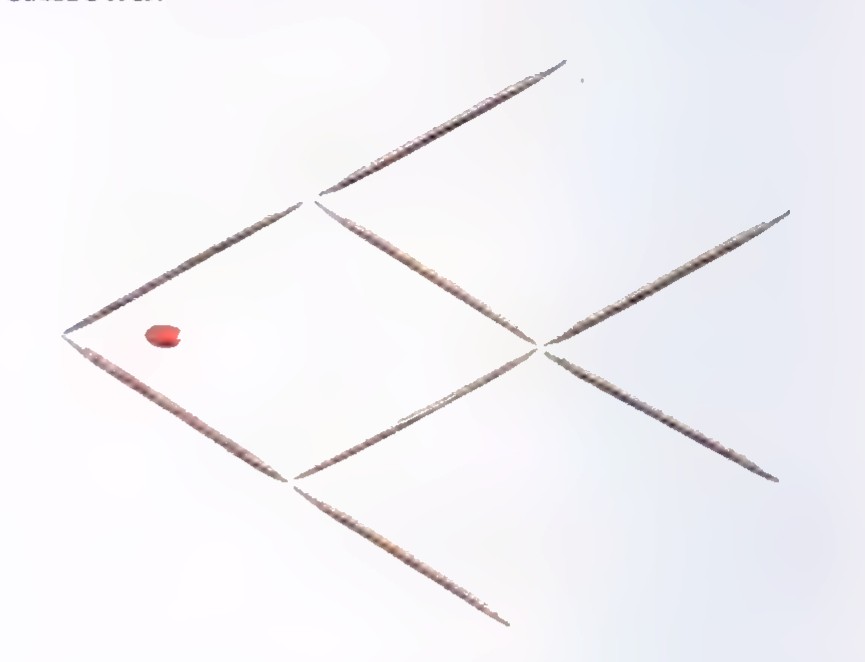
The challenge is to move just three toothpicks and the matchhead to make the fish swim in the opposite direction.
- Can you do it? If so, make a drawing illustrating the original fish and what you did to get your answer.
- Can the solution be regarded as the result of one of the transformations considered in this lesson? If so, which one? Explain.
* The Next Book of Omni Games, by Scott Morris (New American Library, 1988).
p. 305
Lesson 2: Reflections
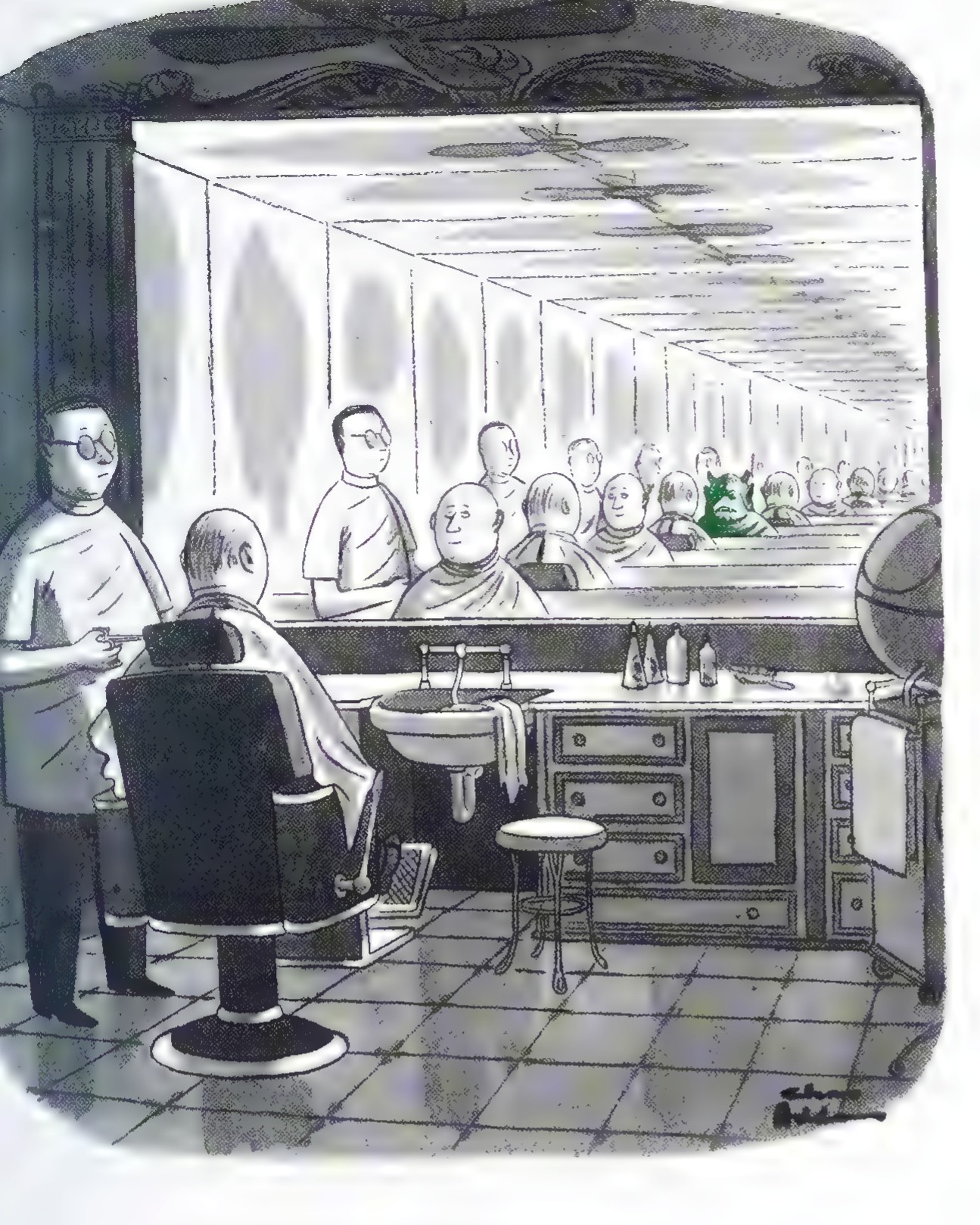
Some barber shops have mirrors on the walls that face each other, giving a series of reflections as seen above.
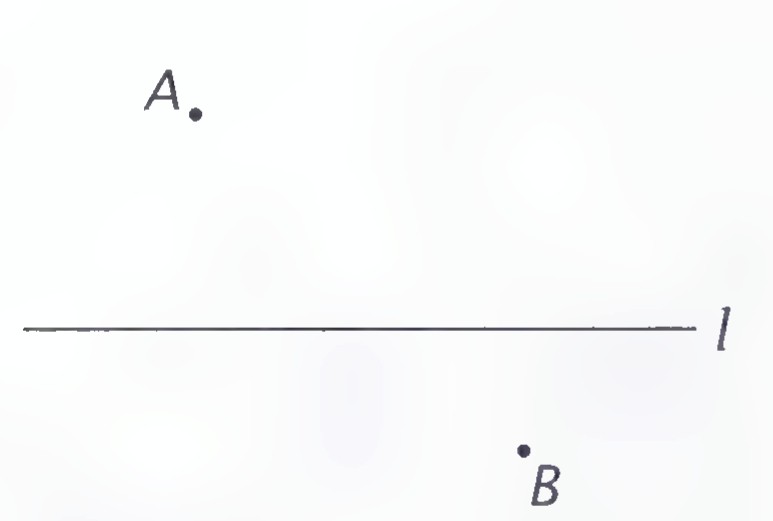
You already know that a reflection is a special type of transformation. The figure at the right shows how to find the points corresponding to A and B when an object is reflected in a mirror, line l. Find the perpendicular to l through the point, go to the mirror, and continue an equal distance on the other side. The distance from any point on l to l is 0; so the reflection of such a point through the line is the point itself.
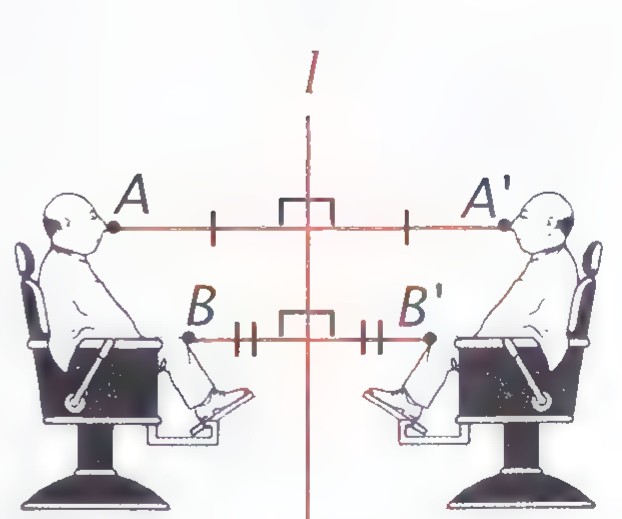
A reflection
Definition
The reflection of point P through line l is P itself if P lies on l. Otherwise, it is the point P′ such that l is the perpendicular bisector of PP′.
p. 306
The reflection of a point through a line can be found by using a mirror or by folding. It can also be found by construction.
Construction 8
To reflect a point through a line.
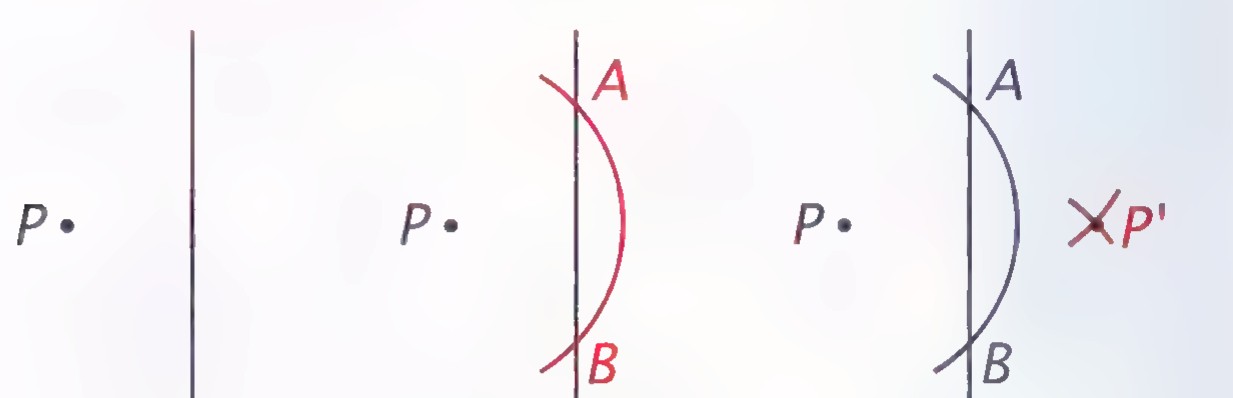
Let the point be P and the line be l. With P as center, draw an arc that intersects l in two points, A and B. With A and B as centers, draw two more arcs with the same radius as the first arc. The point in which they intersect, P′, is the reflection of P through l.
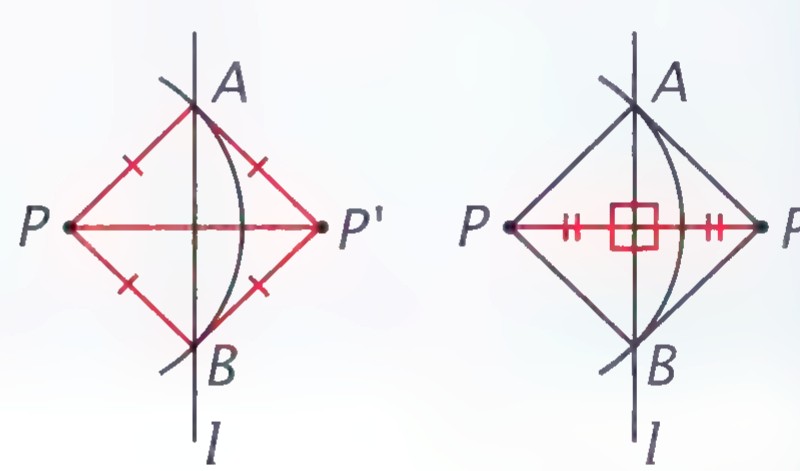
These figures show why this method works. Because PA = PB = AP′ = BP′, points A and B are equidistant from P and P′. In a plane, two points each equidistant from the endpoints of a line segment determine the perpendicular bisector of the line segment; so l is the perpendicular bisector of PP′. It follows from the definition of the reflection of a point through a line that P′ is the reflection of P through l.
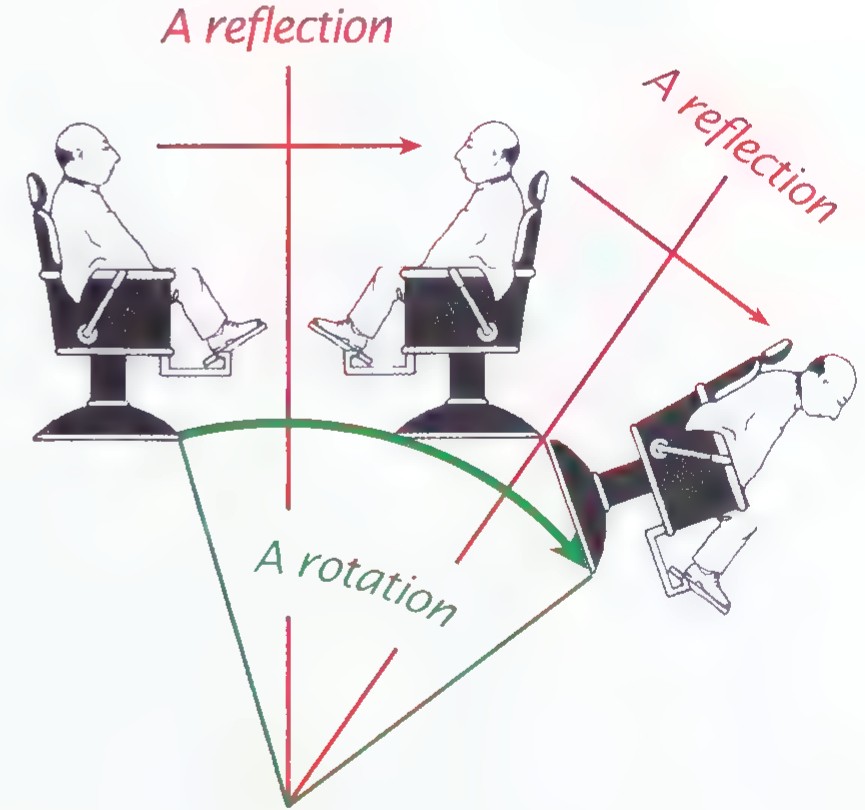
In the cartoon by Charles Addams at the beginning of this lesson, not all of the successive images produced by the parallel mirrors are alike. Some of the images of the man in the barber chair face in the same direction and some face in the opposite direction. The second image, which faces in the same direction as the man in the chair, is the result of another special transformation, a translation. It’s as if the man in the chair could be pushed through two “walls” to coincide with his translation image. We have already described a translation as sliding without turning. The figure suggests that a translation can be produced by two successive reflections in parallel mirrors.
p. 307
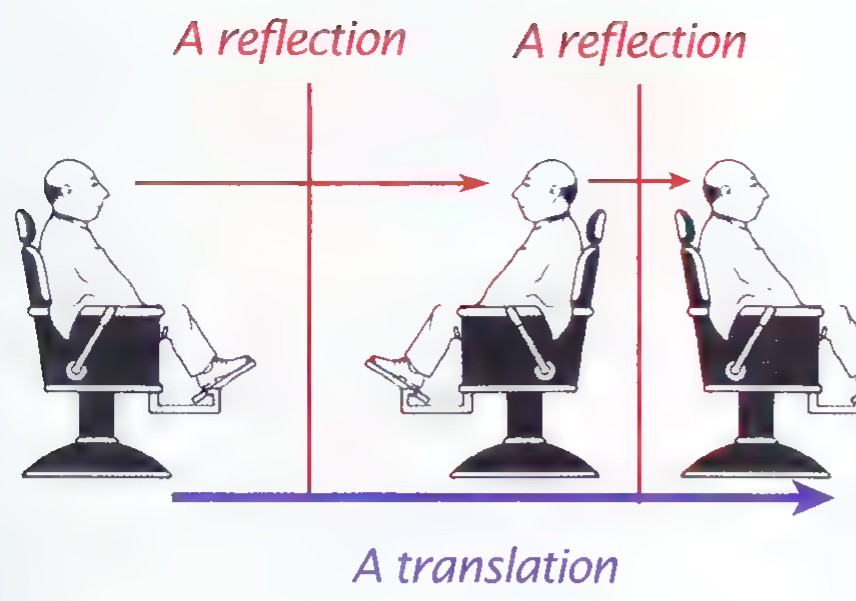
We will call a transformation that is the result of two or more successive transformations their composite and define translation in the following way.
Definition
A translation is the composite of two successive reflections through parallel lines.
The distance between a point of the original figure and its translation image is called the magnitude of the translation. The length of the blue arrow in the figure above illustrates the magnitude of the translation.
A translation is the composite of two reflections through parallel lines. What would the composite of two reflections through intersecting lines be?
The figure at the right suggests that it would be a rotation. If the mirrors in the barbershop were not parallel, the customer might get the impression that the barber was trying to tip him out of the chair!
Definition
A rotation is the composite of two successive reflections through intersecting lines.
The point in which the lines intersect is the center of the rotation, and the measure of the angle through which a point of the original figure turns to coincide with its rotation image is called the magnitude of the rotation. The green angle in this figure illustrates the magnitude of the rotation.
p. 308
Exercises
Set I
A Suspicious Cow. Take a good look at this photograph of a cow and barn.
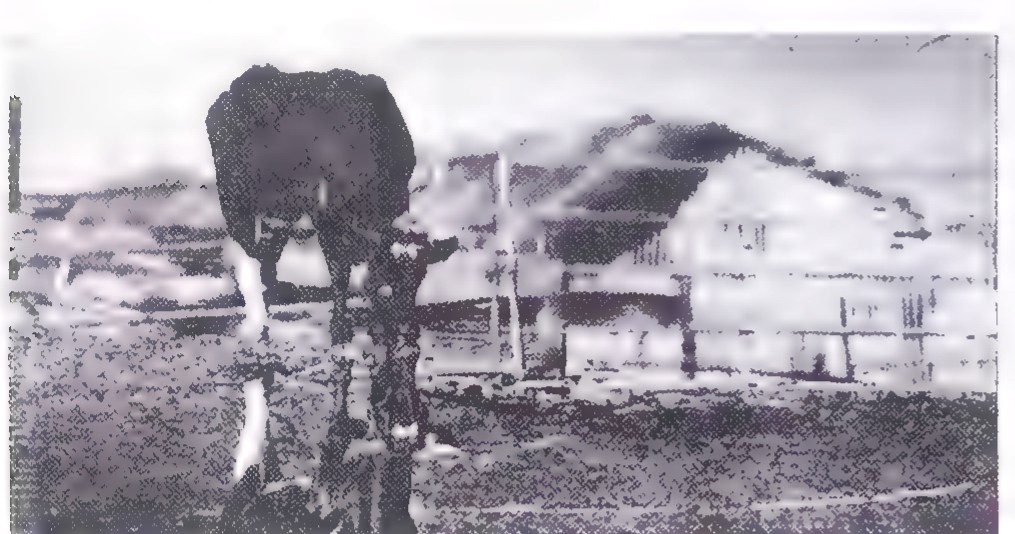
- What is the “mirror” that causes the reflection?
- What is misleading about the photograph?
- Make a large copy of the figure below. Use your straightedge and compass to construct the reflections of points A and B through line l.
- If a point is x units from a mirror in which it is reflected, how far is it from its image?
- What relation does the mirror have to the line segment that connects a point and its image?
Double Reflections. It is fairly easy to imagine a reflection through a vertical or horizontal line because mirrors are usually vertical or horizontal.
The figure at the right shows two successive reflections of the flag at the upper left.
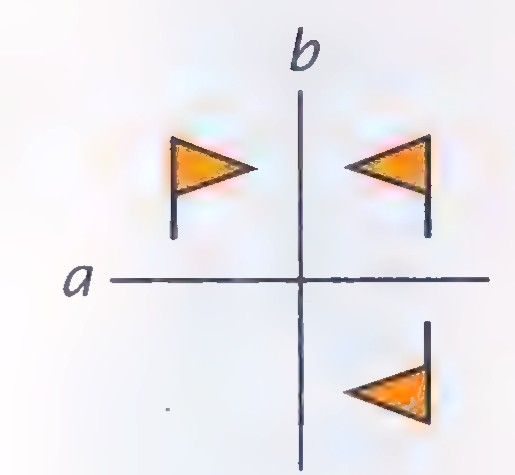
- Through which line was the flag reflected first?
- Through what transformation is the flag at the lower right the image of the original flag?
- What does the measure of the angles formed by the two lines appear to be?
- What does the magnitude of the transformation from the first flag to the last flag appear to be?
Copy the following figures on your paper. Sketch the reflection of each letter through line a (a vertical line) and then sketch the reflection of the image that results through line b (a horizontal line).
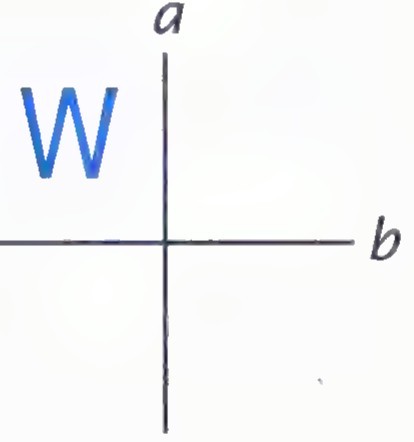
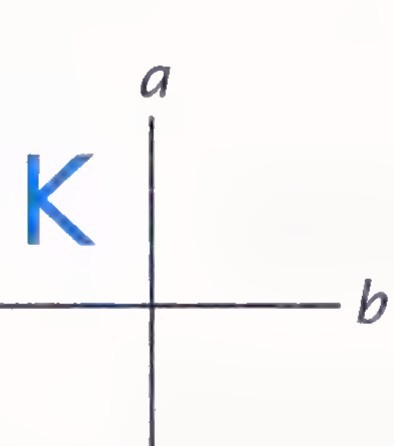
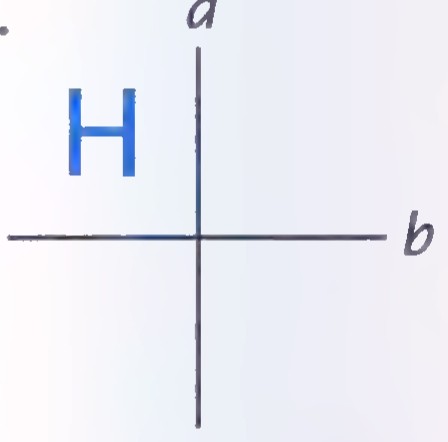
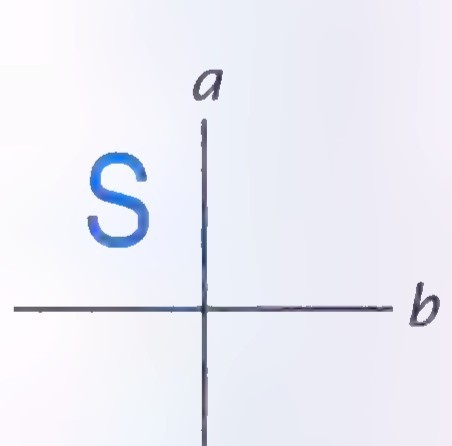
Look at your drawings for exercises 10 through 13 to answer the following questions.
What happens when a figure with
- a vertical line of symmetry is reflected through a vertical line?
- a horizontal line of symmetry is reflected through a horizontal line?
p. 309
- point symmetry is reflected through both a vertical and a horizontal line?
- In which exercise do all three figures look alike? Why?
SAT Problem. The following figure appeared in a problem on an SAT exam.

All of the boxes in the strip are the same size.
- When the strip is folded together along the dashed line, which point is most likely to coincide with point P?
- What transformation does this problem illustrate?
- How could you use a ruler to check your answer?
Can You Read Chinese? The figure in green below was designed by David Moser when he was a graduate student in Chinese.*
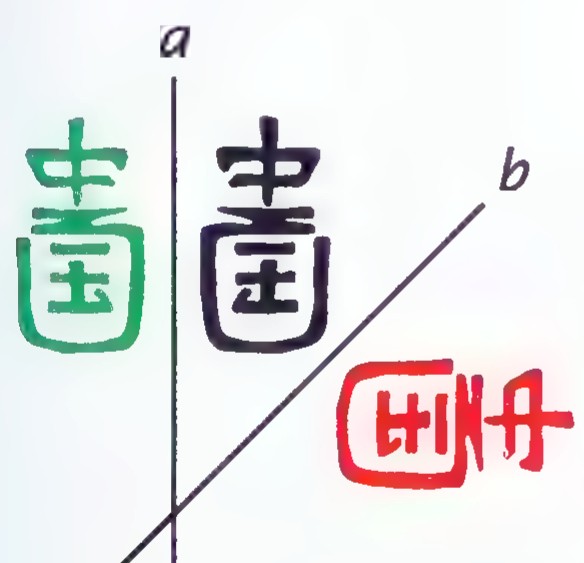
Through what transformation is
- the figure in black the image of the figure in green?
- the figure in red the image of the figure in black?
- the figure in red the image of the figure in green?
A reader of Chinese would read the figure in green as the word “China.”
- Would it be correct to say that the figure in red is a rotation of the figure in green? Explain.
- In what sense would it be correct to say that the figure in red is a translation of the figure in green?
Set II
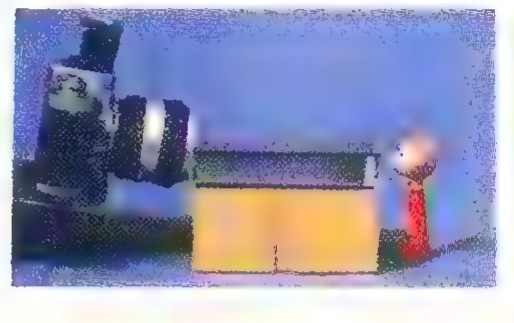
Kaleidoscope Patterns. A kaleidoscope uses mirrors to produce symmetric patterns. The photograph below shows the face of a toy monkey and five of its images in a kaleidoscope with two mirrors that meet at a 60° angle.
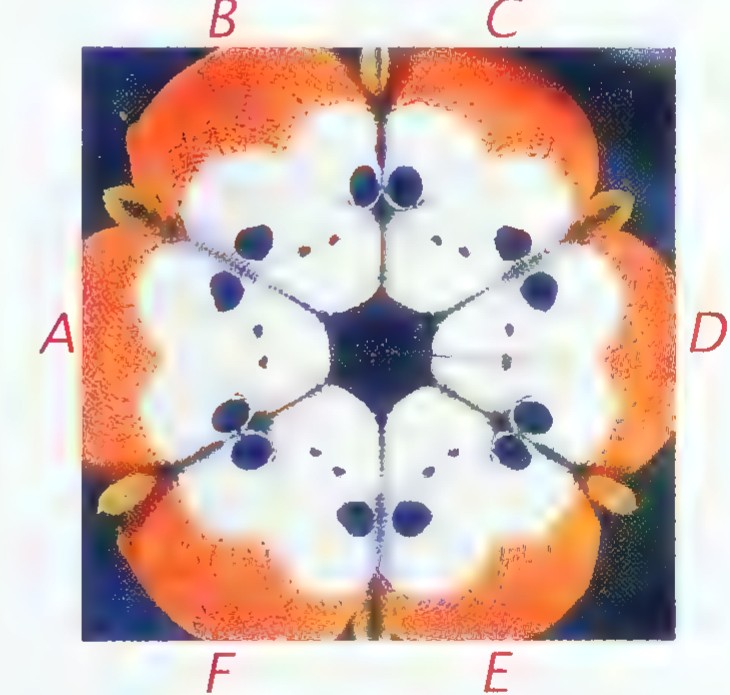
The monkey’s face is at A. Which of the five images are
- reflections of it?
- rotations of it?
- What is the magnitude of each rotation?
- How many lines of symmetry does the pattern of monkey faces seem to have? Where are they?
- Does the pattern of faces seem to have point symmetry? Explain why or why not.
* Can You Believe Your Eyes? by J. R. Block and Harold E. Yuker (Brunner/Mazel, 1992).
p. 310
Scaring Chickens. Experimental findings have shown that, if chickens see this shape flying overhead in the direction of its long end, they ignore it. If they see it flying in the direction of its short end, they run for cover.*
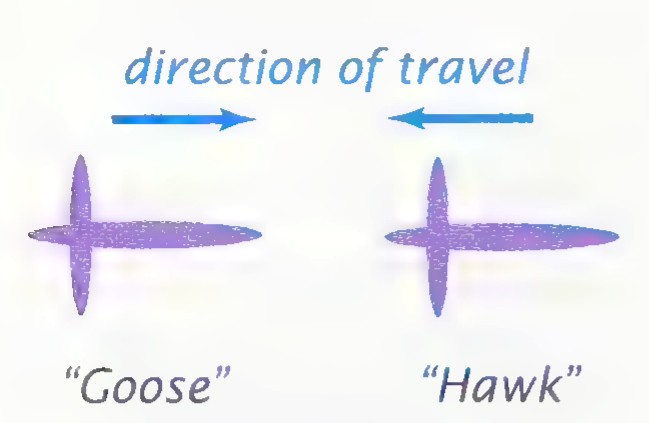
In the figure below, a ∥ b and birds A, B, D, and E are reflection images of bird C through either or both of the lines.
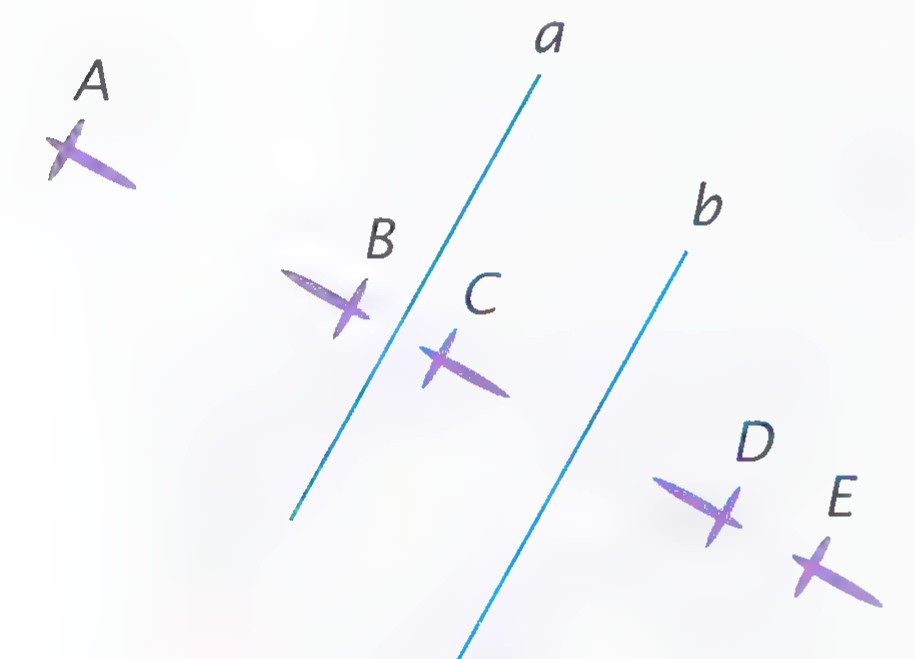
Which bird is the reflection image of
- bird C through a?
- bird B through b?
- bird C through b?
- bird D through a?
Which bird is the image of bird C as a result of successive reflections through
a and b?
b and a?
What transformation do exercises 35 and 36 illustrate?
Use the definition of that transformation to explain why.
Which would scare chickens: seeing the bird at C flying to A or seeing it fly to E?
Boomerang. The figure below shows a boomerang flying overhead.
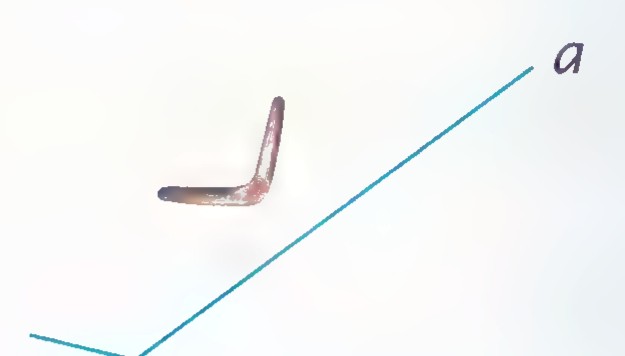
- Draw a large copy of the figure and sketch the reflection of the boomerang through line a. Then sketch the reflection of the resulting image through line b. (Doing so will be easier if you turn your paper so that each line is vertical as you reflect through it.)
- Under what transformation is the final image the image of the original figure?
- Use the definition of that transformation to explain why.
- Where is the center of the transformation?
* Visual Intelligence: How We Create What We See, by Donald D. Hoffman (Norton, 1998).
p. 311
Triangle Reflections. In the figure below, △A′B′C′ is the reflection of △ABC through l₁ and △A″B″C″ is the reflection of △A′B′C′ through l₂; l₁ ∥ l₂.
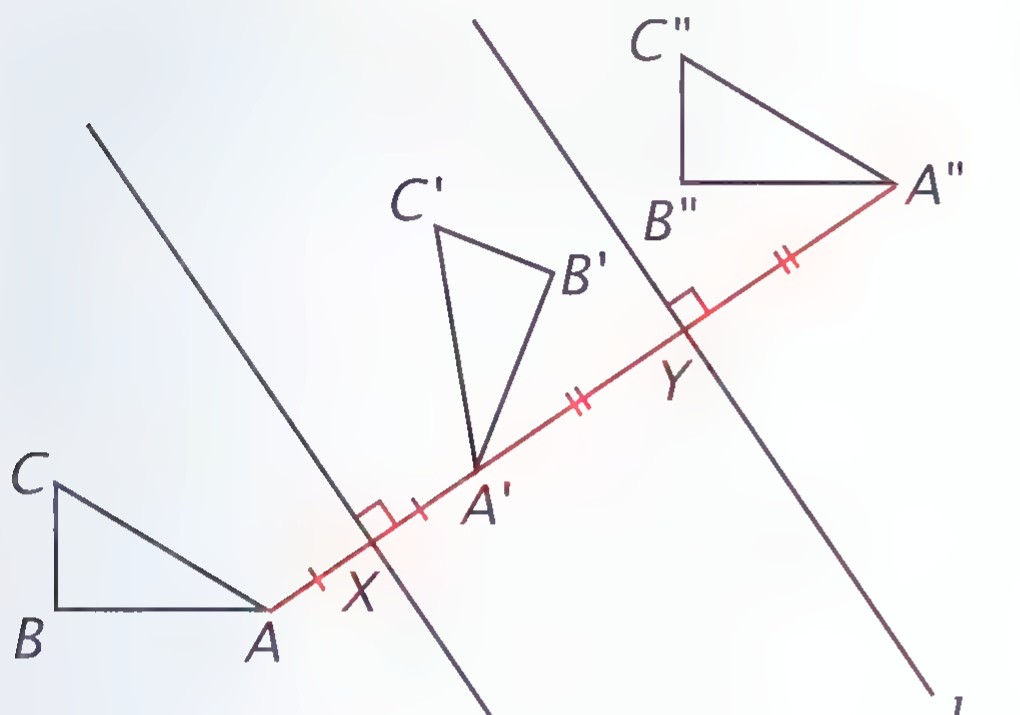
- Why is AX = XA′ and A′Y = YA″?
- Through what transformation is △A″B″C″ the image of △ABC?
- What is the length of AA″ called with respect to this transformation?
- How does the length of AA″ compare with that of XY, the distance between l₁ and l₂?
In the figure at the right, △A′B′C′ is the reflection of △ABC through l₁ and △A″B″C″ is the reflection of △A′B′C′ through l₂; l₁ and l₂ intersect at point O.
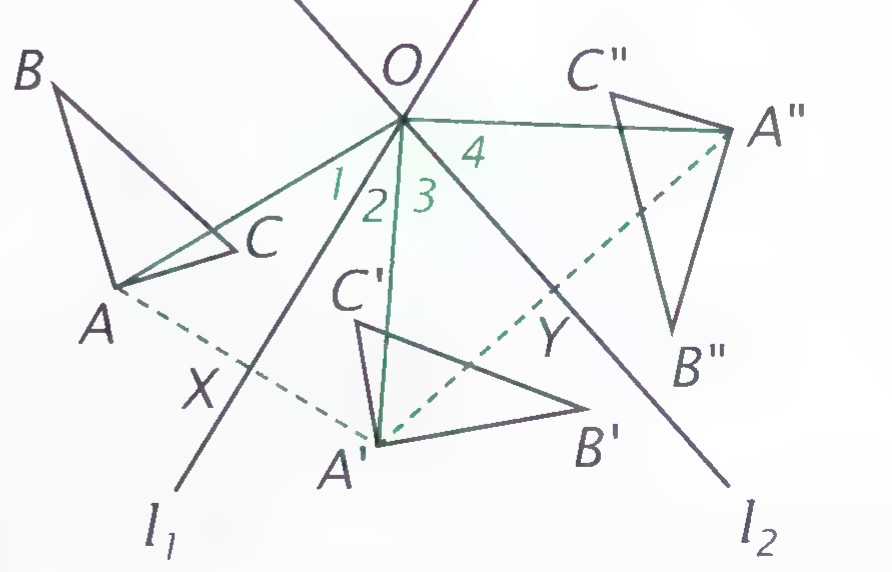
- Why is △AOX ≅ △A′OX and △A′OY ≅ △A″OY?
- Why is OA = OA′ and OA′ = OA″?
- Through what transformation is △A″B″C″ the image of △ABC?
- What is the measure of ∠AOA″ called with respect to this transformation?
- How does the measure of ∠AOA″ compare with that of ∠XOY, the angle between l₁ and l₂?
Set III
What Time Was It? In the murder mystery titled The House of the Arrow by A. E. W. Mason, the solution depends on a clock:
The three witnesses advanced into the room, and as they looked again, from close at hand and with a longer gaze, a cry of surprise broke from all of them.
There was no clock upon the marquetry cabinet at all.
But high above it in the long mirror before which it stood there was a reflection of a clock, its white face so clear and bright that even now it was difficult to disbelieve that this was the clock itself. And the position of the hands gave the hour as precisely half-past ten.
“Now turn about and see!” said Hanaud.
The clock itself stood upon the shelf of the Adam mantelpiece and there staring at them, the true hour was marked. It was exactly. . . .
- Exactly what time was it? Make some drawings to support your answer.
- Are there any other times when the reflection would also look like an actual time? Explain.
p. 312
Lesson 3: Isometries and Congruence
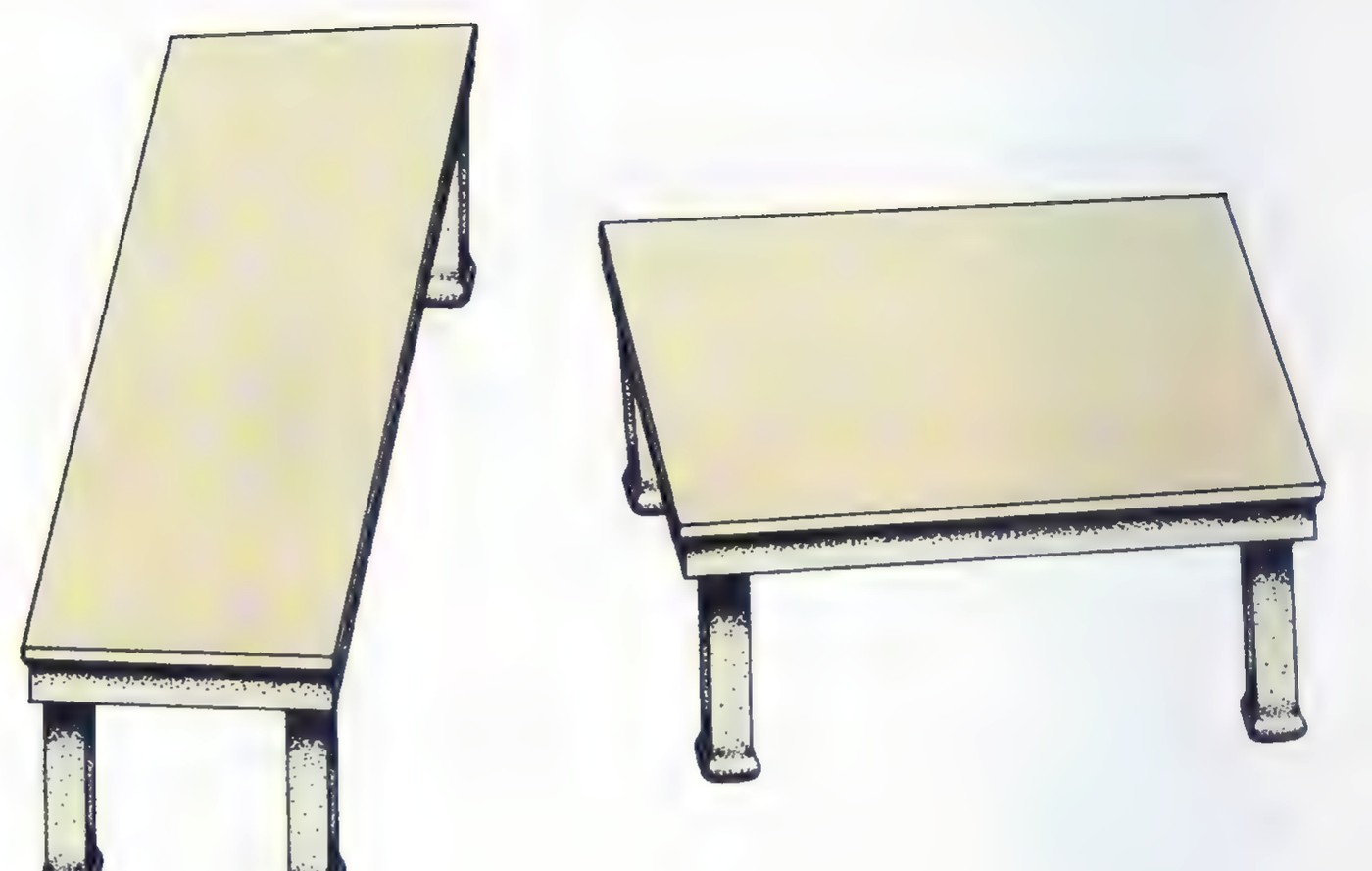
Here is an amazing illusion by psychologist Roger Shepard. How does the shape of the table on the left above compare with the shape of the table on the right? If you trace the outline of the top of one of the tables on a thin sheet of paper and place it on the other table, you will find that it fits exactly. In other words, the tabletops are congruent!*
When this method is used to test for congruence, the tracing of the tabletop is translated and rotated to see if it can be made to coincide with the other tabletop. Because translations and rotations are isometries, this procedure suggests that congruence can be defined as an isometry. This definition agrees with our earlier definition of congruence for triangles, and it extends the idea so that it can be applied to any pair of figures having the same size and shape.
Definition
Two figures are congruent if there is an isometry such that one figure is the image of the other.
* Mind Sights, by Roger N. Shepard (W. H. Freeman and Company, 1990).
p. 313
Look at the figure at the right showing the tabletops at a smaller scale. The definition of congruence in relation to isometry says that ABCD ≅ EFGH if there is an isometry such that EFGH is the image of ABCD. Translations and rotations are composites of reflections. Is it possible to find a composite of just reflections in which EFGH is the image of ABCD?
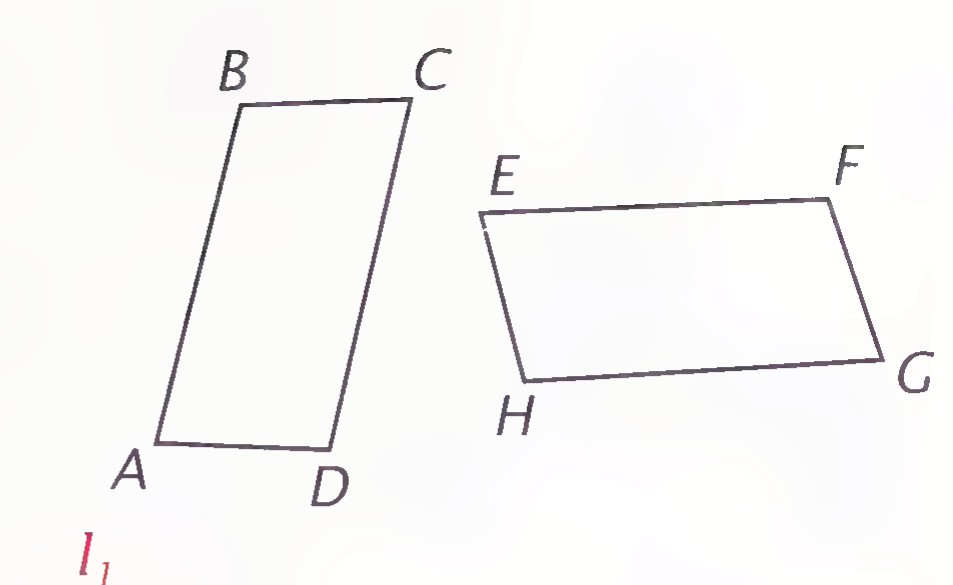
Notice that E appears to be the image of A. Imagine that the figures are printed on a transparent sheet of paper and that we fold the paper so that A fits on E. The second figure shows what happens. Tracing the reflection image of ABCD through the fold line, l₁, produces EB′C′D′.
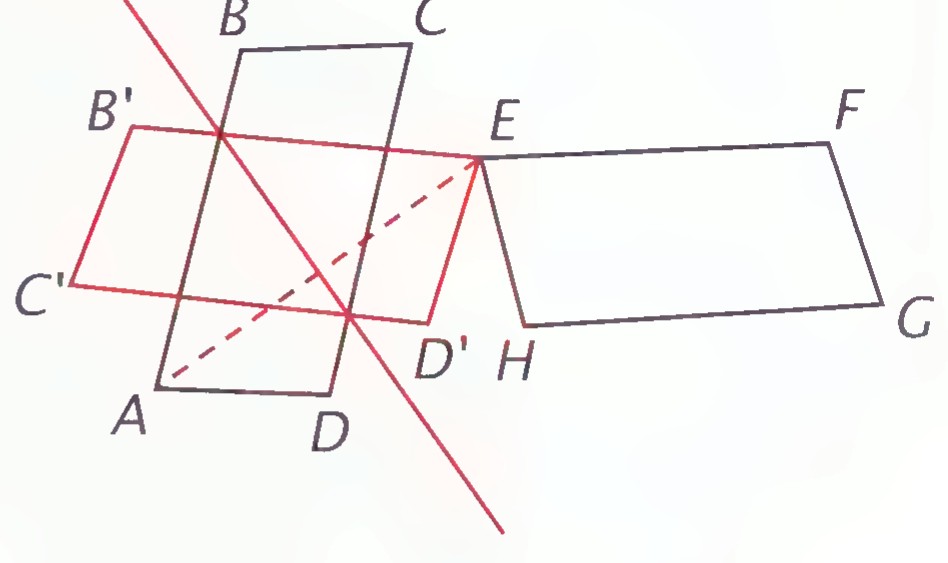
Next, since F appears to be the image of B, and hence B′, imagine folding the paper so that B′ fits on F. The third figure shows what happens. The reflection image of EB′C′D′ through the fold line, l₂, is EFGH. The composite of the two reflections through l₁ and l₂ is an isometry in which EFGH is the image of ABCD, so ABCD ≅ EFGH.
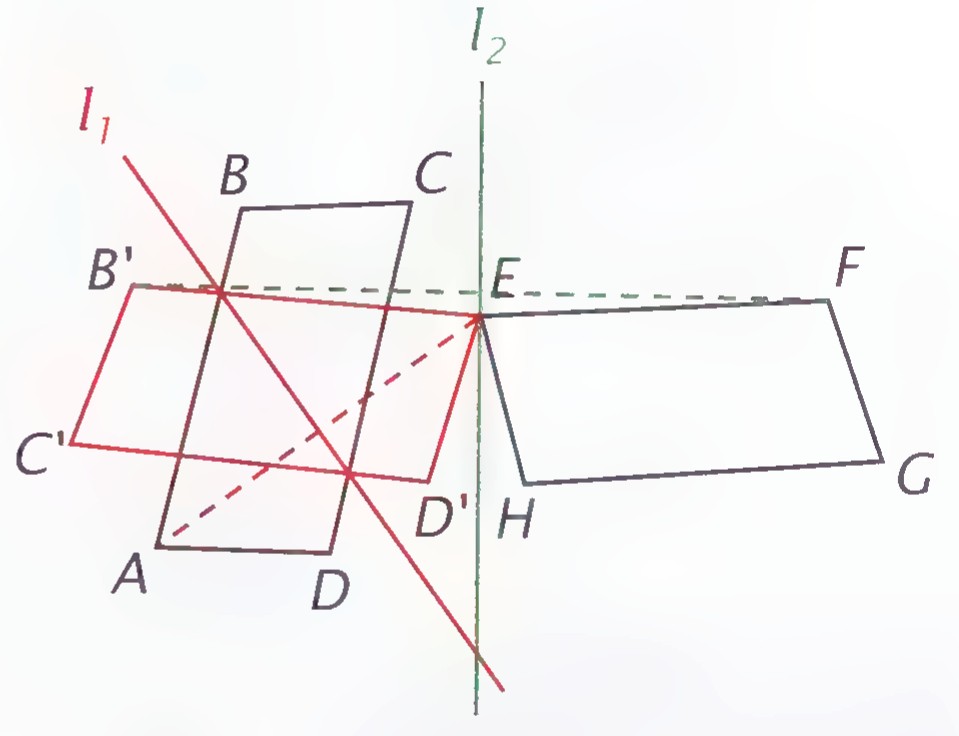
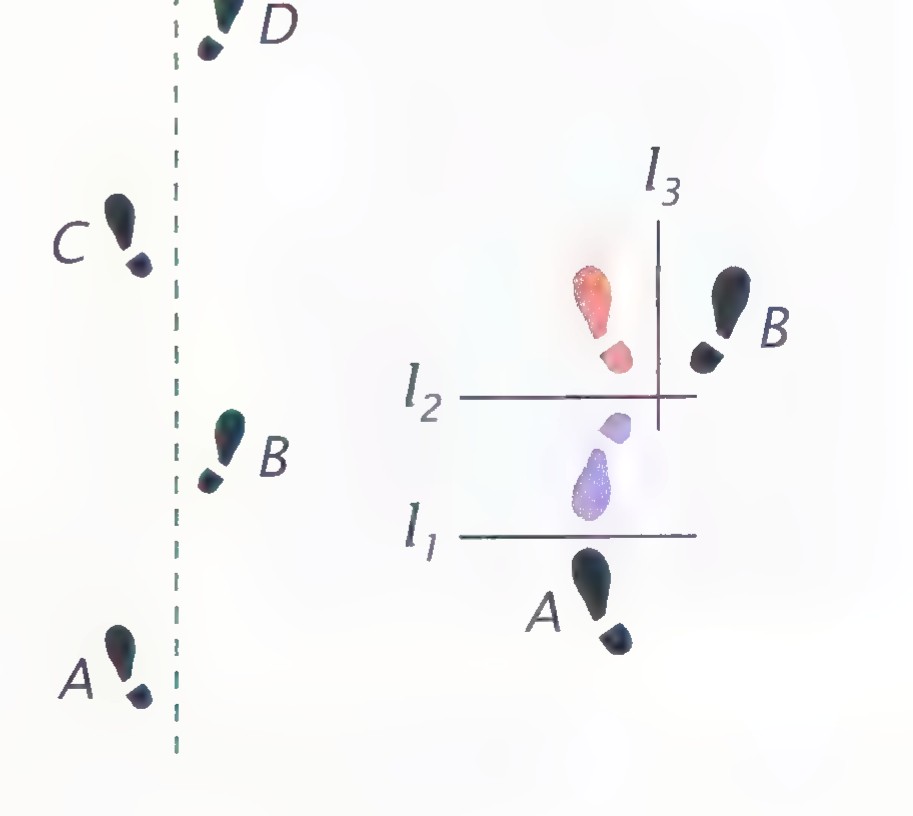
Just two reflections were needed to show that the tabletops are congruent. Is it always possible to get a pair of congruent figures to coincide with two reflections? The figure at the bottom left showing the footprints of successive steps taken by someone walking forward suggests an answer to this question.
Suppose the four steps are congruent. Step C is a translation image of step A, as is step D of step B. Under what transformation is step B an image of step A? It looks like a combination of a translation and a reflection. Such a transformation is called a glide reflection.
Definition
A glide reflection is the composite of a translation and a reflection in a line parallel to the direction of the translation.
Because a translation is the composite of two reflections, a glide reflection is the composite of three reflections. Getting step A to coincide with step B is an example of an isometry that requires three reflections. Notice that the left and right steps look different. Each is a mirror image of the other because it takes an odd number of reflections to carry either onto the other. We will explore congruence and isometries further in the exercises of this lesson.
p. 314
Exercises
Set I
Prevaricator. The four figures at the right by graphic artist Paul Agule are congruent.*
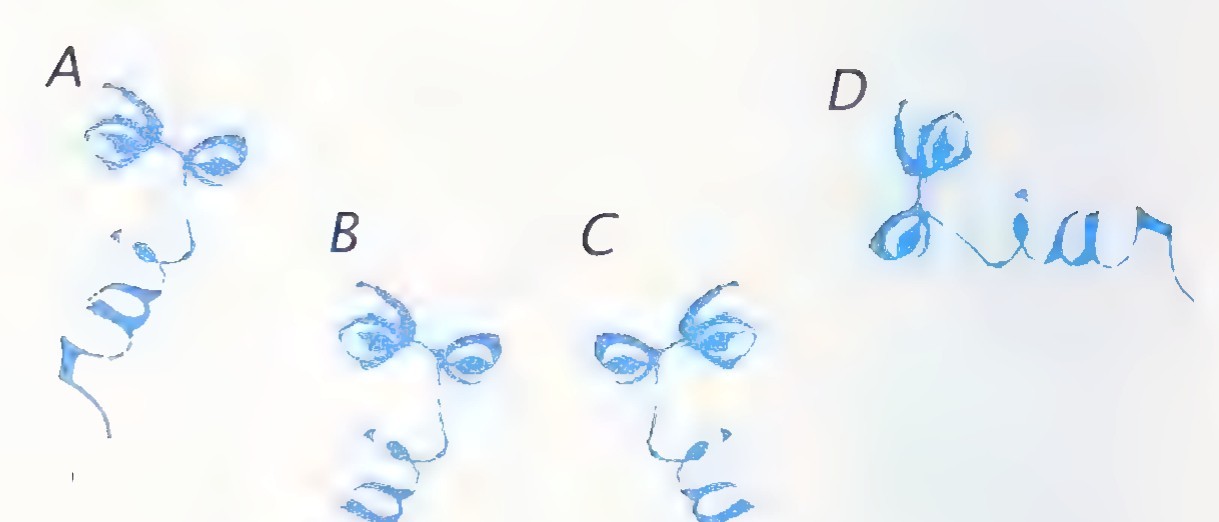
The artist asks: “Can you trust this man?”
- What do you think?
Name the isometry through which
- figure B appears to be the image of figure A.
- figure C appears to be the image of figure B.
- figure D appears to be the image of figure C.
- figure C appears to be the image of figure A.
- Is there an isometry through which D is the image of figure B?
- Use the definition of congruent figures in this lesson to explain why or why not.
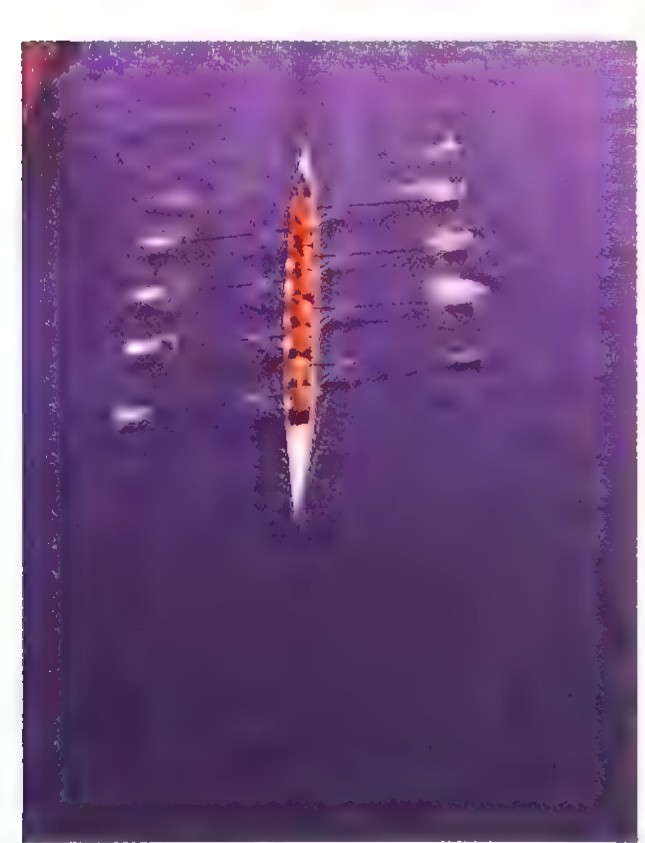
Synchronized Oars. For maximum speed, rowers have to keep their oars synchronized. The oars along each side of the boat are synchronized if they are always parallel.
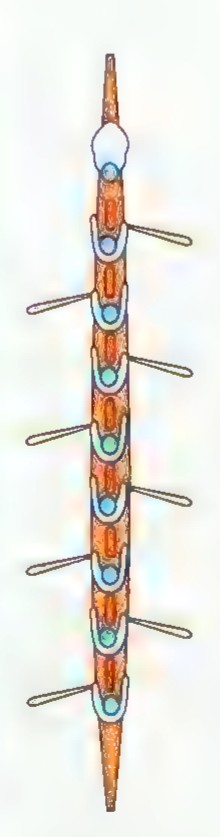
- Name the two angles in the figure below that must be equal if AB ∥ CD.
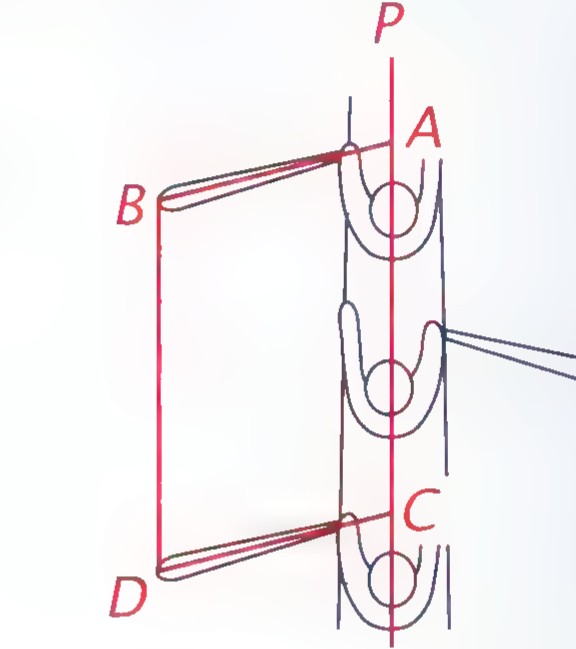
- If AB ∥ CD, why is it reasonable to think that ABDC is a parallelogram?
- Why does it follow that the distance between the tips of the oars, BD, is equal to the distance between the rowers, AC?
What transformation relates the positions of two oars
- on the same side of the boat?
- on opposite sides of the boat?
Synchronization is also important in another water sport.
- What sport is it?
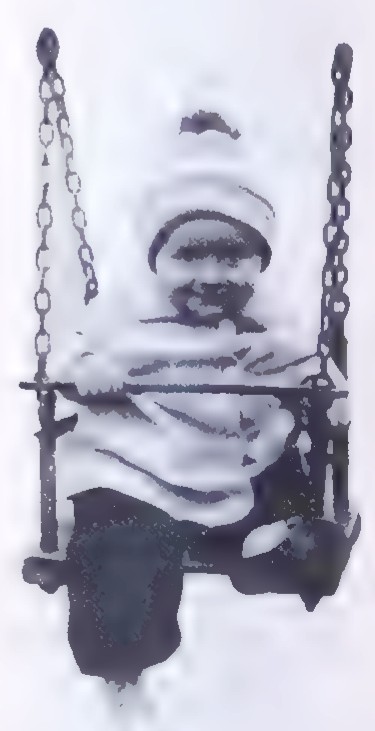
Swing Isometries. Little children like being rotated in a swing.
* Can You Believe Your Eyes? by J. R. Block and Harold E. Yuker (Brunner/Mazel, 1992).
p. 315
The figure below illustrates the composite of two isometries.
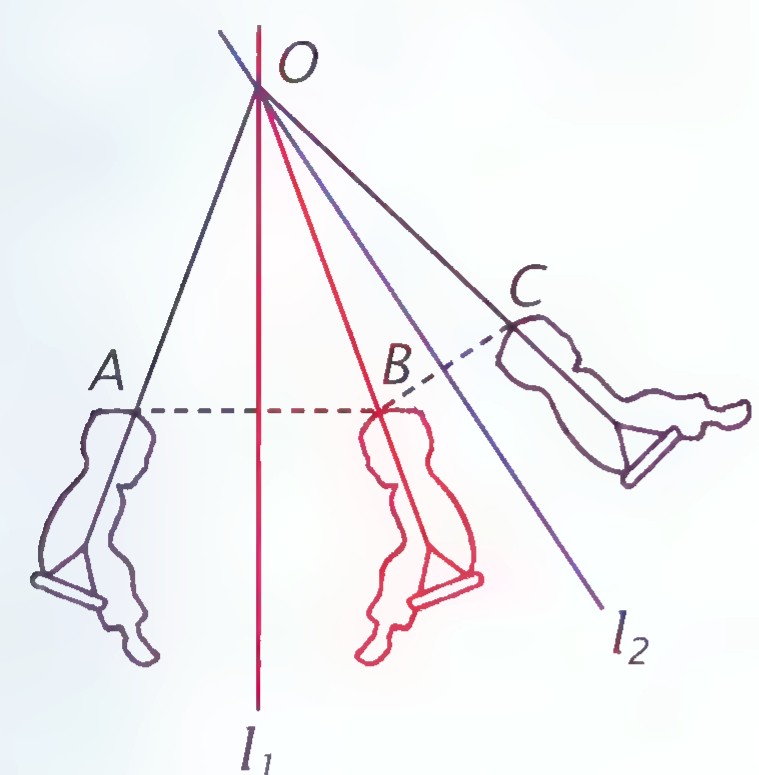
Through what transformation is
B the image of A and C the image of B?
C the image of A?
What is point O called with respect to this transformation?
What is the measure of ∠AOC called?
What relation do l₁ and l₂ have to
∠AOB and ∠BOC?
AB and BC?
How does ∠AOC compare in measure with that of the acute angle formed by l₁ and l₂?
Quadrilateral Reflections. In the figure below, EFGH and EIJK are successive reflection images of ABCD. Lines a and b and line segments AE and FI have been added to the figure to show that ABCD and EIJK are related by a certain isometry.
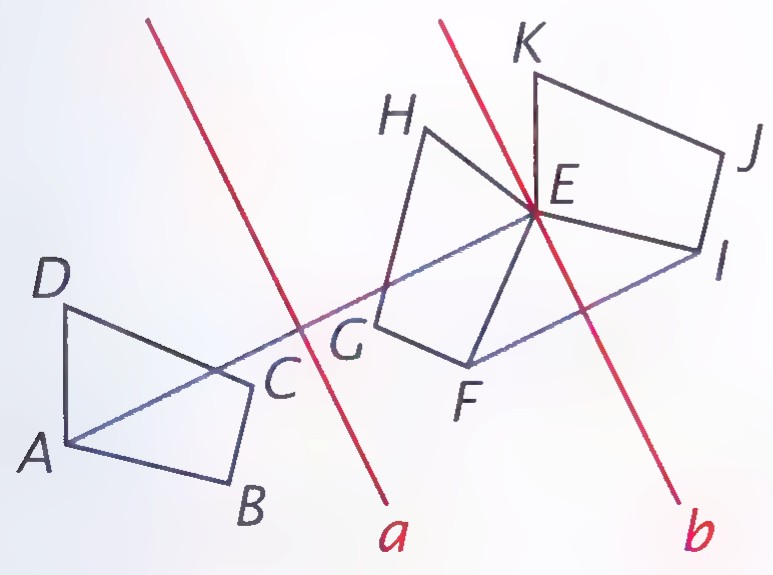
- What postulate permits us to draw AE and FI?
- What relation does line a appear to have to AE and line b to FI?
- What relation do lines a and b appear to have?
- If your observations are true, through what transformation is EIJK the image of ABCD?
- How would this transformation show that ABCD ≅ EIJK?
Set II
Moving a Piano. A heavy piano is to be moved from one wall of a room to another. To do so, the piano is turned on its casters, which are at its corners.*
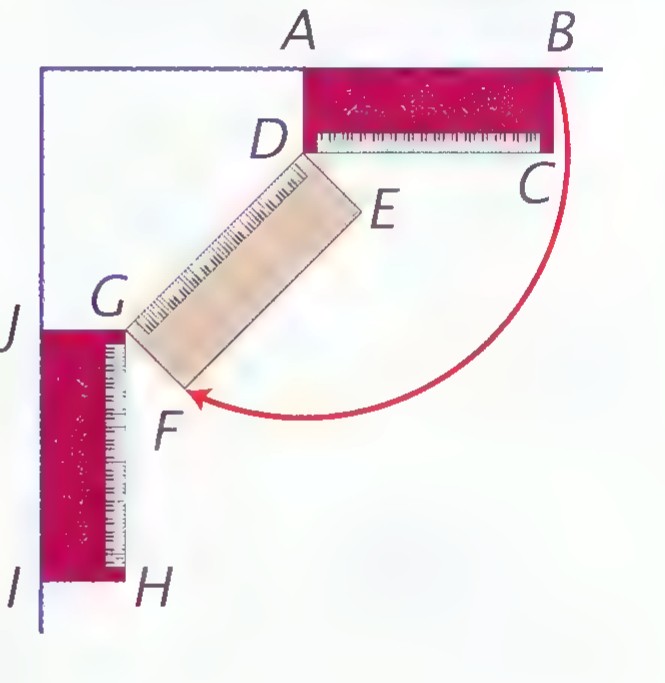
- What type of transformation is illustrated?
- What point is its center?
What point on DEFG is the image of
point A?
point C?
point D?
What transformation is needed to finish moving the piano? Describe it.
Through how many degrees do you think the piano is turned altogether?
* Adapted from a problem in The School Mathematics Project, Book 4 (Cambridge University Press, 1969).
p. 316
Bulldogs. All of the bulldogs in this mosaic by Escher are congruent.
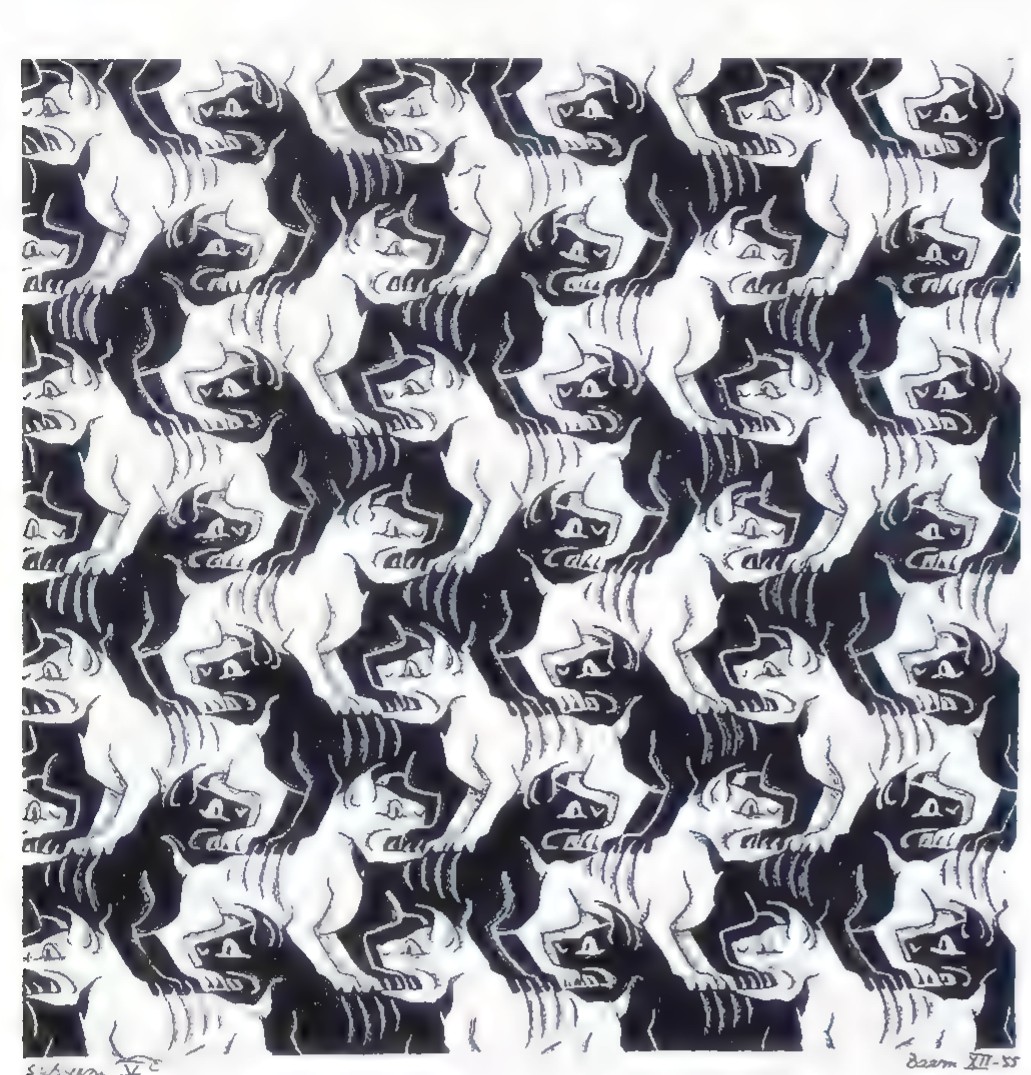
- What does it mean in relation to isometry to say that two figures are congruent?
- Through what transformation is one of the bulldogs in the figure below the image of the other?
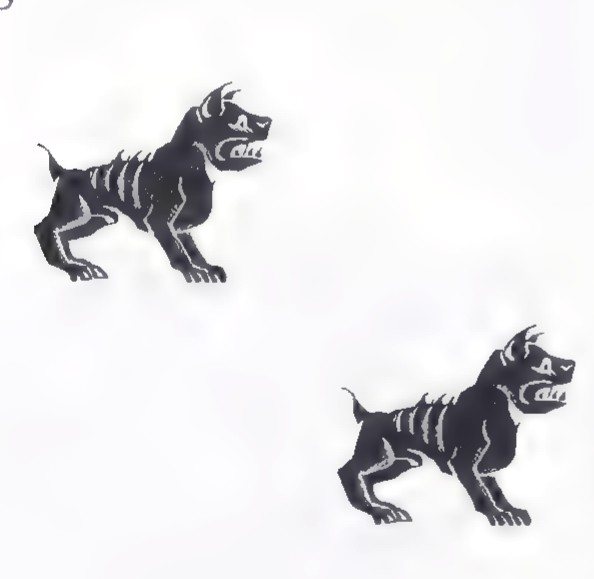
Is it possible that one of these bulldogs could be the image of the other
- by a single reflection? Explain.
- by the composite of two reflections? Explain.
- by the composite of three reflections? Explain.
- Through what transformation is one of the bulldogs in the figure at the top of the next column the image of the other?
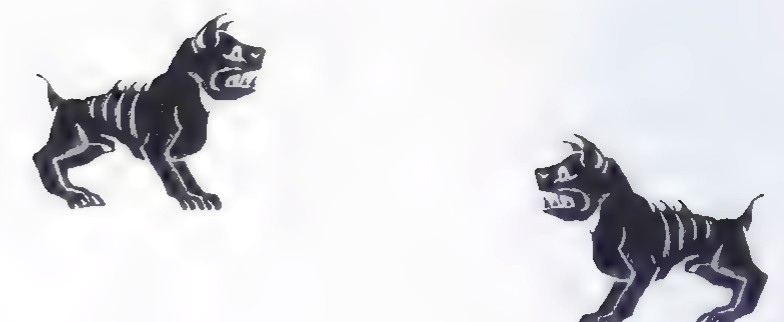
- Of what two transformations is this transformation a composite?
- Of what three transformations is it a composite?
Grid Problem. On graph paper, draw a pair of axes extending 20 units to the right and 15 units up from the origin.
- Plot the following points and connect them with line segments to form △ABC: A(5, 4), B(8, 3), C(3, 0).
- (continued) Plot point A′(11, 10) and draw AA′. Draw △A′B′C′ so that it is the translation image of △ABC.
- What are the coordinates of points B′ and C′?
- Find the magnitude of the translation.
- (continued) Draw the line determined by the points (7, 0) and (20, 13) and label it l.
- What relation does AA′ appear to have to line l?
- (continued) Draw △A″B″C″ so that it is the reflection image of △A′B′C′ through line l.
- If your observation in exercise 44 is true, through what transformation is △A″B″C″ the image of △ABC? Explain.
- (continued) Draw AA″, BB″, and CC″ and use the grid to help in finding their midpoints. Label them M, N, and P, respectively.
- What are the coordinates of M, N, and P?
- Exactly how is the y-coordinate of each of these three points related to the x-coordinate?
- What is interesting about the three points?
p. 317
Set III
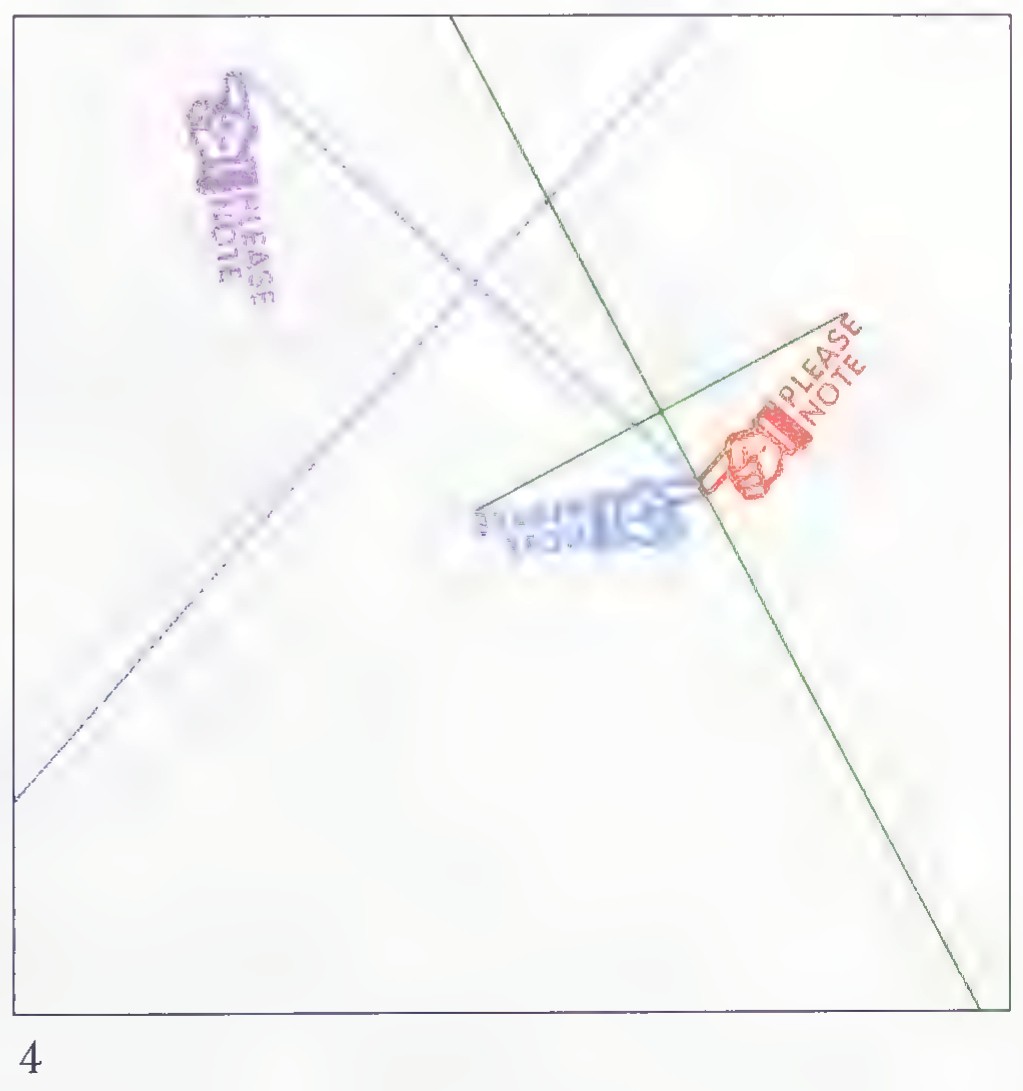
Stamp Tricks. Obtuse Ollie found a rubber stamp and stamped it twice on a sheet of tracing paper as shown in figure 1 below.

Acute Alice folded the paper to reflect one of the figures twice, getting the result shown in figure 2 below.
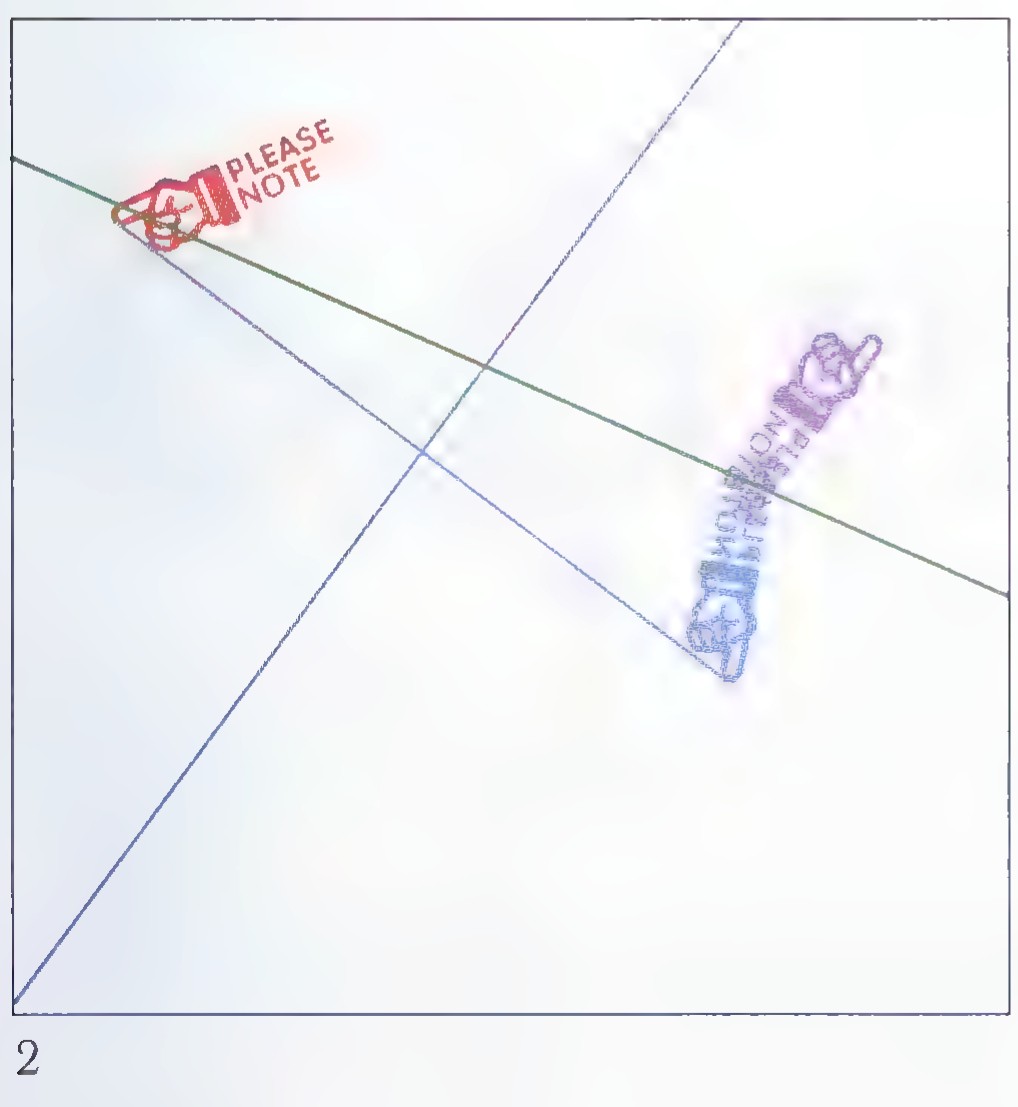
Surprised, Ollie stamped another sheet of tracing paper twice as shown in figure 3 below.
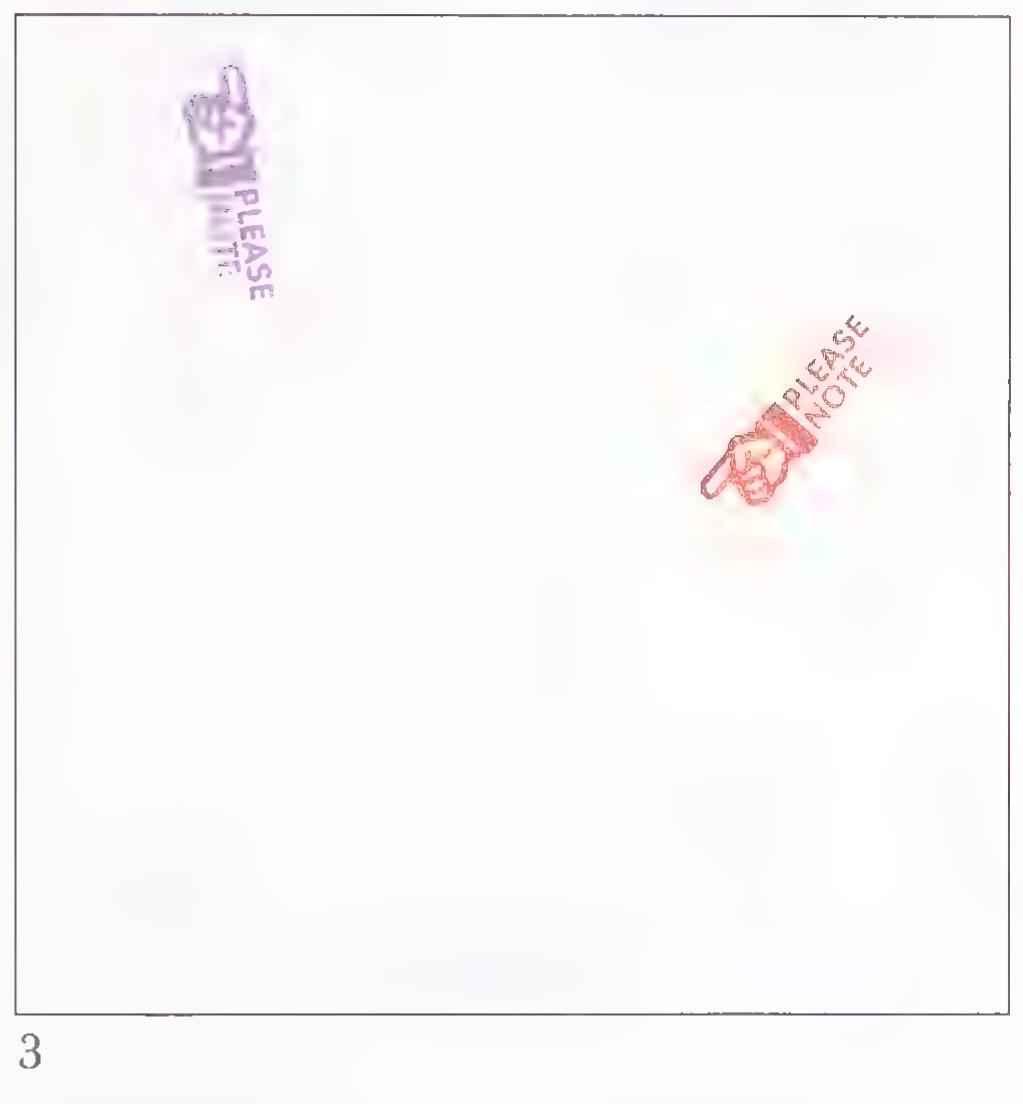
Again, Alice managed to fold the paper just twice, getting the result shown in figure 4 below.
p. 318
Ollie couldn’t believe it. He decided to try to trick Alice and stamped a third sheet of tracing paper as shown below.
This time, Alice had to fold the paper more than two times to get the images to coincide.
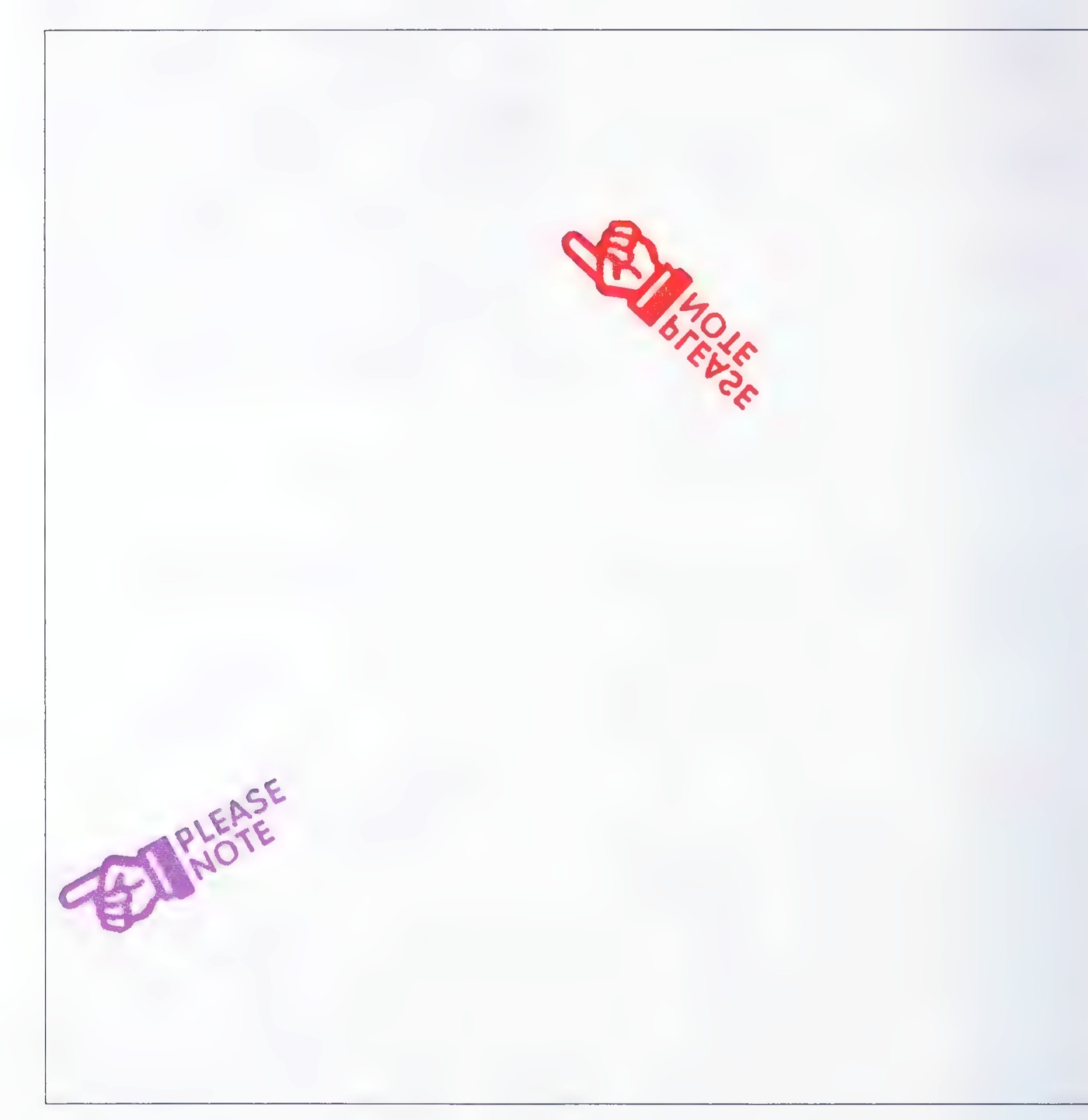
- How did Ollie try to trick Alice?
- How did his “trick” prevent Alice from being able to get the images to coincide with just two folds?
- Trace the two figures on a sheet of tracing paper. Can you get them to coincide with three folds?
p. 319
Lesson 4: Transformations and Symmetry
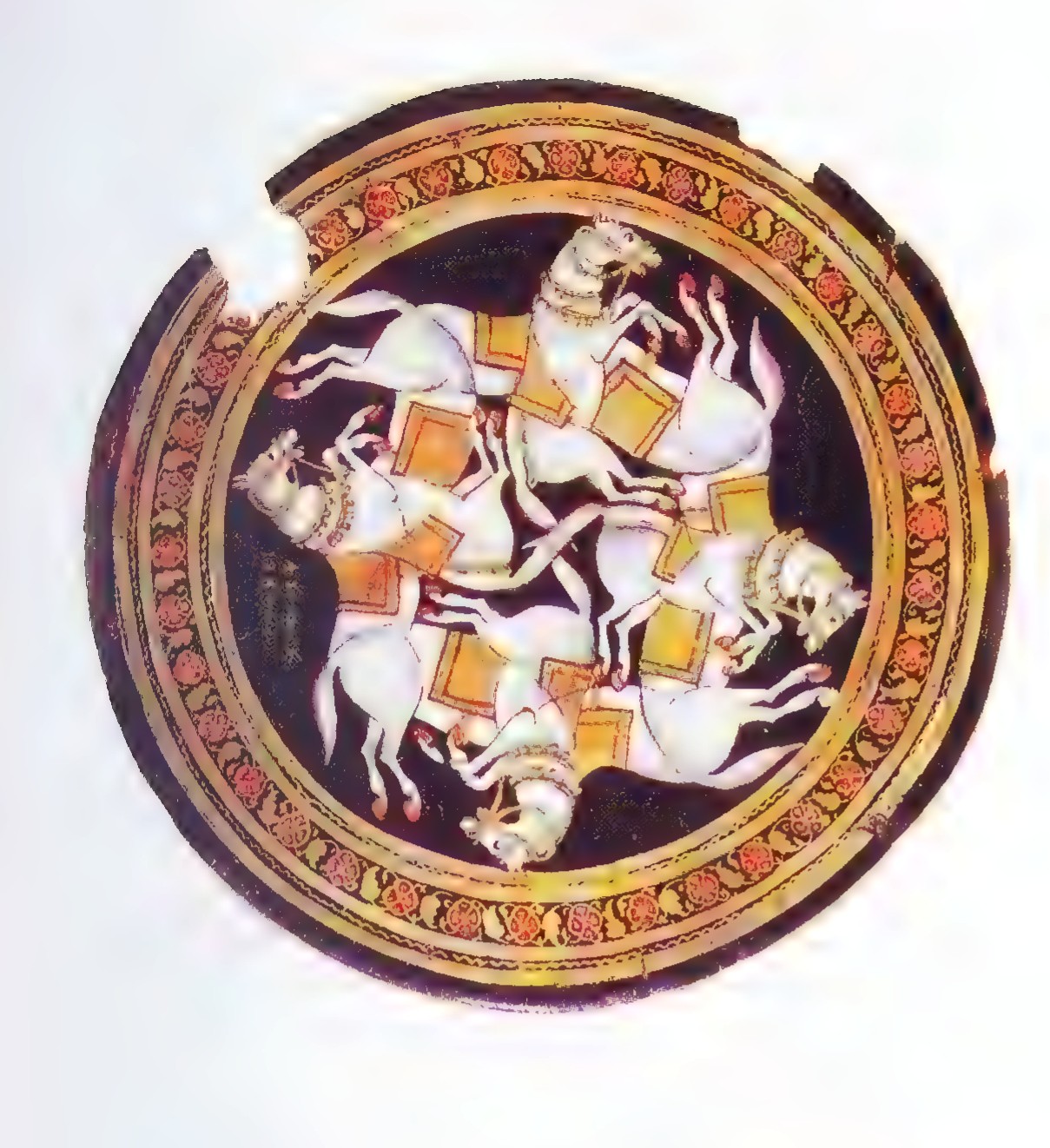
How many horses are pictured on the plate shown above? Counting the heads gives a different number from that obtained by counting the bodies.
The creator of the plate, who lived in Persia in the seventeenth century, made use of symmetry in its design. Each time the plate is rotated 90°, as the figures below show, it looks almost the same.
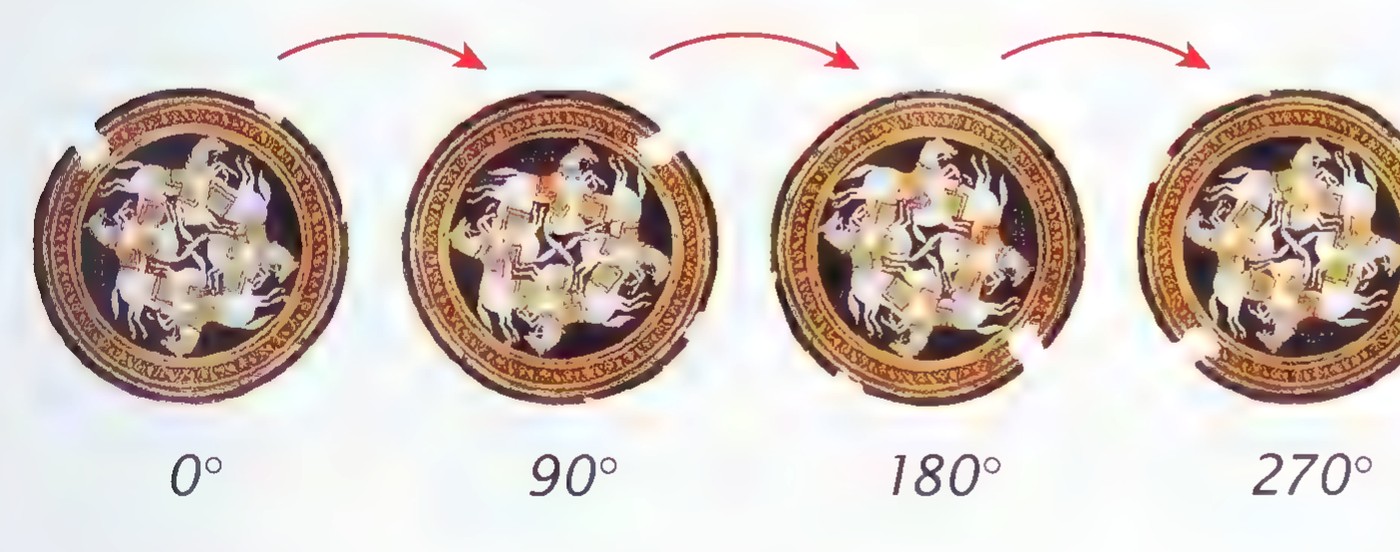
A figure that looks exactly the same after being rotated less than one full turn about its center is said to have rotation symmetry.
Definition
A figure has rotation symmetry with respect to a point iff it coincides with its rotation image through less than 360° about the point.
p. 320
The point, which is the center of the rotation, is called the center of the symmetry.
The Persian plate can be rotated so that it looks the same in four positions. For this reason, it has 4-fold rotation symmetry. Each position corresponds to a turn of 90°: . In general, a figure has -fold rotation symmetry iff the smallest angle through which it can be turned to look exactly the same is .
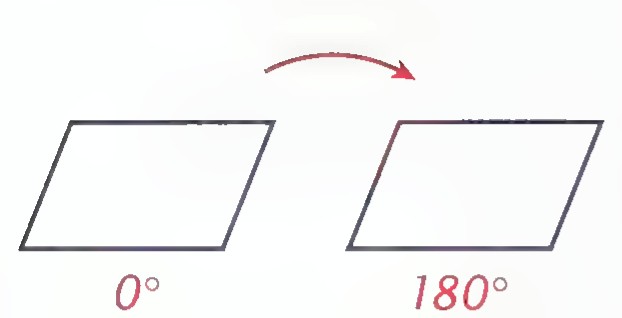
Recall that a figure that has point symmetry looks exactly the same when it is turned upside down. A parallelogram has point symmetry. The figure at the left shows that it also has 2-fold rotation symmetry. So point symmetry is symmetry by a rotation of 180°.
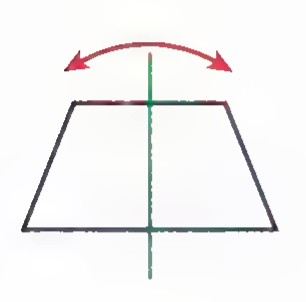
Just as rotation symmetry and hence point symmetry are related to the rotation transformation, line symmetry is related to the reflection transformation. For this reason, line symmetry is also called reflection symmetry.
An isosceles trapezoid has reflection symmetry. If the trapezoid is folded along the line shown in the figure at the left, the two halves coincide. Or, if a two-sided mirror is placed on the line, each half of the trapezoid is reflected onto the other half.
We can define reflection (line) symmetry in relation to the reflection transformation.
Definition
A figure has reflection (line) symmetry with respect to a line iff it coincides with its reflection image through the line.
The line is sometimes called the axis of the symmetry.
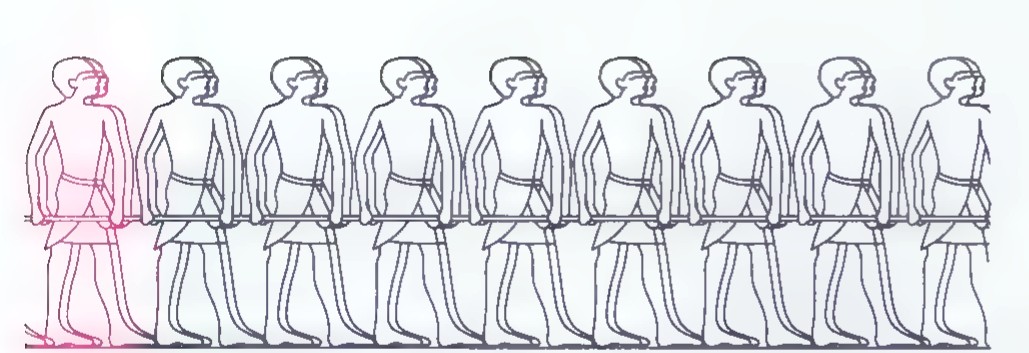
The translation transformation also is related to symmetry. The figure at the left from ancient Egypt is an example. The part of the drawing shown in red does not have any symmetry of its own but, like the repeating pattern of the horses around the plate, the repeating pattern of the people illustrates a type of symmetry. Rather than repeating around a circle, this pattern repeats along a line. The part of the drawing shown in red is translated a certain distance in the same direction again and again. The resulting pattern has translation symmetry. In defining this type of symmetry, we think of the pattern as continuing in both directions endlessly.
Definition
A pattern has translation symmetry iff it coincides with a translation image.
Because rotations, reflections, and translations are isometries, we know that corresponding distances and angles in symmetric figures are equal.
p. 321
Exercises
Set I
Ambigrams. The figures below are examples of “ambigrams,” words that can be read in more than one way.*
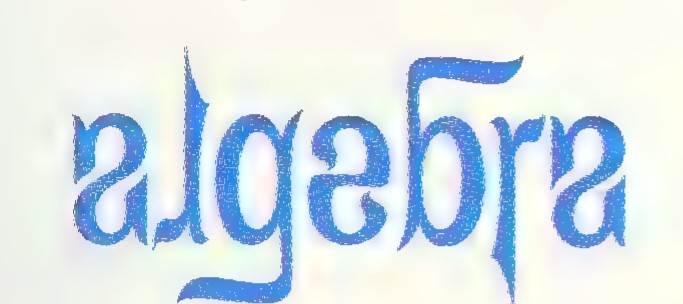
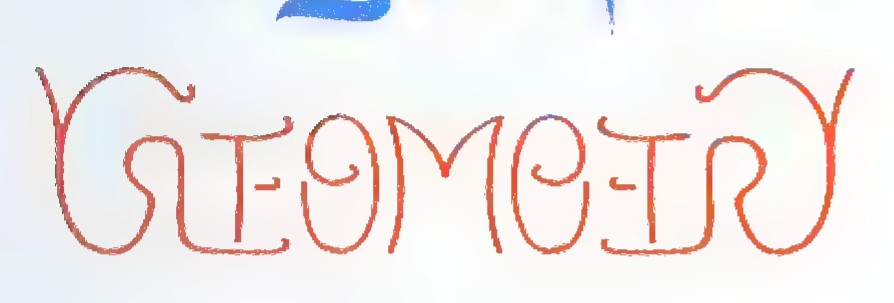
- What type of symmetry does the first figure have?
- What is a simple test for this type of symmetry?
- What type of symmetry does the second figure have?
- What is a simple test for this type of symmetry?
Sport Symmetry. The fields and courts on which most sports are played are symmetric.
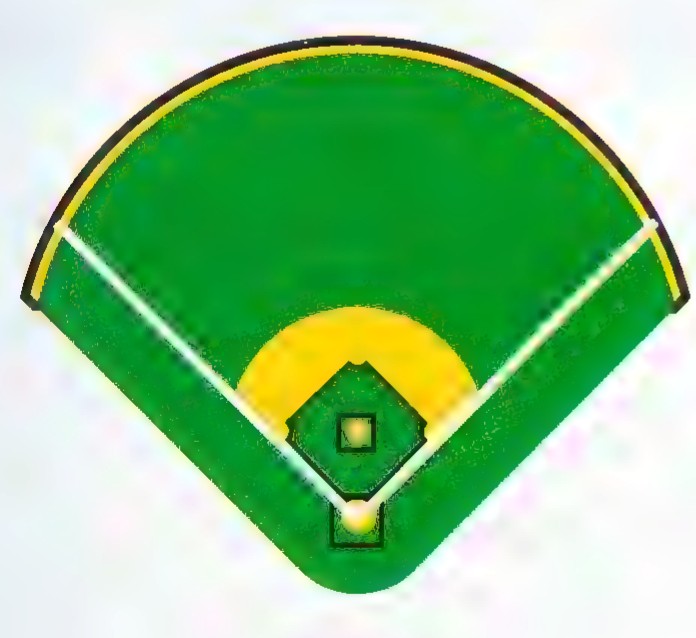
- What sport is played on the field above?
- Describe its symmetry.
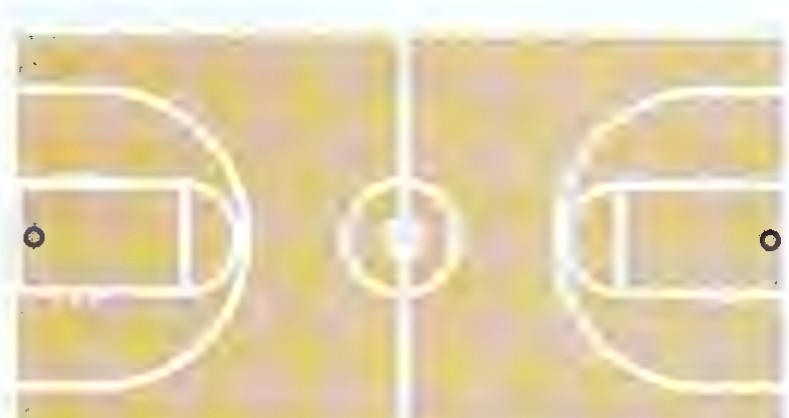
- What sport is played on the court above?
- Describe its symmetry.
- What type of symmetry do you think most sport fields and courts have?
- Why do you think they have it?
Mount Vernon. George Washington’s home, Mount Vernon, has a fake window. It is the second upstairs window from the left.

- Why do you suppose Washington had this window painted on the outside wall?
Symmetries of Basic Figures. Some geometric figures are so simple that we tend to ignore their symmetry.
A point has rotation symmetry.
- Where is its center of symmetry?
- Does a point have line symmetry? If so, where is the line?
* “Algebra” is from Wordplay, by John Langdon (Harcourt Brace Jovanovich, 1992).
p. 322
Euclid defined a “straight line” as “a line that lies symmetrically with the points on itself.”
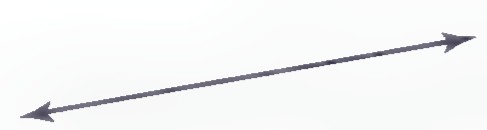
- A line has rotation symmetry. Explain.
- What points can serve as its center of symmetry?
- A line has reflection symmetry. Explain.
- How many lines of symmetry does a line have? Where are they?
- Does a line have translation symmetry? Explain.
We defined “vertical angles” with reference to opposite rays.
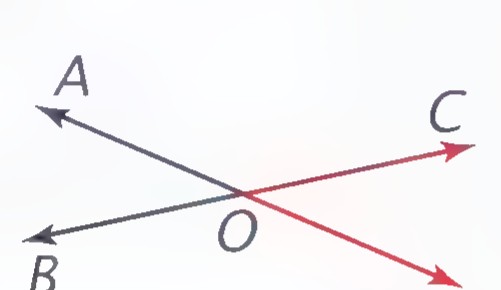
- Explain what this definition says about ∠COD and ∠BOA, given that they are vertical angles.
- ∠COD can be thought of as a rotation image of ∠BOA. Explain.
- What theorem about vertical angles is suggested by the fact that rotations are isometries?
△ABC is an isosceles triangle with AB = AC.
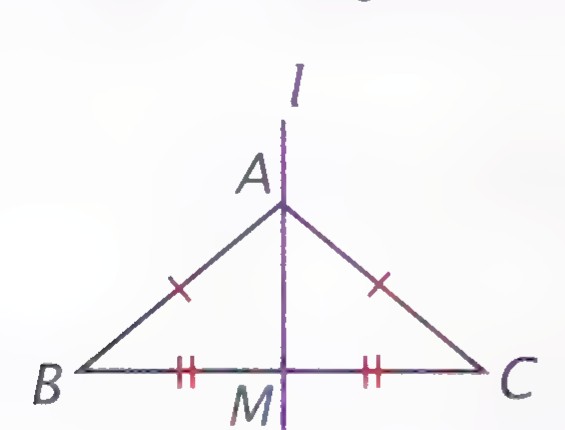
If a mirror line l is drawn through A and M, the midpoint of BC, l ⊥ BC. Why?
What are the images of A and B reflected through l?
What theorem about isosceles triangles is suggested by the fact that reflections are isometries?
ABCD is a parallelogram with diagonals AC and BD.
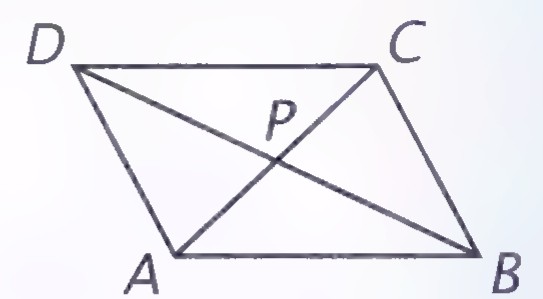
- What must be true about AC and BD?
- If ABCD is rotated 180° about point P as center, what is the image of AB?
- What theorem about the sides of a parallelogram is suggested by the fact that rotations are isometries?
- Does BD appear to be a rotation image of AC? Explain.
Set II
Piano Keyboard. Imagine that the keyboard of a piano extends endlessly in both directions.
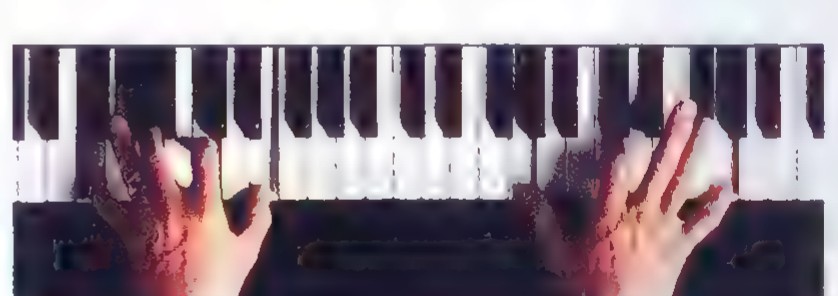
- Draw a picture of the part of the keyboard that repeats.
- What type of symmetry does the “endless” keyboard have because of this repeating pattern?
- (continued) Draw the lines on your figure through which the “endless” keyboard could be reflected so that it coincides with itself.
- Is there any point about which the “endless” keyboard can be rotated less than 360° so that it coincides with itself? If so, where is it?
p. 323
Water Wheel. The design of an old type of water wheel is shown here.*
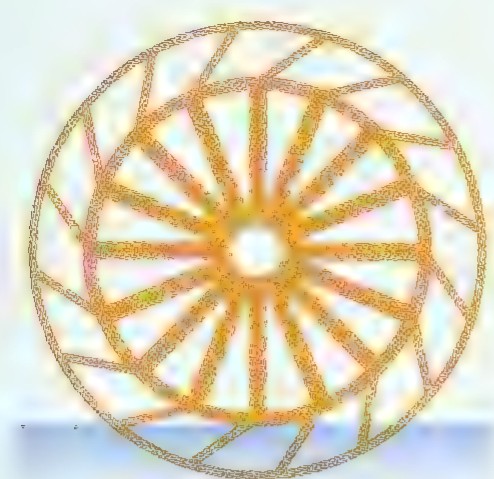
- What types of symmetry does it have?
- What is the measure of the smallest angle through which it can be turned to look exactly the same?
Would the wheel look exactly the same if it were turned
125°?
225°?
To say that the wheel has “n-fold” symmetry, what number should n be?
Does it have reflection symmetry?
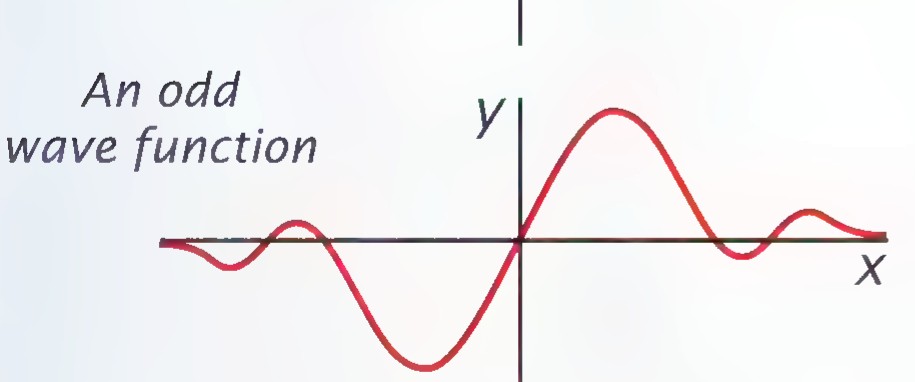
Wave Functions. Elementary particles such as electrons and photons are associated with “wave functions.” The two figures below are graphs of wave functions.†
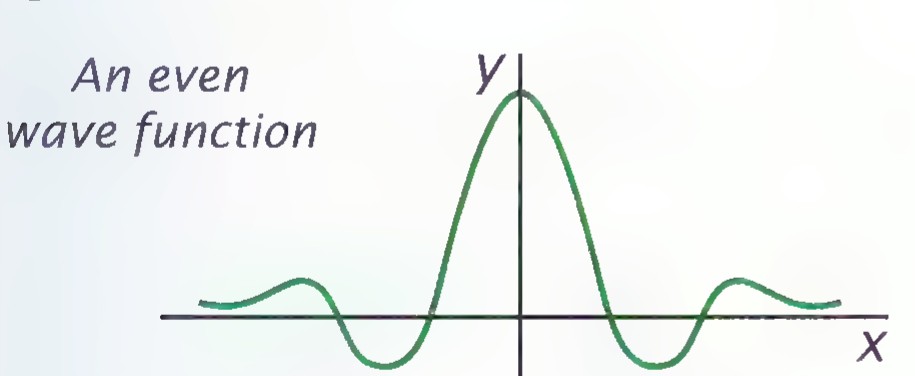
- What is the axis of symmetry of the graph of the even function?
- What type of symmetry does the graph of an even function have?
- What is the center of symmetry of the graph of the odd function?
- What type of symmetry does the graph of an odd function have?
What type of function—even, odd, or neither—is described by each of these statements?
- If the point (a, b) is on its graph, then so is the point (−a, b).
- If the point (a, b) is on its graph, then so is the point (a, −b).
- If the point (a, b) is on its graph, then so is the point (−a, −b).
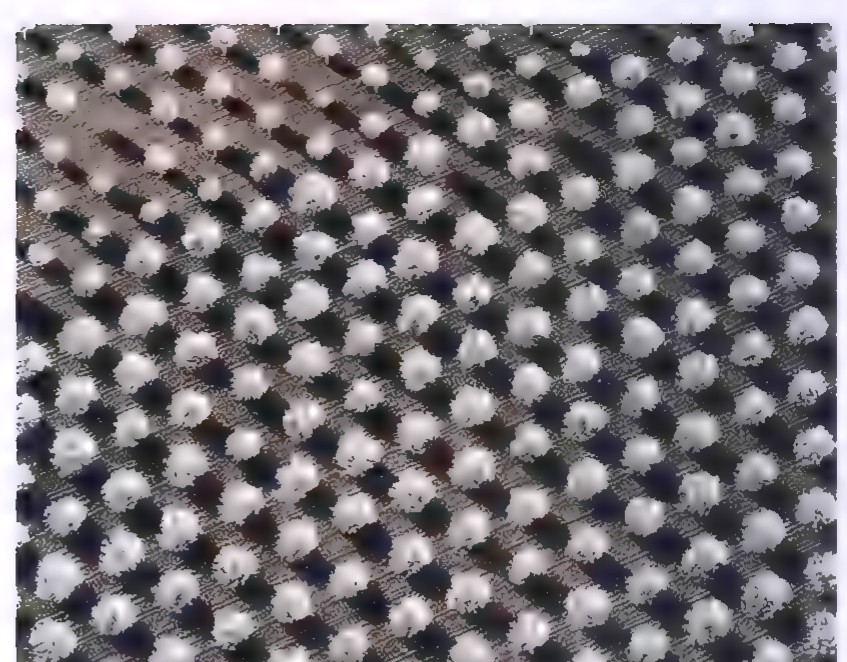
Cherry Orchard. Imagine that this orchard of cherry trees extends endlessly without any boundaries.‡
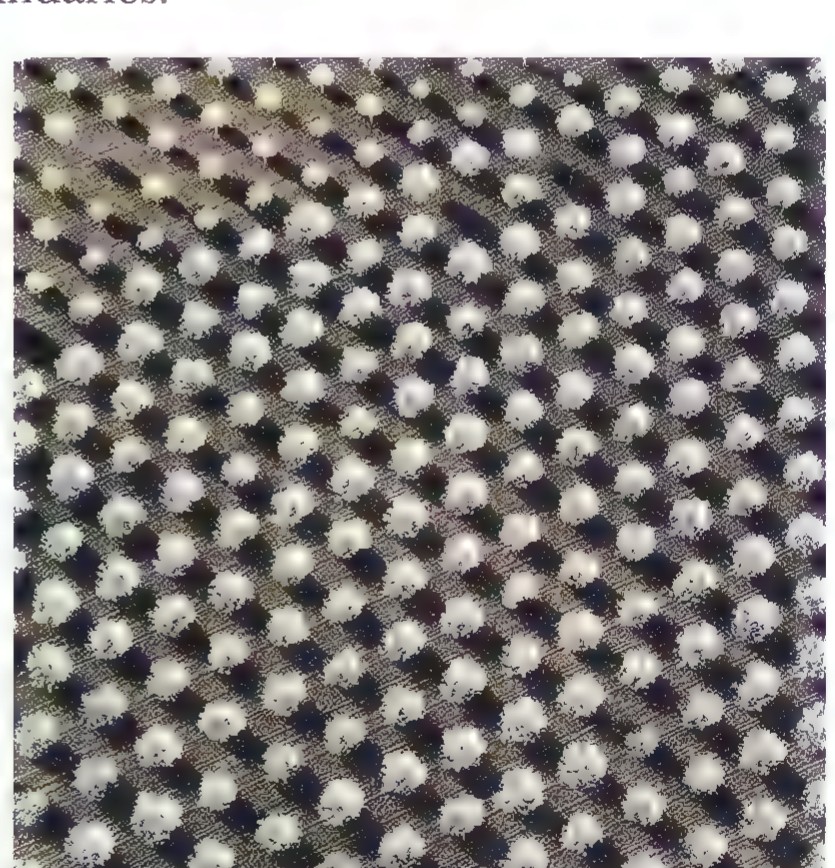
- Why does the “infinite” orchard have translation symmetry?
- What is the shortest distance related to the trees that the orchard can be translated and coincide with itself?
* Cats’ Paws and Catapults: Mechanical Worlds of Nature and People, by Steven Vogel (Norton, 1998).
† Reality’s Mirror: Exploring the Mathematics of Symmetry, by Bryan Bunch (Wiley, 1989).
‡ Below from Above, by Georg Gerster (Abbeville Press, 1986).
p. 324
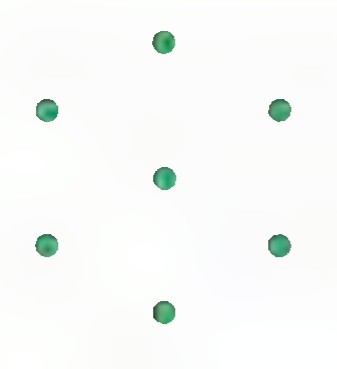
Copy the figure above illustrating one tree and its six closest neighbors. Draw all of its lines of symmetry.
Why does the orchard have reflection symmetry?
Why does the orchard have rotation symmetry?
What points could serve as centers of symmetry?
What is the smallest angle through which the orchard can be turned to coincide with itself?
Set III
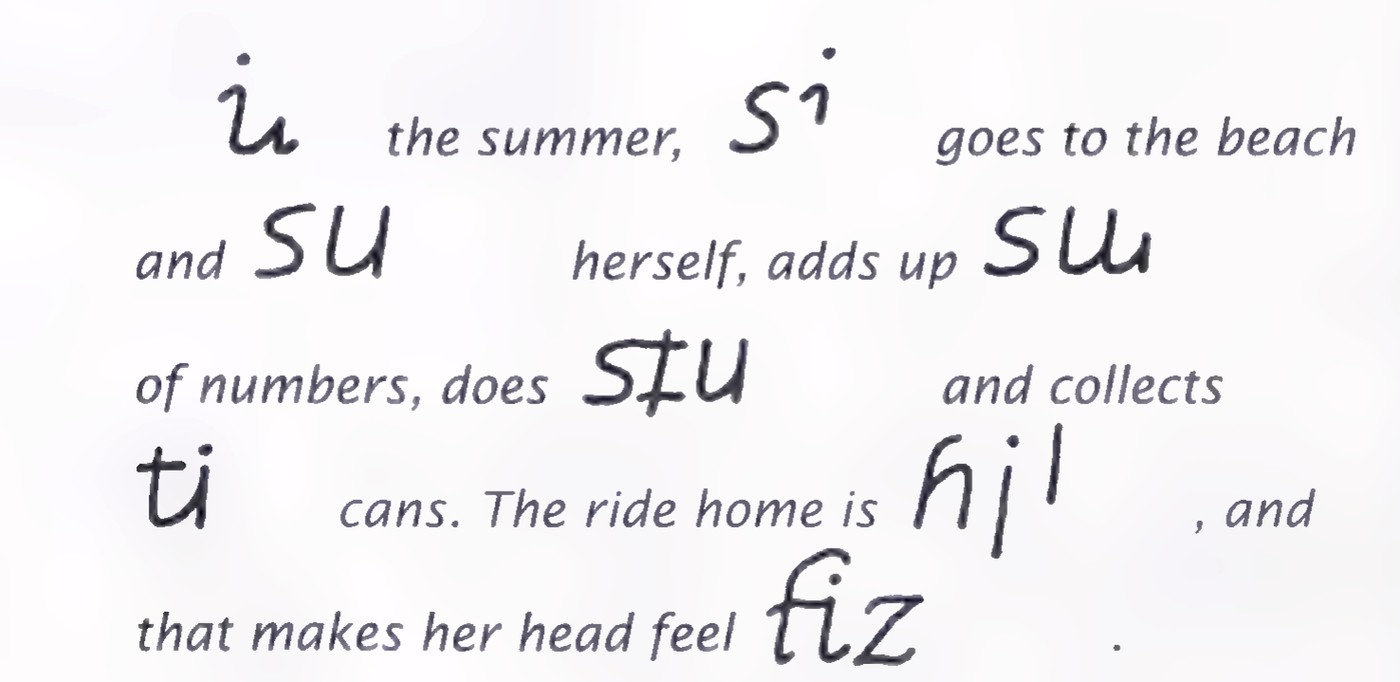
Short Story. In the following very short story by Scott Kim, some of the words have missing parts. In each case, the missing part is congruent to the part shown but rotated 180°. For example,

- Copy the story and fill in the missing parts.
Scott Kim also created this figure.
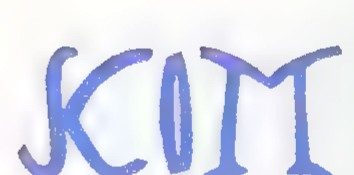
- What is unusual about it?
p. 325
Summary and Review
Basic Ideas
| Basic Ideas | Page |
|---|---|
| Congruent figures | 312 |
| Dilation | 300 |
| Glide reflection | 313 |
| Isometry | 300 |
| Magnitude of rotation | 307 |
| Magnitude of translation | 307 |
| Mirror image | 313 |
| Reflection | 298–299, 305 |
| Reflection (line) symmetry | 320 |
| Rotation | 298–299, 307 |
| Rotation symmetry | 319 |
| Transformation | 298–299 |
| Translation | 298–299, 307 |
| Translation symmetry | 320 |
Summary of Key Ideas
Every isometry of the plane can be identified as a single reflection (a mirror image), as two reflections (a translation or rotation), or as three reflections (a glide reflection).
An isometry of the plane that changes a figure into its mirror image is either a reflection or a glide reflection. An isometry that does not change a figure into its mirror image is either a translation or a rotation.
Construction
- To reflect a point through a line. 306
Exercises
Set I
Amazing Vase. This vase was created for Queen Elizabeth’s Silver Jubilee in 1977.
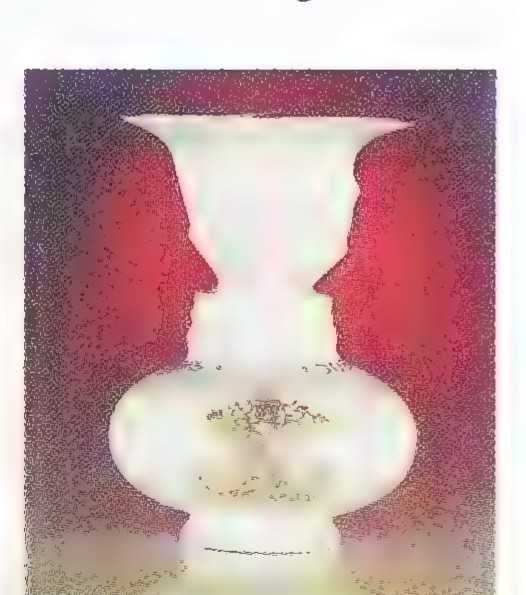
- Does this photograph appear to have reflection symmetry? Explain.
- What is unusual about the vase?
Double Meanings. To an electrician, a transformer is a device used to transfer electric energy from one circuit to another.
- What does the word transformation mean in geometry?
To an athlete, the word isometric refers to an exercise in which a muscle is tensed without changing its length.
- What does the word isometry mean in geometry?
To an eye doctor, the word dilation refers to enlarging the pupil of the eye.
- What does the word dilation mean in geometry?
- Is a dilation an isometry?
p. 326
Monkey Rug. This tapestry was woven in Peru sometime between 1000 and 1500 A.D.
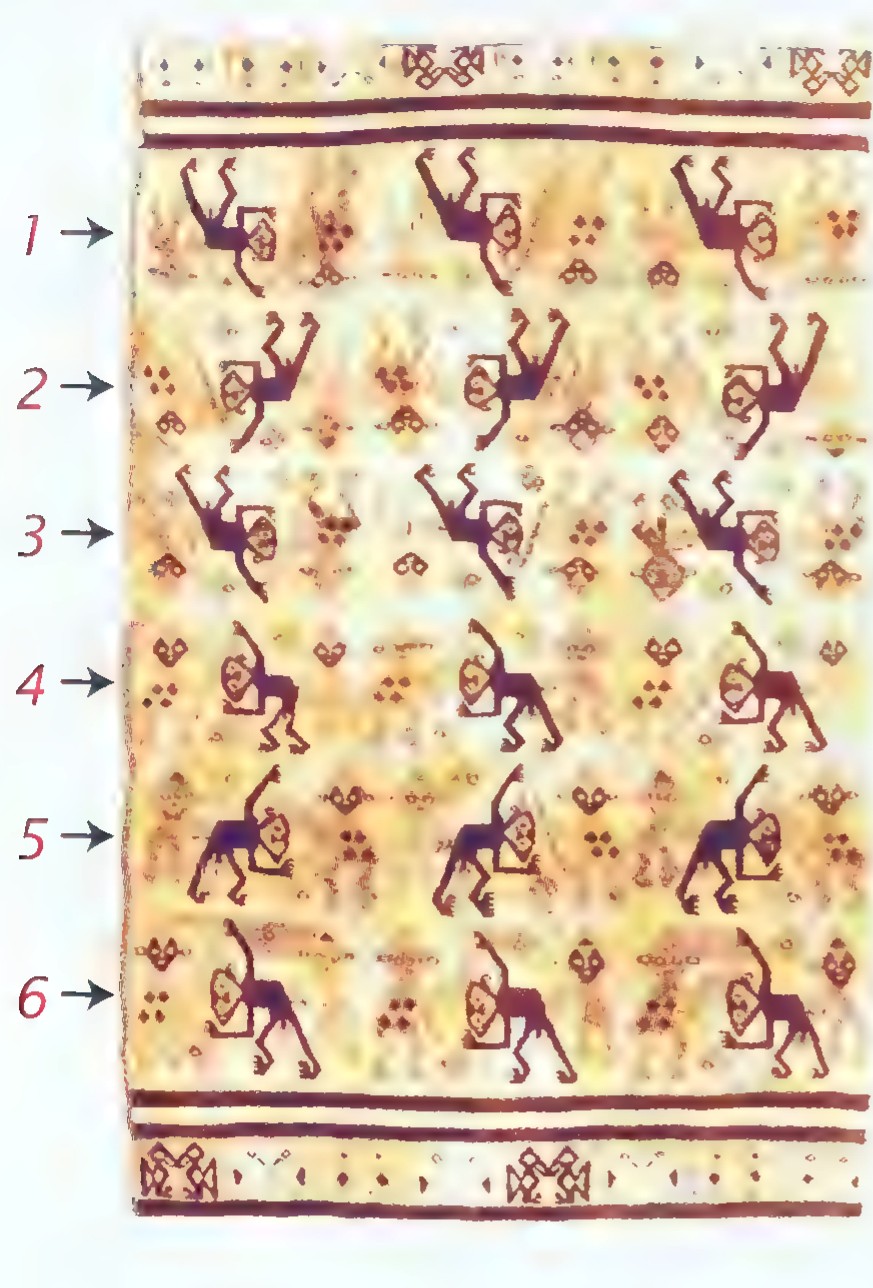
The following questions refer to the rows (numbered in red) of dark brown monkeys. Name the transformation through which the
- third row appears to be the image of the first row.
- second row appears to be the image of the first row.
- fourth row appears to be the image of the third row.
- sixth row appears to be the image of the second row.
Clover Leaves. An ordinary clover leaf has 3-fold rotation symmetry.
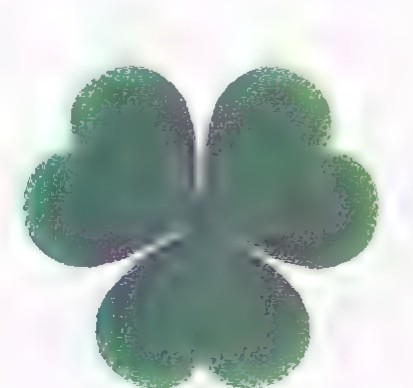
- What does “3-fold” mean?
- What is the smallest angle through which the leaf can be turned to look the same?
- Does an ordinary clover leaf have point symmetry? Explain.
- Sketch the leaf and draw its lines of symmetry.
- Sketch a clover leaf with four “leaves” and draw its lines of symmetry.
- What is the smallest angle through which it can be turned to look the same?
- Does this kind of clover leaf have point symmetry?
- What kind of luck is associated with the clover leaf that you drew in exercise 15?
Musical Transformations. The first measure of a piece of music by Bach is shown here.*
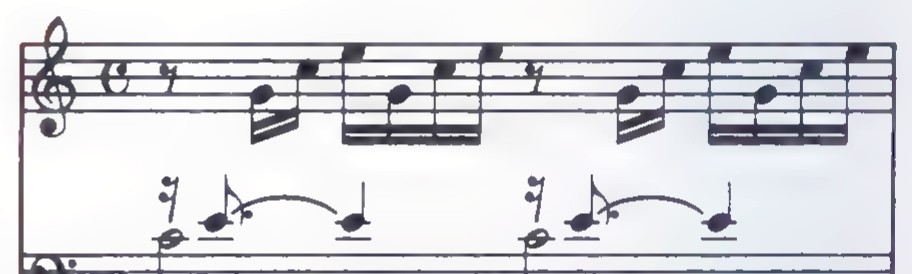
- What transformation appears in it?
Another composer, Arnold Schoenberg, wrote about taking a sequence of musical notes and transforming it in different ways.†
What geometric transformation corresponds to each of the following musical transformations?
- Retrogression (playing a sequence of notes backward).
- Transposition (moving a sequence of notes up or down).
- Inversion (turning a sequence of notes upside down).
* First Prelude (BWV 846) from The Well-Tempered Clavier, Vol. 1.
† Emblems of Mind: The Inner Life of Music and Mathematics, by Edward Rothstein (Times Books, 1995).
p. 327
Fish Design. This is one of Escher’s mosaics based on fish.
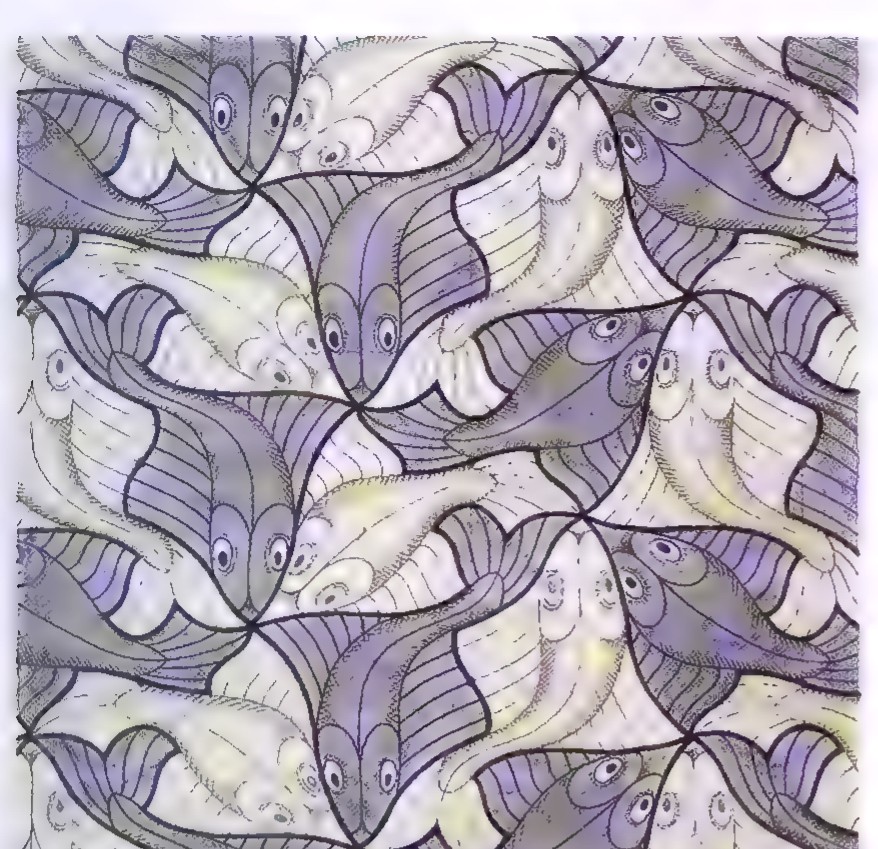
- Do all of the fish in the figure appear to be congruent? Explain.
- Define congruence with respect to isometry.
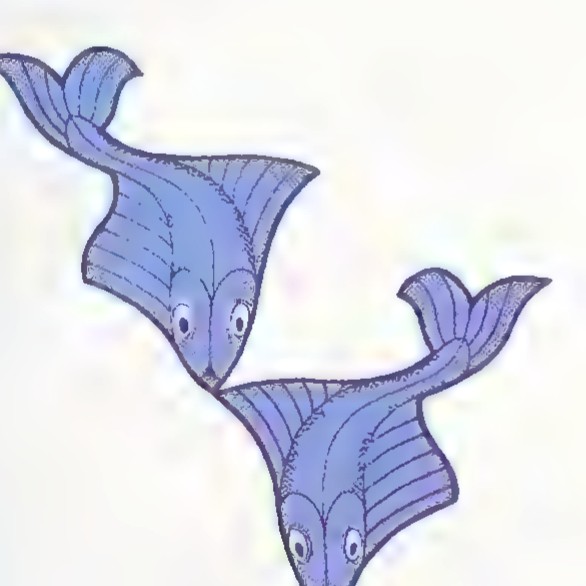
Through what transformation is one of the fish in this part of the mosaic the image of the other?
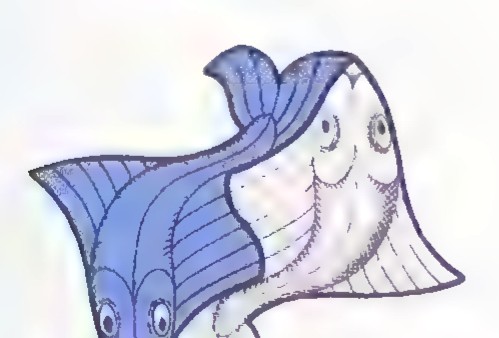
Through what transformation is one of the fish in this part of the mosaic the image of the other?
- Do any other types of transformation appear in Escher’s mosaic? If so, draw a figure to illustrate an example.
Set II
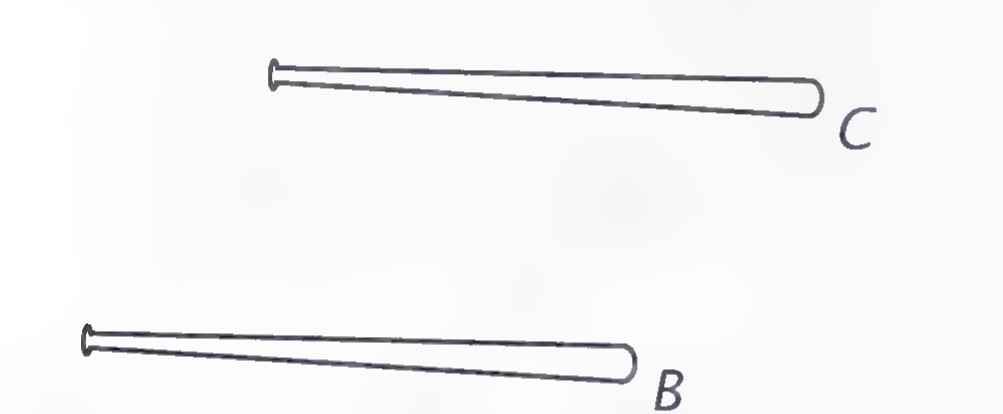
Batter’s Swing. The swing of a baseball bat includes two types of motion.*
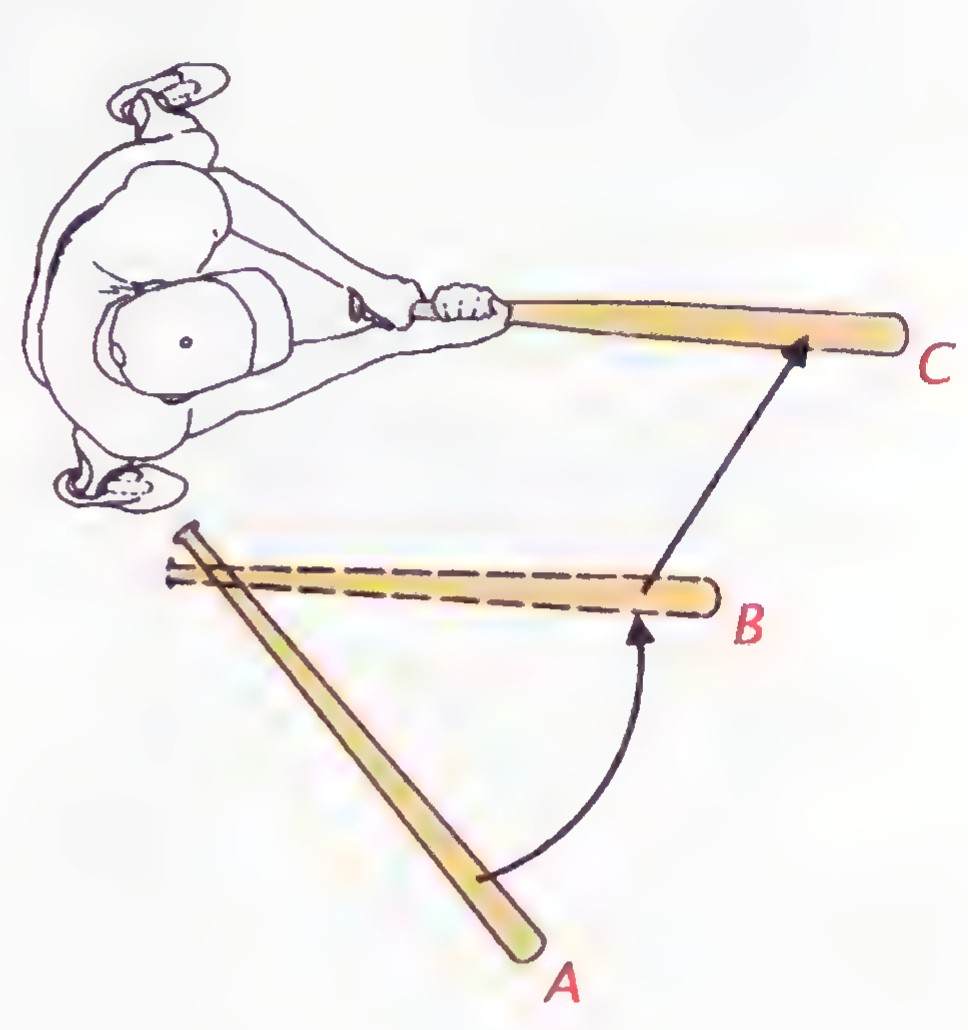
In the figure above, under what transformation is the bat
- at B the image of the bat at A?
- at C the image of the bat at B?
Each of these transformations can be considered the composite of two reflections.
- What is the difference in the way that the lines of reflection are related?
- Use your protractor to estimate the magnitude of the rotation.
- Given that the length of the bat is 42 inches, use the figure to estimate the magnitude of the translation. (Hint: Measure everything in millimeters.)
* Keep Your Eye on the Ball: The Science and Folklore of Baseball, by Robert G. Watts and A. Terry Bahill (W. H. Freeman and Company, 1990).
p. 328
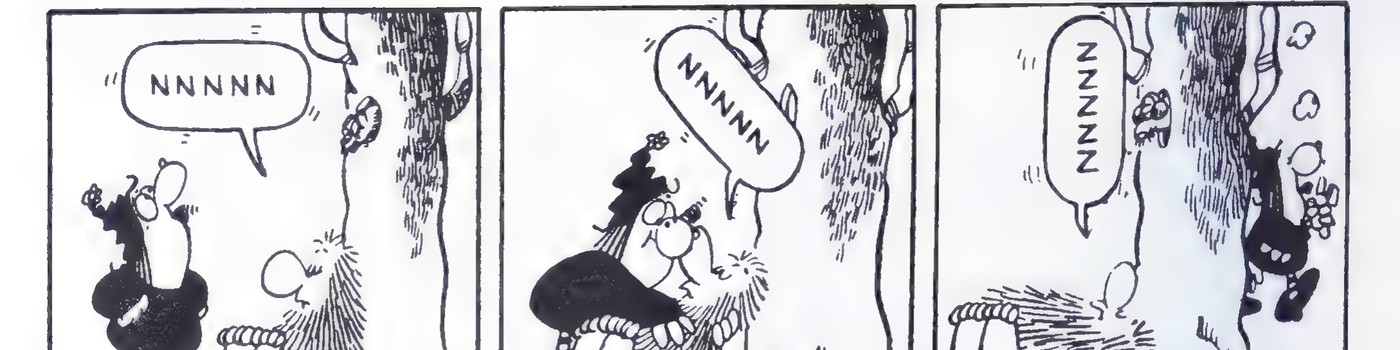
Reprinted by permission of The Chicago Tribune.
- Trace the figure below of the bats in positions B and C and show, by an accurate drawing, one way in which the transformation can be obtained geometrically as the composite of two reflections.
Construction Problem. △ABC has no special symmetry.
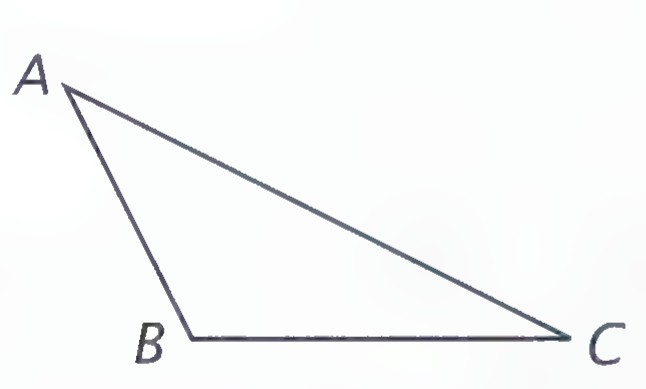
- Draw a large copy of it on your paper. Use your straightedge and compass to construct the reflection of point B through line AC. Label its image D. Draw AD and CD.
- (continued) Construct the reflection of point A through line DC. Label its image E. Draw DE and CE.
- What are the images of AB and BC through line AC?
- Why is △ABC ≅ △ADC?
- Describe the symmetry of quadrilateral ABCD.
- For what type of transformation is △EDC the image of △ABC?
From N to Z. Make an accurate copy of the following figure.
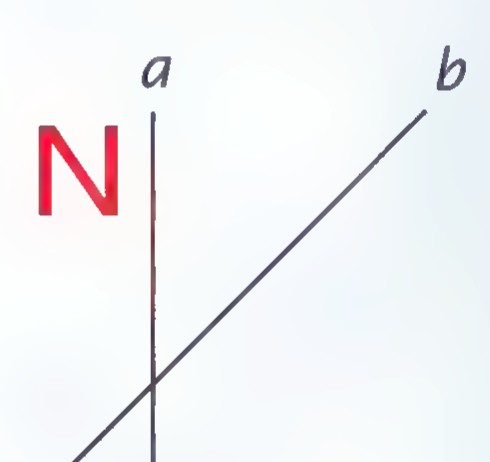
- Sketch the reflection of the letter N through line a, and then sketch the reflection of the image that results through line b.
- What transformation is the composite of these two reflections?
- What does the measure of the acute angle formed by lines a and b appear to be?
- What does the magnitude of the composite transformation appear to be?
- Is there any other letter of the alphabet whose final image from reflections through these two lines is another letter of the alphabet? Explain.
p. 329
Past and Future. The following figures are by graphic designer John Langdon.*


Think of each pattern in the figures as repeating endlessly in both directions.
- Draw a picture of the part of each pattern that repeats.
- What type of symmetry does each figure have owing to this repeating pattern?
- (continued) Draw the lines on your figures through which the “endless” patterns could be reflected so that each coincides with itself.
- Why have no vertical bars been drawn on the Es?
- Does either pattern have rotation symmetry?
- Which letters in the patterns have been drawn so that they have reflection symmetry?
- Have any letters been drawn so that they have rotation symmetry? If so, which one(s)?
Dice Symmetries. The six faces of a die do not all have the same symmetry.
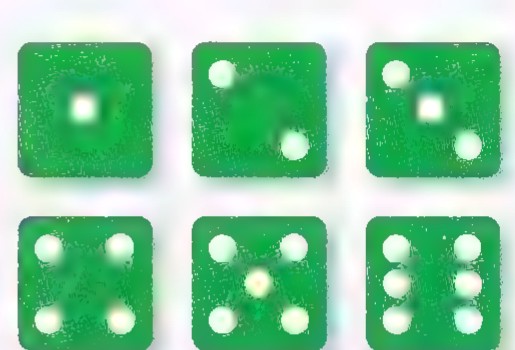
- Sort them into groups in which the faces of each group have the same symmetry and describe the symmetries of each group.
* Wordplay, by John Langdon (Harcourt Brace Jovanovich, 1992).