p. 330
Midterm Review
Set I
Chill Factor. A 3-year-old child can understand the statement “You can’t go outside if you don’t put your coat on.”*
- What type of statement is it?
- What is its hypothesis?
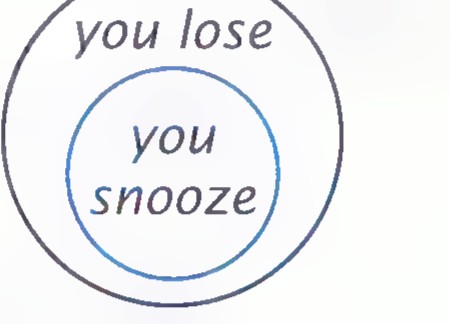
Losers, Sleepers. The following questions are about the diagram at the right.
- What is a diagram of this type called?
- Write the statement represented by the diagram.
- What is its conclusion?
Marine Logic. Sea lions that have been taught with symbols that a → b and b → c seem to realize that a → c.†
What is an argument of the form
a → b
b → c
Therefore, a → ccalled?
What could cause the conclusion of such an argument to be false?
Finding Truth. G. K. Chesterton once wrote: “You can only find truth with logic if you have already found truth without it.”
What are the statements called that we
- prove to be true by using logic?
- assume to be true without proof?
* Why Do Buses Come in Threes? The Hidden Mathematics of Everyday Life, by Rob Eastaway and Jeremy Wyndham (Wiley, 1998).
† The Animal Mind, by James L. Gould and Carol Grant Gould (Scientific American Library, 1994).
Only in Geometry. Each of the following words is an important term used only in geometry. Briefly explain what each word means.
- Collinear.
- Hypotenuse.
- Isosceles.
- Rhombus.
Why Three? Most insects walk on three of their six legs at a time.
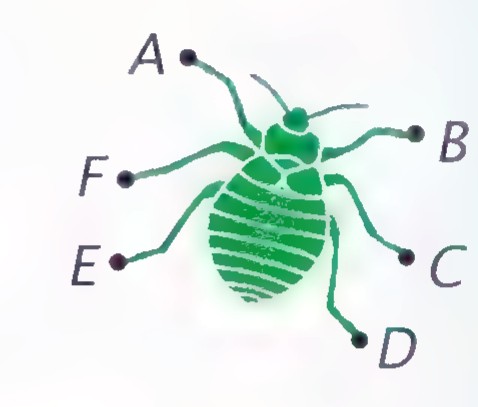
- What postulate tells you that the insect in the figure above won’t tip over when legs A, C, and E touch the ground?
- Which geometric terms in this postulate are undefined?
What Follows? Complete the statements of the following postulates and theorems.
- Two points determine . . .
- The sum of the angles of a triangle is . . .
- An angle has exactly one ray that . . .
- Complements of the same angle . . .
- An equilateral triangle is . . .
- An exterior angle of a triangle is greater than . . .
- In a plane, two points each equidistant from the endpoints of a line segment determine . . .
- Equal corresponding angles mean that lines . . .
- In a plane, two lines perpendicular to a third line . . .
- In a plane, a line perpendicular to one of two parallel lines is . . .
p. 331
- An exterior angle of a triangle is equal to the sum of . . .
- A quadrilateral is a parallelogram if its opposite angles are . . .
- The diagonals of an isosceles trapezoid . . .
Formulas. Explain what each of the following formulas means.
- .
- .
- .
- .
- .
Protractor Problems. The figure below shows a protractor placed on ∠AOB so that the coordinates of its sides are 123 and 39.
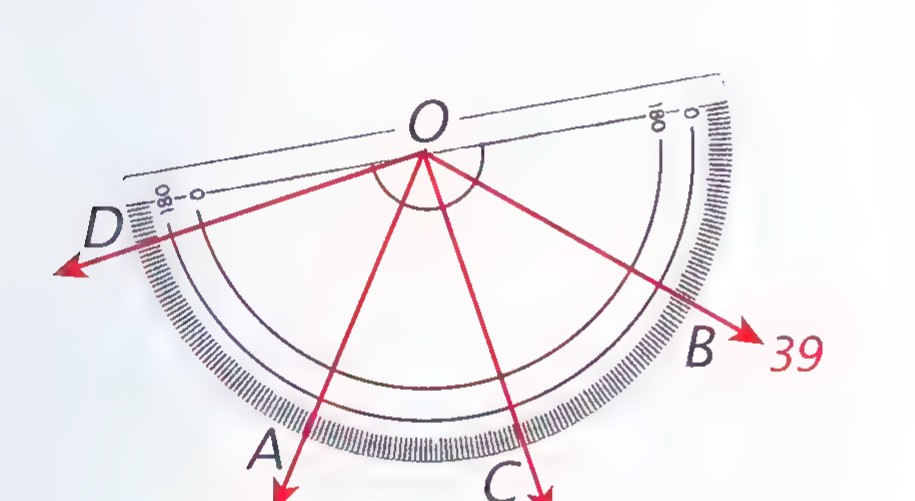
- Find the measure of ∠AOB.
- Find the measures of ∠AOC and ∠COB, given that ray OC bisects ∠AOB.
- Find the coordinate of ray OC.
- Find the measure of ∠AOD, given that ∠AOD and ∠AOC are complementary.
- Find the coordinate of ray OD.
- Would it be correct to say that ray OC is between ray OD and ray OB? Explain why or why not.
Metric Angles. As part of the metric system adopted at the time of the French revolution, right angles were defined to have a measure of 100 “grades.”
Write each of the following definitions or theorems in terms of “grades.”
- The definition of supplementary angles.
- The definition of an obtuse angle.
- The theorem about the sum of the angles of a quadrilateral.
- The theorem that each angle of an equilateral triangle is 60°.
Linear Pair. The figure below appeared on the opening page of the first printed edition of the Elements (1482).
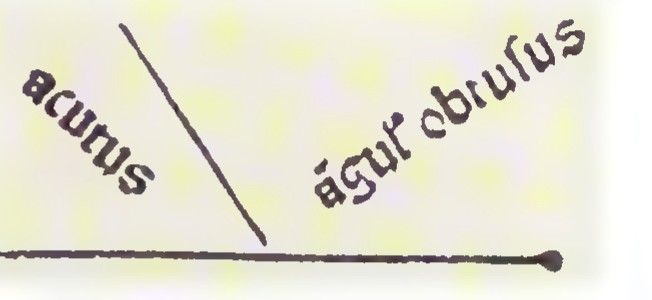
- What do you need to know about this figure to know that it contains a linear pair?
- If two angles form a linear pair, does it follow that one is acute and the other is obtuse? Explain.
- In what way are the measures of the angles of every linear pair related?
- If the angles in a linear pair are equal, what can you conclude about each angle?
Polygons. In each of the following exercises, the measure of one or more parts of a polygon is given. Tell what the measures of the indicated parts must be.
- A right triangle. The other side if the two shorter sides are 15 and 30.
- An isosceles triangle. The third side if two sides are 15 and 30.
- A rhombus. The other angles if one angle is 30°.
- An isosceles trapezoid. The other angles if one angle is 30°.
p. 332
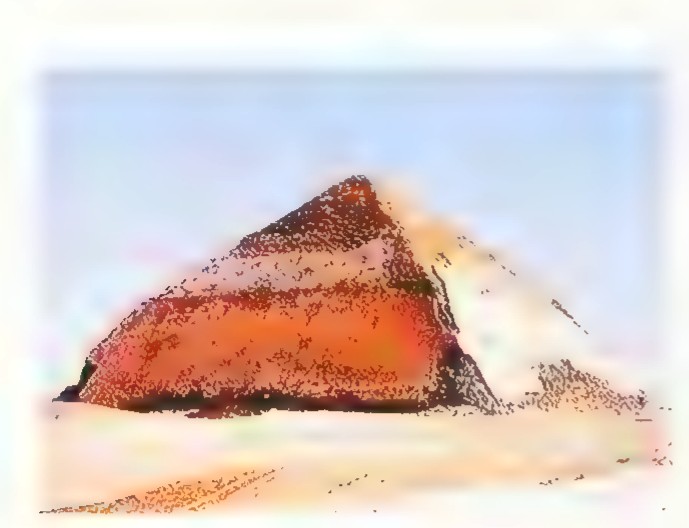
Bent Pyramid. The Bent Pyramid at Dahshur in Egypt is shown in the photograph below.
In the following side view of it, ABDE is an isosceles trapezoid and △BCD is an isosceles triangle.
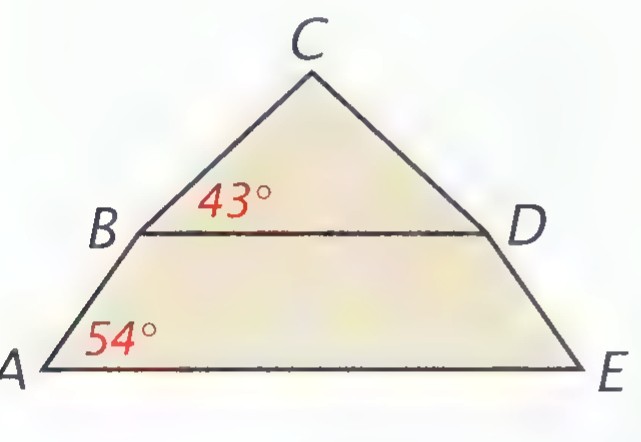
Use the facts that ∠A = 54° and ∠CBD = 43° to find
- ∠ABD.
- ∠C.
- ∠E.
- ∠CDE.
Six Triangles. Three triangles in the following figure are right triangles, and the other three are isosceles.
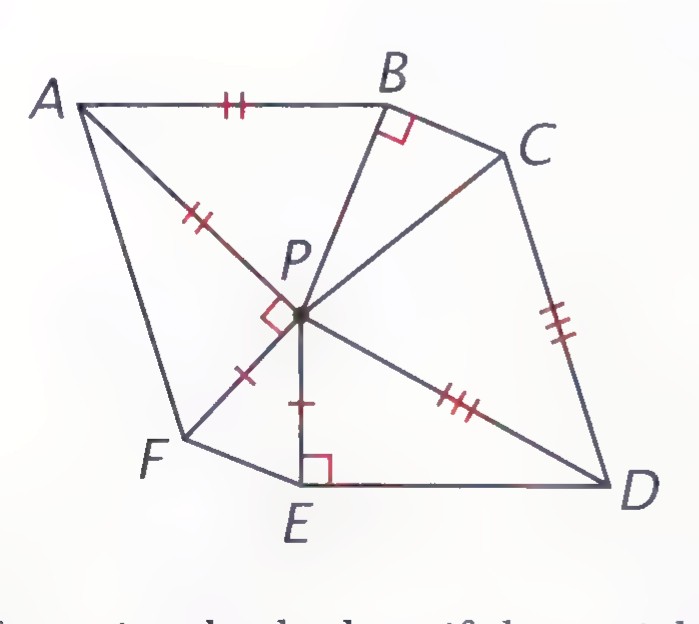
Two triangles look as if they might be congruent. Which two are they?
If you knew that AB = ED, you could prove these triangles congruent. How?
You could also prove them congruent if you knew that AF = CD. How?
Italian Theorem. The following theorem appears in an Italian geometry book.
Teorema. Se due lati di un triangolo sono diseguali, l’angolo opposto al lato maggiore è maggiore di quello opposto al lato minore.
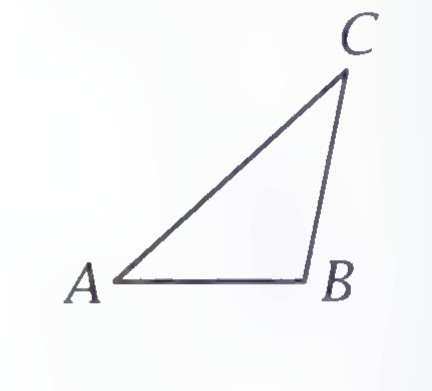
In terms of the figure above, the hypothesis of this theorem might be stated as: “In △ABC, CA > CB.”
- State the conclusion in terms of the figure.
- State the theorem as a complete sentence in English.
- What English words are related in meaning to “maggiore” and “minore”?
Impossibly Obtuse. Recalling that an acute triangle has three acute angles, Obtuse Ollie concluded that an obtuse triangle has three obtuse angles.
The beginning of a proof that such a triangle is impossible follows.
Proof
Suppose that △ABC has three obtuse angles.
Then ∠A > 90°, ∠B > 90°, and ∠C > 90°.
- What follows from adding these inequalities?
- What does this result contradict?
- What does the contradiction show about what we supposed?
- What kind of proof is this proof?
p. 333
Converses. Write the converses of the following statements and tell whether the converses are true or false.
- If two angles are the acute angles of a right triangle, then they are complementary.
- If a quadrilateral is a parallelogram, then the diagonals of the quadrilateral bisect each other.
Construction Exercises.
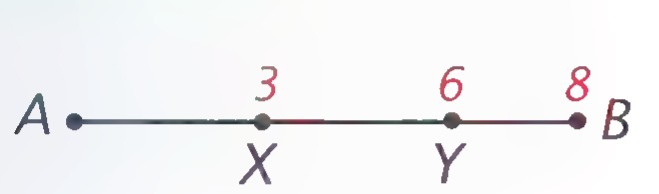
First, use your ruler to draw a line segment 8 cm long. Label its endpoints A and B and mark the points X and Y on it that are 3 cm and 6 cm from point A. Use your straightedge and compass to construct △ABC with AC = AY and BC = BX.
Construct the line that bisects ∠A.
Does this line also bisect BC?
(continued) Check your answer by constructing a line that bisects BC.
(continued) Through C, construct a line perpendicular to AB. Let P be the point in which this line intersects AB.
What point on line AB is closest to point C?
Which three lines in the figure are concurrent?
Set II
Grid Exercise. On graph paper, draw a pair of axes extending 20 units to the right and 10 units up from the origin.
- Plot the following points and connect them with line segments to form quadrilateral ABCD: A(0, 2), B(12, 2), C(16, 8), D(4, 8).
- What kind of quadrilateral does ABCD appear to be?
- Find the lengths of its sides to check your answer.
- (continued) Plot P(10, 2) and draw PD and PC.
- Which segment looks longer: PD or PC?
- Use the distance formula to check your answer.
Roof Truss. The figure below from a book on architecture illustrates one type of truss, a structure used to support a roof.
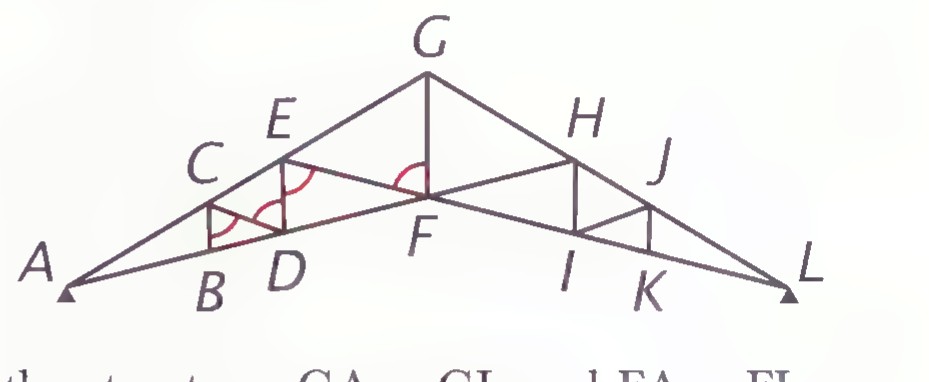
In the structure, GA = GL and FA = FL.
- What can you conclude about ∠A and ∠L? Explain.
Also, ∠BCD = ∠CDE = ∠DEF = ∠EFG.
- What can you conclude about BC and FG? Explain.
It appears as if CD ∥ EF.
- Is this necessarily true? Explain.
∠AGF is acute and ∠GFA is obtuse.
- Can these two angles be supplementary? Explain.
Angles Problem 1. In the figure at the right, △ABC is equilateral and its vertices lie on the sides of △DEF, AB ∥ DE, ∠D = 65°, and ∠F = 50°.
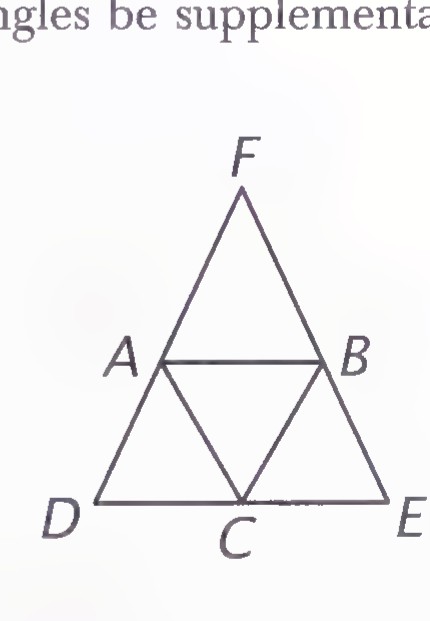
- Make a large copy of the figure and write the given information on it. Find the measures of the other angles and write them on the figure.
- What can you conclude about △ACD and △BCE? Explain.
p. 334
Irregular Star. The five angles at the points of the star below, formed from five intersecting line segments, are equal.
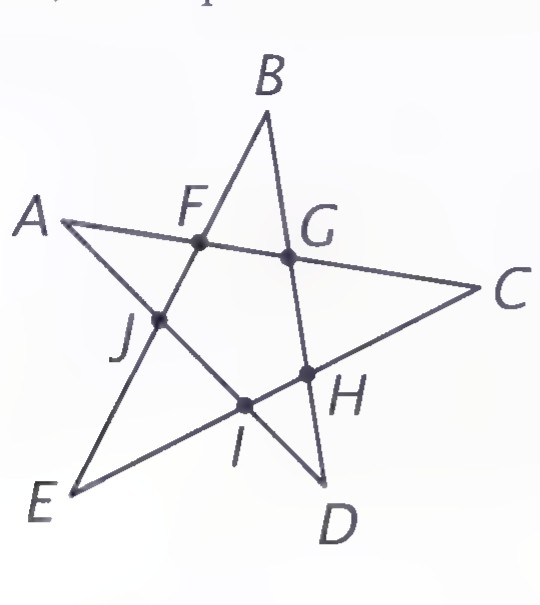
- Copy the figure and mark it as needed to help in deciding whether each of the following statements is true. If you think a statement is true, explain why.
- △EFC is isosceles.
- Pentagon FGHIJ is equiangular.
- Pentagon FGHIJ is equilateral.
- Every triangle in the figure is isosceles.
Angle Trisector. The linkage below can be used to trisect an angle.
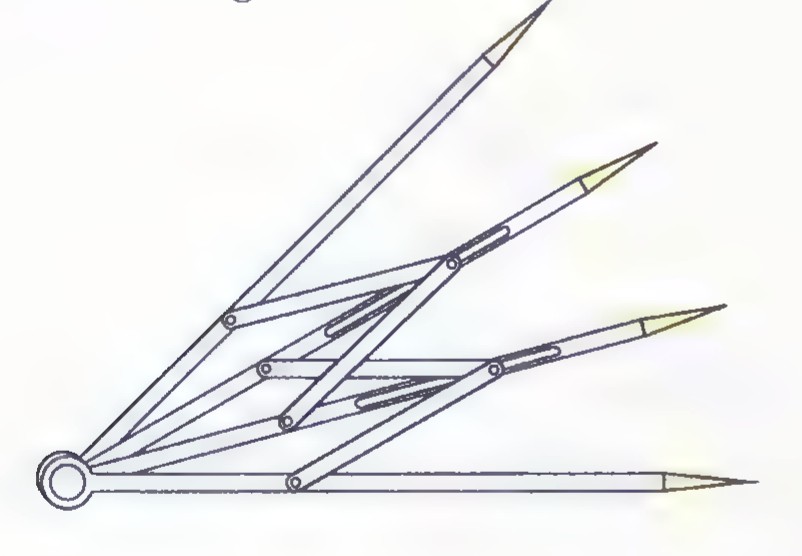
It is designed so that OA = AB = BC = CO = OD = DE = EF = FO.
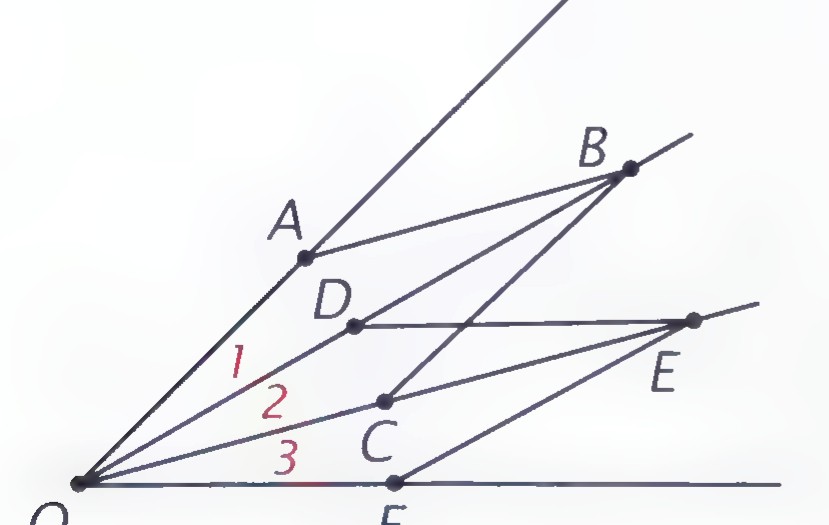
Explain why each of the following statements is always true, no matter how the linkage is moved.
- △OAB ≅ △OCB, and △ODE ≅ △OFE.
- ∠1 = ∠2 = ∠3.
Quadrilateral Problem. The measures of the angles of quadrilateral ABCD are multiples of x.
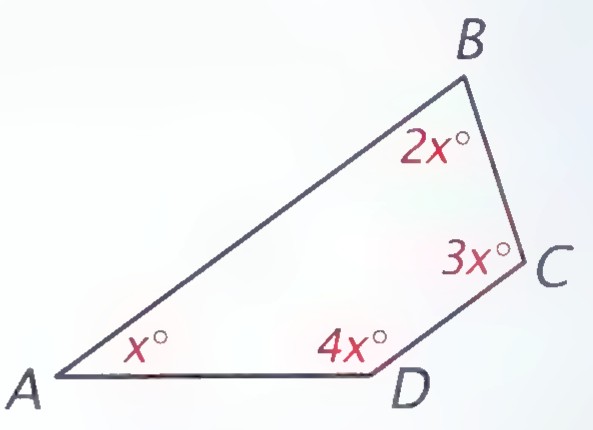
- Write an appropriate equation and solve for x.
- What is the measure of the largest angle of ABCD?
- What other conclusions can you make about this figure?
Angles Problem 2. In the figure below, l₁ ∥ l₂ and AC bisects ∠BAD.
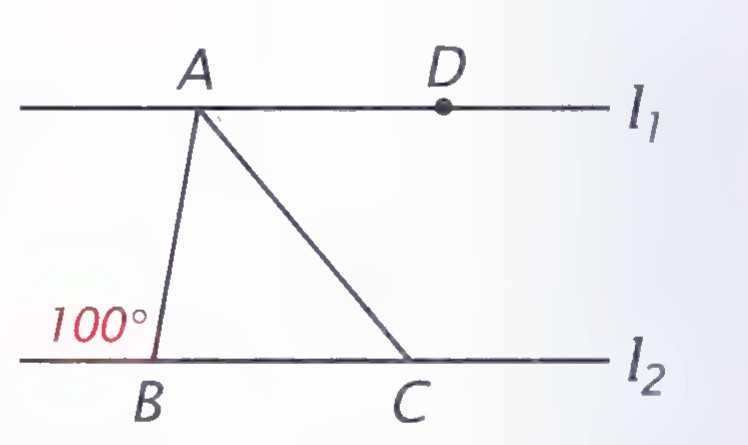
- Make a large copy of the figure and write in the measure of the 100° angle. Find the measures of the other angles and write them on the figure.
- What can you conclude about △ABC? Explain.
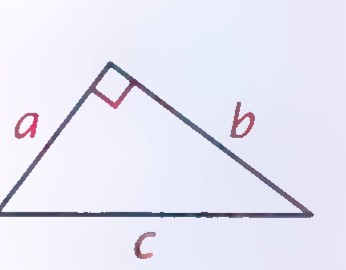
A, B, C. Suppose that the legs of a right triangle have lengths a and b and the hypotenuse has length c.
p. 335
- Write an equation relating a, b, and c.
- Write three inequalities relating a, b, and c.
- Could a triangle have sides of lengths a², b², and c²? Explain.
Midsegments. In the figure below, D and E are the midpoints of AC and BC, AE and BD intersect at F, and G and H are the midpoints of AF and BF.
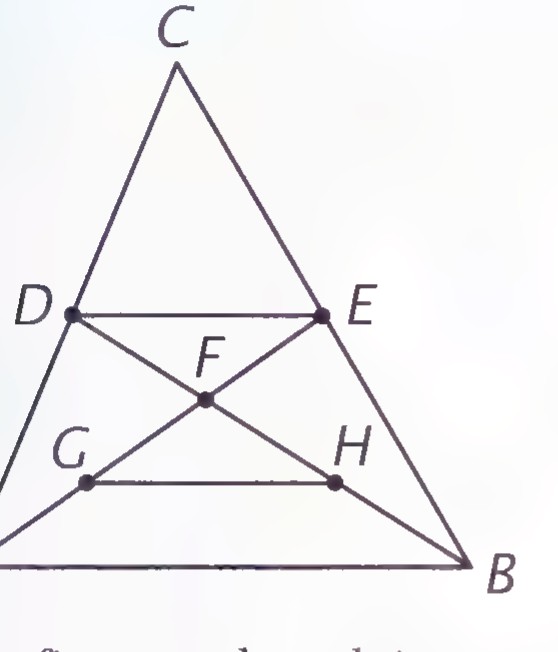
- Copy the figure and mark it as needed to explain why each of the following statements is true.
- DE = GH.
- DE ∥ GH.
- (continued) Draw DG and EH.
- DEHG is a parallelogram.
- AG = GF = FE and BH = HF = FD.
On the Level. The plank of this swing always stays level with the ground as the plank moves back and forth.*
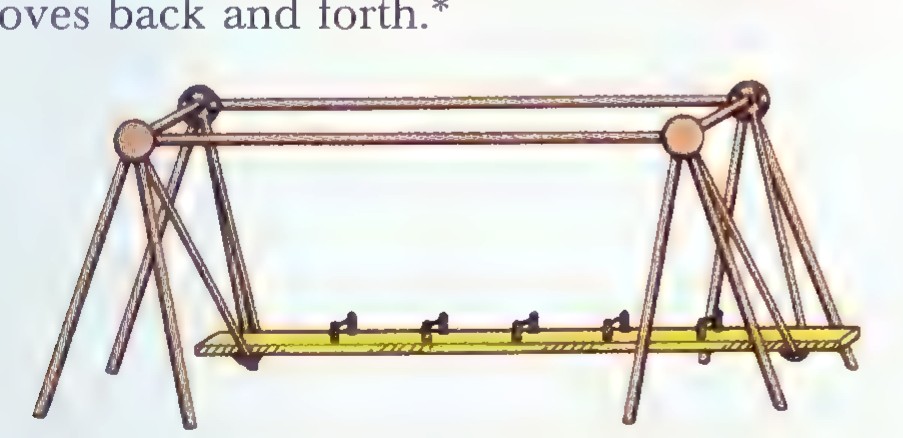
- What is it about the design of the swing that makes the plank stay level?
* Mathematics Meets Technology, by Brian Bolt (Cambridge University Press, 1991).
Folding Experiment. Mark a point on a sheet of paper and label the point A. Choose a corner of the paper, label it B, and draw segment AB. Fold the paper so that B falls on A, and make a sharp crease. Unfold the paper so that it is flat.
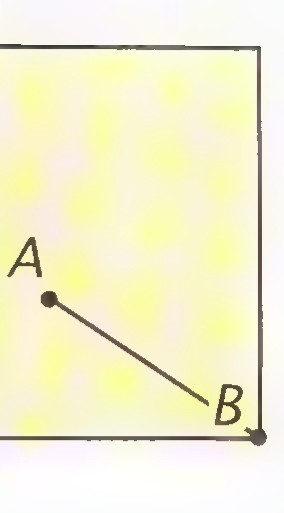
- Draw a sketch of the result.
- What relation does the crease line seem to have to AB?
- Add some extra line segments as needed to help in explaining why.
Earth Measurement. In the ninth century, a team of surveyors working near Baghdad found that 1 degree at the center of the earth corresponded to about 57 miles on the surface.
With the use of this information, what did they estimate for
- the circumference of the earth?
- the distance from the surface of the earth to its center?
Not a Square. Although parallelogram ABCD looks like a square, it is not because ∠DAB ≠ ∠ABC.
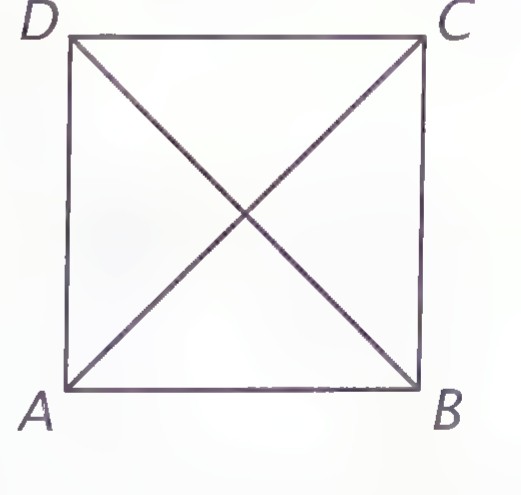
On the basis of this information, could it be that
- ABCD is a rhombus? Explain.
- AC ⊥ DB? Explain.
- AC and BD bisect each other? Explain.
- ABCD is a rectangle? Explain.
- AC = DB? Explain.
p. 336
Construction Exercise.
- Draw a scalene triangle in the center of a sheet of paper and label its vertices A, B, and C. Use your straightedge and compass to construct three equilateral triangles outwardly on the sides of △ABC. Label the equilateral triangles △ABZ, △BCX, and △ACY.
- Draw AX, BY, and CZ. What seems to be true about these three line segments?
SAT Problem. The figures below appeared in a problem on an SAT test.
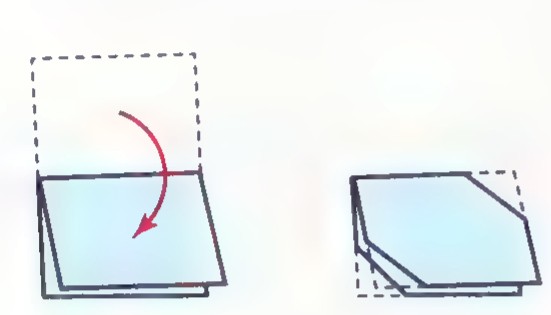
The first figure shows a rectangular sheet of paper being folded in half. The second figure shows the result of cutting off two opposite corners of the folded paper.
In figure A below, the lower half is the image of the upper half by a reflection.
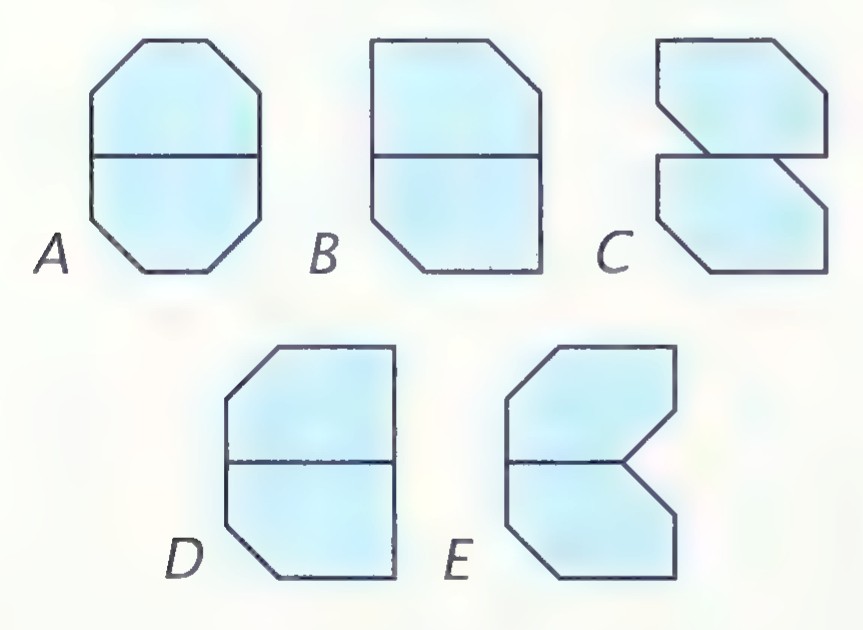
Name the transformation(s) through which the lower half is the image of the upper half in
- figure B.
- figure C.
- figure D.
- figure E.
- Which one of the five figures represents the paper when it is unfolded?
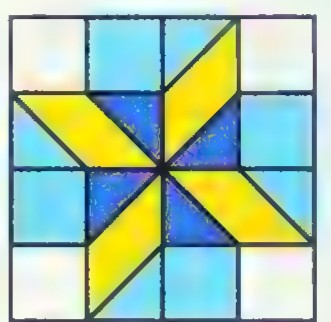
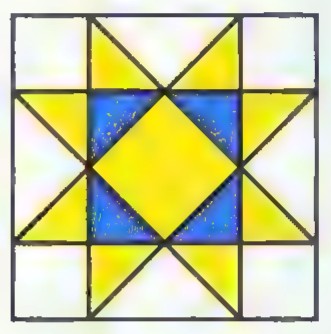
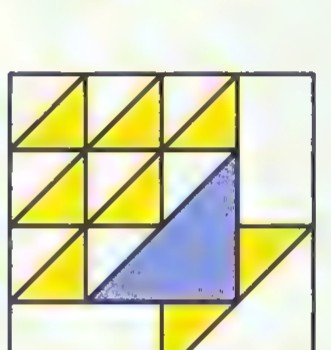
Quilt Patterns. Three patterns used in making quilts are shown below.* Describe the symmetries of each pattern.
Dividing a Lot. A real estate developer† is planning to subdivide a vacant lot into congruent parcels (the ʹ stands for feet).
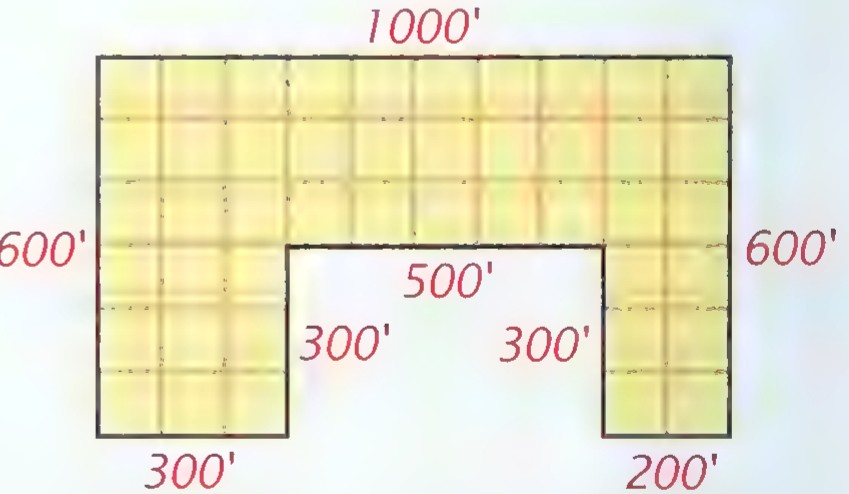
Make a sketch to illustrate each of the following divisions.
- A way to divide the lot into three congruent parcels.
- A way to divide it into five congruent parcels.
* Designing Tessellations, by Jinny Beyer (Contemporary Books, 1999).
†Solomon Golomb.