p. 211
Chapter 6: Parallel Lines
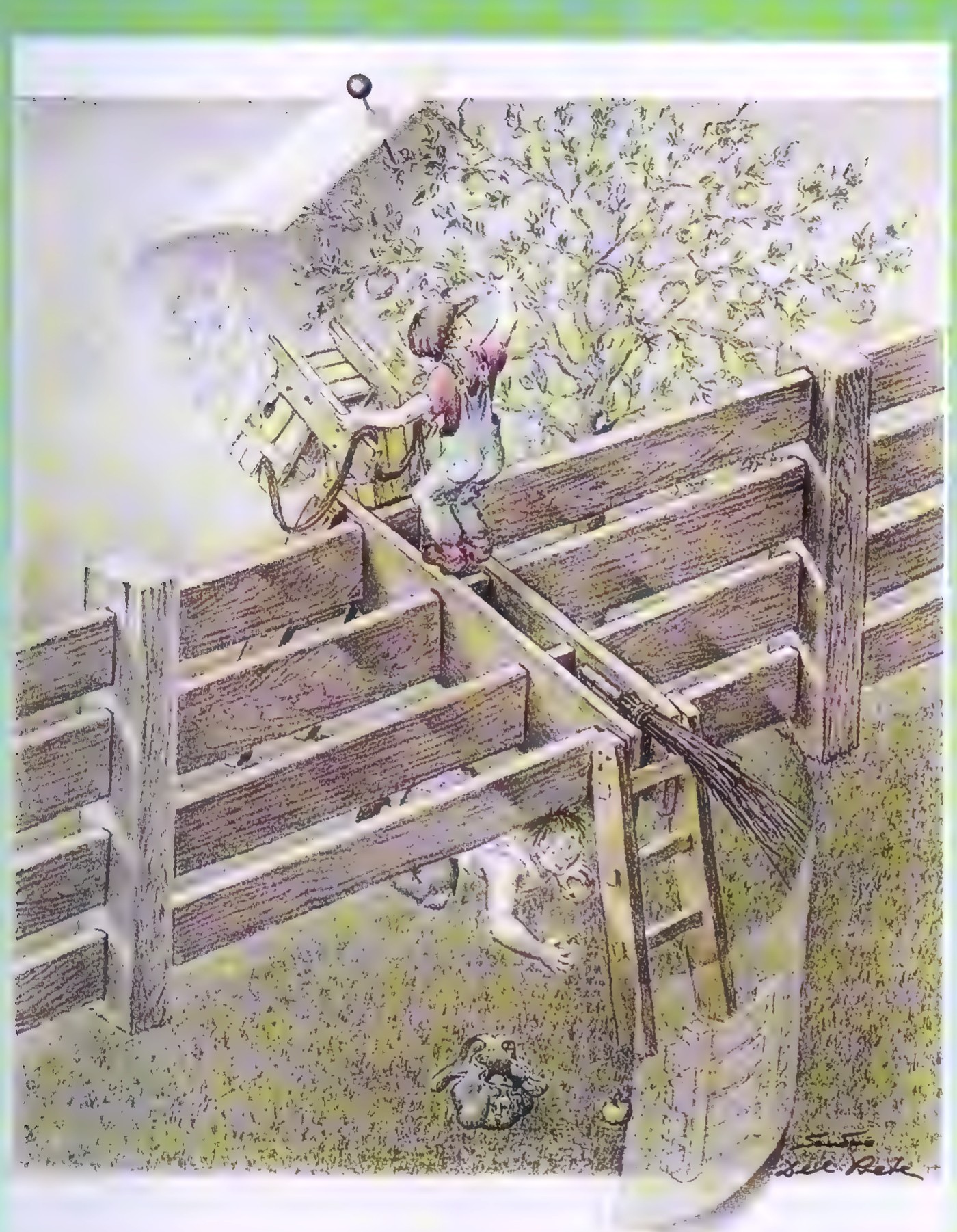
The word “parallel,” from the Greek word parallelos, meaning “side by side,” suggests the idea of lines that have the same direction, something that we take for granted. In this chapter, we consider several ways to prove that lines are parallel and encounter the Parallel Postulate, an assumption that has been the subject of more controversy than everything else in Euclid’s Elements combined! From the Parallel Postulate follow several more useful theorems about triangles.
p. 212
Lesson 1: Line Symmetry
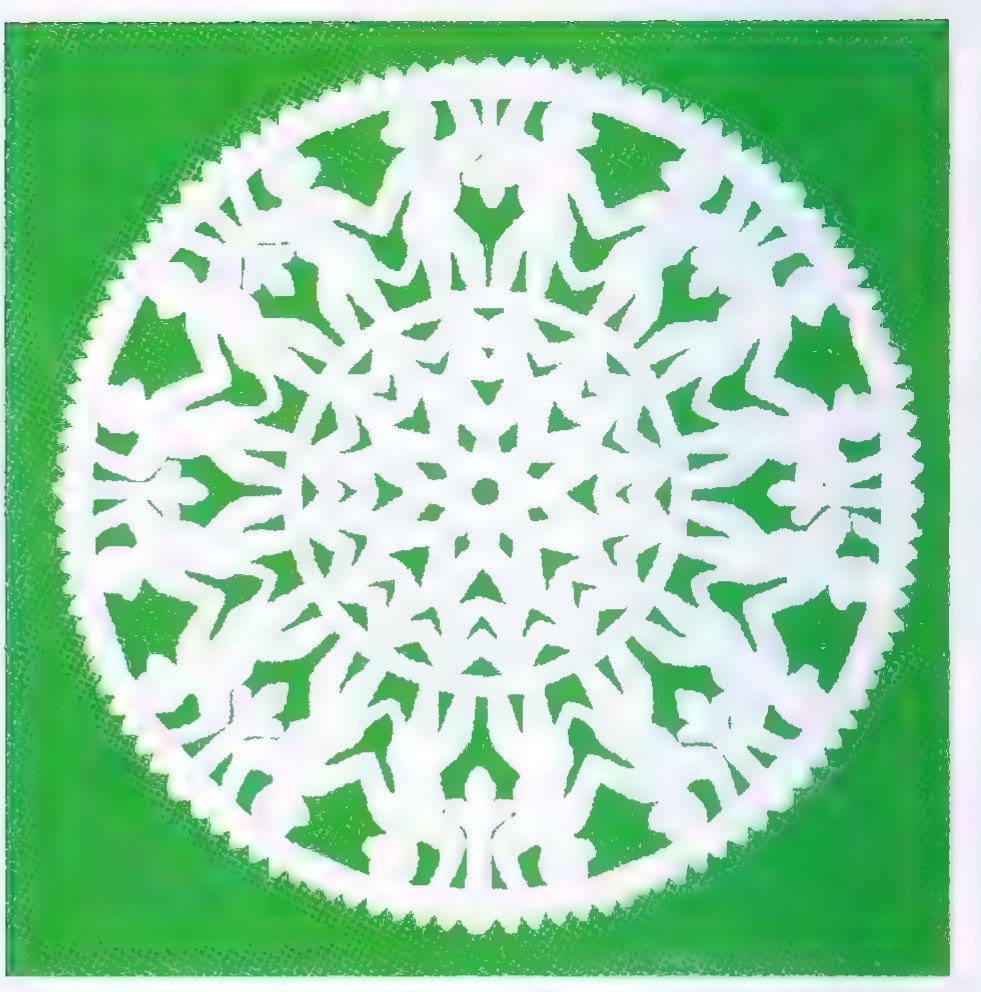
This symmetric design was cut from paper. Although it contains eight pairs of monkeys (16 monkeys in all), the artist cut out only one of them.* A trick that children sometimes use in cutting paper made it possible: folding the paper in advance.
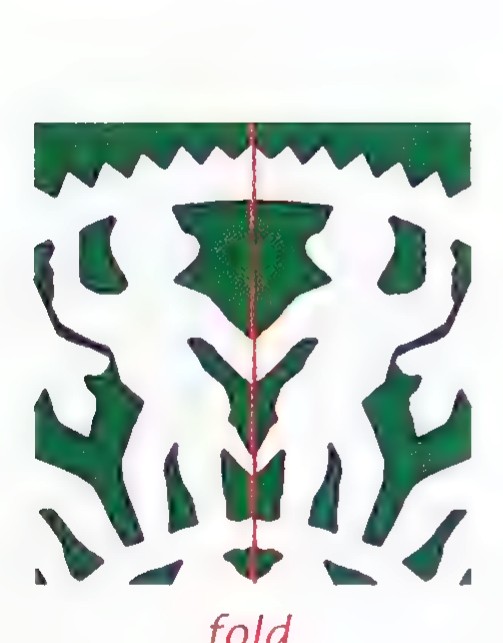
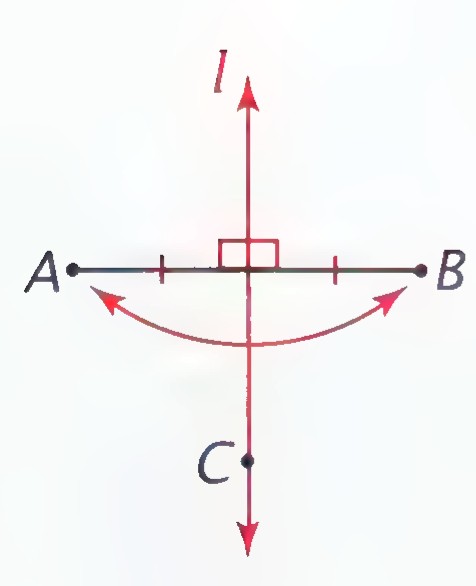
One pair of the monkeys and the fold that produced them are shown in the figure at the left. The monkeys are symmetric with respect to the line of the fold. The second figure at the left suggests how to define this symmetry in terms of points: A and B are symmetric with respect to l if they coincide when the paper is folded along l; they will coincide if l is the perpendicular bisector of segment AB; a point such as C on line l coincides with itself.
Definition
Two points are symmetric with respect to a line iff the line is the perpendicular bisector of the line segment connecting the two points.
Although the perpendicular bisector can be found by folding, it can also be constructed with straightedge and compass. You already know how.† The construction is based on our first postulate that two points determine a line—more specifically, on the fact that two points each equidistant from the endpoints of a line segment determine a line that is the perpendicular bisector of the line segment.
Theorem 16
In a plane, two points each equidistant from the endpoints of a line segment determine the perpendicular bisector of the line segment.
* The Art of Chinese Papercuts, by Zhang Daoyi (Foreign Language Press, 1989).
† Construction 1. To bisect a line segment (Chapter 1, Lesson 4, page 25).
p. 213
In the first figure at the right, the two points are on opposite sides of the line segment. In the second figure, they are on the same side. Either way, the proof is the same.
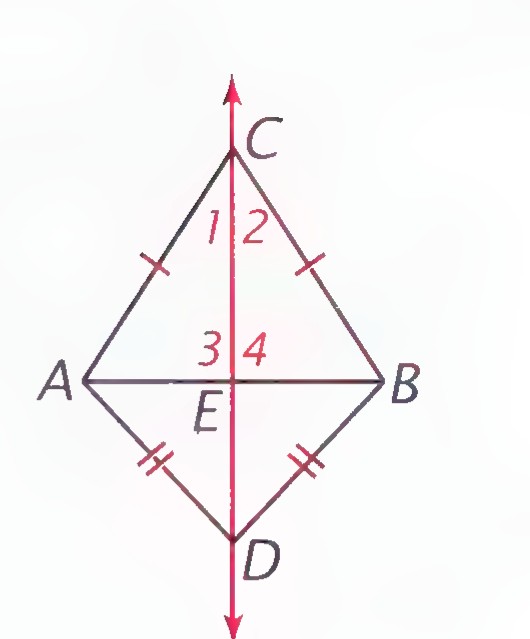
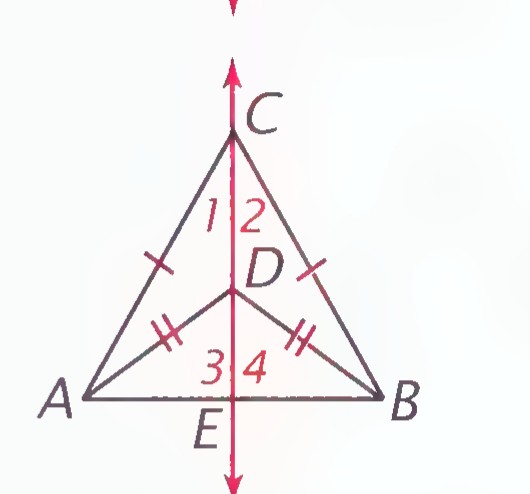
Given: CA = CB and DA = DB.
Prove: CD is the perpendicular bisector of AB.
Proof
Because CD = CD, △ACD ≅ △BCD (SSS); so ∠1 = ∠2. Also, CE = CE; so △ACE ≅ △BCE (SAS), and so ∠3 = ∠4. From the figure, ∠3 and ∠4 are also a linear pair; so their sides are perpendicular and CD ⊥ AB. Finally, AE = BE because they also are corresponding parts of △ACE and △BCE; so CD bisects AB.
This proof provides an easy way to construct a line perpendicular to a given line and passing through any given point.
Construction 6
To construct a line perpendicular to a given line through a given point.
The following steps show that the method is the same whether or not the point is on the line.
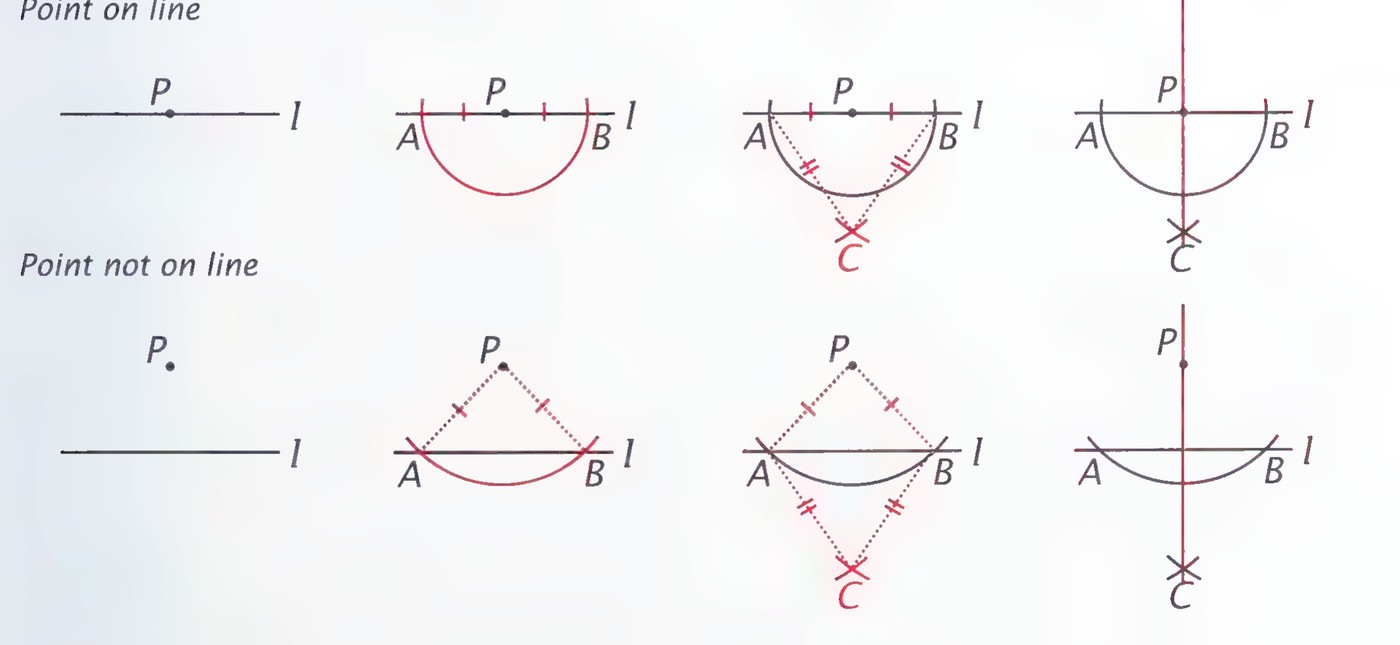
Let l be the given line and P be the given point.
With P as center, draw an arc that intersects l in two points (A and B). Note that P is equidistant from A and B.
Use the compass to find another point C that is equidistant from A and B.
Draw PC.
Line PC is the perpendicular bisector of segment AB according to Theorem 16, because P and C are equidistant from the endpoints A and B of the segment by construction.
p. 214
Exercises
Set I
Rope Trick. An old way to make perpendicular lines on the ground is shown in the figures below.*
The ends of a long rope are tied to posts at W and E. Someone holding the rope at its center walks north until the rope is tight on both sides and places a post at the point N. Point S is located in a similar way by walking to the south.
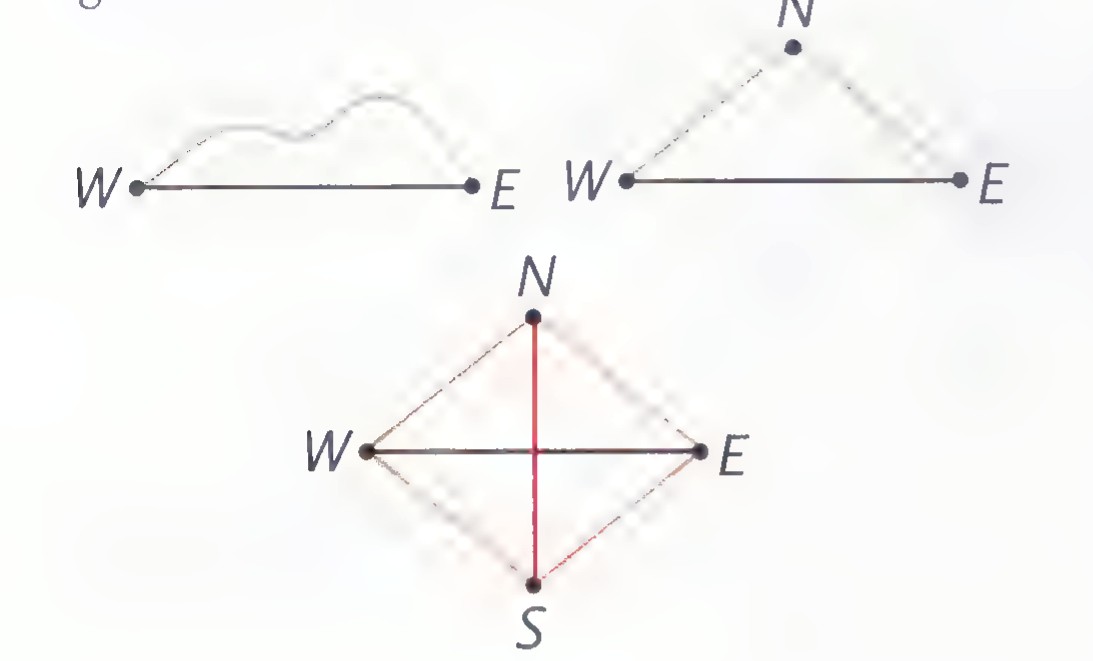
- Draw the third figure and mark the lengths on it that must be equal from this procedure.
- Why is the line NS perpendicular to WE?
- Does NS bisect WE?
- Does WE necessarily bisect NS? Explain.
Lines of Symmetry. Copy each of the following figures and sketch its line(s) of symmetry.
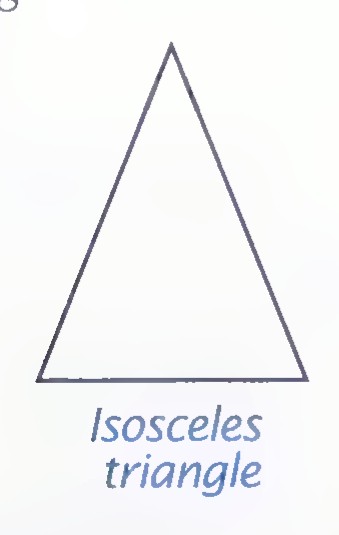
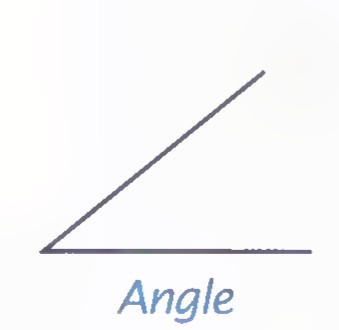
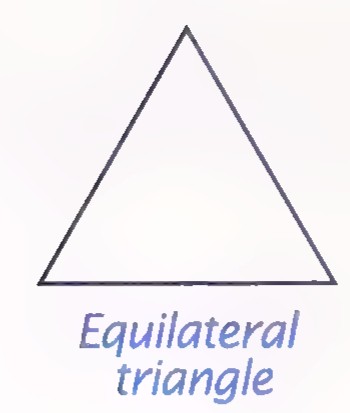
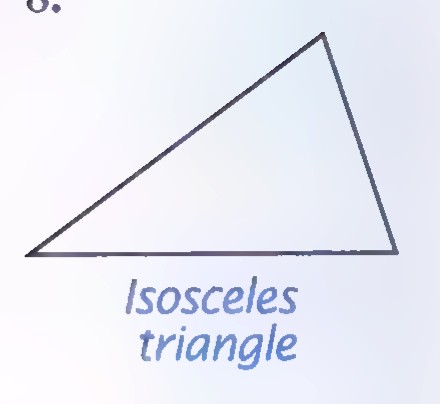
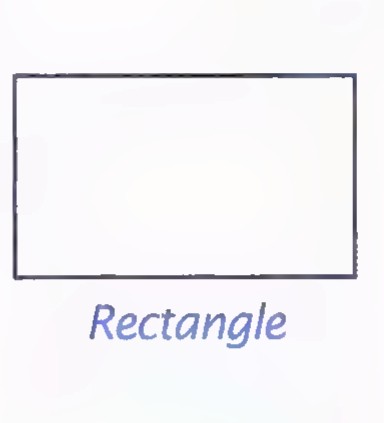
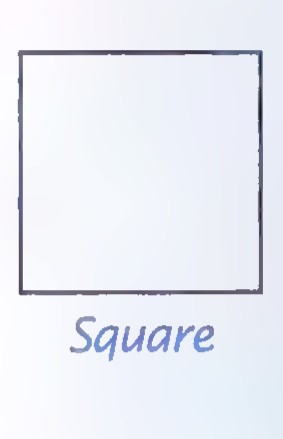
Baseball Diamond. According to major league rules, a baseball diamond should be laid out so that the batter is facing east.
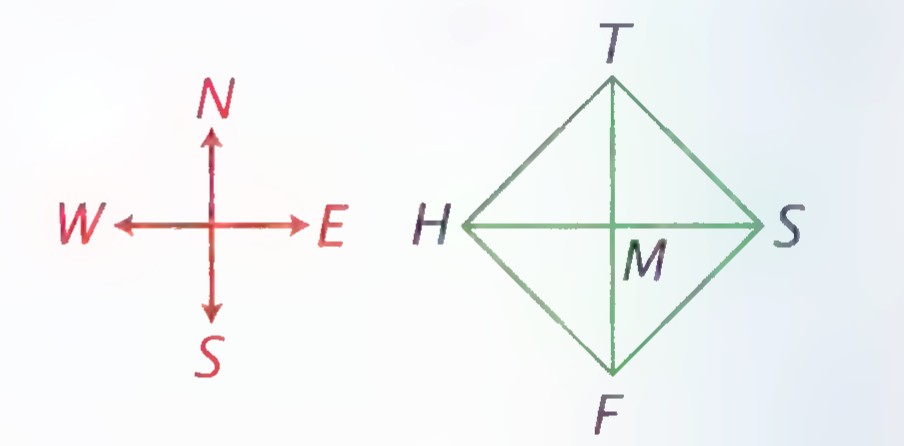
- Use your ruler to draw line segment HS 8.5 cm long. Construct a line as its perpendicular bisector. Label the midpoint M and mark off points F and T so that MH = MS = MT = MF. Connect points H, F, S, and T to form a diamond.
- Measure HF in centimeters.
In your drawing, 1 cm represents 15 feet. How many feet is it from home plate to
first base?
second base?
In what direction is the sun in the late afternoon?
Why are baseball diamonds laid out in the directions that they are?
Why is a pitcher who is left-handed called a “southpaw”?
* Geometry Civilized, by J. L. Heilbron (Clarendon Press, 1998).
p. 215
Paper Chain. The figure below shows a paper chain. The chain was produced by cutting out just one penguin.*

- How many times do you think the paper was folded before it was cut?
- How many lines of symmetry between pairs of neighboring penguins are there in all?
- How many times would a paper have to be folded to produce a chain of 16 penguins in this way?
Stealth Bomber. In this view of the B-2 Stealth Bomber, points S and T are symmetric with respect to line l.
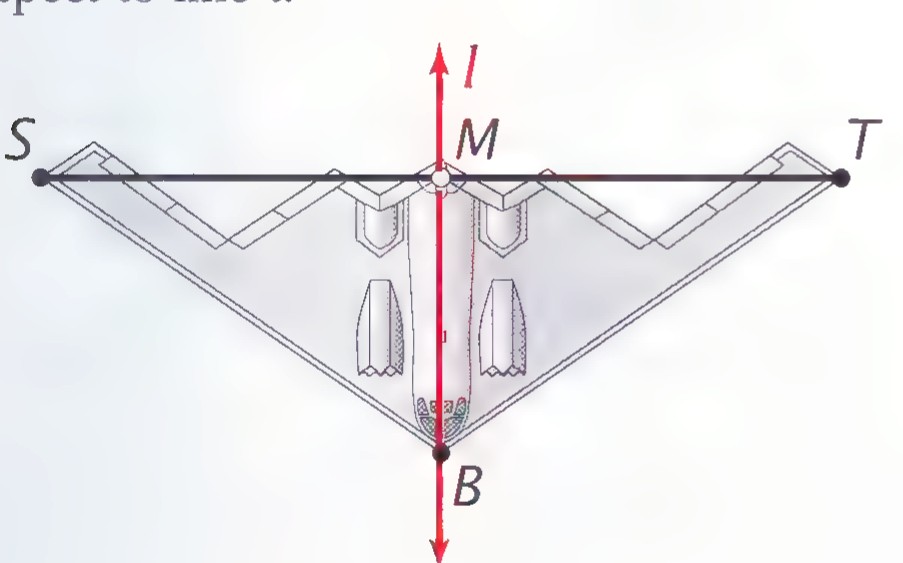
- What can you conclude about line l?
Give a reason for each of the following statements.
- SM = MT.
- ∠BMS and ∠BMT are right angles.
- ∠BMS = ∠BMT.
- MB = MB.
- △BMS ≅ △BMT.
- BS = BT.
Set II
Race to the Fence. Acute Alice and Obtuse Ollie were standing on the opposite sides of a long straight fence when they decided to race to some point along it. Because Ollie was closer to the fence, Alice said it was only fair that they run to the point on the fence equidistant from both of them.†
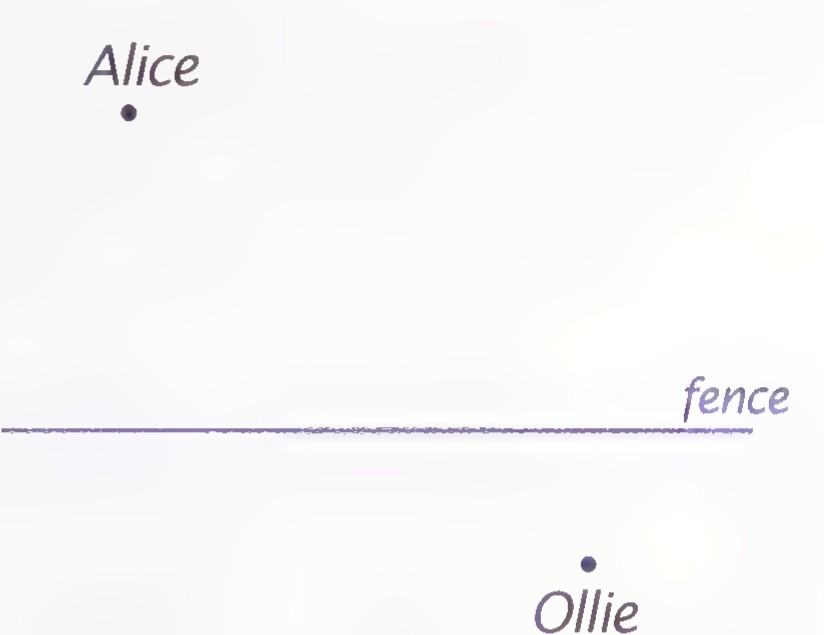
- Draw a figure similar to but larger than the one shown above. Use your straightedge and compass to find the point to which they ran. Also draw their paths.
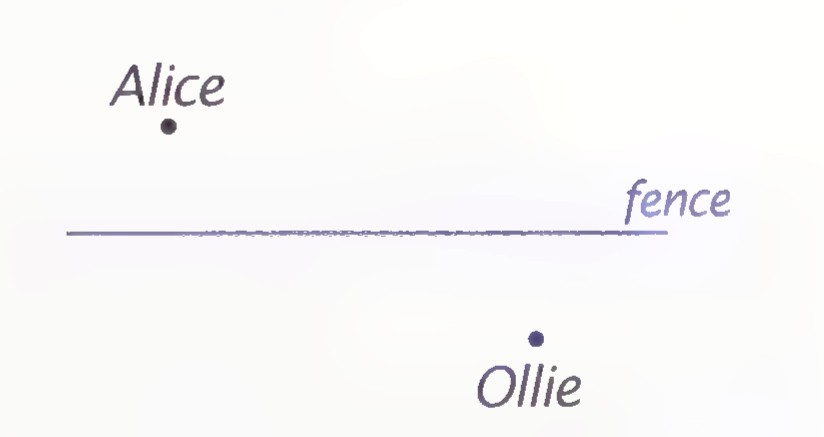
- If Alice and Ollie were initially at equal distances from the fence, as shown in this figure, where would the point have been? Describe its location in words and draw a figure to illustrate it.
* Wild Animal Paper Chains, by Stewart Walton and Sally Walton (Tupelo Books, 1993).
† Based on a problem in You Are a Mathematician, by David Wells (Wiley, 1995).
p. 216
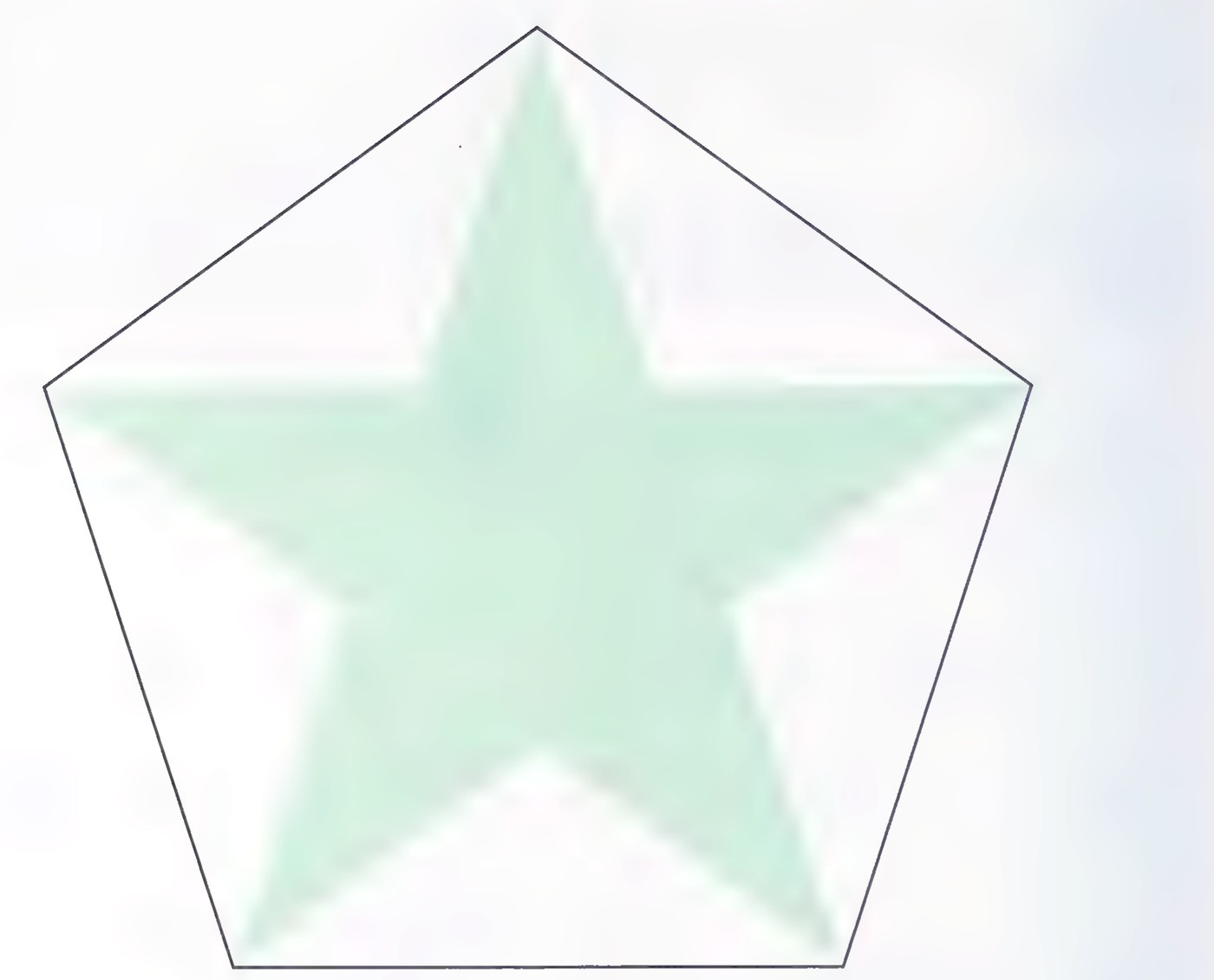
Clairvoyance Test. The following problem appeared in a “clairvoyance” test.*
Make an accurate copy of this figure by placing your paper over it and marking the five corners. Draw the figure and then choose a point anywhere inside it. Use your straightedge and compass to construct perpendicular lines from your point to each of the pentagon’s five sides. (Extend the sides with your ruler if necessary.)
Add the lengths of the five perpendicular line segments by marking them along the edge of a sheet of paper. Measure the total length with your ruler to the nearest half inch.
Why do you suppose this problem might be used on a test of “supernatural power”?
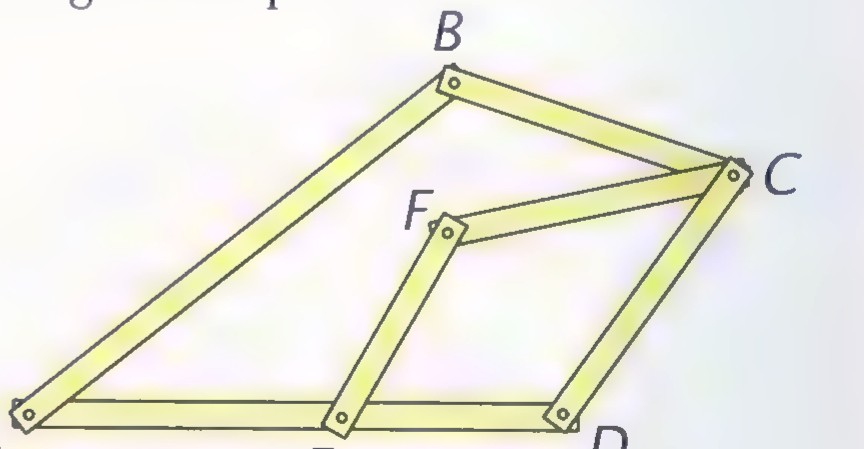
Linkage Problem. Linkages are used to control motion in machines. The linkage below is made of six rods that are equal as follows: AB = AD, CB = CF = CD, and EF = ED. The rods can pivot about their ends; so the figure can change its shape.†
* The Incredible Dr. Matrix, by Martin Gardner (Scribner’s, 1976).
† Mathematics Meets Technology, by Brian Bolt (Cambridge University Press, 1991).
p. 217
Regardless of the shape of the linkage, a line through AC is always perpendicular to a line through BD.
- Why?
- What other pairs of points determine two lines that are always perpendicular?
- Draw the figure by using line segments to represent the rods. Also draw AC and EC.
- Regardless of the shape of the linkage, ∠B is always equal to ∠D. Why?
- Is ∠B always equal to ∠F? Explain why or why not.
One Problem, Two Solutions. The figure below by Scott Kim has line symmetry, but the line is not shown.
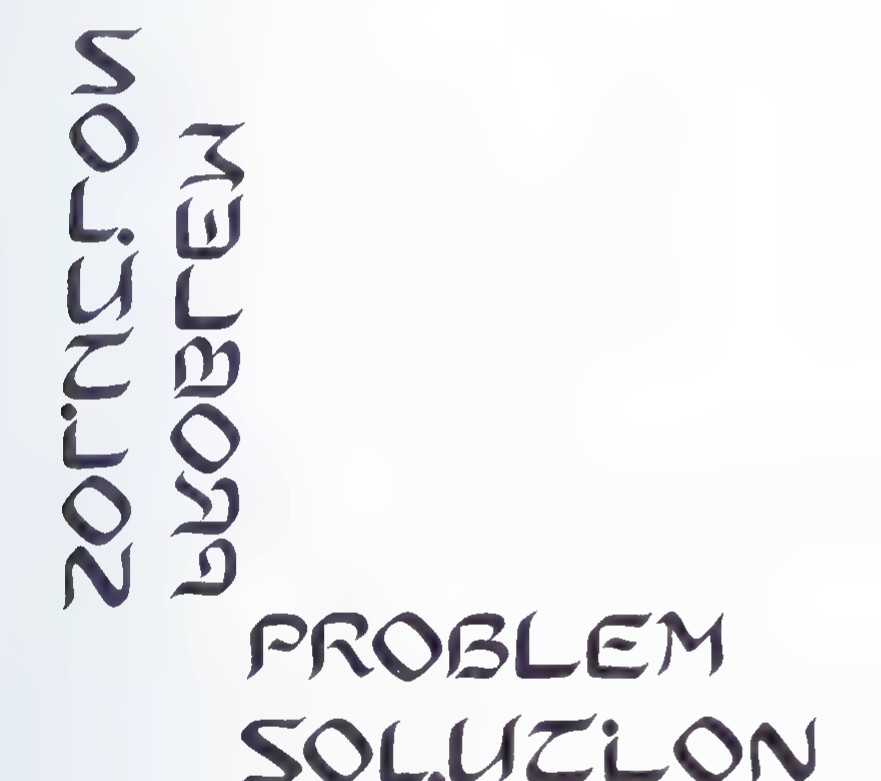
- If the figure were folded on the symmetry line, where would the fold be?
- To what letter on the other side of the line does the letter S correspond?
- To what letter does U correspond?
- What is strange about the figure?
Kepler’s Diagram. The figure at the top of the next column was drawn by the astronomer Johannes Kepler in 1608.*
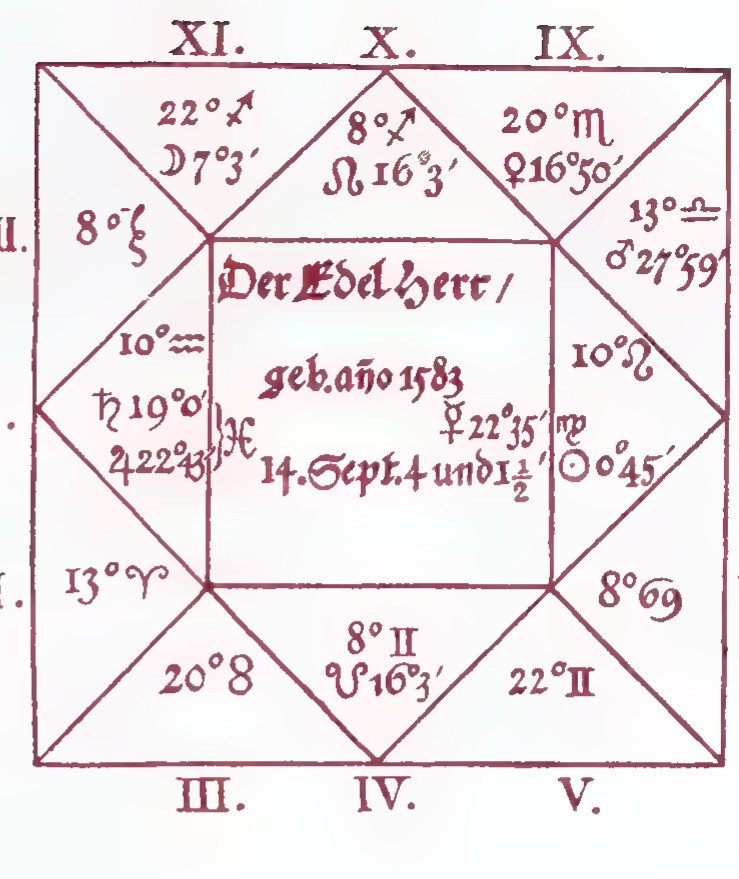
- Draw the figure using the following procedure. Use your ruler to draw a horizontal line across your paper and mark a line segment 3 inches long on it for the base of the figure. Construct perpendicular segments at each endpoint of the base as illustrated here.
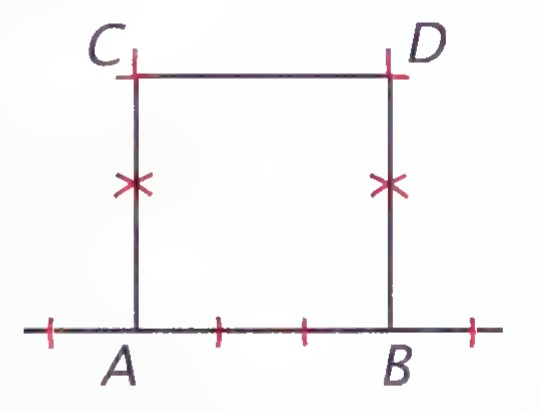
Copy AB on each perpendicular to determine C and D. Use only your straightedge and compass and what you notice about the symmetry of Kepler’s figure to complete your drawing.
- How many squares does Kepler’s figure appear to contain?
- What kind of triangle do all of the triangles in the figure appear to be?
- How many triangles do there seem to be in all?
* Age of Kings, by Charles Blitzer (Time-Life Books, 1967).
p. 218
Set III
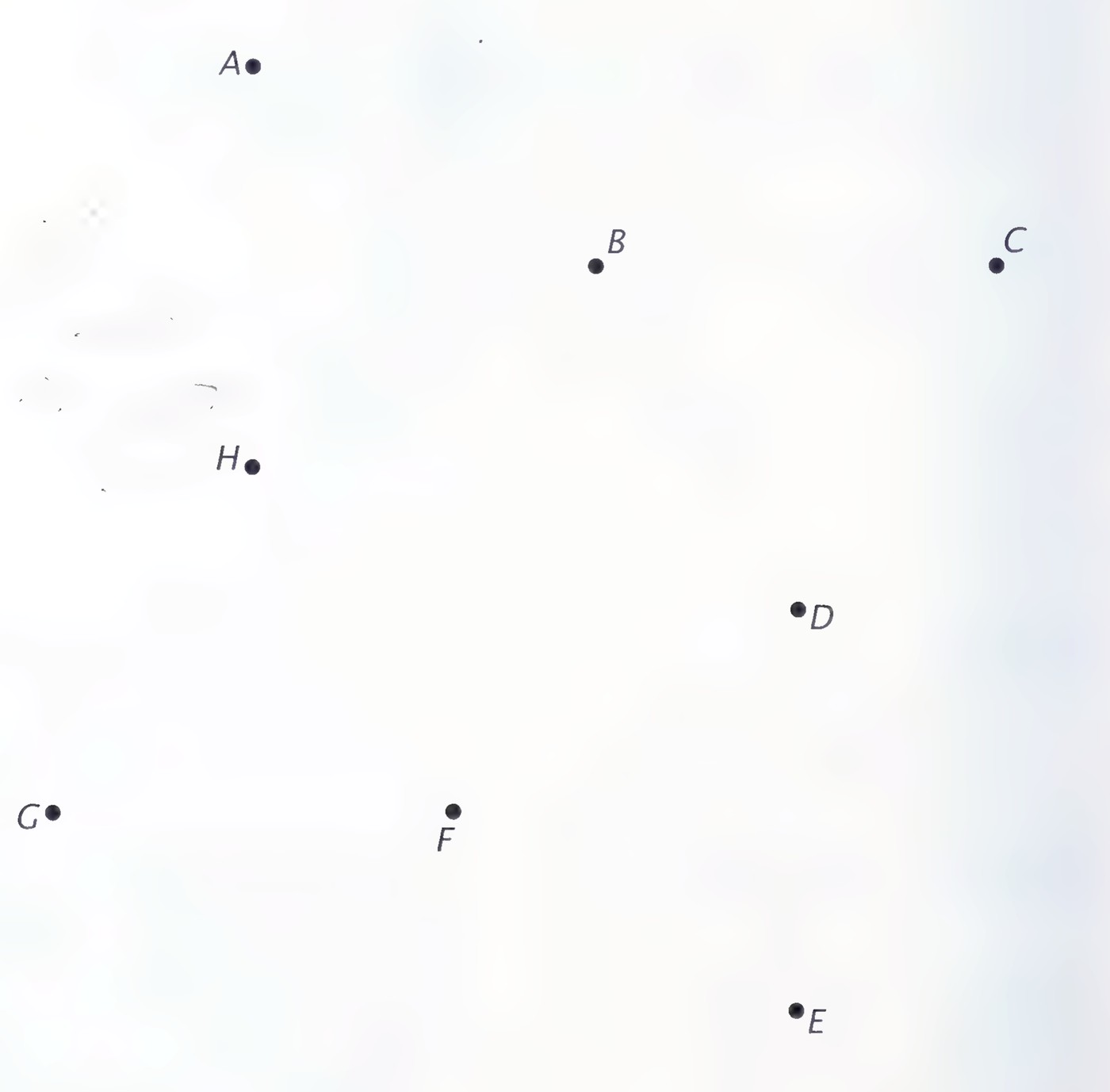
An Unusual Set of Points.* Make an accurate tracing of the figure below. Choose any two points and connect them with a line segment. Construct the perpendicular bisector of the line segment. What do you notice? Do it again with several other pairs of points. What seems to always be true?
* Wheels, Life, and Other Mathematical Amusements, by Martin Gardner (W. H. Freeman and Company, 1983).
p. 219
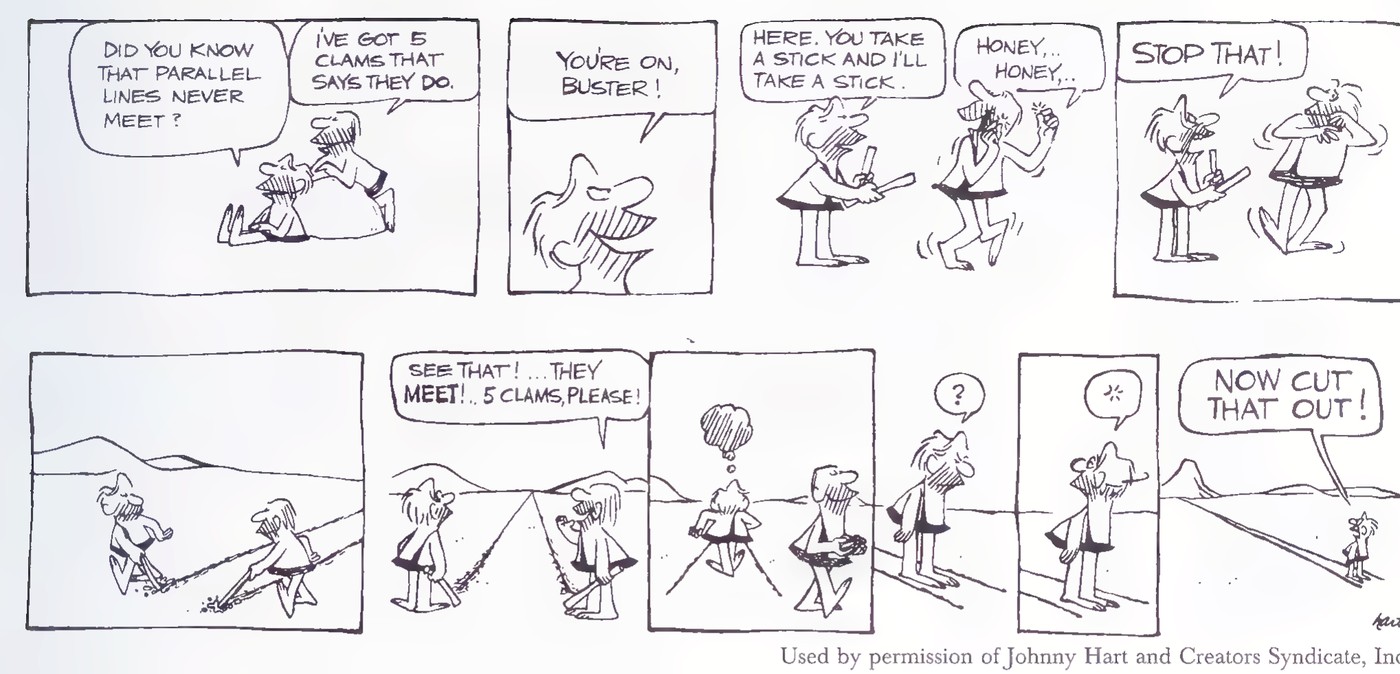
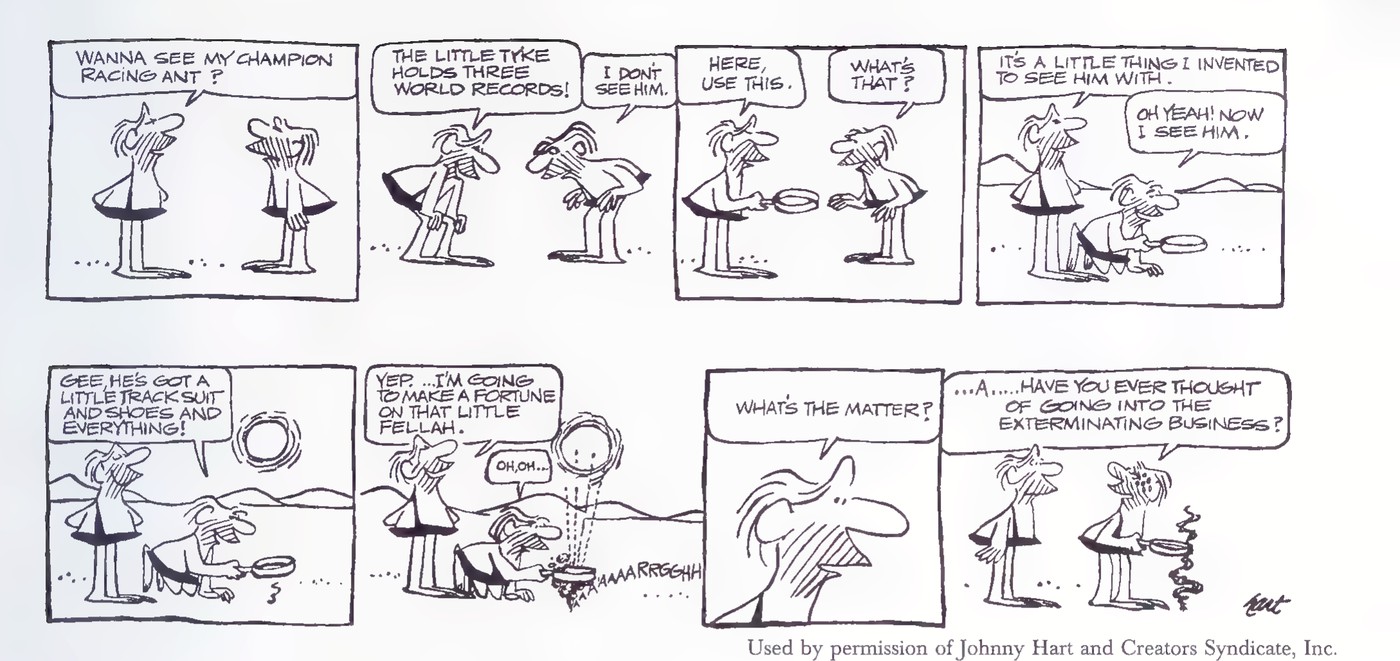
Used by permission of Johnny Hart and Creators Syndicate, Inc.
Lesson 2: Proving Lines Parallel
So far in our study of geometry, we haven’t paid much attention to parallel lines. The idea that they never meet is the basis for our definition of them, as you may recall.
Definition
Two lines are parallel iff they lie in the same plane and do not intersect.
B. C. and Peter’s approach to trying to determine whether two lines meet illustrates the fact that, in practice, our definition of parallel lines is difficult to use. Lines are infinite in extent. We can’t look everywhere along them to find out if they intersect.
The solution to this problem is to look at a third line that cuts across the two lines that we are wondering about. For example, lines l₁ and l₂ in the figure at the right appear to be parallel. The third line, t, intersects them to form a number of angles. If we know that certain of these angles are equal, such as the pair indicated, then it is easy to prove that the lines must be parallel.
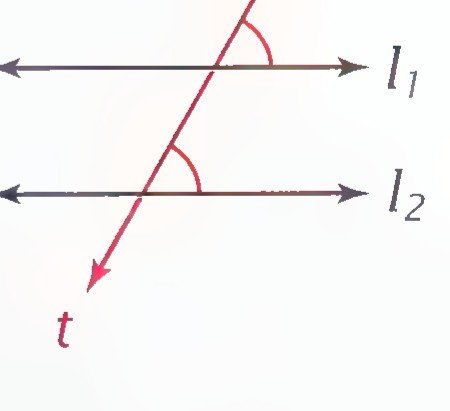
The third line is called a transversal. The word “transversal” comes from the Latin word transversus, meaning “turned across.” A transversal is a line that “goes across”—that is, “intersects” two or more lines in different points.
p. 220
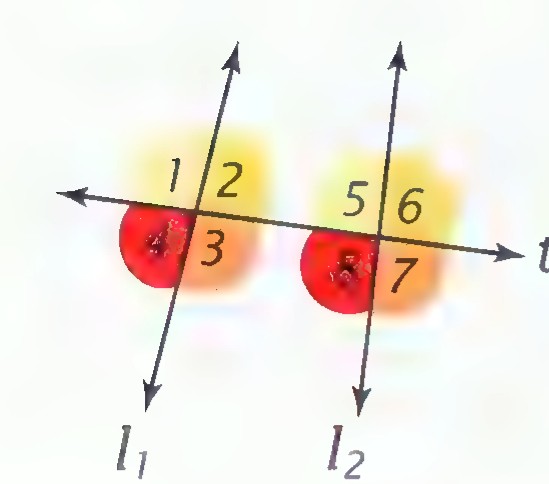
Corresponding angles
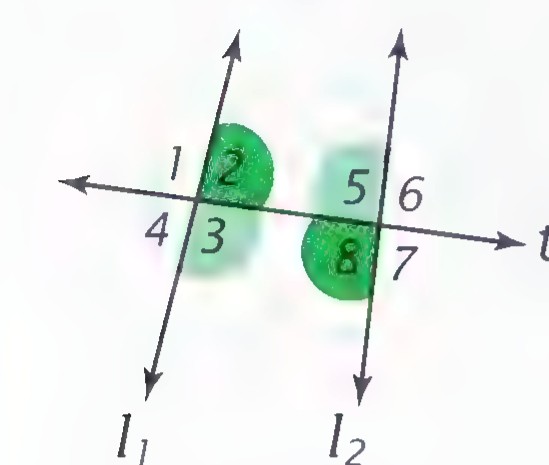
Alternate interior angles
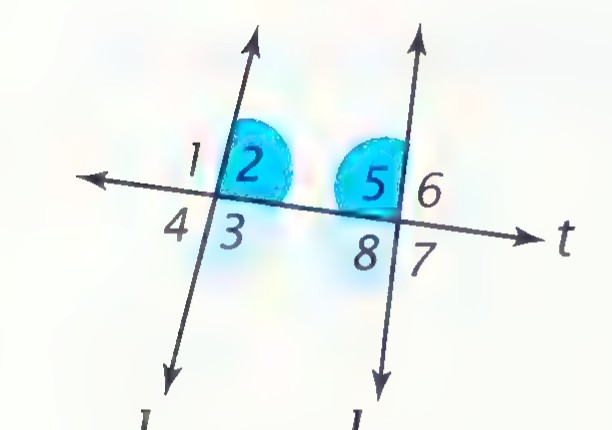
Interior angles on the same side of the transversal
When a transversal intersects two lines that lie in the same plane, it forms pairs of angles that are given special names. In the figure at the left, ∠1 and ∠5 are called corresponding angles. The other pairs of corresponding angles are ∠2 and ∠6, ∠4 and ∠8, and ∠3 and ∠7.
The transversal also forms two pairs of alternate interior angles: ∠2 and ∠8 are alternate interior angles, as are ∠3 and ∠5.
Finally, angles such as ∠2 and ∠5 are called interior angles on the same side of the transversal. So are ∠3 and ∠8.
All we need to know that two lines are parallel is to know that the angles in one of these pairs are related in a special way. We begin by proving that, if a pair of corresponding angles are equal, then the lines are parallel.
Theorem 17
Equal corresponding angles mean that lines are parallel.
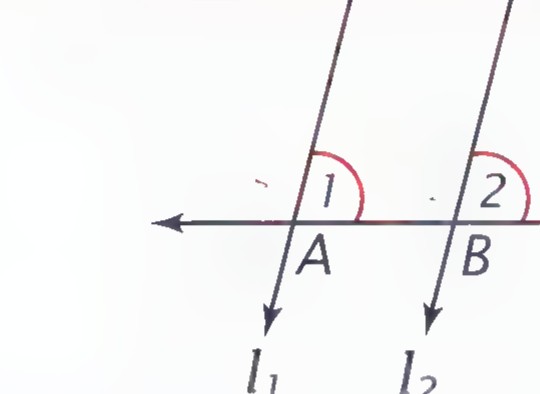
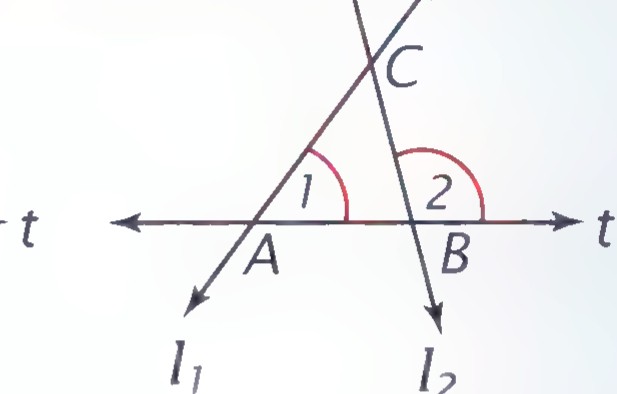
Given: Lines l₁ and l₂ with transversal t, ∠1 = ∠2.
Prove: l₁ ∥ l₂.
Our proof, from Euclid’s Elements, is indirect. Look at the figure at the right above, which illustrates the possibility that the lines might intersect, and you may see the contradiction immediately.
Proof
Suppose l₁ and l₂ are not parallel. Then they must intersect (because they lie in the same plane). If l₁ and l₂ intersect in some point C, then they form a triangle, △ABC. But ∠2 is an exterior angle of this triangle, and ∠1 is a remote interior angle; so ∠2 > ∠1, which contradicts the hypothesis that ∠1 = ∠2. So the assumption that the lines are not parallel is false, and l₁ ∥ l₂.
Knowing that equal corresponding angles mean that lines are parallel makes it easy to establish some other ways to prove lines parallel as well.
Corollary 1. Equal alternate interior angles mean that lines are parallel.
Corollary 2. Supplementary interior angles on the same side of a transversal mean that lines are parallel.
Corollary 3. In a plane, two lines perpendicular to a third line are parallel.
p. 221
Exercises
Set I
Complete the following proofs of the corollaries of this lesson by giving the missing statements.
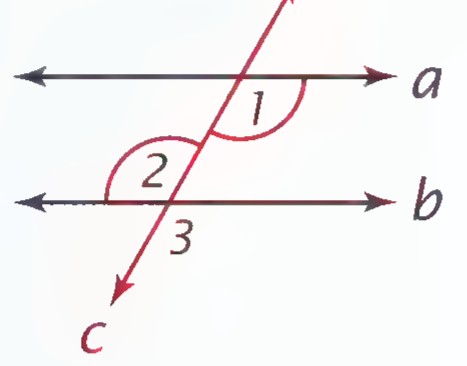
1. Corollary 1. Equal alternate interior angles mean that lines are parallel.
Given: ∠1 = ∠2.
Prove: a ∥ b.
Proof
| Statements | Reasons |
|---|---|
| 1. ? | Given. |
| 2. ? | Vertical angles are equal. |
| 3. ? | Substitution. |
| 4. ? | Equal corresponding angles mean that lines are parallel. |
2. Corollary 2. Supplementary interior angles on the same side of a transversal mean that lines are parallel.
Given: ∠1 and ∠2 are supplementary.
Prove: a ∥ b.
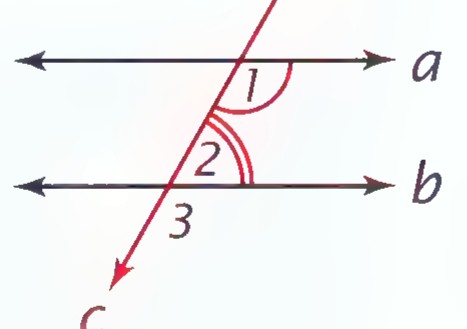
Proof
| Statements | Reasons |
|---|---|
| 1. ? | Given. |
| 2. ? | The angles in a linear pair are supplementary. |
| 3. ? | Supplements of the same angle are equal. |
| 4. ? | Equal corresponding angles mean that lines are parallel. |
3. Corollary 3. In a plane, two lines perpendicular to a third line are parallel.
Given: a ⊥ c and b ⊥ c.
Prove: a ∥ b.
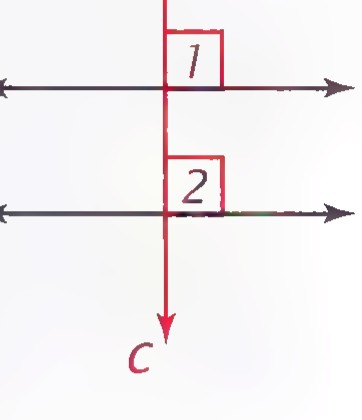
Proof
| Statements | Reasons |
|---|---|
| 1. ? | Given. |
| 2. ? | Perpendicular lines form right angles. |
| 3. ? | All right angles are equal. |
| 4. ? | Equal corresponding angles mean that lines are parallel. |
Folded Paper. The figure below shows a sheet of paper folded into an accordion shape. The pleated edge outlined in color lies in a vertical plane.
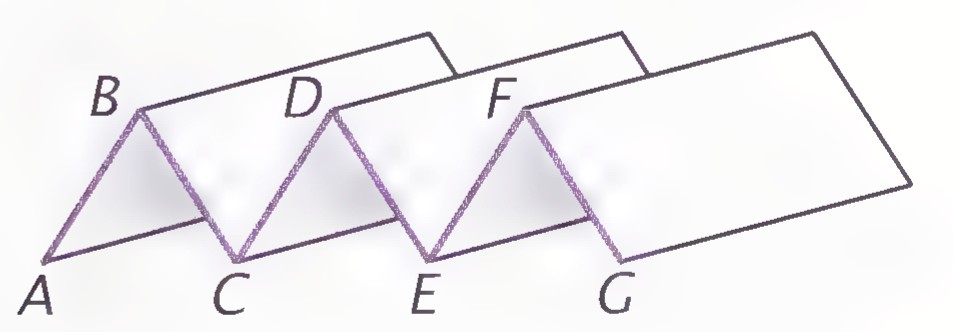
- What are ∠B and ∠C called with respect to lines AB, BC, and CD?
- If ∠B = ∠C, why is AB ∥ CD?
- If CD ⊥ DE and DE ⊥ EF, why is CD ∥ EF?
p. 222
Snake Track. As a sidewinding snake moves across the desert, its track appears as a series of lines, each at an angle of about 60° to the snake’s line of travel.*
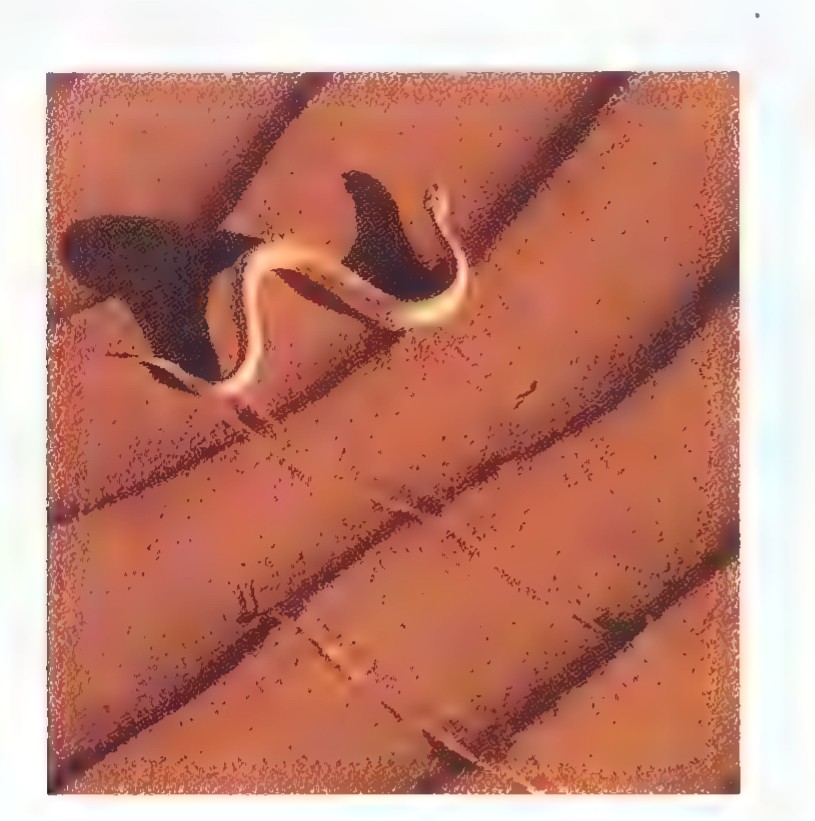
In the figure below, t is the snake’s line of travel and a, b, and c are parts of its track.
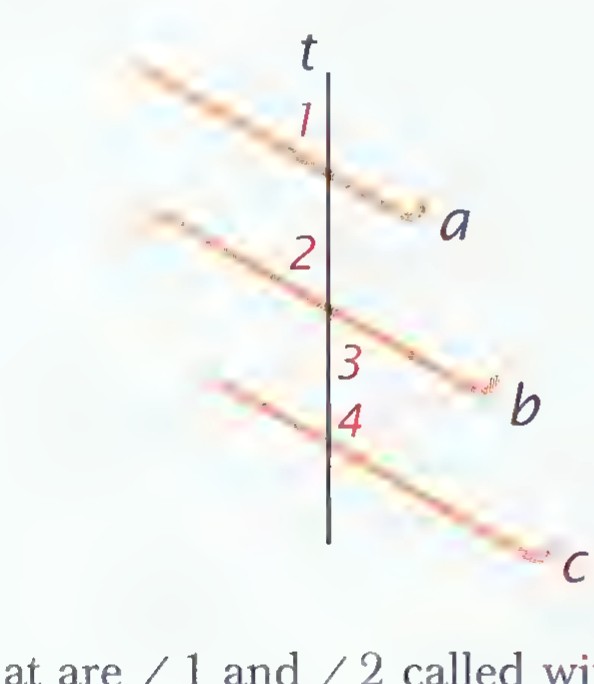
- What are ∠1 and ∠2 called with respect to the transversal?
- If ∠1 and ∠2 each equal 60°, what can you conclude about the lines of a and b?
- Why?
- What are ∠3 and ∠4 called?
- If ∠3 = 60° and ∠4 = 120°, how are ∠3 and ∠4 related?
- What can you conclude about the lines of b and c?
- Why?
I-Beam. A shape commonly used in beams of structural steel is shown below.
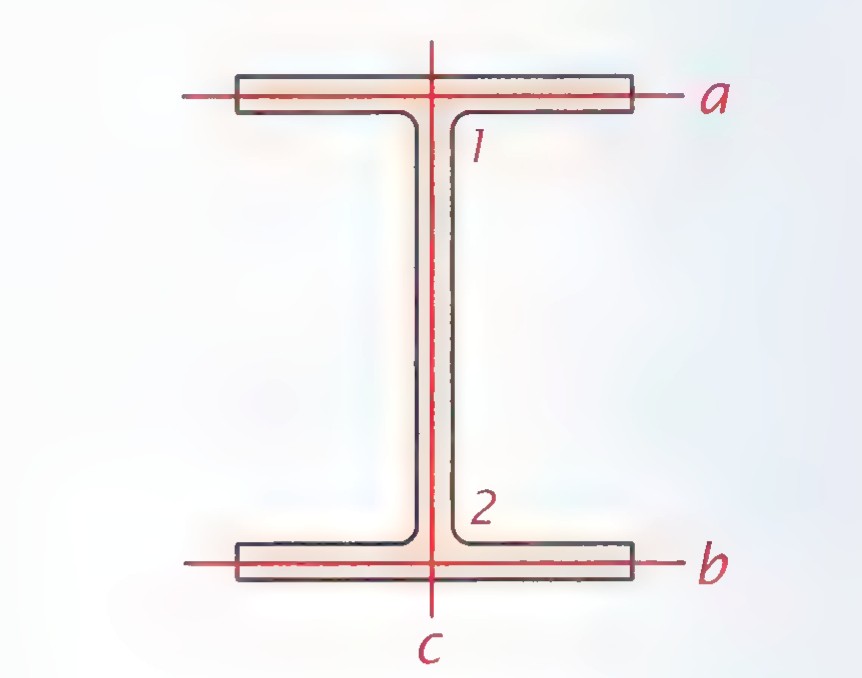
Can you conclude that a ∥ b if you know that
- ∠1 = ∠2?
- ∠1 and ∠2 are supplementary?
- a ⊥ c and b ⊥ c?
Parallel Lines. Some of the line segments in the figure below appear to lie in parallel lines.
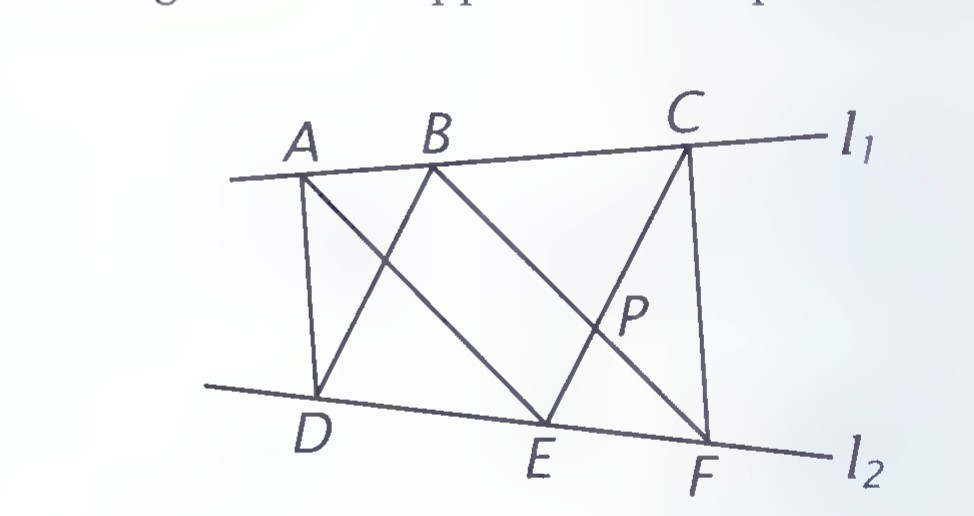
- Copy the figure and mark its angles as needed to answer the following questions.
- Which lines are parallel if ∠AED = ∠BFD?
- Why?
- Which lines are parallel if ∠DBF = ∠BPC?
- Why?
- Which lines are parallel if ∠DAC and ∠ACF are supplementary?
- Why?
* “How Snakes Move,” by Carl Gans (Scientific American, June 1970).
p. 223
Set II
Drafting Triangles. Two identical drafting triangles are sometimes placed together by a navigator in plotting a chart.
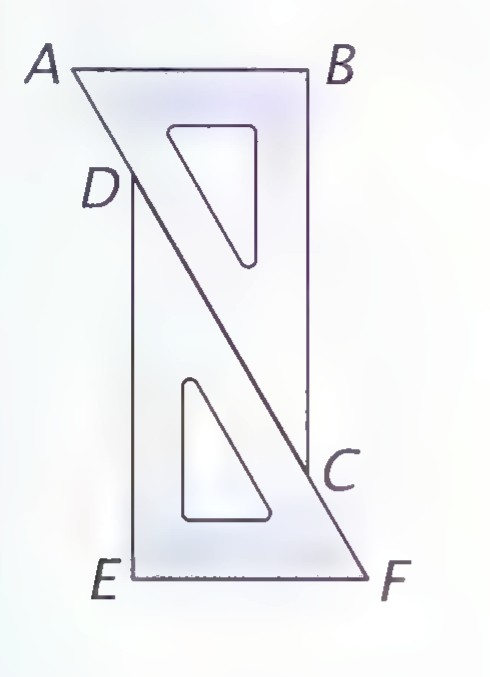
- As long as points A, D, C, and F are lined up, AB must be parallel to EF. Why?
- Why must BC be parallel to DE?
Optical Illusion. In the optical illusion below, two lines cross a V-shaped pattern.*
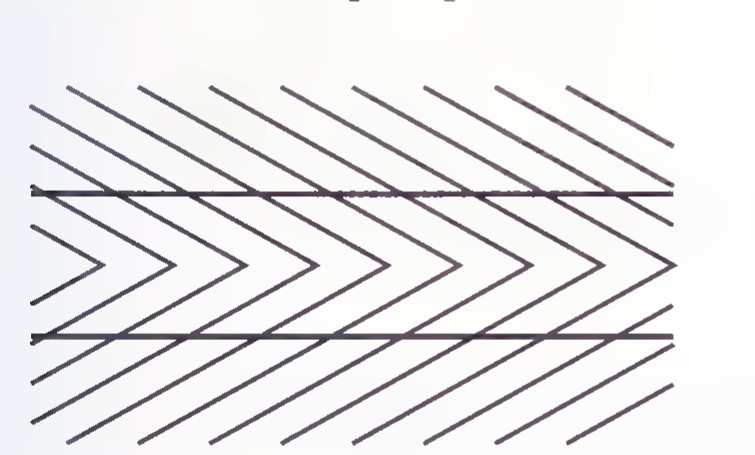
- Draw the figure as shown below, in which all but one of the Vs have been removed.
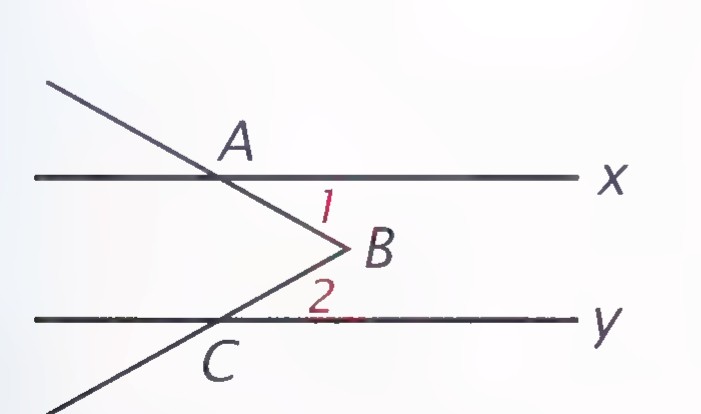
- If ∠1 = ∠2, can you conclude that x ∥ y? Explain.
Suppose line AB is drawn to intersect y at D.
- (continued) Extend line AB so that it intersects line y. Label the intersection D.
- If ∠1 = ∠2 and BD = BC, can you conclude that x ∥ y? Explain.
Different Proofs. Here are two different proofs for the same problem. Tell the missing reasons in each proof.
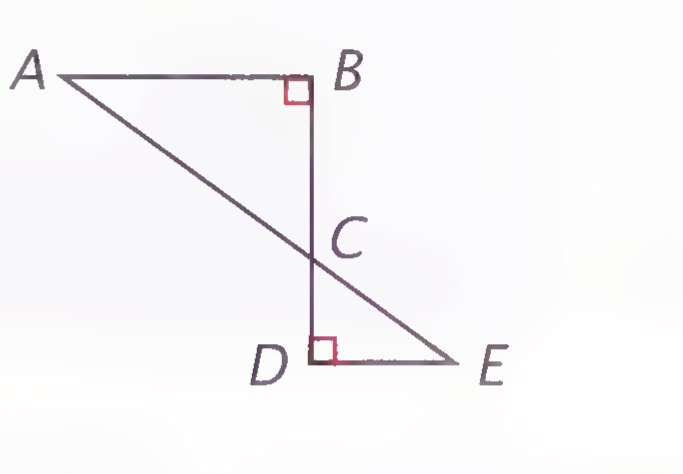
Given: ∠ABD and ∠BDE are right angles.
Prove: AB ∥ DE.
29. Proof
| Statements | Reasons |
|---|---|
| 1. ∠ABD and ∠BDE are right angles. | Given. |
| 2. AB ⊥ BD and BD ⊥ DE. | Why? |
| 3. AB ∥ DE. | Why? |
30. Proof
| Statements | Reasons |
|---|---|
| 1. ∠ABD and ∠BDE are right angles. | Given. |
| 2. ∠ABD = ∠BDE. | Why? |
| 3. AB ∥ DE. | Why? |
Construction Exercise. Use your construction tools to do the following construction as accurately as you can.
- Construct △ABC with base AB = 11 cm, AC = 9 cm, and BC = 7 cm. Construct the line that bisects ∠C and let D be the point in which the line intersects AB. Construct
* Can You Believe Your Eyes? by J. R. Block and Harold E. Yuker (Brunner/Mazel, 1992).
p. 224
the perpendicular bisector of CD; let E be the point in which the bisector intersects AC, let F be the point in which it intersects CD, and let G be the point in which it intersects BC. Draw DE and DG.
Mark your figure as needed to answer the following questions.
- How many right angles are in the figure?
- Why is △CFE ≅ △CFG?
- Why is EF = FG?
- Why are all four triangles surrounding F congruent?
- Why is CG = GD = DE = EC?
- Why is CG ∥ DE and GD ∥ EC?
- Is EG ∥ AB?
Write complete proofs for each of the following.
39.
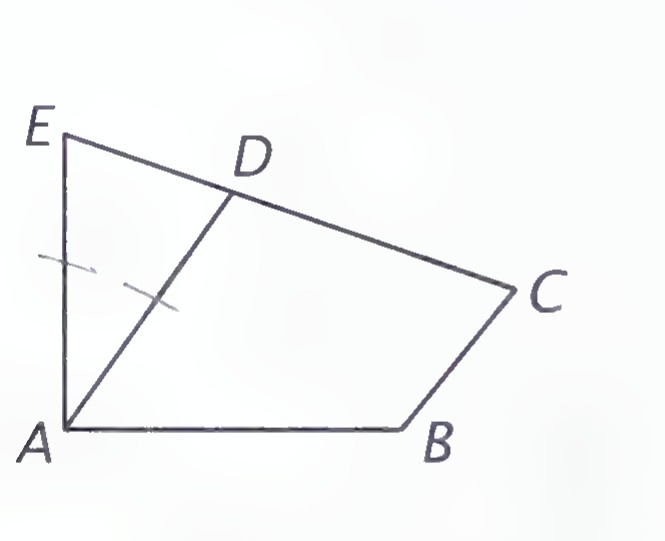
Given: AE = AD and ∠E = ∠BCE.
Prove: AD ∥ BC.
40.
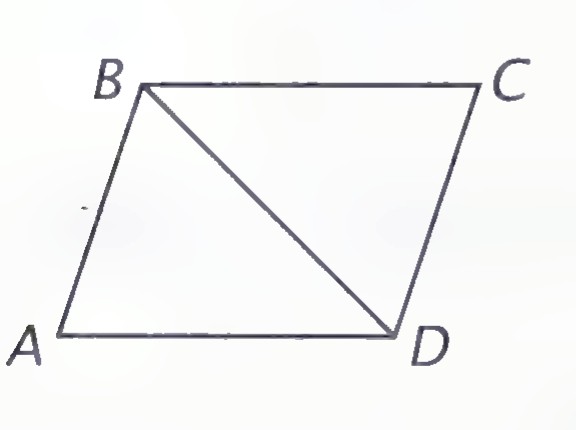
Given: AB = CD and AD = BC.
Prove: AB ∥ CD.
Set III
What Do You See? Sometimes what you think you see determines how you see it.*
- Which cross bar in the figure below is perpendicular to the vertical bar?
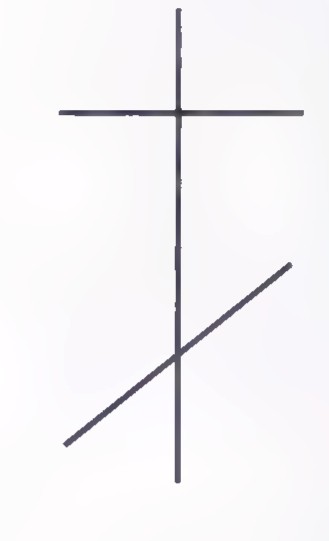
- Which cross bar in the figure below is perpendicular to the vertical bar?
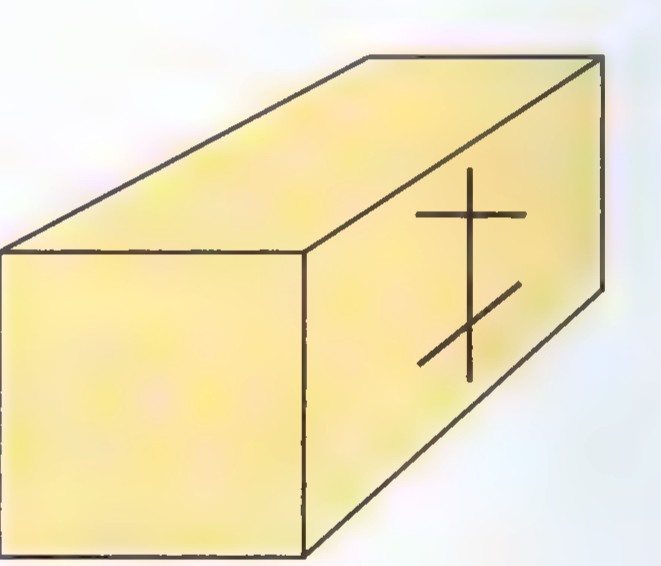
- If you didn’t give the same answer to both questions, why not? Aren’t they the same figure?
- Is it possible that both cross bars are perpendicular to the vertical line? Explain.
- If they are, does it follow that they are parallel? Explain.
* Human Information Processing: An Introduction to Psychology, by Peter H. Lindsay and Donald A. Norman (Harcourt Brace Jovanovich, 1977).
p. 225
Lesson 3: The Parallel Postulate
The most famous and enduring riddle of geometry arose from a construction.
Construction 7
To construct a line parallel to a given line through a given point.
The idea behind this construction is simple: equal corresponding angles mean that lines are parallel. To construct the parallel line, we draw a transversal and copy an angle.
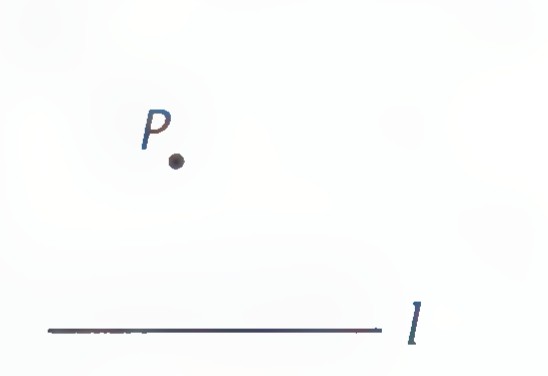
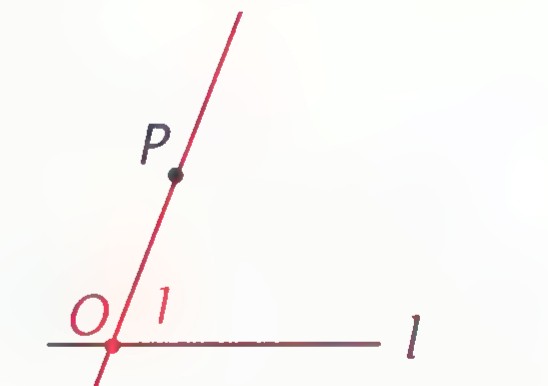
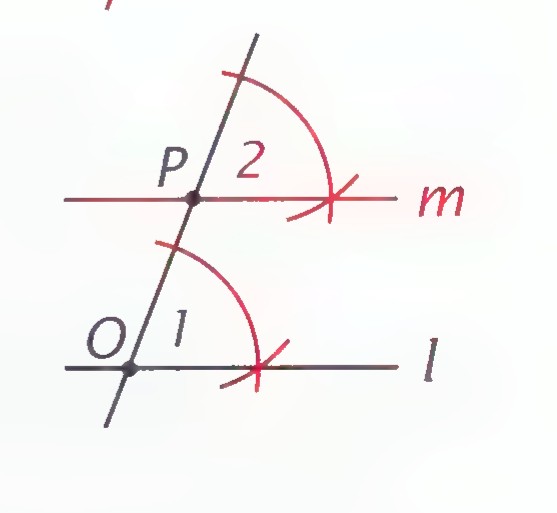
- Let l be the given line and P be the given point.
- Choose any point O on line l and draw line PO. Name one of the angles formed at O ∠1 as shown in the second figure at the right.
- Copy ∠1 at P as shown in the third figure. Name it ∠2.
Because ∠1 and ∠2 are equal corresponding angles formed by lines m and l and transversal PO, m ∥ l.
The problem is:
Is line m the only line that can be drawn parallel to l through point P?
p. 226
The answer surprised mathematicians when it was discovered in the 1830s, and it is not what you might expect even today. To see why, we need to take another look at what we know about perpendicular lines.
We know how to construct a line m perpendicular to a given line l through a given point P. Suppose we do so, with l and m intersecting at A as shown at the left. Could there be another line n passing through P and perpendicular to l with intersection point B as added in color? No, because, if there were, then the remote angle PAB of △PAB would be equal to the triangle’s exterior angle at B. This equality would contradict the fact that an exterior angle of a triangle is greater than either remote interior angle and proves that
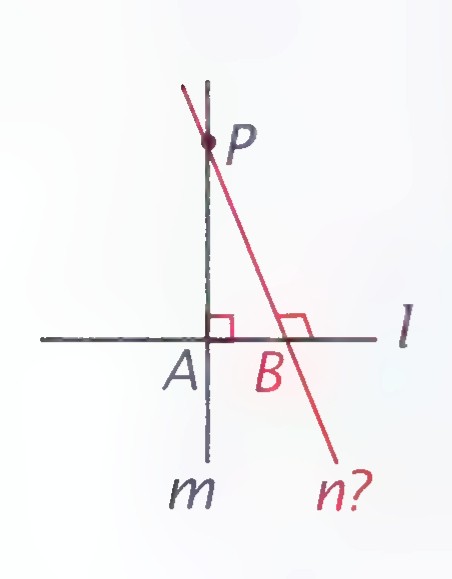
Through a point not on a line, there is exactly one line perpendicular to the given line.
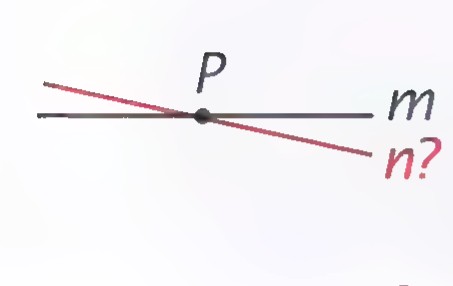
Can we use a similar proof by contradiction to show that there can’t be two different lines m and n through P and parallel to a given line l? This riddle took more than 2,000 years to work out. The surprising answer came with the discovery of non-Euclidean geometries, which we will learn about in Chapter 16. There are consistent geometries that satisfy all of the postulates and theorems that we have learned so far in which more than one line can be parallel to a given line through a point not on it! This fact astonished people when it was discovered in the 1830s.
Euclid knew that he needed some further assumption to go forward with his development of geometry (his Fifth Postulate), and we need such a postulate, too. We call ours the Parallel Postulate.
Postulate 7. The Parallel Postulate
Through a point not on a line, there is exactly one line parallel to the given line.
With this postulate, it is easy to prove the following theorem.
Theorem 18
In a plane, two lines parallel to a third line are parallel to each other.
Exercises
Set I
Optical Illusion. Every pair of lines in this optical illusion appears to be either perpendicular or parallel.
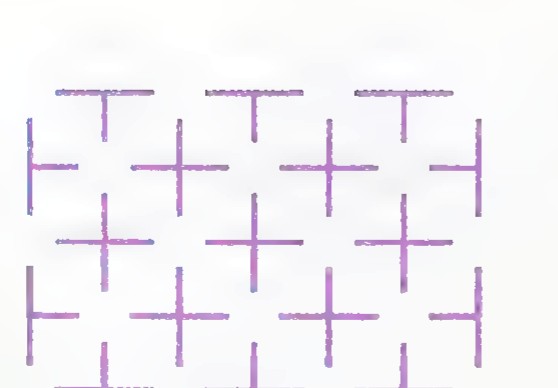
- How many lines does the figure appear to have?
What determines whether or not two lines are
- perpendicular?
- parallel?
- What do you see in the figure that “isn’t there”?
p. 227
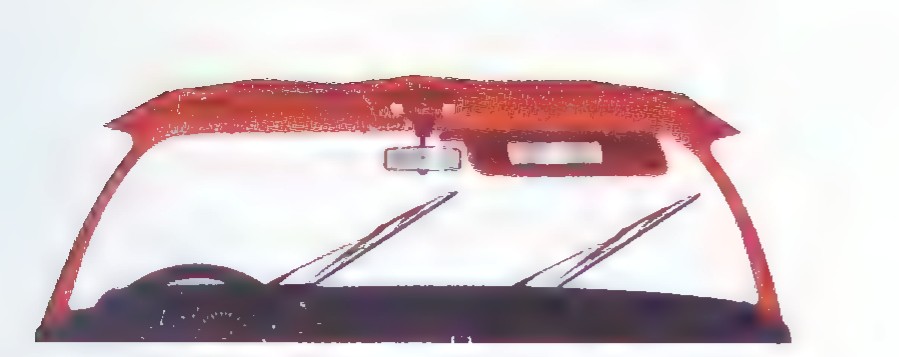
Windshield Wipers. One type of windshield wipers has two blades that remain parallel as they move back and forth.
In the figure below, the lines of the wipers, a and b, form angles with the transversal c.
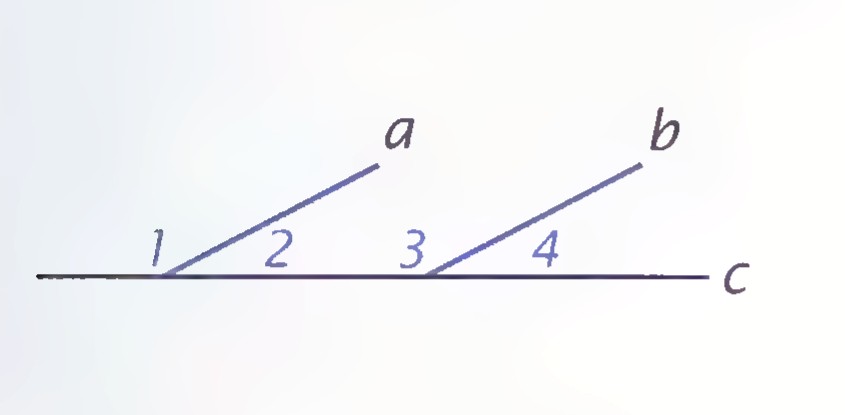
- Which angle corresponds to ∠1?
- If these two angles are always equal, why do the wipers always stay parallel?
- What are ∠2 and ∠3 called with respect to lines a, b, and c?
- If these two angles are always supplementary, why are the wipers always parallel?
- Name another pair of angles that, if they were equal, would ensure that the wipers are parallel.
- If ∠1 and ∠4 are supplementary, does it follow that the wipers are parallel? Why or why not?
Exactly One. The words “exactly one” have a twofold meaning: that there is at least one and that there is no more than one.
- Which would be easier to prove: that a cat has at least one flea or that it has no more than one flea?
Tell whether one or more of the following expressions could correctly replace the question mark in each of the following statements: “at least,” “no more than,” “exactly.”
- A line segment has ? one midpoint.
- An angle has ? one ray that bisects it.
- A triangle contains ? one right angle.
- Two lines intersect in ? one point.
- Lines are perpendicular if they form ? one right angle.
- Through a point on a line, there is ? one line perpendicular to the line.
- Through a point not on a line, there is ? one line perpendicular to the line.
Parallelogram. The figure below shows a method for constructing a parallelogram, a quadrilateral with two pairs of parallel sides.
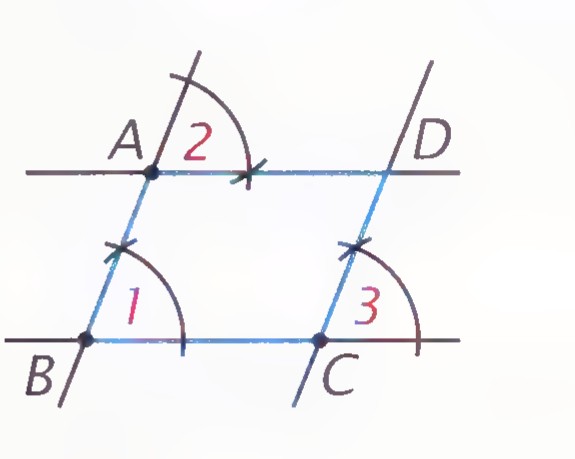
- Draw two intersecting lines and mark points A, B, and C on them as shown in the figure. Use your straightedge and compass to construct parallelogram ABCD by copying ∠1 as illustrated.
- Why is AD ∥ BC and CD ∥ BA?
- What else seems to be true about segments AD and BC as well as about segments CD and BA?
What relation seems to exist between
∠1 and ∠BCD?
∠1 and ∠ADC?
Does parallelogram ABCD appear to have line symmetry? Explain why or why not.
Euclid’s Assumption. Euclid made the following assumption:
If two lines form interior angles on the same side of a transversal whose sum is less than 180°, then the two lines meet on that side of the transversal.
p. 228
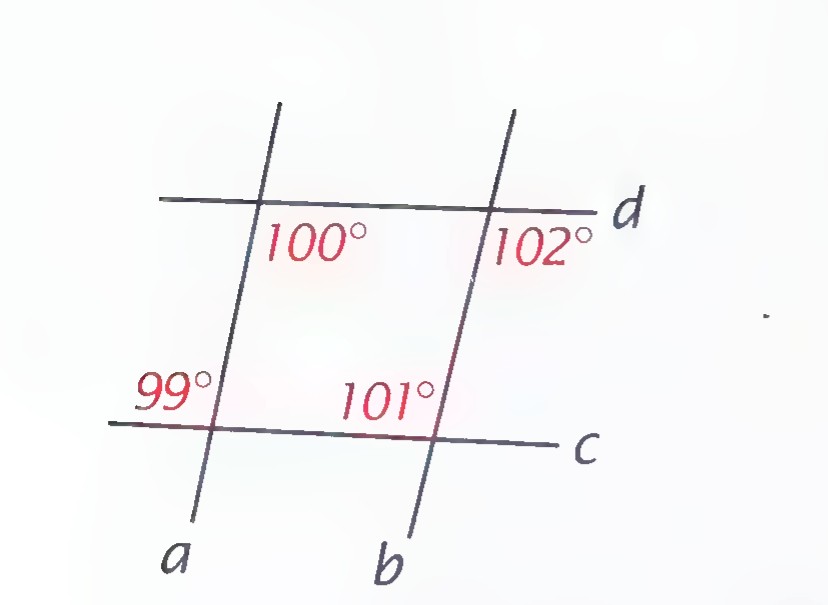
The figure above shows four lines intersecting at four points.
- How many of these lines can be considered to be transversals?
- Copy the figure and write the measures of the other angles surrounding each of the four points.
In what direction (left, right, up, or down) do lines
- a and b intersect?
- c and d intersect?
Set II
Gateway. Architect Francis Ching wrote:
Two points can denote a gateway signifying passage from one place to another. Extended vertically, the two points define both a plane of entry and an approach perpendicular to it.*
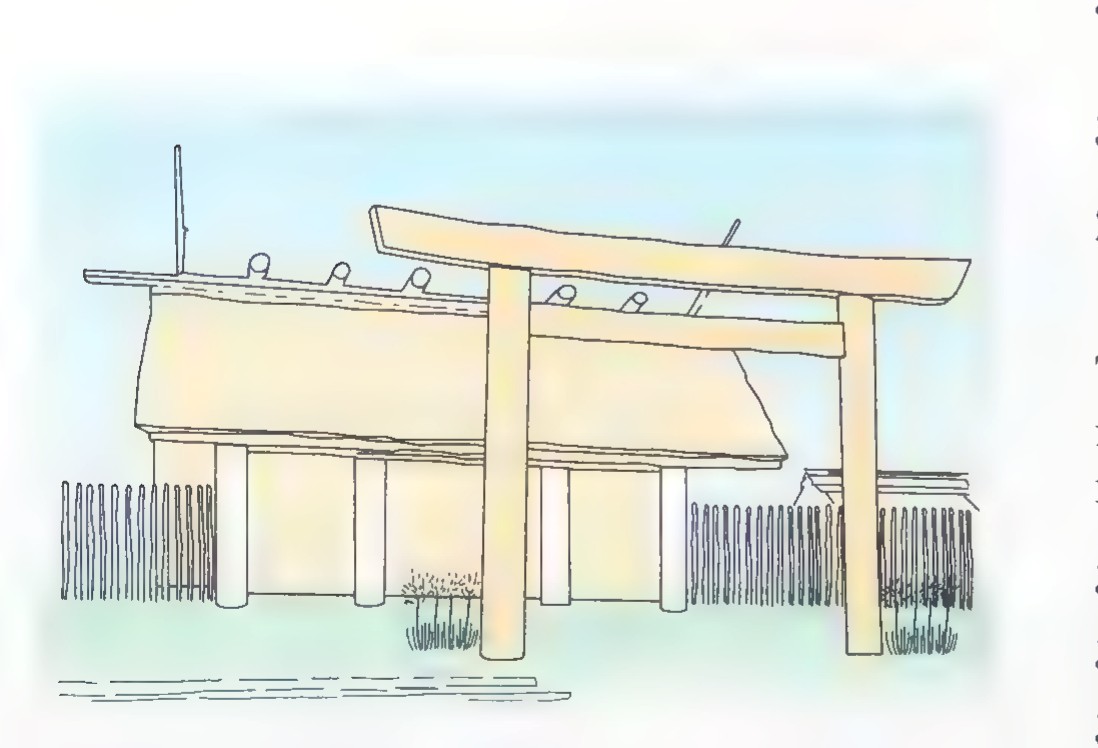
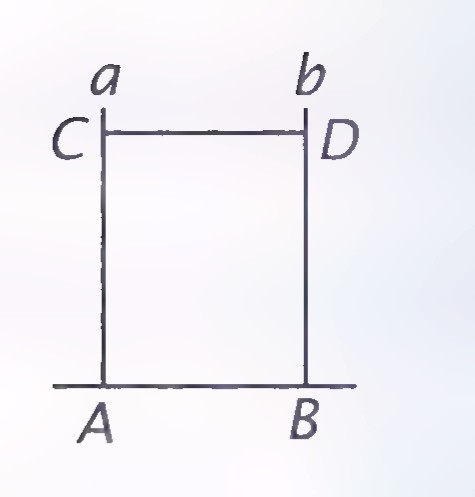
Draw the gateway described by doing the following.
Mark two points 4 cm apart and label them A and B.
Draw line AB and construct two lines, a and b, perpendicular to it at points A and B.
Mark point C on line a and point D on line b so that AC = BD = 5 cm.
Draw CD.
In the plane of the gateway (that is, the plane of your paper), how many lines can be drawn that are perpendicular to AB
through point A?
through point D?
What relation do lines a and b have?
Why?
What relation do lines AB and CD seem to have?
How many lines can be drawn that are parallel to AB through point C?
Why?
(continued) Draw line segments AD and BC.
Tell whether you think we have enough information to be able to prove each of the following statements.
- △ADB ≅ △BCA.
- AD = BC.
- △ADC ≅ △BCD.
- ∠ACD = ∠BDC.
- △ABC ≅ △CDA.
* Architecture: Form, Space, and Order, by Francis D. K. Ching (Wiley, 1996).
p. 229
Theorem 18. Complete the following indirect proof of Theorem 18.
In a plane, two lines parallel to a third line are parallel to each other.
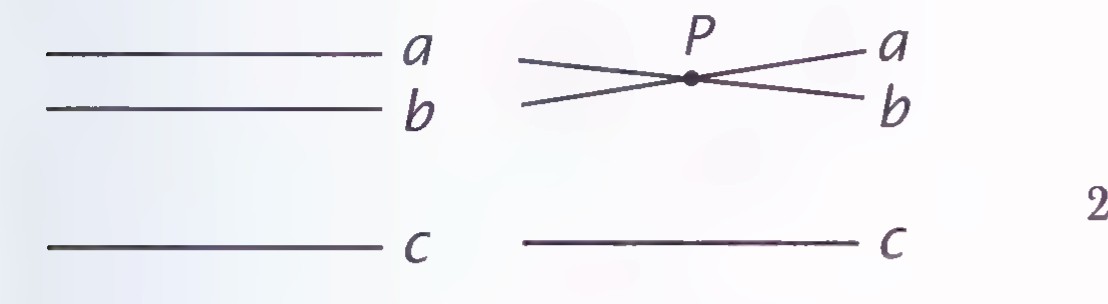
Given: Lines a, b, and c lie in a plane; a ∥ c and b ∥ c.
Prove: a ∥ b.
Proof
- Suppose ?.
If a and b are not parallel, then they intersect in some point P.
- But a ∥ c and b ∥ c. Why?
- This contradicts the fact that ?.
- Therefore, what we assumed is false and ?.
Proclus’s Claim. The Greek geometer Proclus said, “In a plane, if a line intersects one of two parallels, it will intersect the other also.”
In the figure at the right, a ∥ b and line c intersects line a at P.
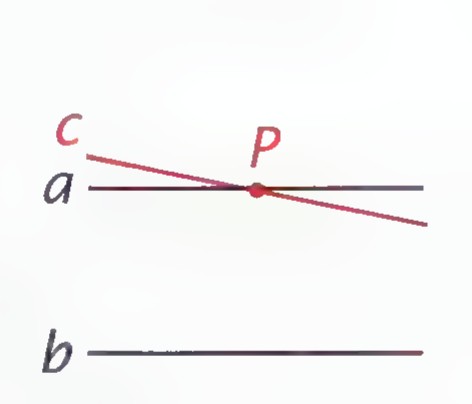
- Does it follow that line c must also intersect line b?
- Explain why or why not.
Set III
A Dragon Curve. The figure at the right, a model of a “dragon curve,” can be formed by folding paper.*
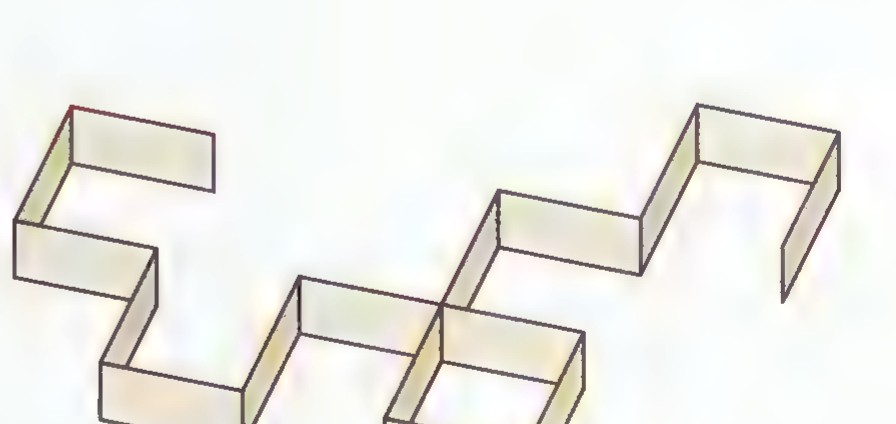
- Cut a strip of paper 12½ inches long and ¼ inch wide. Fold it in half by putting the narrow ends together. Fold the result in half in the same direction. Continue in this way two more times. Open the paper so that, when viewed from the edge, every fold forms a right angle.
- On graph paper, draw a pair of axes extending 10 units in each direction from the origin. Plot the following points and connect them in alphabetical order with line segments:
| A (−4, 8), | G (−2, 4), | M (2, 6), |
| B (−7, 9), | H (1, 3), | N (5, 5), |
| C (−8, 6), | I (0, 0), | O (6, 8), |
| D (−5, 5), | J (3, −1), | P (9, 7), |
| E (−6, 2), | K (4, 2), | Q (8, 4). |
| F (−3, 1), | L (1, 3), |
- How is the figure that you have drawn related to your paper strip?
- Which point corresponds to the position of the first fold?
- Which points correspond to the position of the second fold?
- In what way is the second half of the figure (from I to Q) related to the first half (from A to I)?
- What do you notice about the coordinates of the corners of the two halves of the figure?
* Mathematical Magic Show, by Martin Gardner (Knopf, 1977).
p. 230
Lesson 4: Parallel Lines and Angles
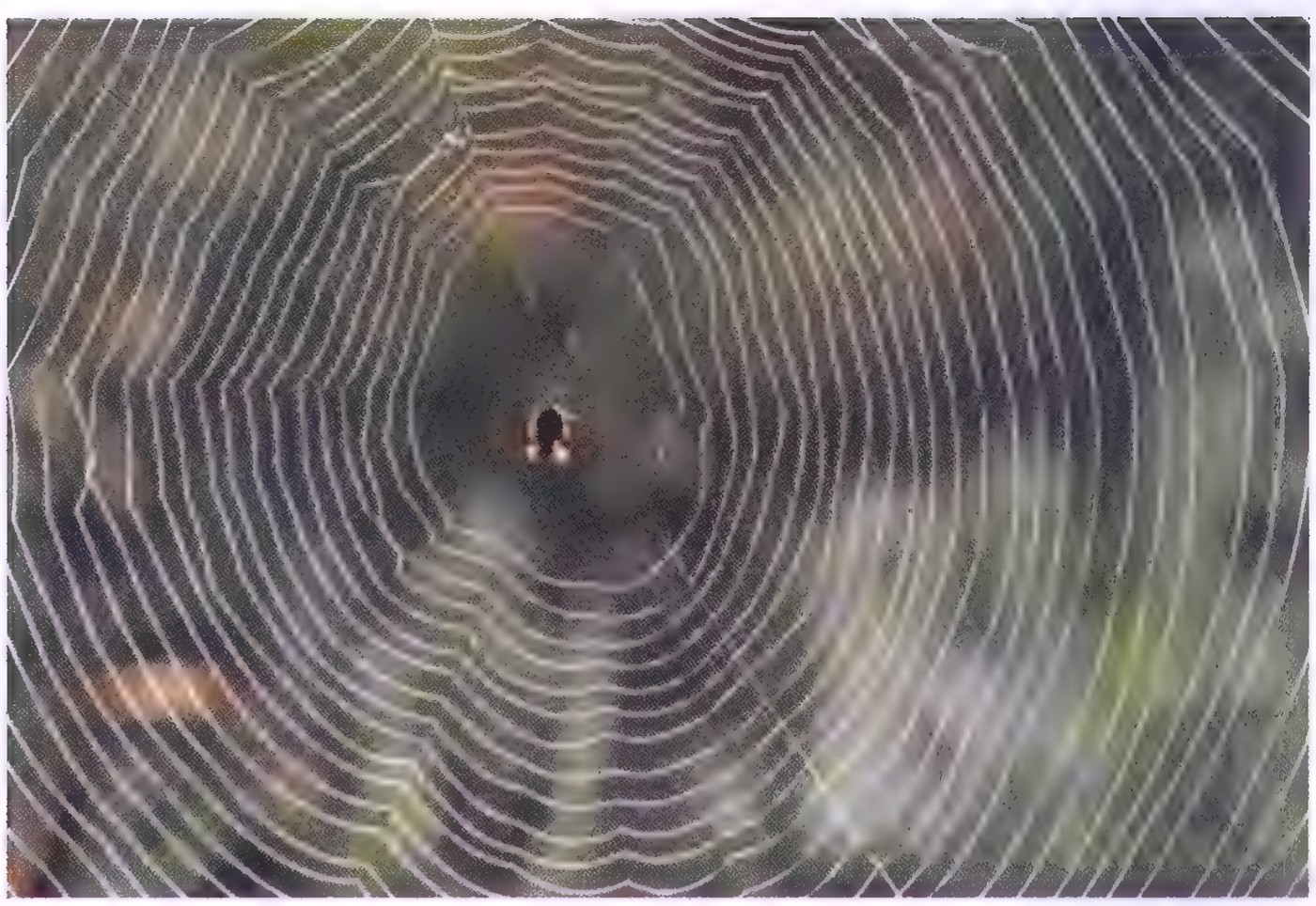
Biologists see a lot of geometry when looking at a spider’s web. Jean Henri Fabre, in his book The Life of the Spider, wrote:
In each sector, the various chords, the elements of the spiral windings, are parallel to one another. . . . With the two radiating lines that frame them they form obtuse angles on one side and acute angles on the other; and these angles remain constant in the same sector, because the chords are parallel.
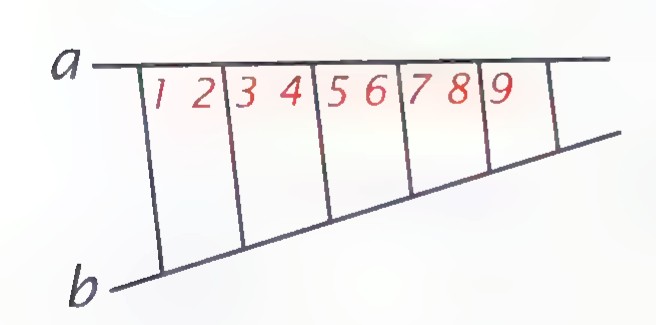
In the figure at the left, lines a and b are the “radiating lines” and the segments between them are the parallel “chords.” Fabre said that angles such as ∠1 and ∠3 are equal because the chords are parallel. In other words, parallel lines form equal corresponding angles with a transversal.
This statement seems like a theorem that we have already proved, but it is not. Look at the two statements written in if-then form:
Theorem 17. If two lines form equal corresponding angles, then the lines are parallel.
Statement about spider web. If two lines are parallel, then they form equal corresponding angles.
p. 231
It is tempting to assume that these two statements say the same thing, but they do not: one is the converse of the other. Remember that the converse of a true statement may be false. Here is another pair of statements about parallel lines that obviously do not say the same thing:
Statement. If two lines are parallel, then they lie in the same plane. (True.)
Converse. If two lines lie in the same plane, then they are parallel. (False.)
This is a reminder that, even though we may think that the converse of a theorem that we have already proved is true, to add it to our deductive system we must either assume it as a postulate or prove it as a new theorem. In regard to Fabre’s statement about the spider web, we can easily prove it by using the Parallel Postulate.
Theorem 19
Parallel lines form equal corresponding angles.
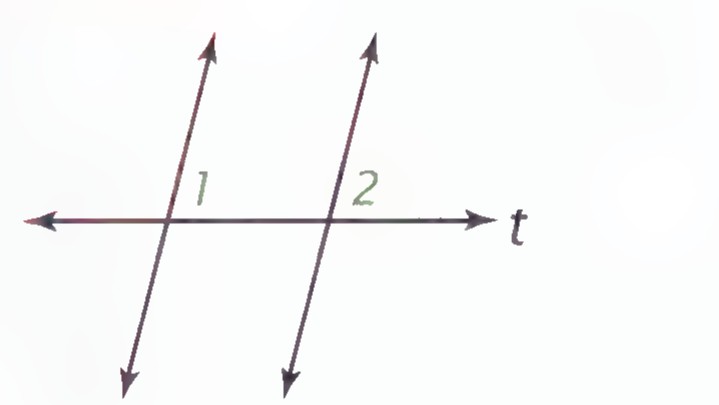
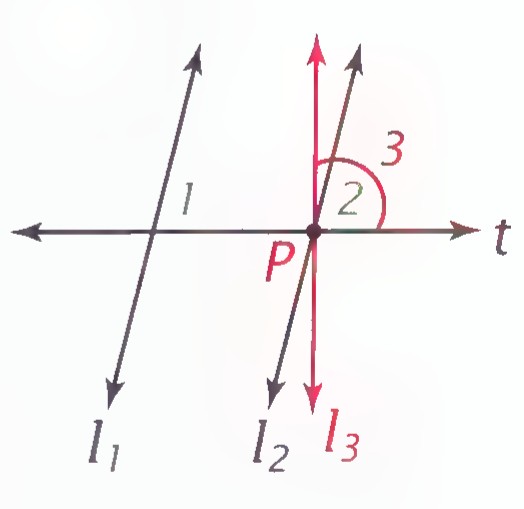
Given: Lines l₁ and l₂ with transversal t, l₁ ∥ l₂.
Prove: ∠1 = ∠2.
Proof
Suppose that ∠1 ≠ ∠2. Draw a line l₃ through point P so that ∠3 = ∠1 (the Protractor Postulate). Equal corresponding angles mean that lines are parallel; so l₁ ∥ l₃. But l₁ ∥ l₂ (given); so, through point P, we have two lines parallel to l₁. This contradicts the Parallel Postulate, which says that, through a point not on a line, there is exactly one line parallel to the line. So our assumption that ∠1 ≠ ∠2 is false, and hence ∠1 = ∠2.
Now that we have proved the converse of Theorem 17, it is easy to prove the converses of its corollaries as well.
Corollary 1. Parallel lines form equal alternate interior angles.
Corollary 2. Parallel lines form supplementary interior angles on the same side of a transversal.
Corollary 3. In a plane, a line perpendicular to one of two parallel lines is also perpendicular to the other.
p. 232
Exercises
Set I
Which Fishpole? The figure below appeared in a book of puzzles.* The four lines labeled A, B, C, and D are parallel.
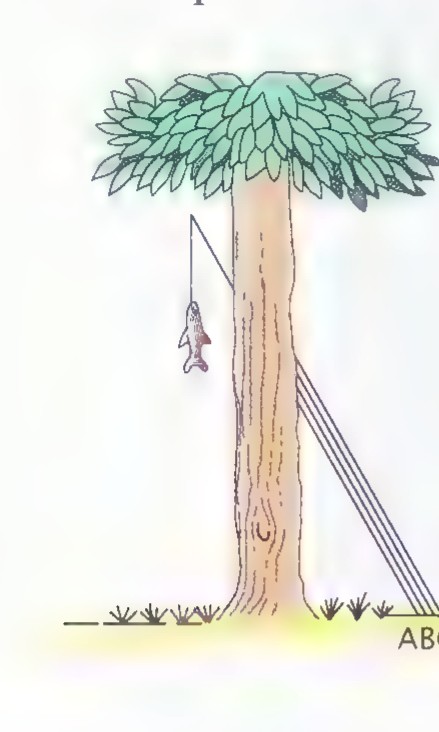
- What can you conclude about the acute angles at A, B, C, and D?
- Why?
- Which fishpole caught the fish?
- What is “puzzling” about this puzzle?
Corollary Proofs. Complete the following proofs of the corollaries of this lesson by giving the missing reasons.
5. Corollary 1. Parallel lines form equal alternate interior angles.
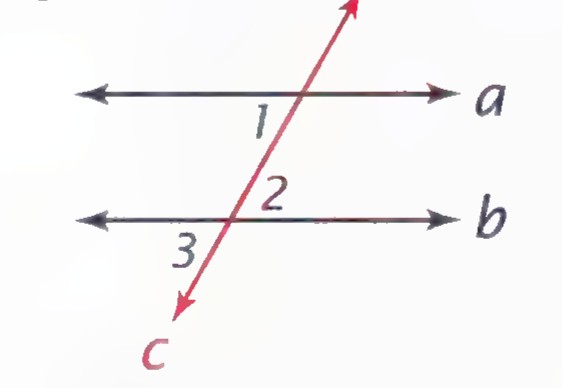
Given: a ∥ b.
Prove: ∠1 = ∠2.
Proof
| Statements | Reasons |
|---|---|
| 1. a ∥ b. | ? |
| 2. ∠1 = ∠3. | ? |
| 3. ∠2 = ∠3. | ? |
| 4. ∠1 = ∠2. | ? |
6. Corollary 2. Parallel lines form supplementary interior angles on the same side of a transversal.
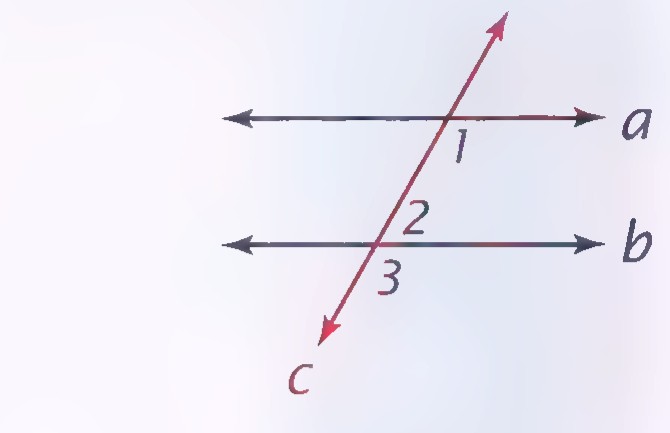
Given: a ∥ b.
Prove: ∠1 and ∠2 are supplementary.
Proof
| Statements | Reasons |
|---|---|
| 1. a ∥ b. | ? |
| 2. ∠1 = ∠3. | ? |
| 3. ∠2 and ∠3 are supplementary. | ? |
| 4. ∠2 + ∠3 = 180°. | ? |
| 5. ∠2 + ∠1 = 180°. | ? |
| 6. ∠1 and ∠2 are supplementary. | ? |
7. Corollary 3. In a plane, if a line is perpendicular to one of two parallel lines, it is also perpendicular to the other.
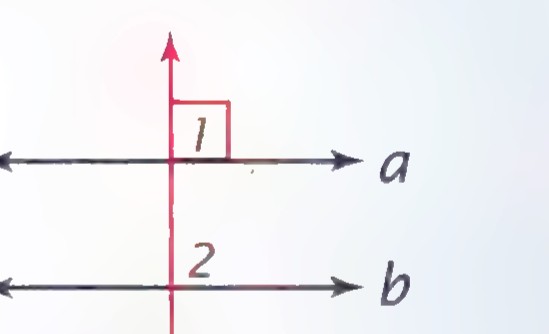
Given: c ⊥ a and a ∥ b.
Prove: c ⊥ b.
Proof
| Statements | Reasons |
|---|---|
| 1. c ⊥ a. | ? |
| 2. ∠1 is a right angle. | ? |
| 3. ∠1 = 90°. | ? |
| 4. a ∥ b. | ? |
| 5. ∠1 = ∠2. | ? |
| 6. ∠2 = 90°. | ? |
| 7. ∠2 is a right angle. | ? |
| 8. c ⊥ b. | ? |
* Challenge! by Charlie Rice (Hallmark Editions, 1968).
p. 233
Bent Pencil. The pencil in this cup appears to be bent because light rays are bent when they go from air into water.

In the figure below, PE ∥ CI and ∠PEN = ∠CIL.
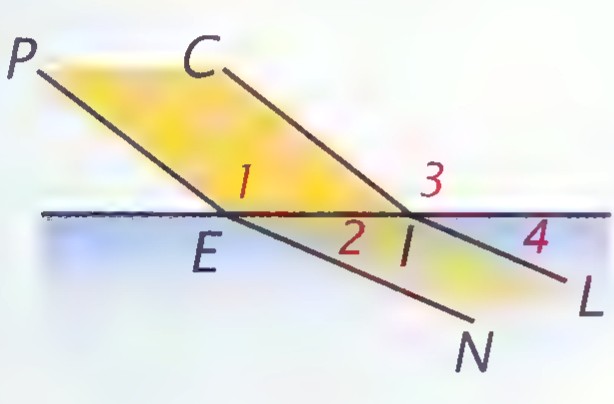
- Why is ∠1 = ∠3?
- Why is ∠PEN = ∠1 + ∠2 and ∠CIL = ∠3 + ∠4?
- Why is ∠1 + ∠2 = ∠3 + ∠4?
- Why is ∠2 = ∠4?
- Why is EN ∥ IL?
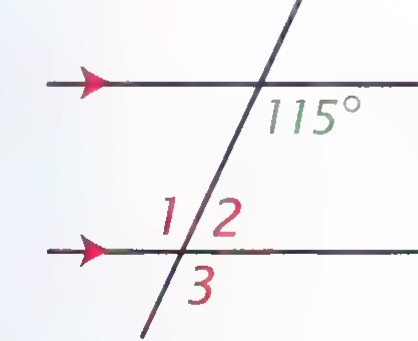
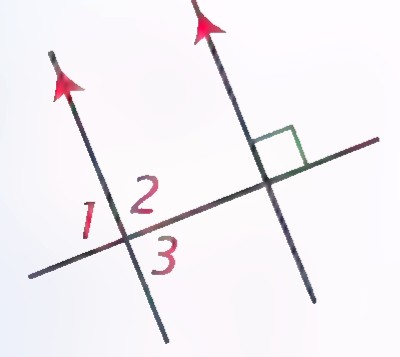
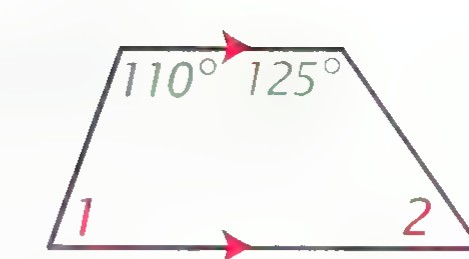
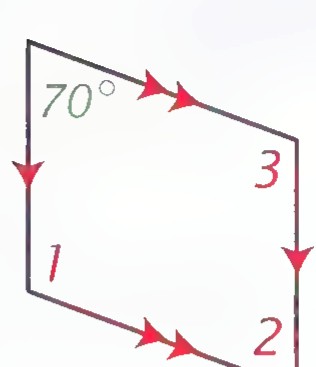
Find the Angles. In each of the following figures, the arrowheads indicate parallel lines. Find the measures of the indicated angles.
City Streets. This map shows some of the streets in New York City. The streets running from left to right on the map are parallel.
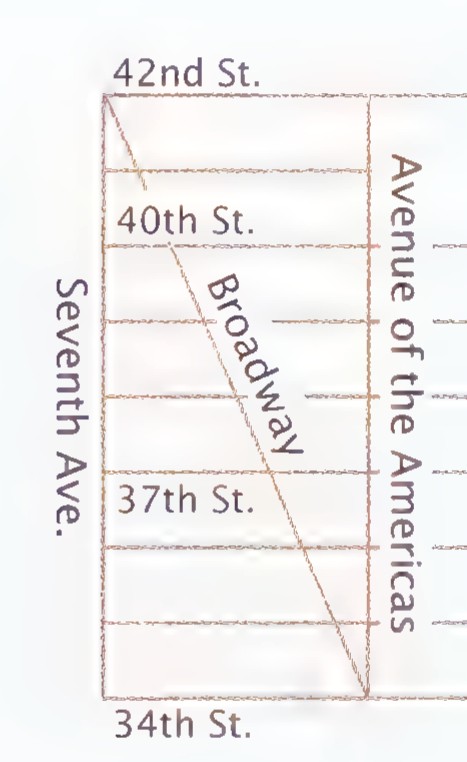
Seventh Ave. and Avenue of the Americas are perpendicular to 34th St.
- What relation must Seventh Ave. have to 42nd St.? Why?
- What relation must Seventh Ave. and Avenue of the Americas have? Why?
One of the acute angles at the intersection of Broadway and 37th St. is 67°.
- How large are the other three angles at that intersection?
- How large are the angles at the intersection of Broadway and 40th St.?
- How do you know?
p. 234
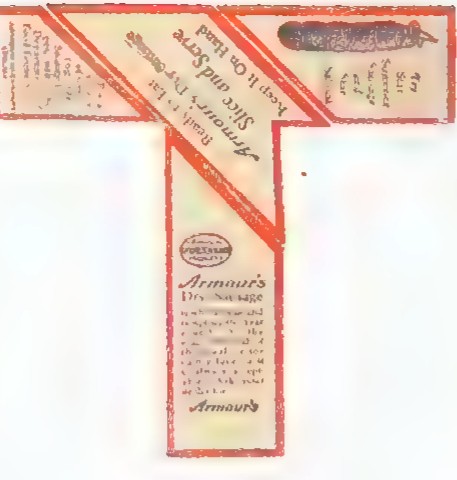
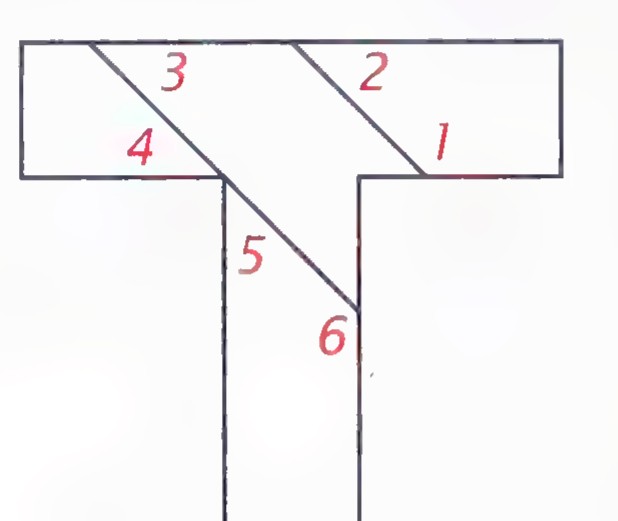
T Puzzle. This four-piece puzzle in the shape of the letter T was once used to advertise sausage! Its edges are parallel and perpendicular, and the two slanted cuts are parallel.
Tell in what way each of the following pairs of angles is related and why.
- ∠1 and ∠2.
- ∠2 and ∠3.
- ∠3 and ∠4.
- ∠2 and ∠4.
- ∠4 and ∠5.
- ∠5 and ∠6.
Set II
Parallel Construction. In the figure below, line l has been constructed through point C by copying ∠A of △ABC as ∠1.
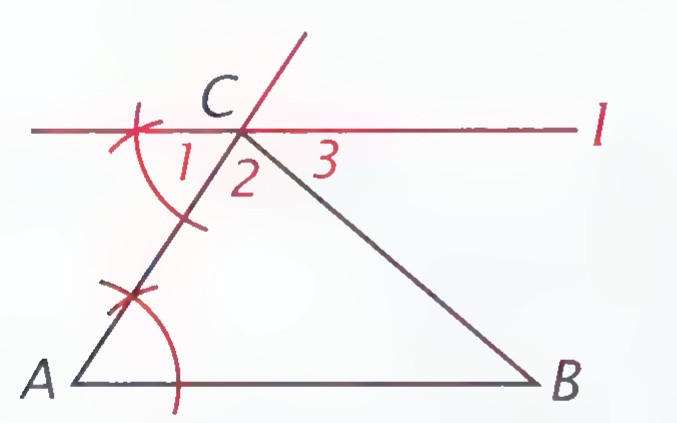
- Draw a figure similar to this one and do the construction.
- Why is l ∥ AB?
- Why is line l the only line that can be constructed parallel to AB through point C?
- Why is ∠3 = ∠B?
- What is ∠1 + ∠2 + ∠3?
- What is ∠A + ∠2 + ∠B?
Overlapping Angles.
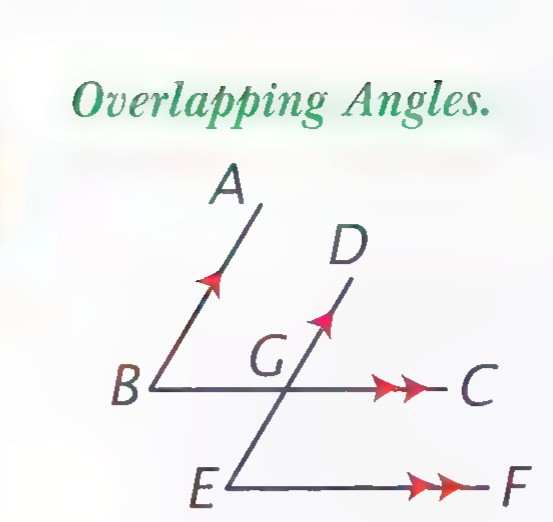
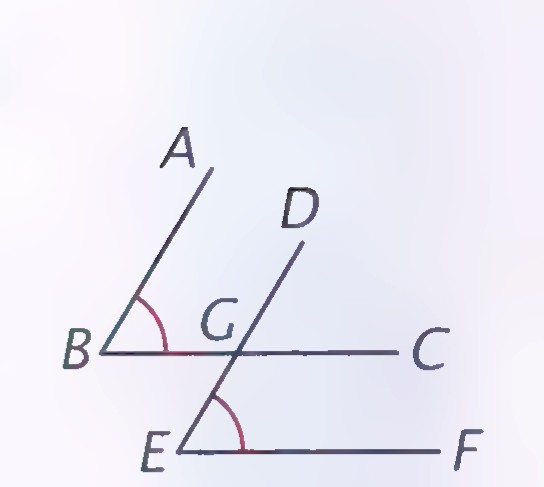
In the figure at the left above, BA ∥ ED and BC ∥ EF. It looks as if ∠B = ∠E.
- Is this necessarily true? Explain why or why not.
In the figure at the right above, ∠B = ∠E. It looks as if BA ∥ ED and BC ∥ EF.
- Is this necessarily true? Explain why or why not.
Sand Dune Lines. When desert sand dunes are seen from a high altitude, they often seem to form parallel lines.*
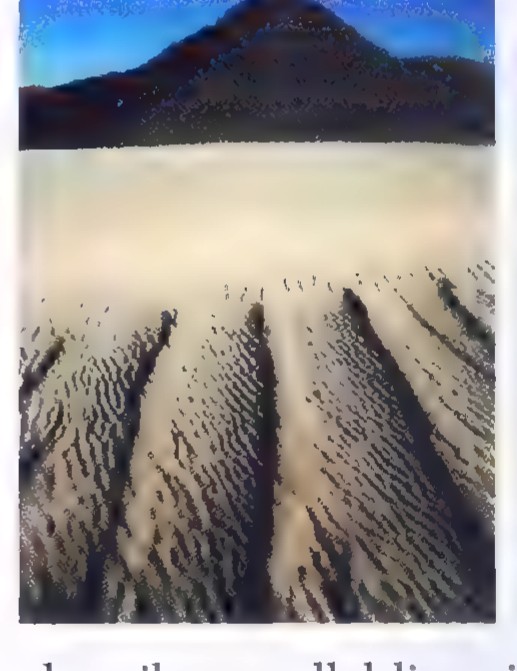
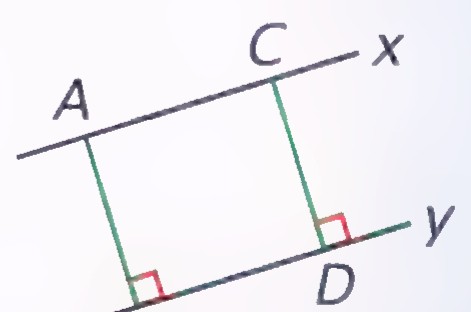
One way to describe parallel lines is to say that they are “everywhere equidistant.” This description suggests that, if x ∥ y in the figure below and AB and CD are both perpendicular to y, then AB = CD.
* The Flying Circus of Physics, by Jearl Walker (Wiley, 1977).
p. 235
- Copy the figure and add to it as needed to answer each of the following questions.
- We can add line AD to the figure. Why?
- Why is ∠CAD = ∠BDA?
- Why is AB ∥ CD?
- Why is ∠BAD = ∠CDA?
- Why is AD = AD?
- Why is △ABD ≅ △DCA?
- Why is AB = CD?
- In general, what would you measure to find the distance between two parallel lines?
SAT Problem. In the figure below, a ∥ b.
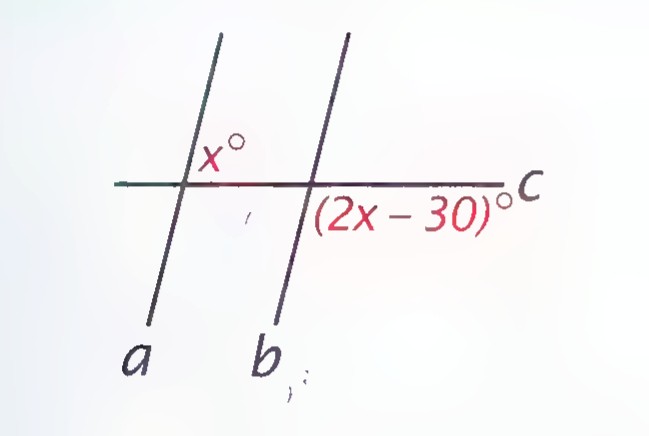
- Write an equation relating the measures of the two indicated angles.
Find the measure of
- the acute angle.
- the obtuse angle.
Construction Problem. In the figure below, line b has been drawn parallel to line a through P. Also PA = PB.
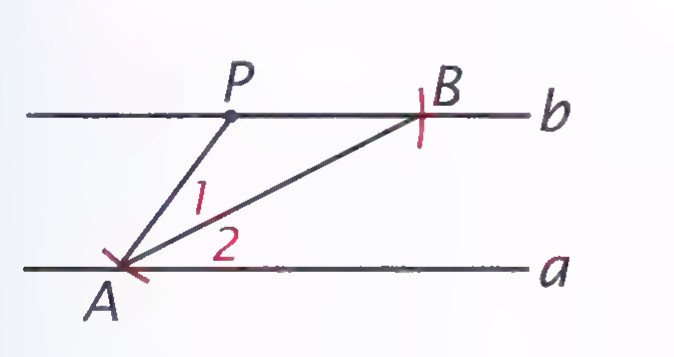
- Draw line a and point P. Use your straightedge and compass to construct b ∥ a and PA = PB.
- What seems to be true about ∠1 and ∠2?
- Use what you know about angles and parallel lines to prove it.
Set III
Astronomer Johannes Kepler was the first to figure out the orbits of the planets.
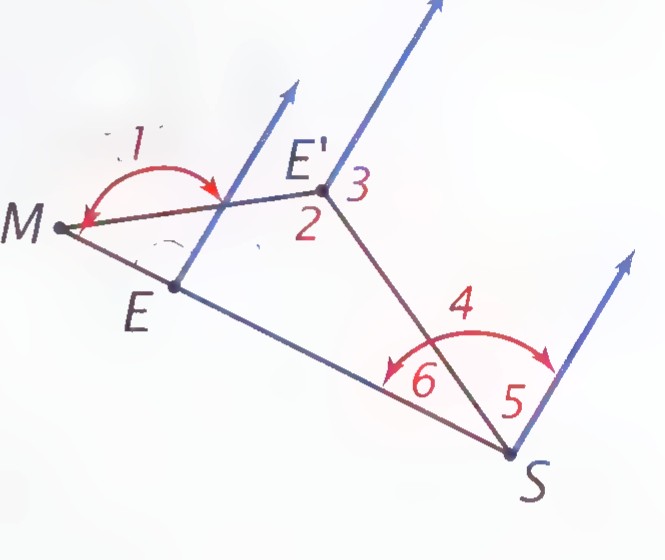
He used diagrams like the one above to calculate the shape of Earth’s orbit.* The points M and S represent Mars and the sun and E and E’ represent two positions of Earth. The three lines in blue are parallel and everything lies in the same plane. The angles numbered 1, 2, and 3 can be measured from Earth. From these angles, Kepler was able to figure out the measures of the angles numbered 4, 5, and 6 and the angle at M. How did he figure out the measure of
| 1. ∠4? | 3. ∠6? |
| 2. ∠5? | 4. ∠M? |
Starting with SM as one side, Kepler was then able to draw △MSE’ and hence determine the position of Earth at E’.
- Suppose that ∠1 = 84°, ∠2 = 124°, and ∠3 = 122°. Find ∠4, ∠5, ∠6, and ∠M.
- Show how Kepler drew △MSE’ by using your ruler and protractor to draw it. Let MS = 10 cm.
* Constructing the Universe, by David Layzer (Scientific American Library, 1984).
p. 236
Lesson 5: The Angles of a Triangle
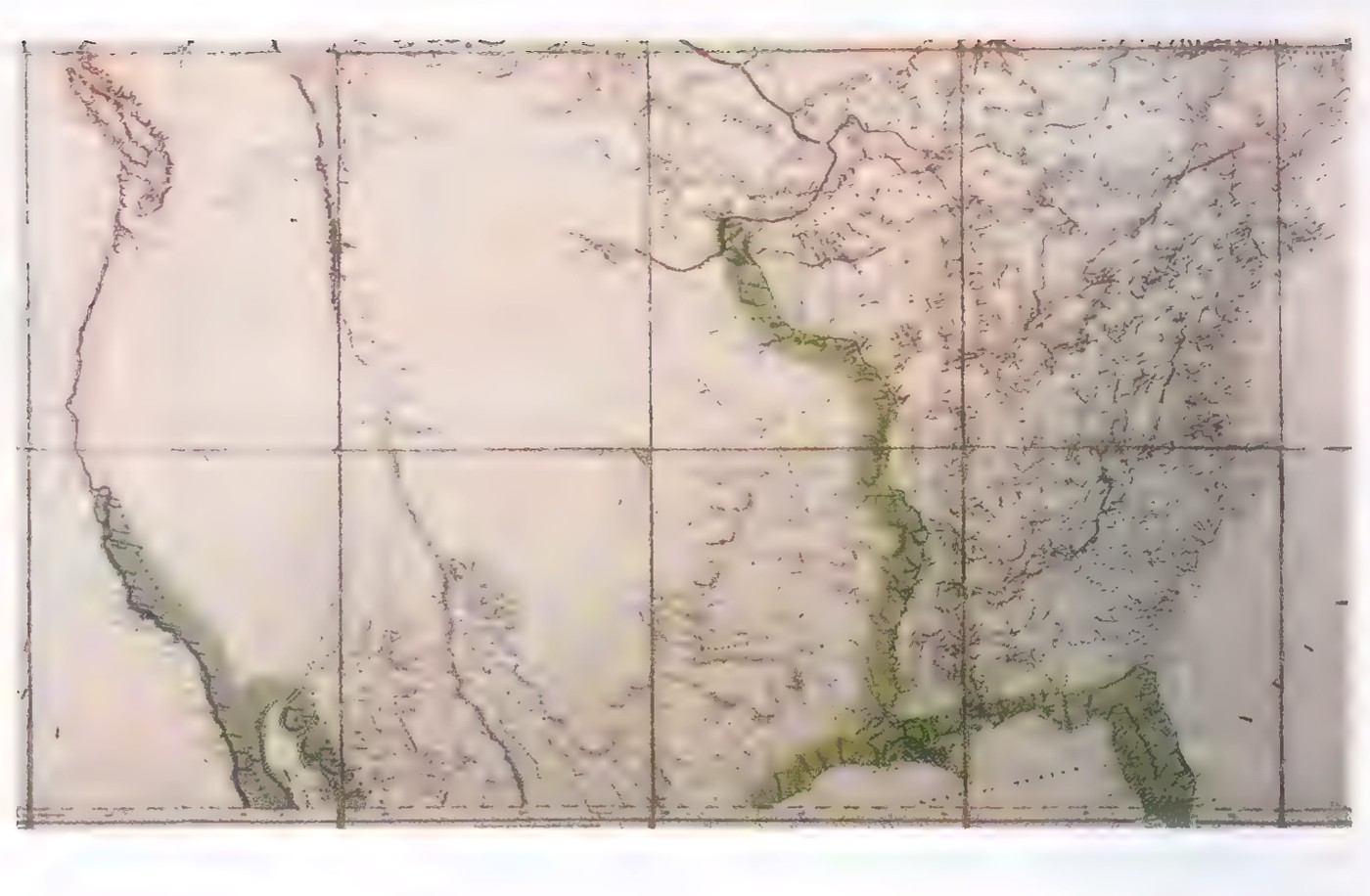
When Lewis and Clark set out on their historic expedition across America, most of the land west of the Mississippi was unknown territory. The map that they used, shown above, had been drawn in 1802. It would be many years before the entire country was surveyed.
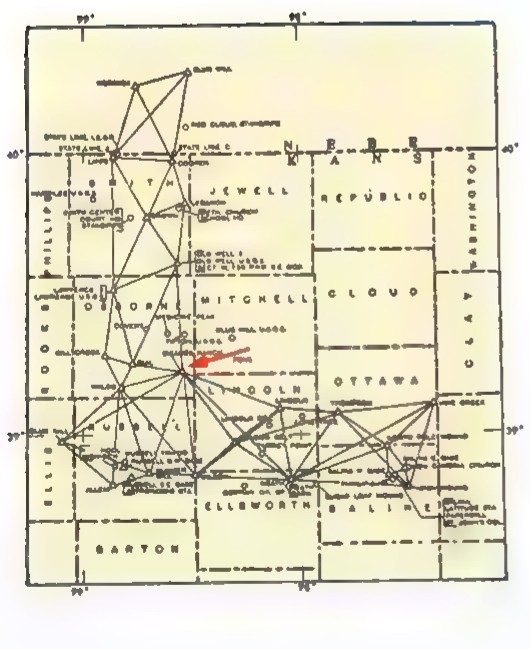
To map the United States, surveyors used a method called triangulation—so named because it locates points by means of a network of triangles. The entire country is now “criss crossed with an elaborate network of many thousands of triangles, measured by surveyors’ transits, and the corners of all of them are marked by permanent stones called ‘bench marks.’”* The initial point from which the triangulation began was in a pasture in Meades Ranch, Kansas. Part of the network of triangles starting from this point is shown in the map at the left. Meades Ranch is marked with an arrow.
Surveyors check their accuracy over short distances by measuring the angles of the triangles in their network. That the sum of the angles of a triangle is 180° is a famous theorem of plane geometry.† Now that we have the Parallel Postulate, we can prove it.
* Triangles, by Henry M. Neely (Crowell, 1962).
† Chapter 2, Lesson 6.
p. 237
Theorem 20. The Angle Sum Theorem
The sum of the angles of a triangle is 180°.
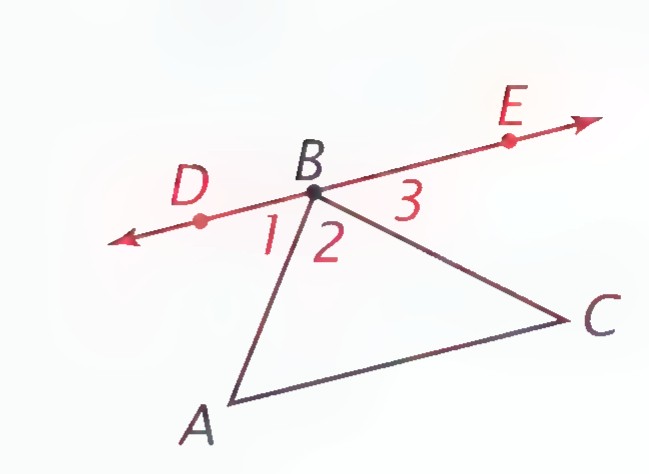
Given: △ABC.
Prove: ∠A + ∠B + ∠C = 180°.
Proof
| Statements | Reasons |
|---|---|
| 1. △ABC. | Given. |
| 2. Through point B, draw line DE ∥ AC. | Through a point not on a line, there is exactly one line parallel to the line. |
| 3. ∠1 = ∠A and ∠3 = ∠C. | Parallel lines form equal alternate interior angles. |
| 4. ∠1 + ∠2 = ∠DBC. | Betweenness of Rays Theorem (BD-BA-BC). |
| 5. ∠DBC and ∠3 are supplementary. | The angles in a linear pair are supplementary. |
| 6. ∠DBC + ∠3 = 180°. | The sum of two supplementary angles is 180°. |
| 7. ∠1 + ∠2 + ∠3 = 180°. | Substitution (steps 4 and 6). |
| 8. ∠A + ∠B + ∠C = 180°. | Substitution (steps 3 and 7). |
This theorem has some useful corollaries.
Corollary 1. If two angles of one triangle are equal to two angles of another triangle, the third angles are equal.
Corollary 2. The acute angles of a right triangle are complementary.
Corollary 3. Each angle of an equilateral triangle is 60°.
A fourth immediate consequence of Theorem 20 concerns the measure of an exterior angle of a triangle. We already know that an exterior angle of a triangle is greater than either remote interior angle. Now we can prove that it is equal to their sum.
Theorem 21
An exterior angle of a triangle is equal to the sum of the remote interior angles.
Several proofs of this theorem have been discovered. We will consider one of them in the exercises.
p. 238
Exercises
Set I
Corollary Proofs. Complete the following proofs of the corollaries of this lesson by giving the reasons. The proofs are written in paragraph form.
Corollary 1. If two angles of one triangle are equal to two angles of another triangle, the third angles are equal.
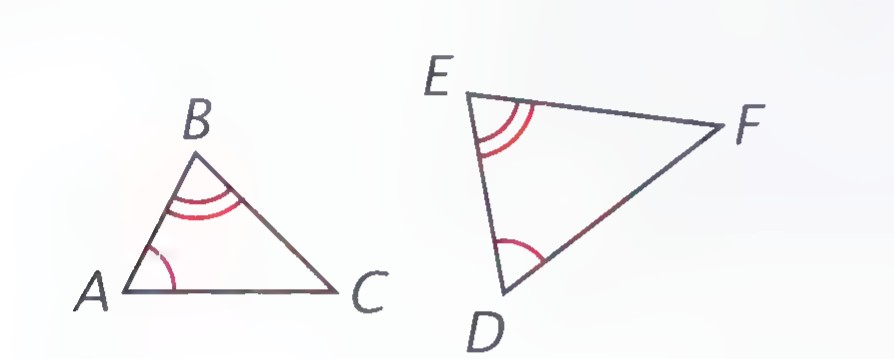
Given: In △ABC and △DEF, ∠A = ∠D and ∠B = ∠E.
Prove: ∠C = ∠F.
Proof
- ∠A + ∠B + ∠C = 180° and ∠D + ∠E + ∠F = 180°. Why?
- It follows that ∠A + ∠B + ∠C = ∠D + ∠E + ∠F. Why?
- Because ∠A = ∠D and ∠B = ∠E, it follows that ∠D + ∠E + ∠C = ∠D + ∠E + ∠F. Why?
- Therefore, ∠C = ∠F. Why?
Corollary 2. The acute angles of a right triangle are complementary.
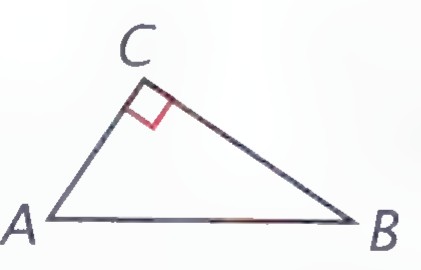
Given: △ABC is a right triangle with right ∠C.
Prove: ∠A and ∠B are complementary.
Proof
- △ABC is a right triangle with right ∠C; so ∠C = 90°. Why?
- Because ∠A + ∠B + ∠C = 180°, it follows that ∠A + ∠B + 90° = 180°. Why?
- So ∠A + ∠B = 90°. Why?
- Therefore, ∠A and ∠B are complementary. Why?
Corollary 3. Each angle of an equilateral triangle is 60°.
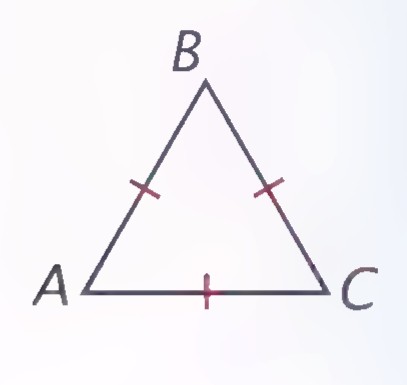
Given: △ABC is equilateral.
Prove: ∠A = 60°, ∠B = 60°, ∠C = 60°.
Proof
- △ABC is equilateral; so it is also equiangular. Why?
- Because △ABC is equiangular, ∠A = ∠B = ∠C. Why?
- Because ∠A + ∠B + ∠C = 180°, it follows that ∠A + ∠A + ∠A = 3∠A = 180°. Why?
- So ∠A = 60°. Why?
- It follows that ∠B = 60° and ∠C = 60°. Why?
Exterior Angle Theorem. One way to prove Theorem 21 is given here. Complete the proof by giving the reasons.
Theorem 21. An exterior angle of a triangle is equal to the sum of the remote interior angles.
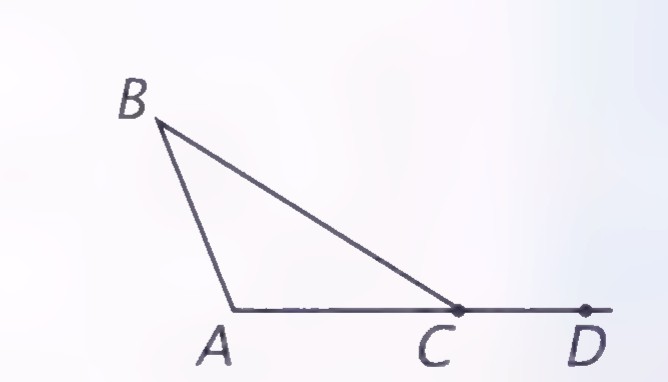
Given: ∠BCD is an exterior angle of △ABC.
Prove: ∠BCD = ∠A + ∠B.
p. 239
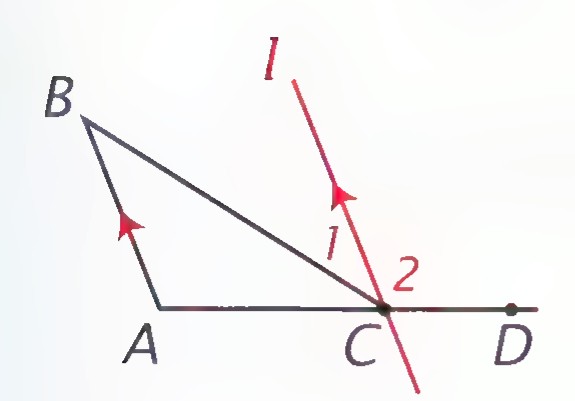
Proof
- Through point C, draw line l parallel to AB. Why is this possible?
- ∠1 = ∠B. Why?
- ∠2 = ∠A. Why?
- ∠BCD = ∠1 + ∠2. Why?
- Therefore, ∠BCD = ∠A + ∠B. Why?
UFO Angles. The angles of elevation of a UFO at A are measured from two positions, B and C.
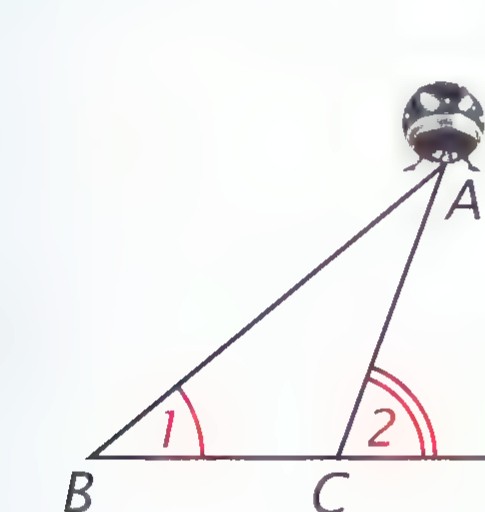
- Write the two inequalities that follow from the Exterior Angle Theorem.
- Write the equation relating the measures of ∠1, ∠2, and ∠A.
- Find ∠A if ∠1 = 42° and ∠2 = 70°.
Right and Wrong. Obtuse Ollie told Acute Alice that, because ∠C is the right angle of the triangle below, ∠A and ∠B must be the wrong angles.*
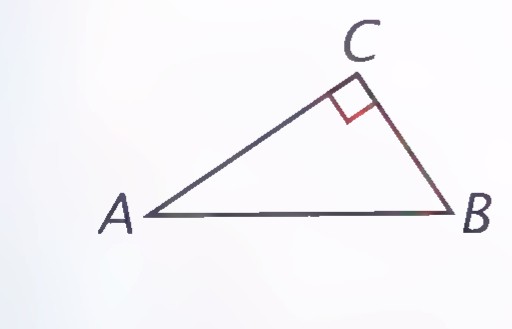
- What kind of angles must they actually be?
Alice told Ollie that, if he is correct, then “two wrongs make a right.”
- What does she mean?
Another Kind of Triangle. The triangle in this picture is made of steel.
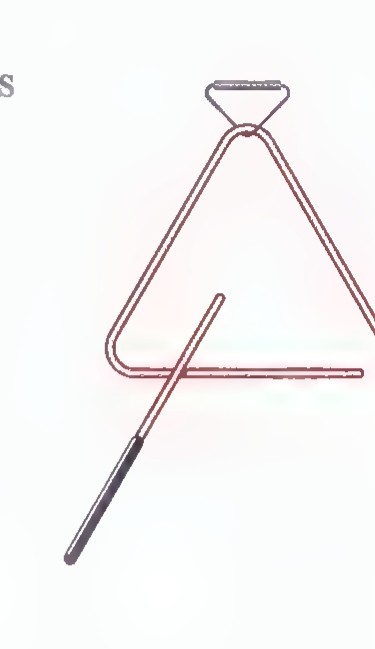
- What kind of geometric triangle has a similar shape?
- What is the triangle in the picture used for?
- How large are its “angles”?
Economics Graph. The following words from an economics book describe the graph of the “consumption” function.†
At any point on the 45° line, the distance up from the horizontal axis (which is consumption) exactly equals the distance across from the vertical axis (which is income).
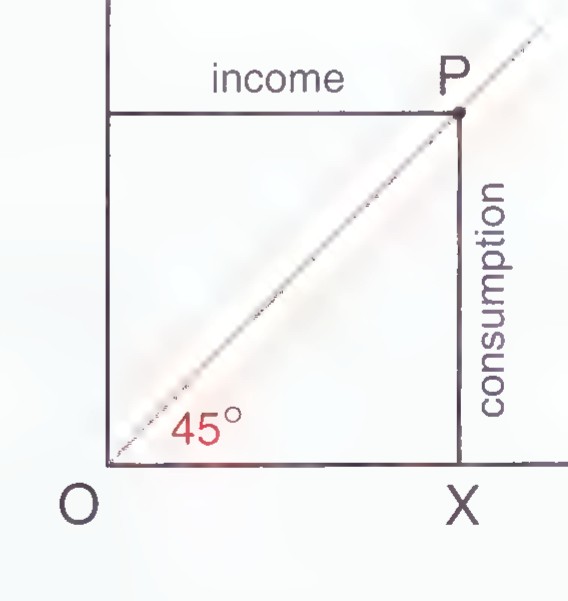
- From the fact that XP ⊥ OX, what kind of triangle is △OPX?
- What is the relation of ∠OPX to ∠POX?
- What is the measure of ∠OPX?
- Why is XP = OX?
* From an idea in The Heart of Mathematics, by Edward B. Burger and Michael Starbird (Key College Publishing, 2000).
† Economics, by Paul A. Samuelson and William D. Nordhaus (McGraw-Hill, 1989).
p. 240
Set II
North Star and Latitude. In Peculiar, Missouri, the North Star is always 38° above the horizon. The angle between Peculiar and the equator also is 38°, which isn’t really peculiar, because we can prove it.*
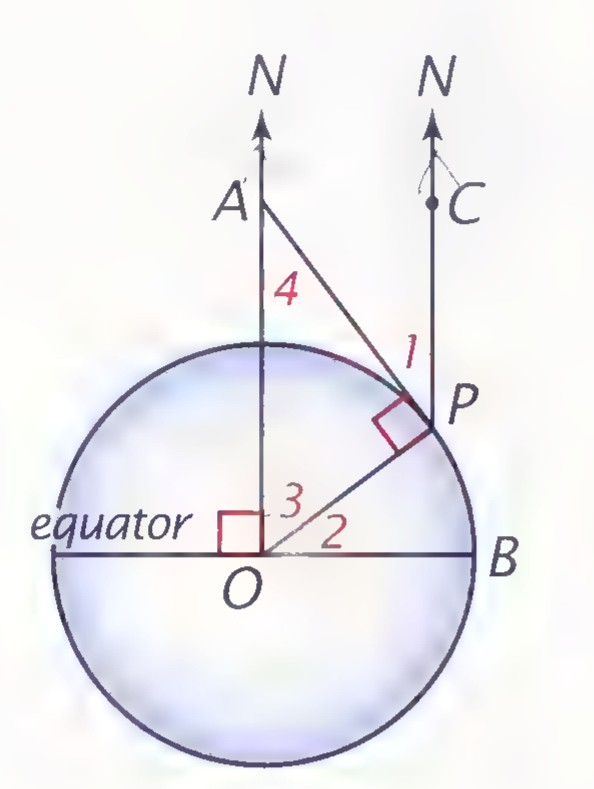
In the figure at the right, the angle of elevation of the North Star at P is ∠1; the latitude of P is ∠2. Also, OA ∥ PC, OA ⊥ OB, and OP ⊥ PA.
Explain why ∠1 = ∠2 by answering each of the following questions.
- Why is ∠1 = ∠4?
- What relation does ∠4 have to ∠3?
- Why?
- What relation does ∠2 have to ∠3?
- What relation does ∠4 have to ∠2?
- Why?
- Why is ∠1 = ∠2?
Angle Bisectors. In the figure below, the bisectors of an interior and an exterior angle of △ABC meet at E.
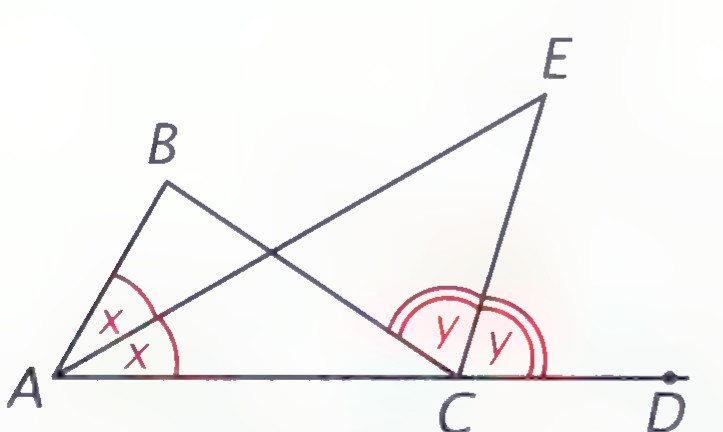
- Draw a larger △ABC with exterior ∠BCD. Use your straightedge and compass to bisect ∠BAC and ∠BCD. Label the point in which the bisectors meet E.
- Use your protractor to measure ∠B and ∠E. How do they seem to compare in size?
Tell why each of the following equations is true.
- ∠BCD = ∠BAC + ∠B and ∠ECD = ∠EAC + ∠E.
- 2y = 2x + ∠B and y = x + ∠E.
- 2y = 2x + 2∠E.
- 2x + ∠B = 2x + 2∠E.
- ∠B = 2∠E.
Write proofs for the following.
45.
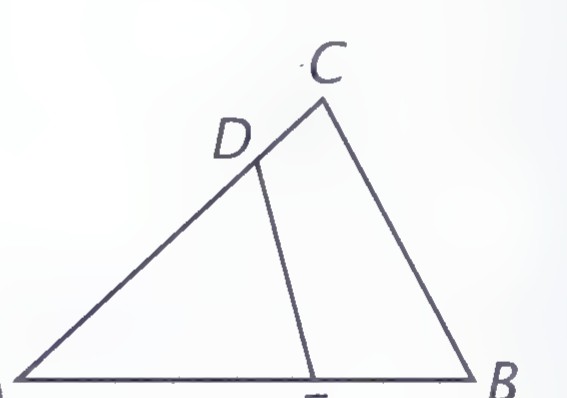
Given: In △ABC and △ADE, ∠ADE = ∠B.
Prove: ∠AED = ∠C.
46.
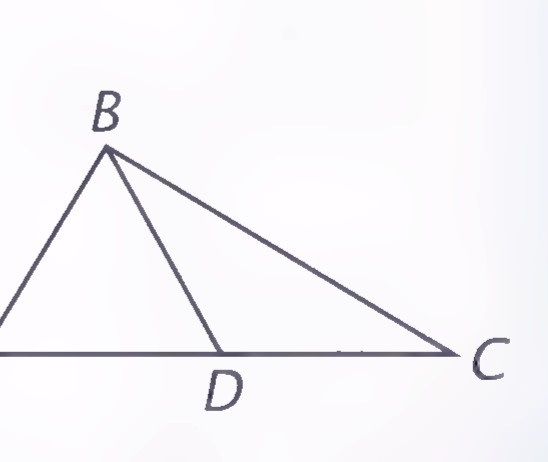
Given: △ABC is a right triangle with right ∠ABC; ∠ABD and ∠C are complementary.
Prove: △ABD is isosceles.
* Peculiar, Missouri, is on highway 71 in Cass County.
p. 241
Catch Question. This problem appeared in a collection of “catch” questions.*
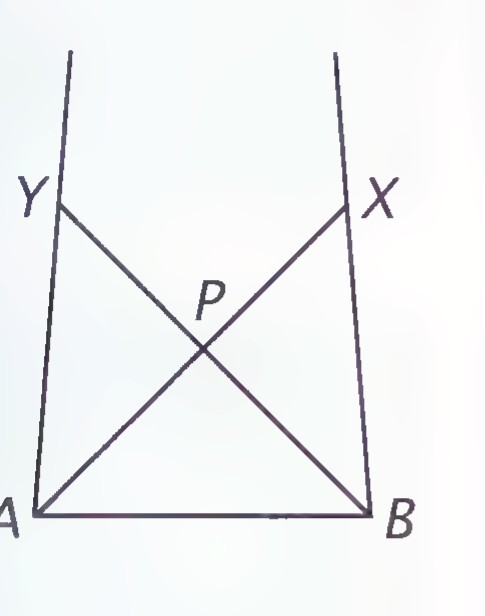
Suppose lines AX and BY bisect two of the angles of a triangle whose third vertex is out of view. If AX ⊥ BY and the base AB of the triangle is 10 inches long, how tall is the triangle?
- Draw the figure and mark this information on it.
- Reasoning from your figure, explain why this is a “catch” question.
Set III
This proof appeared in a book of proofs without words.†
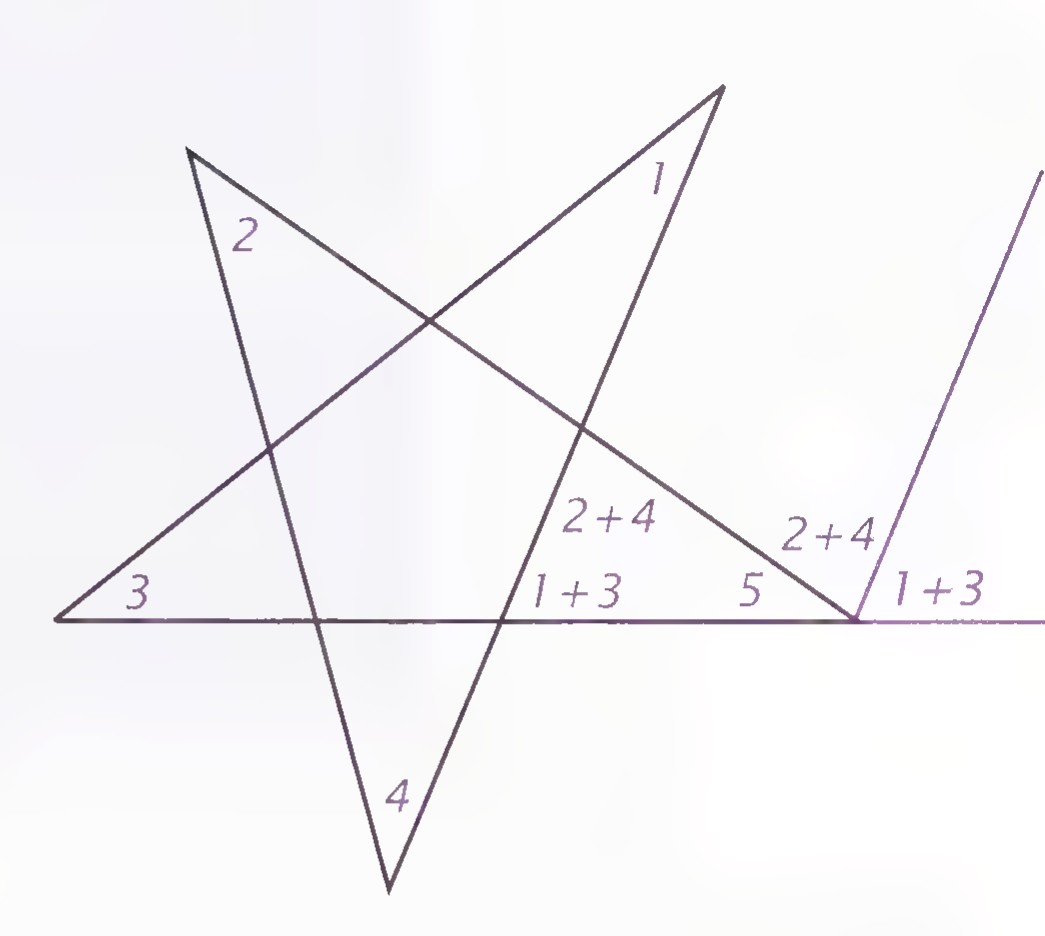
- What do you think is being proved?
- Briefly explain in words how the proof works.
* The Unexpected Hanging and Other Mathematical Diversions, by Martin Gardner (Simon & Schuster, 1969).
† Proof by Fouad Nakhli in Proofs Without Words: Exercises in Visual Thinking, by Roger B. Nelsen (Mathematical Association of America, 1993).
p. 242
Lesson 6: AAS and HL Congruence
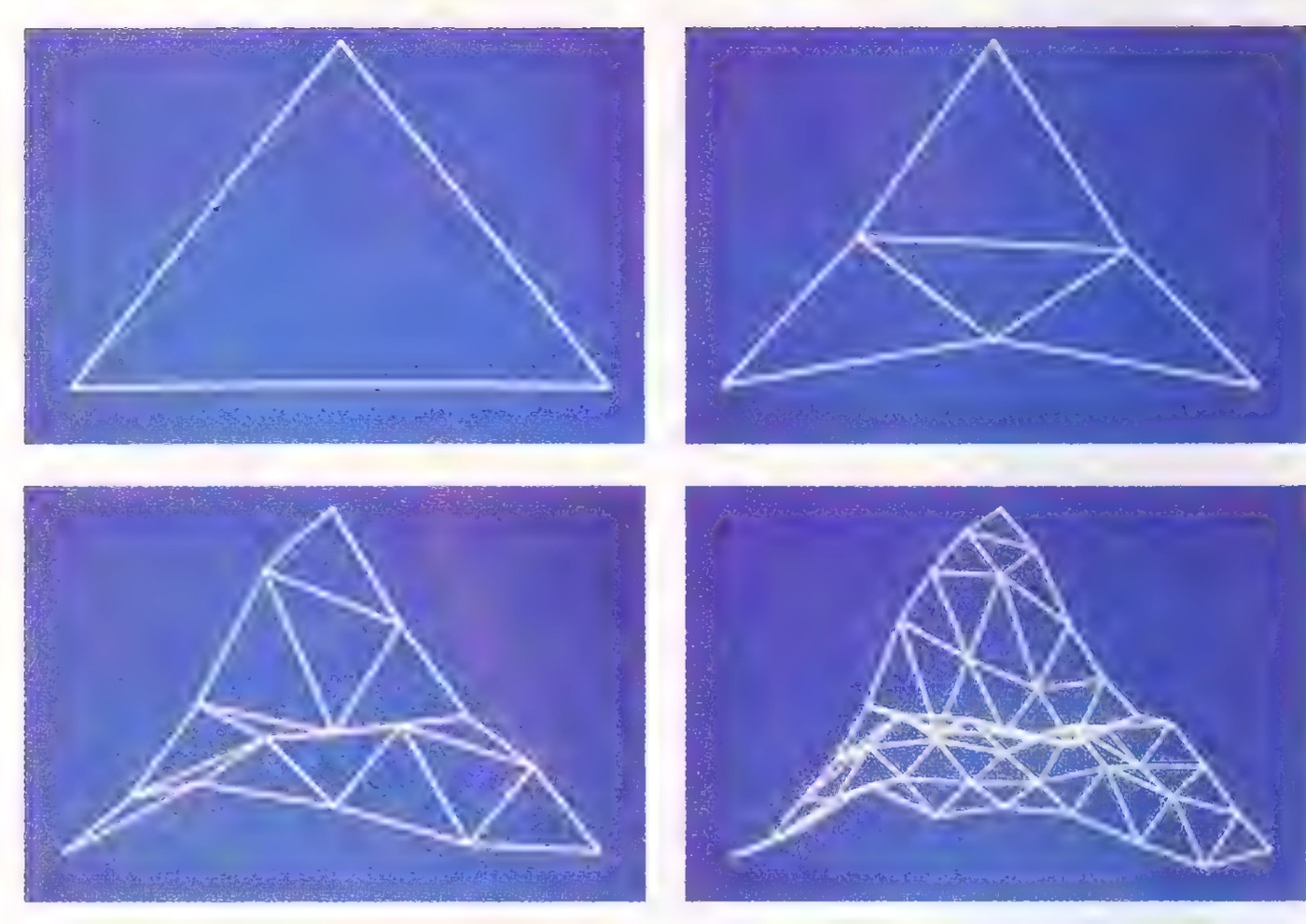
Surveyors have been using triangulations—networks of triangles sometimes numbering in the thousands—for centuries. Triangulations of millions of triangles are now used in computer programming.
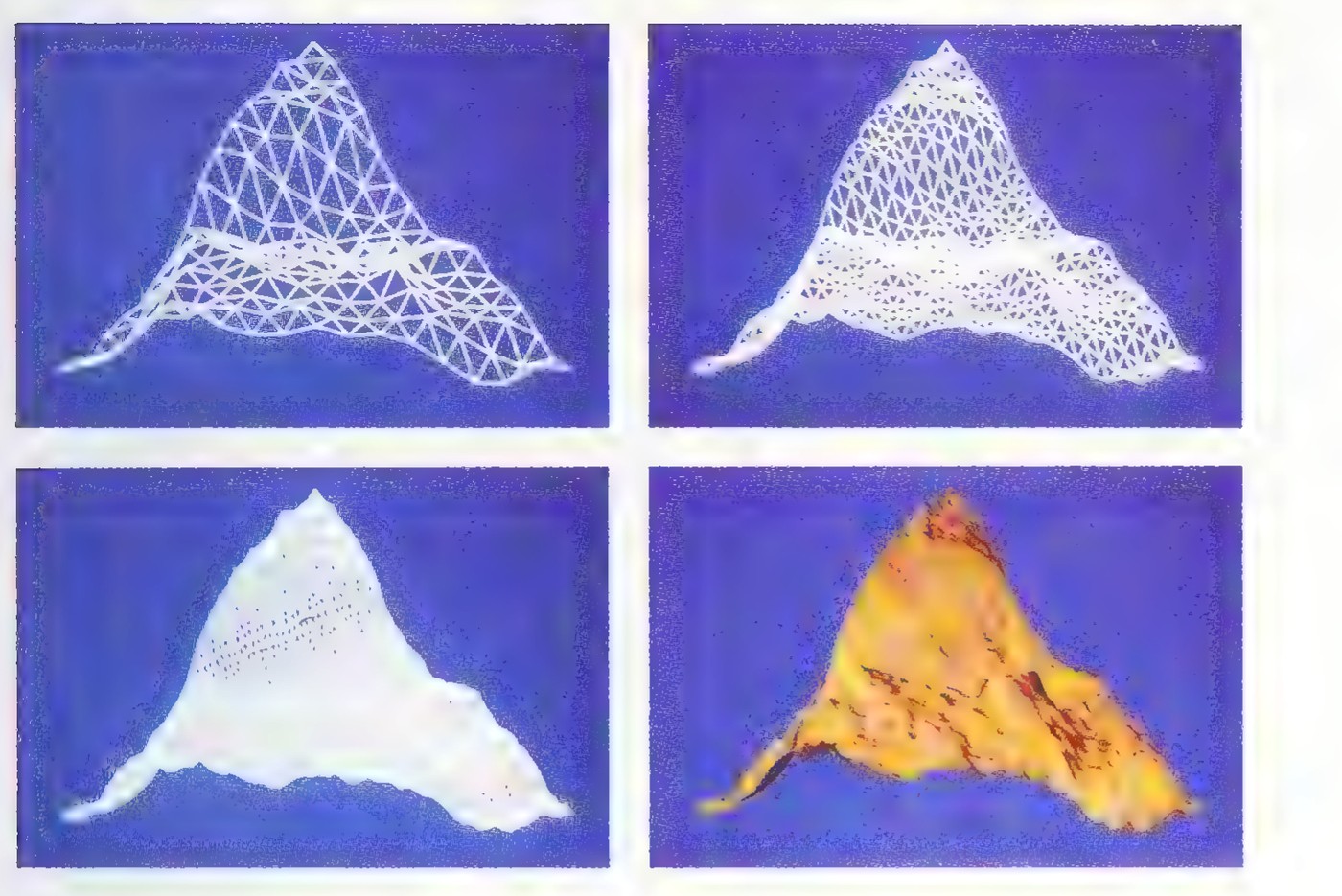
The images above show how the image of a mountain can be generated from repeated divisions of triangles.* The sequence, Fractal Demo, by Alvy Ray Smith, begins with a single triangle in “three-dimensional space.” The triangle is divided into 4 triangles by connecting the midpoints of its sides. The figure is then “bent” at the midpoints to give it the impression of being three-dimensional. Each of the 4 triangles is then transformed in the same way, resulting in 16 triangles. This process is repeated as shown, and the triangles are eventually filled in to create the picture of the mountain.
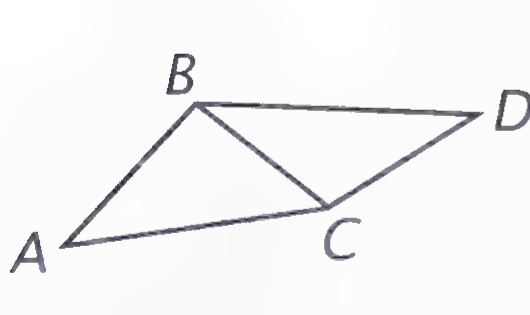
Consider a pair of triangles formed by this process, as shown at the left. Are they congruent? Although it is hard to tell from their appearance, we know several sets of conditions that are sufficient to prove triangles congruent. In fact, we have given them names: ASA, SAS, and SSS.
Are there any other sets of parts that can be used to prove triangles congruent? Yes; we will consider two of them in this lesson.
* Visualization: The Second Computer Revolution, by Richard Mark Friedhoff and William Benzon (Abrams, 1989).
p. 243
Theorem 22. The AAS Theorem
If two angles and the side opposite one of them in one triangle are equal to the corresponding parts of another triangle, the triangles are congruent.
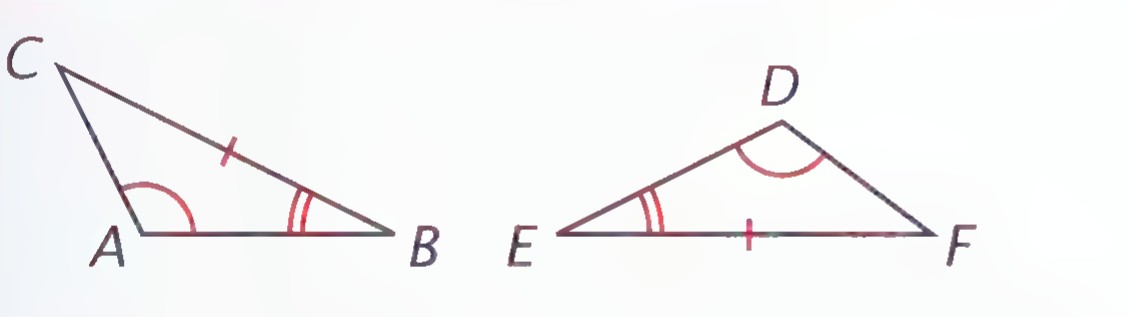
Given: △ABC and △DEF with ∠A = ∠D, ∠B = ∠E, and BC = EF.
Prove: △ABC ≅ △DEF.
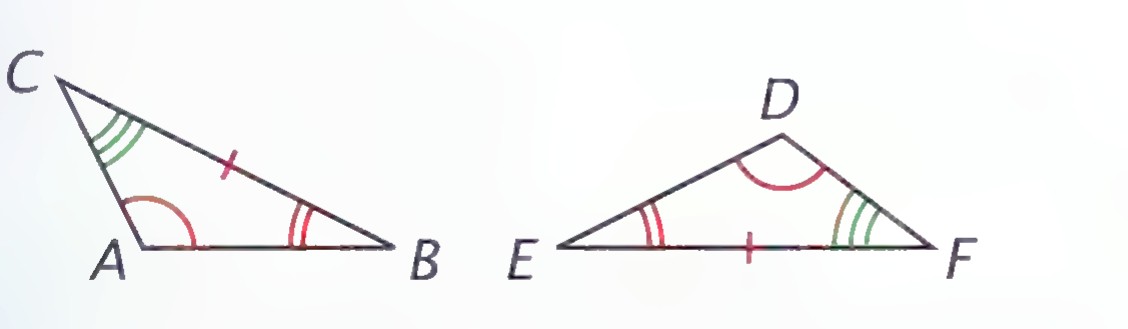
Take a good look at the figures above and you may see the proof. If two angles of one triangle are equal to two angles of another triangle, the third pair of angles also are equal. Consequently, AAS follows from ASA.
Proof
In △ABC and △DEF, ∠A = ∠D and ∠B = ∠E. Therefore, ∠C = ∠F, and so, with BC = EF, △ABC ≅ △DEF by ASA.
p. 244
As the name of the next theorem, HL for “hypotenuse–leg,” implies, the theorem applies only to right triangles.
Theorem 23. The HL Theorem
If the hypotenuse and a leg of one right triangle are equal to the corresponding parts of another right triangle, the triangles are congruent.
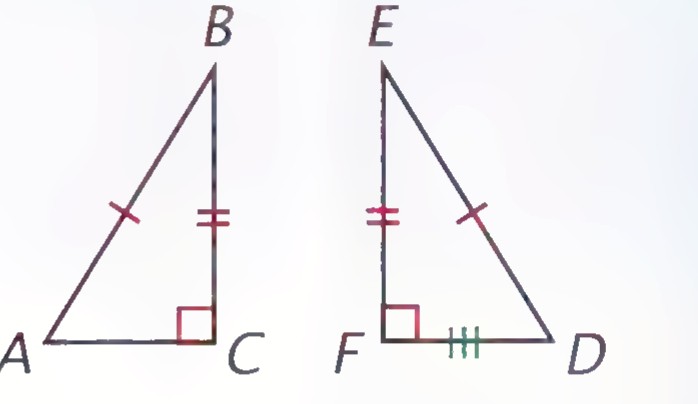
Given: △ABC and △DEF are right triangles (with right angles C and F); AB = DE and BC = EF.
Prove: △ABC ≅ △DEF.
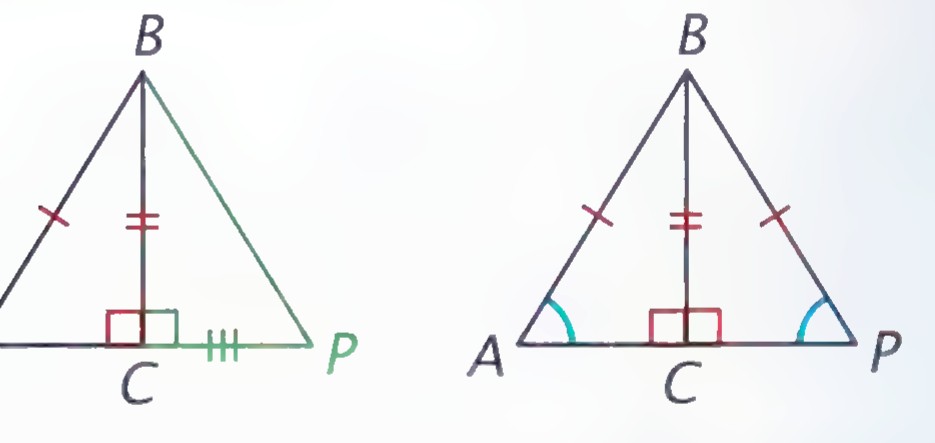
Again, a careful look at the figures above may reveal the proof.
Proof
Extend line AC (two points determine a line) and choose point P on it so that PC = DF (the Ruler Postulate); also, draw BP. △PBC ≅ △DEF (SAS); so PB = DE (corresponding parts of congruent triangles are equal). Because AB = DE (given), AB = PB (substitution).
AB and PB are equal sides of △ABP; so ∠A = ∠BPC (if two sides of a triangle are equal, the angles opposite them are equal). △ABC ≅ △PBC (AAS); so △ABC ≅ △DEF (two triangles congruent to a third triangle are congruent to each other).
p. 245
Exercises
Set I
Hang Glider. A popular type of hang glider is the Rogallo.
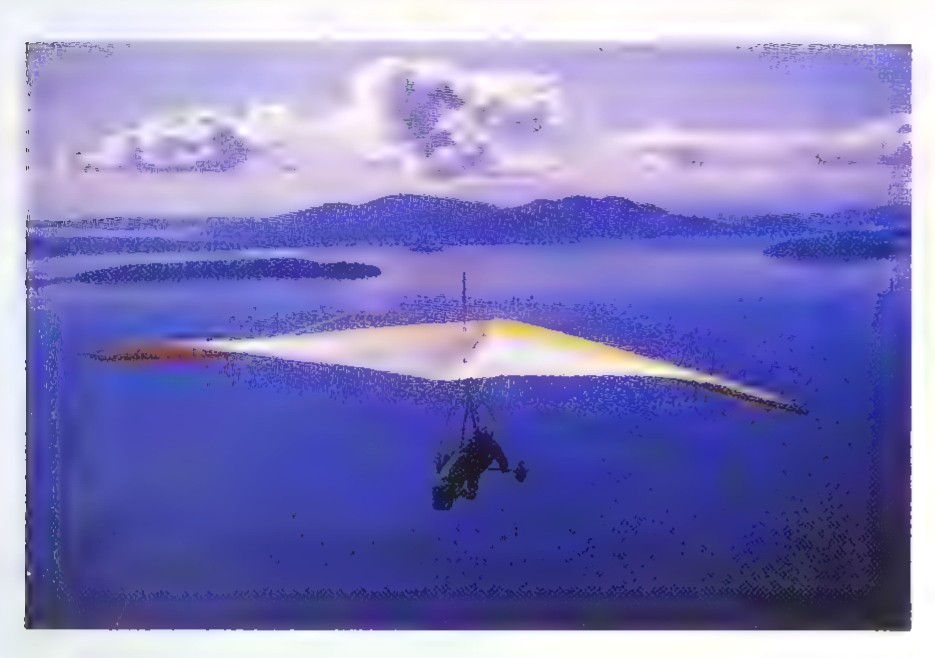
The design of its sail consists of two triangles: △ABC and △ADC. They share a common side; so AC = AC.*
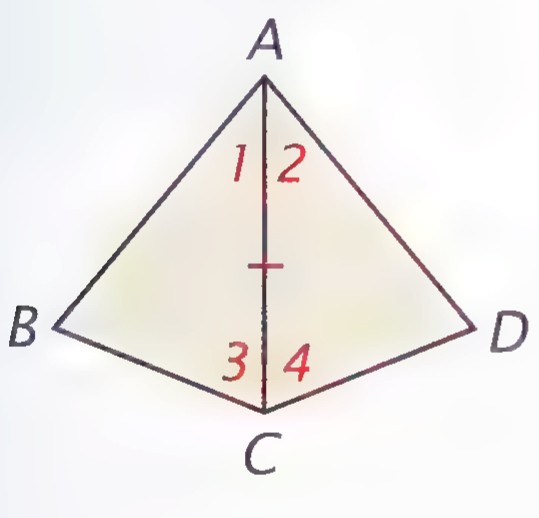
Name the way of knowing that △ABC ≅ △ADC if
- ∠1 = ∠2 and ∠3 = ∠4.
- AB = AD and BC = CD.
- ∠1 = ∠2 and AB = AD.
- ∠B = ∠D and ∠3 = ∠4.
- ∠B = ∠D = 90° and BC = CD.
Congruent or Not? SSS names a way to prove triangles congruent. Does AAA name another way?
AAA?
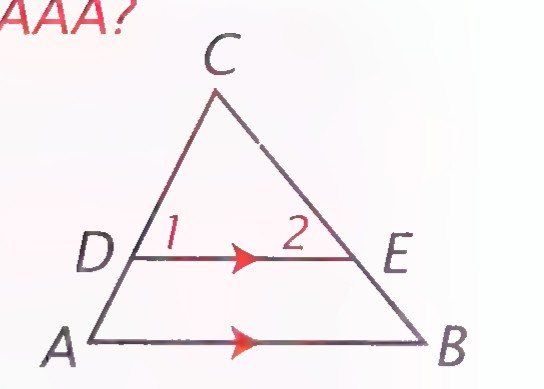
In △ABC, DE ∥ AB.
- Why is ∠1 = ∠A and ∠2 = ∠B?
- How many pairs of angles in △DEC and △ABC are equal?
- Is △DEC ≅ △ABC?
AAS names a way to prove triangles congruent. Does SSA name another way?
SSA?
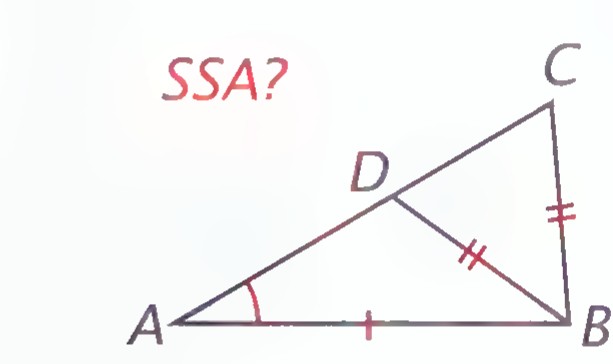
In △ABC, DB = CB.
- How many pairs of parts in △ABC and △ABD are equal?
- Is △ABC ≅ △ABD?
HL names a way to prove triangles congruent. Does HA name another way?
HA?
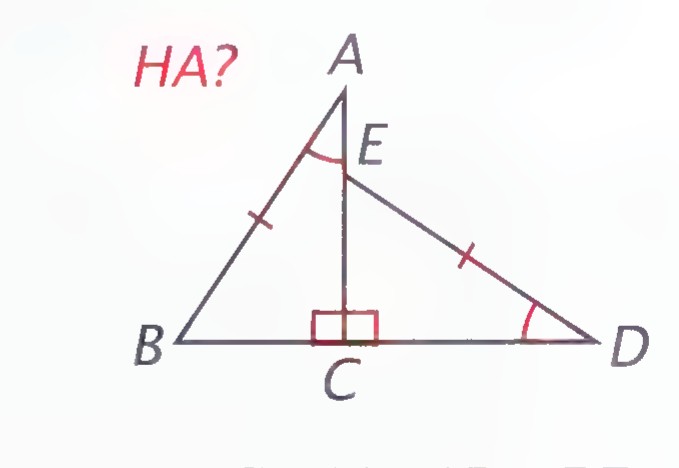
In this figure, AC ⊥ BD, AB = DE, and ∠A = ∠D.
- How many pairs of parts in △ABC and △DEC are equal?
- Is △ABC ≅ △DEC?
- Explain why or why not.
* Hang Gliding and Soaring, by James E. Mrazek (St. Martin’s Press, 1976).
p. 246
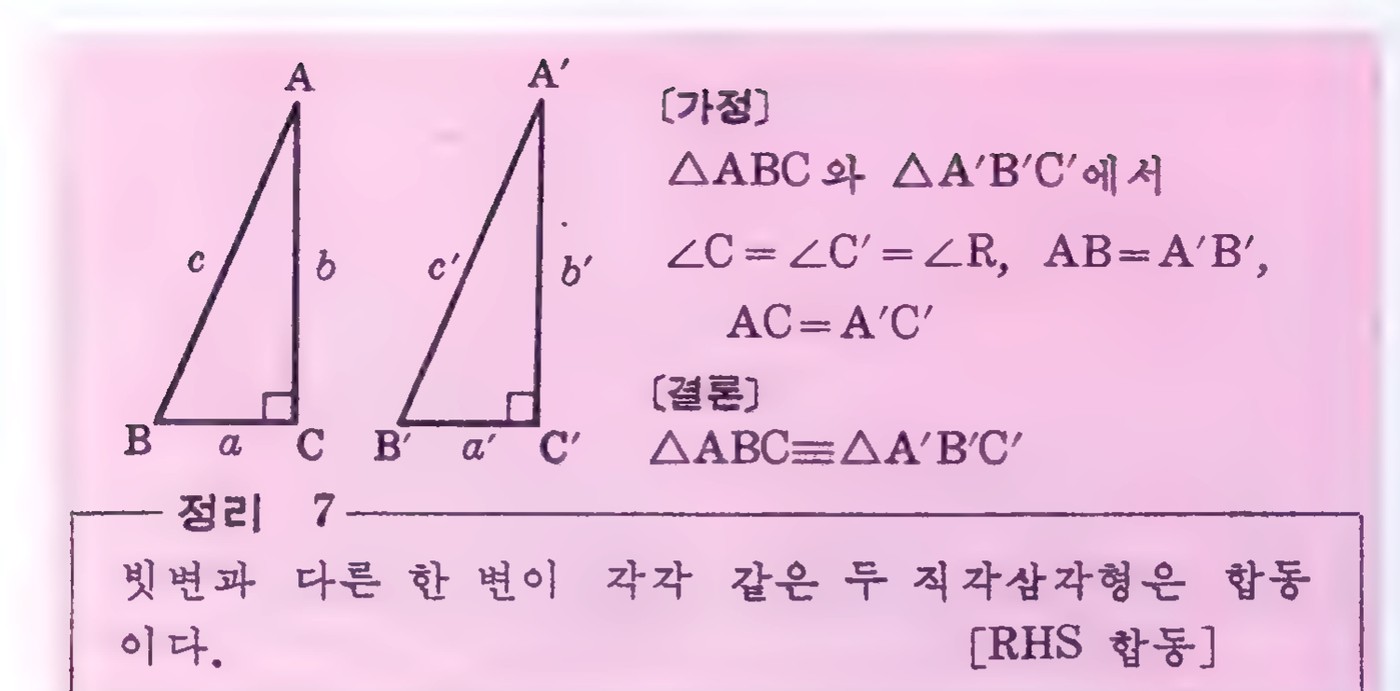
[가정]
△ABC 와 △A′B′C′에서
∠C = ∠C′ = ∠R, AB = A′B′,
AC = A′C′
[결론]
△ABC ≡ △A′B′C′
정리 7
빗변과 다른 한 변이 각각 같은 두 직각삼각형은 합동이다.
[RHS 합동]
Korean Theorem. A theorem from a Korean geometry book is shown above.
- What do you think ∠C = ∠C′ = ∠R means?
- What do you think △ABC ≡ △A′B′C′ means?
- What theorem do you think is illustrated? State it as a complete sentence.
The Korean name for the theorem, RHS, is remarkable in that it is an abbreviation of three words in English rather than Korean.
- What do you think the three words identifying this theorem are?
Triangle Problem. In △ABC, AD ⊥ BC, BE ⊥ AC, and AD = BE.
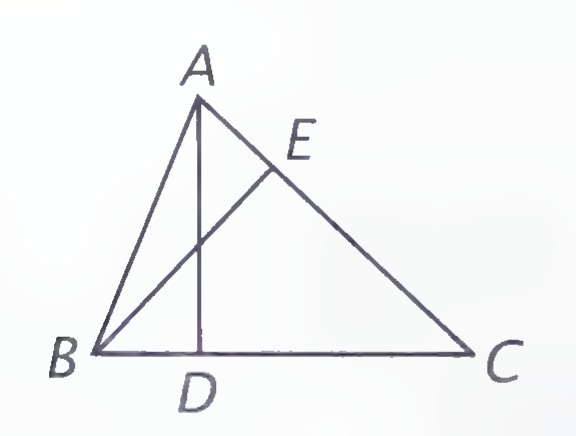
- Copy the figure above and mark it as needed to answer the following questions.
- Why is △BAE ≅ △ABD?
- Why is ∠BAE = ∠ABD?
- Why is BC = AC?
- What kind of triangle is △ABC?
Set II
Mirror Distances. A wall mirror is sometimes used to create the illusion that the space of a room is twice as large as it actually is.

This illusion follows from the fact that, when we see light from an object reflected in a mirror, the object and its reflection seem to be at the same distance from the mirror.
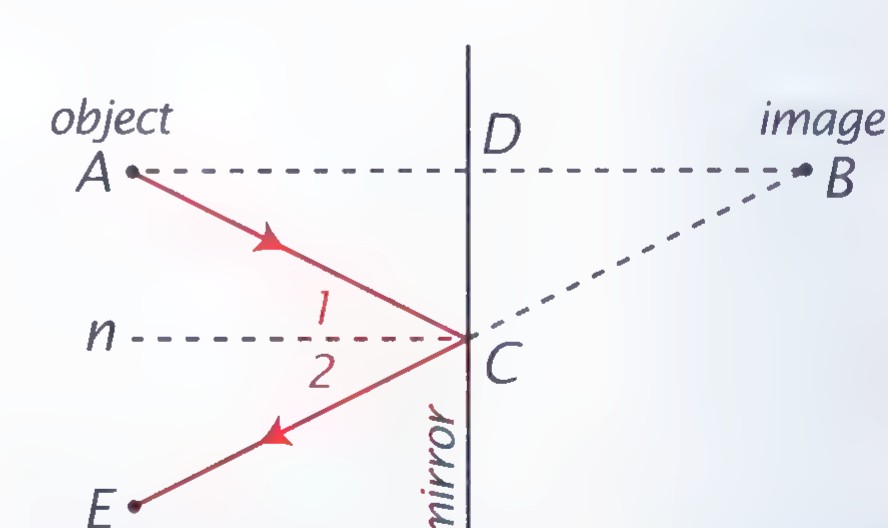
In the figure above, line m represents the mirror. Both AB and n are perpendicular to m, and the angle of incidence, ∠1, is equal to the angle of reflection, ∠2.
p. 247
- Copy the figure and mark it as needed to answer each of the following questions.
- Because AB ⊥ m and n ⊥ m, AB ∥ n. Why?
- ∠1 = ∠A. Why?
- ∠2 = ∠B. Why?
- Because ∠1 = ∠2, ∠A = ∠B. Why?
- DC = DC. Why?
- △BDC ≅ △ADC. Why?
- Therefore, BD = AD. Why?
Angle Bisection. The figure below illustrates the first steps in a different way to bisect an angle.
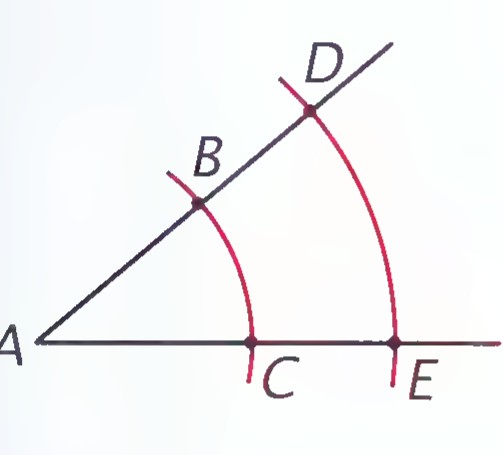
Two arcs have been drawn intersecting the sides of ∠A so that AB = AC and AD = AE.
Use your straightedge and compass to make a large copy of the figure. Draw BE and CD.
Which parts of △ADC and △AEB can be used to prove them congruent?
Why is △ADC ≅ △AEB?
Why is ∠ADC = ∠AEB?
(continued) Label the point in which BE and CD intersect P. Draw AP.
Which parts of △BDP and △CEP can be used to prove them congruent?
Why is △BDP ≅ △CEP?
Why is DP = PE?
Which parts of △ADP and △AEP can be used to prove them congruent?
Why is △ADP ≅ △AEP?
Why does AP bisect ∠DAE?
Origami Frog. The origami pattern for the Japanese jumping frog begins with a square sheet of paper and the two folds shown below.*
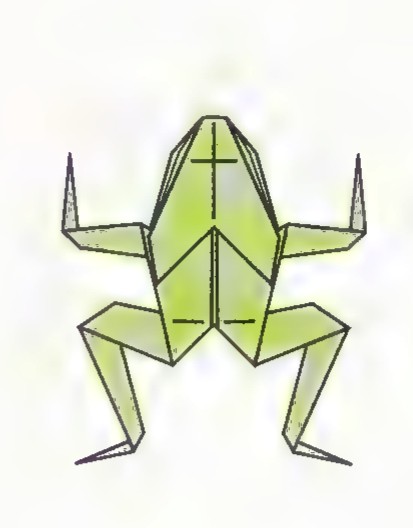
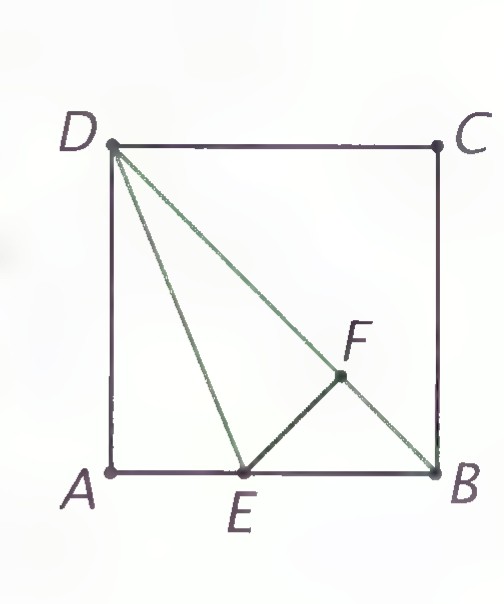
First, corner C is folded onto corner A. Then, side DA is folded onto the fold DB.
- Copy the figure and mark the following information on it: AB = BC = CD = DA = DF. DA ⊥ AB, EF ⊥ DB, and AB ⊥ BC.
- Why is △ABD ≅ △CBD?
- Why is ∠ABD = ∠CBD?
What is the measure of
∠ABD?
∠FEB?
Why is EF = FB?
What kind of triangles are △ADE and △FDE?
Why is △ADE ≅ △FDE?
Why is AE = EF?
Why is AE = FB?
More on Equal Parts. Each of our methods for proving triangles congruent requires showing that three pairs of parts are equal. Can two triangles have more than three pairs of equal parts but not be congruent?
Consider, for example, one pair of equal angles and three pairs of equal sides.
- Do you think it is possible that two triangles could have these equal parts and yet not be congruent? Explain why or why not.
* Folding the Universe, by Peter Engel (Vintage, 1989).
p. 248
Consider two pairs of equal sides and three pairs of equal angles.
- Use your ruler and protractor to draw, as accurately as you can, △ABC with AB = 7.2 cm, ∠A = 21°, AC = 10.8 cm, ∠B = 127°, and ∠C = 32° and △DEF with DE = 10.8 cm, ∠D = 21°, ∠E = 127°, EF = 7.2 cm, and ∠F = 32°.
- Do you think two triangles can have five pairs of equal parts and not be congruent?
- Do you think two triangles can have six pairs of equal parts and not be congruent? Explain.
Set III
Is Every Triangle Isosceles? Here is a proof originally published in 1892 that is so strange that it has since become famous.*
The proof supposedly shows that every triangle is isosceles and is based on the figure below.
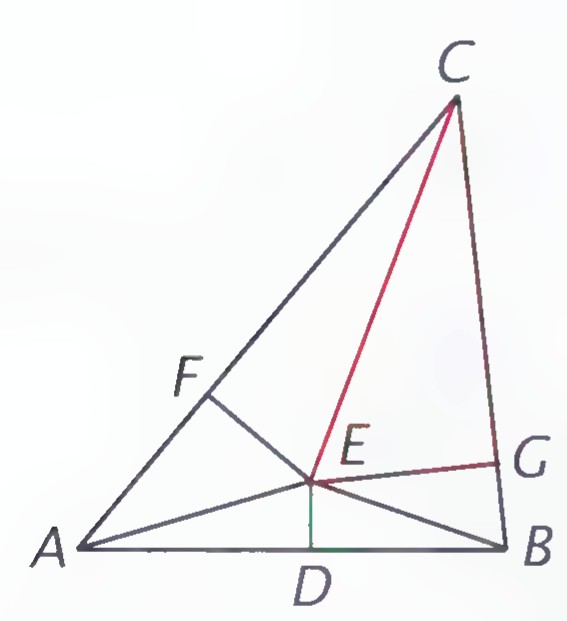
△ABC represents any triangle. The bisector of ∠ACB, CE, and the perpendicular bisector of AB, DE, intersect at E. Lines EF and EG are drawn from E so that EF ⊥ AC and EG ⊥ BC. Finally, lines EA and EB are drawn.
- Copy the figure and mark it as necessary to explain each of the following statements.
- △CEF ≅ △CEG. Why?
- EF = EG. Why?
- △EAD ≅ △EBD. Why?
- EA = EB. Why?
- △AFE ≅ △BGE. Why?
- AF = BG. Why?
- AF + FC = BG + GC. Why?
- AF + FC = AC and BG + GC = BC. Why?
- AC = BC. Why?
Although it seems as if our reasoning is correct, something is obviously very wrong. All triangles are not isosceles. The problem with the proof is that we have assumed something from the figure that isn’t really true. Here is the same triangle with the lines accurately drawn. Compare the steps of the proof with it.
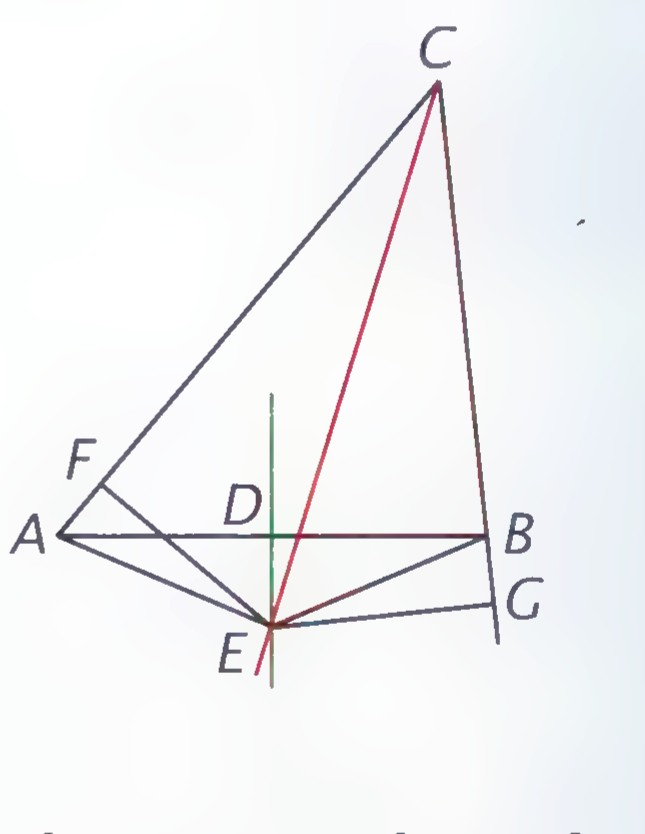
- Which statements in the proof are actually false?
* Mathematical Recreations and Essays, by W. W. Rouse Ball (Macmillan, 1892).
p. 249
Summary and Review
Basic Ideas
- Angles formed by a transversal 220
- Line symmetry 212
- Parallel lines 219
- Transversal 219
Postulate
- 7. The Parallel Postulate. Through a point not on a line, there is exactly one line parallel to the line. 226
Theorems
- 16. In a plane, two points each equidistant from the endpoints of a line segment determine the perpendicular bisector of the line segment. 212
- 17. Equal corresponding angles mean that lines are parallel. 220
- Corollary 1. Equal alternate interior angles mean that lines are parallel. 220
- Corollary 2. Supplementary interior angles on the same side of a transversal mean that lines are parallel. 220
- Corollary 3. In a plane, two lines perpendicular to a third line are parallel. 220
- 18. In a plane, two lines parallel to a third line are parallel to each other. 226
- 19. Parallel lines form equal corresponding angles. 231
- Corollary 1. Parallel lines form equal alternate interior angles. 231
- Corollary 2. Parallel lines form supplementary interior angles on the same side of a transversal. 231
- Corollary 3. In a plane, a line perpendicular to one of two parallel lines is also perpendicular to the other. 231
- 20. The Angle Sum Theorem. The sum of the angles of a triangle is 180°. 237
- Corollary 1. If two angles of one triangle are equal to two angles of another triangle, the third angles are equal. 237
- Corollary 2. The acute angles of a right triangle are complementary. 237
- Corollary 3. Each angle of an equilateral triangle is 60°. 237
- 21. An exterior angle of a triangle is equal to the sum of the remote interior angles. 237
- 22. The AAS Theorem. If two angles and the side opposite one of them in one triangle are equal to the corresponding parts of another triangle, the triangles are congruent. 243
- 23. The HL Theorem. If the hypotenuse and a leg of one right triangle are equal to the corresponding parts of another right triangle, the triangles are congruent. 244
Constructions
- 6. To construct a line perpendicular to a given line through a given point. 213
- 7. To construct a line parallel to a given line through a given point. 225
p. 250
Exercises
Set I
Flag Symmetries. At first glance, the flags below all appear to have line symmetry, but one does not.

- What is a simple test to determine whether such figures have line symmetry?
- Which flag does not have line symmetry? Explain.
- Describe the line (or lines) of symmetry of the other three flags.
Draw two points A and B on your paper as shown in the figure below.
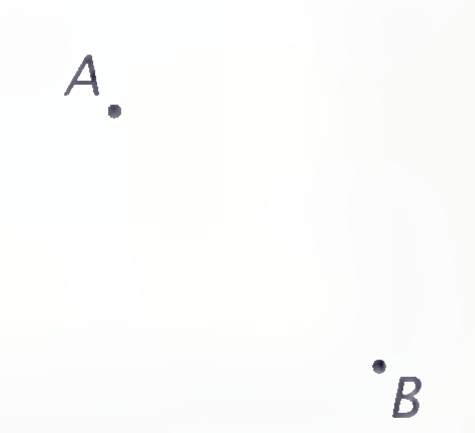
- Use your straightedge and compass to construct the line such that A and B are symmetric with respect to it.
- What relation does the line have to line segment AB?
Lot of Lines. A common occurrence of parallel lines and transversals is shown in this photograph.*
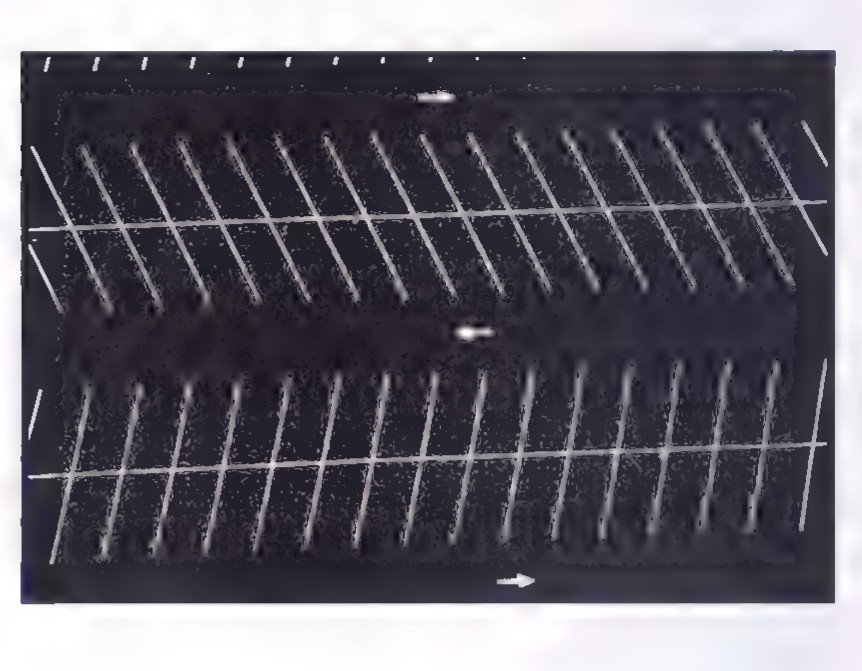
- What does the photograph show?
The figure below illustrates one method by which the lines might have been made parallel.
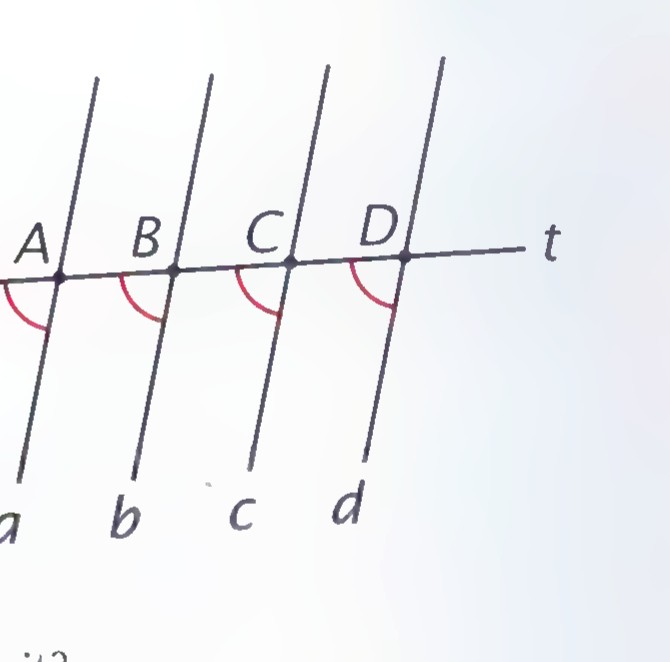
- What is it?
Construct the figure by doing the following.
Draw a line to show the transversal in the figure and use your compass to mark points A, B, C, and D equally spaced along it.
Without using your protractor, construct a line through A that makes a 60° angle with the transversal.
Finally, construct lines b, c, and d parallel to line a.
* Across the American Landscape, by James Corner and Alex S. MacLean (Yale University Press, 1996).
p. 251
Alphabet. The shapes of some of the letters of the alphabet illustrate some of the definitions and theorems of geometry. Complete the definition or theorem suggested by each of the following figures.
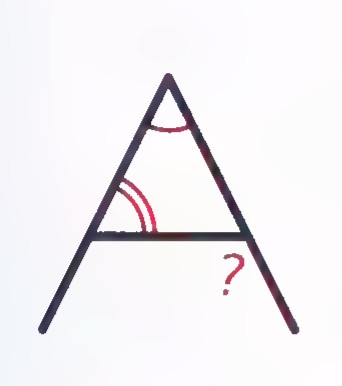
An exterior angle of a triangle is equal . . .
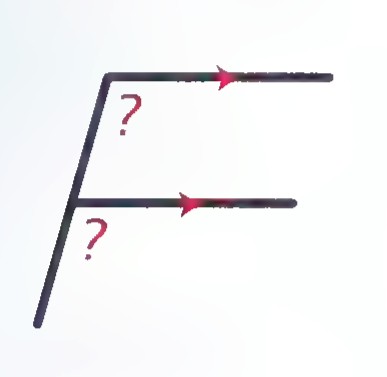
Parallel lines . . .
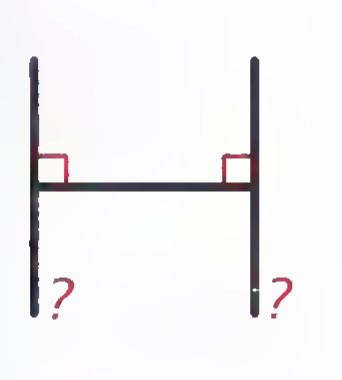
In a plane, two lines . . .
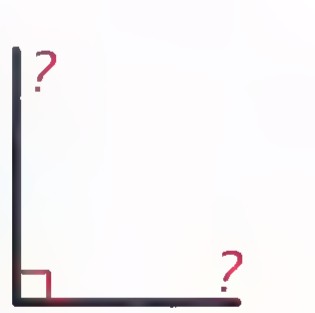
If two lines form a right angle . . .
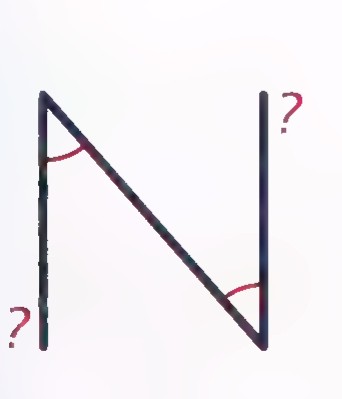
Equal alternate . . .
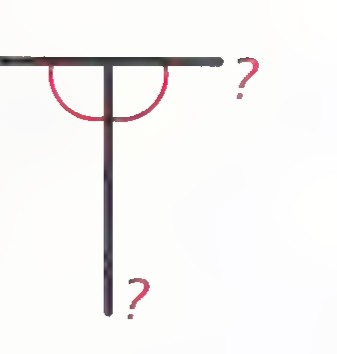
If the angles in a linear pair . . .
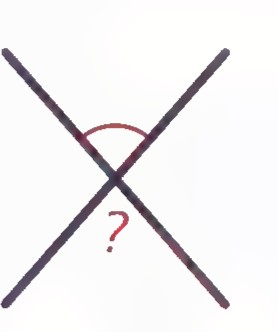
Vertical angles . . .
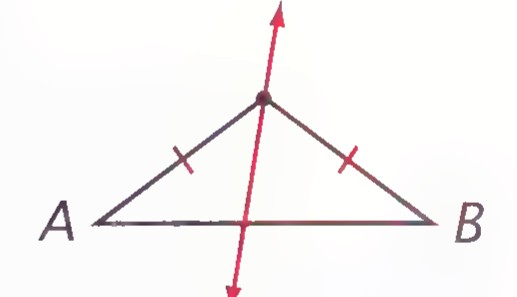
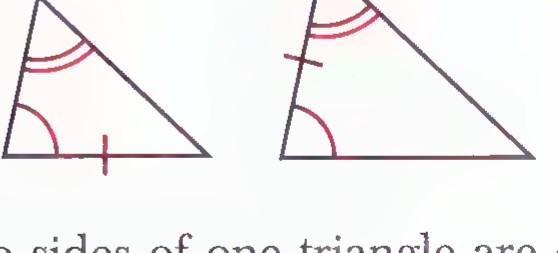
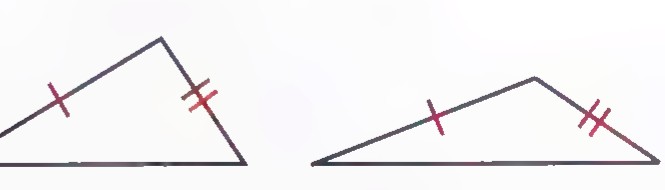
Ollie’s Mistakes. In their big review for the geometry test, Obtuse Ollie misstated four theorems. Acute Alice drew a figure for each one to show him that something was wrong. Rewrite each theorem so that it is stated correctly.
- “In a plane, a point equidistant from the endpoints of a line segment determines the perpendicular bisector of the line segment.”
- “If two angles and a side of one triangle are equal to two angles and a side of another triangle, the triangles are congruent.”
- “If two sides of one triangle are equal to two sides of another triangle, the third sides are equal.”
p. 252
- “A line perpendicular to one of two parallel lines is also perpendicular to the other.”
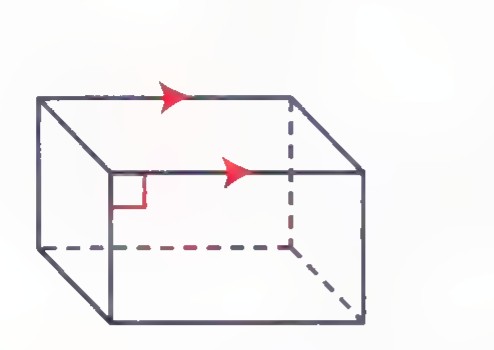
Triangle Division. Each of the equilateral triangles below is divided into five triangular pieces.* Make a large copy of each figure and write in the measures of the other angles.
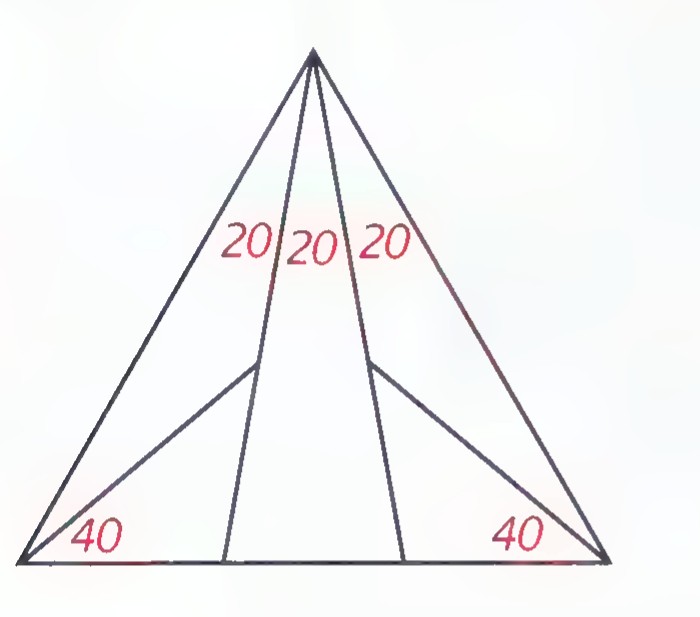
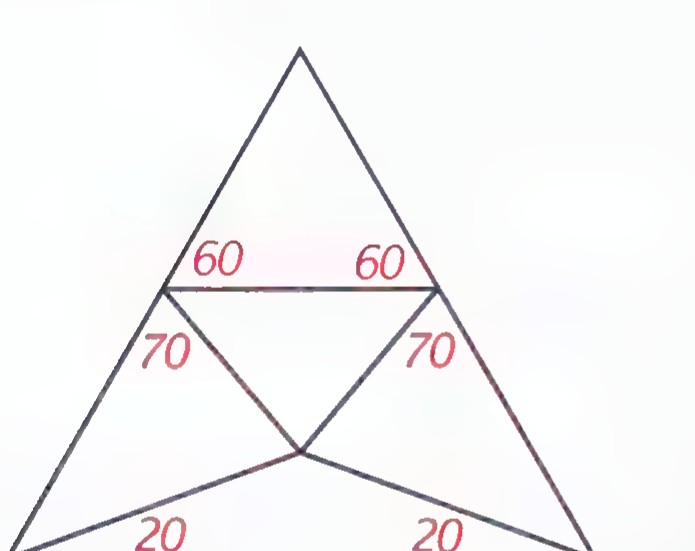
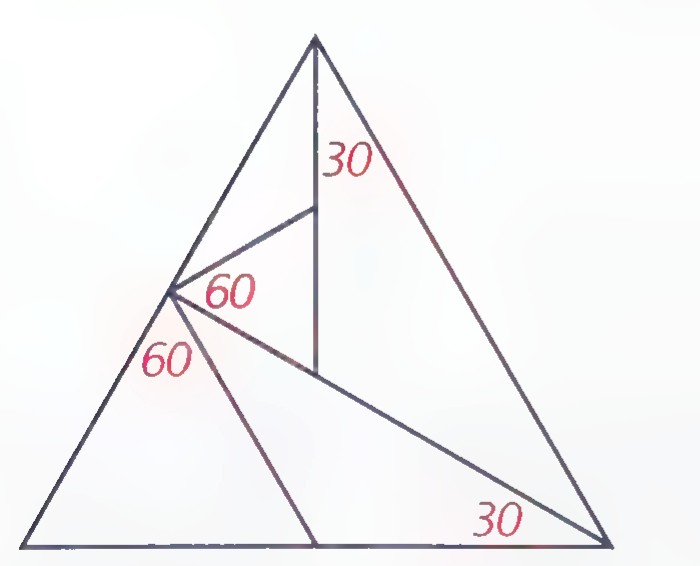
What do all of the triangular pieces in all three figures have in common?
How many pieces in each figure are equilateral triangles?
Angle Trisection. Although it is impossible to trisect most angles with only a straightedge and compass, it is possible to trisect a right angle.
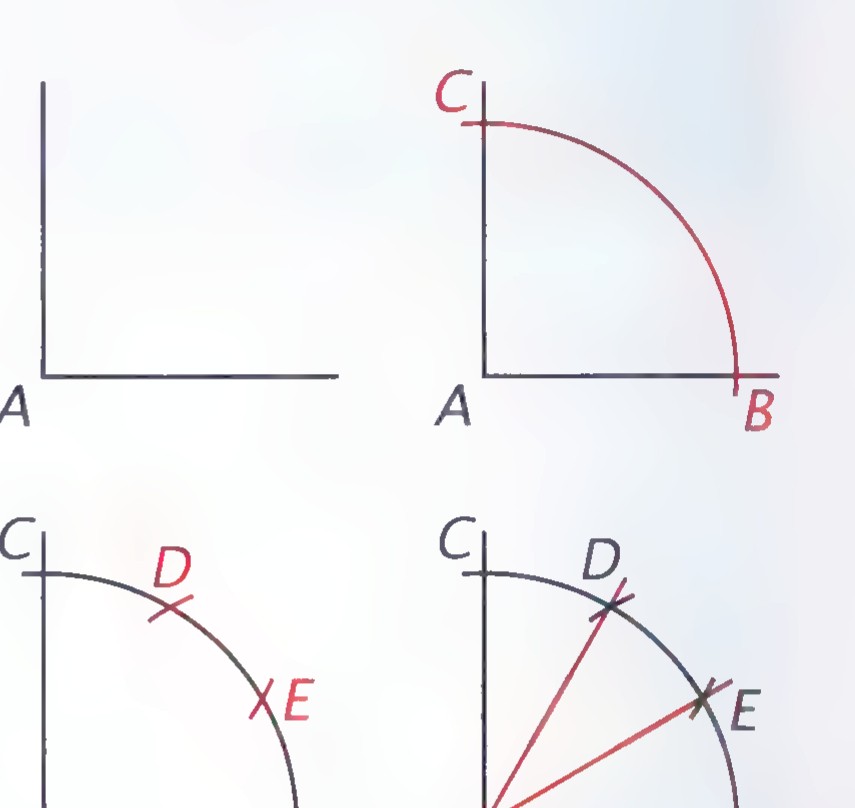
Use your ruler and protractor to draw right ∠A as shown in the first figure above.
With A as center draw an arc intersecting the sides of the angle at B and C as shown in the second figure.
With B as center, draw an arc with the same radius intersecting arc BC at D as shown in the third figure. With C as center, draw an arc with the same radius intersecting arc BC at E.
Draw AD and AE as shown in the fourth figure.
Finally, use your protractor to check the accuracy of your construction.
Draw DB and EC. What kind of triangles are △DAB and △EAC?
What can you conclude about ∠DAB and ∠EAC? Why?
What can you conclude about ∠EAB? Why?
* Which Way Did the Bicycle Go? by Joseph D. E. Konhauser, Dan Yelleman, and Stan Wagon (Mathematical Association of America, 1996).
p. 253
Used by permission of Johnny Hart and Creators Syndicate, Inc.
Surveyor’s Triangle. Surveyors use a right triangle in drawing perpendicular lines. If the triangle is defective, it can seem to produce two lines perpendicular to line l through point P as shown in the figure below.*
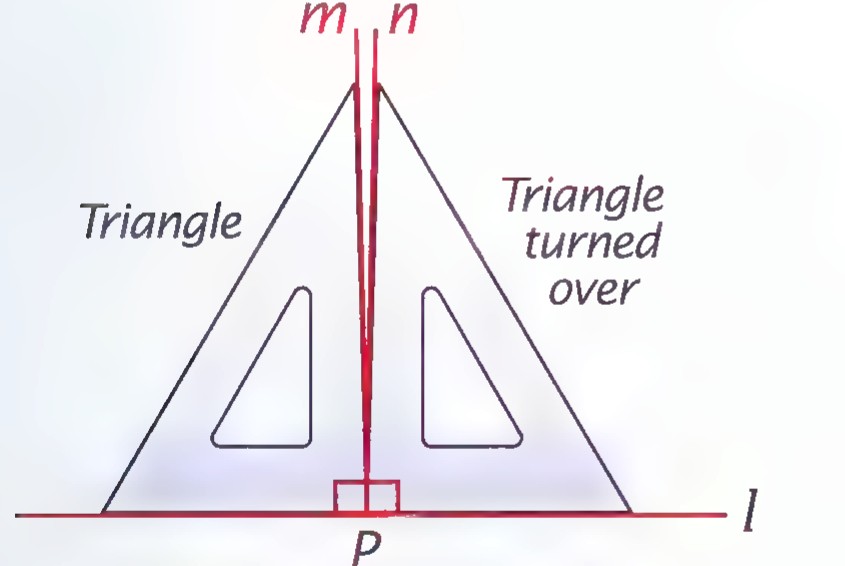
In a plane, through a given point, how many lines can be drawn perpendicular to a given line?
State the theorem that would be contradicted if lines m and n are both perpendicular to l.
What relation would the line that is actually perpendicular to line l at P have to the angle shown in red?
Draw line l, mark point P on it, and use your straightedge and compass to construct the line through P that is perpendicular to l.
Set II
Magnifying Glass. A magnifying glass can be used to focus the light rays of the sun on a small spot. In this figure, AB ∥ CP ∥ EF, and CP is the perpendicular bisector of BF.
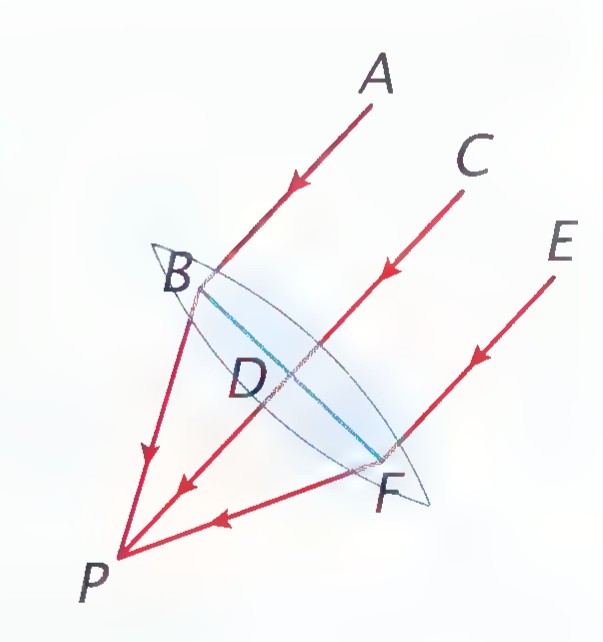
- If all of the lines lie in the same plane, why must it be that AB ⊥ BF and EF ⊥ BF?
- Why does it follow that ∠ABF = ∠EFB?
- What word describes lines such as BP, CP, and FP that meet in a single point?
- Why is △BDP ≅ △FDP?
- Why does it follow that ∠PBF = ∠PFB?
- What conclusion follows about ∠ABP and ∠EFP?
* Elementary Surveying, by Paul R. Wolf and Russell C. Brinker (Harper Collins, 1989).
p. 254
Measuring a Tree. The figure below appeared in an old geometry book.*
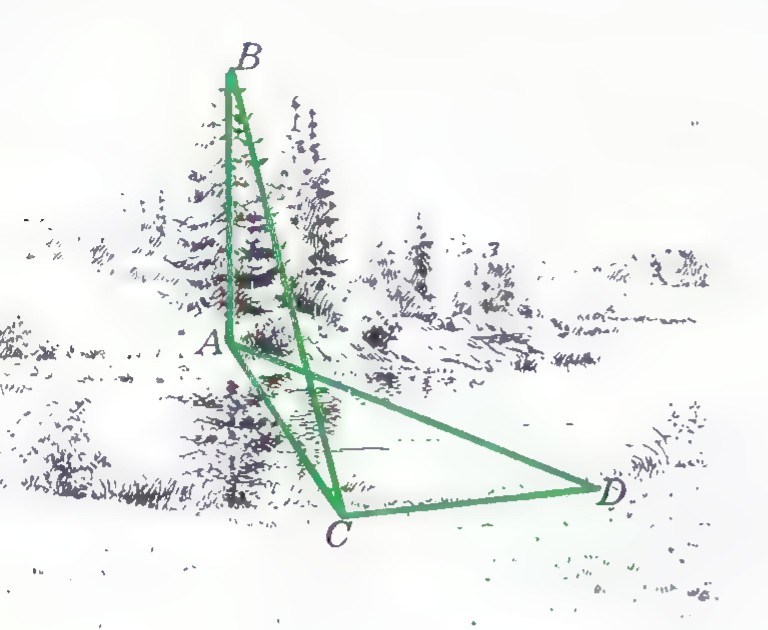
It illustrated a method for finding the height of a tree on the other side of a river. The directions said:
Find the point C directly opposite the tree where the angle of elevation ACB of the tree is 45°. Lay off from C a line CD perpendicular to AC and of such length that the angle ADC = 45°.
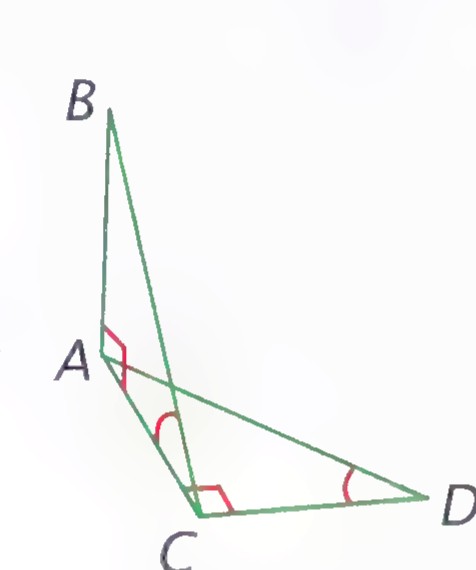
- If this is done, what can you conclude about ∠B and ∠CAD?
- What can you conclude about BA and AC and about AC and CD?
- Why?
- Why would CD have to be equal to the height of the tree?
Quadrilateral Problem. In quadrilateral ABCD, AD = BC and AB ∥ DC.
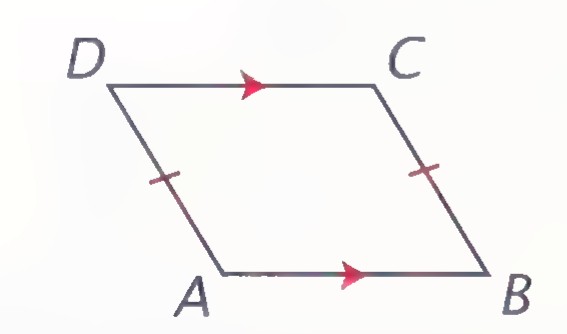
Name a pair of angles in the figure that must be supplementary.
How do you know?
Do you know that any angles in the figure are equal? If so, which ones?
Isosceles Triangle. In isosceles △ABE, AB = BC = CD = DE.
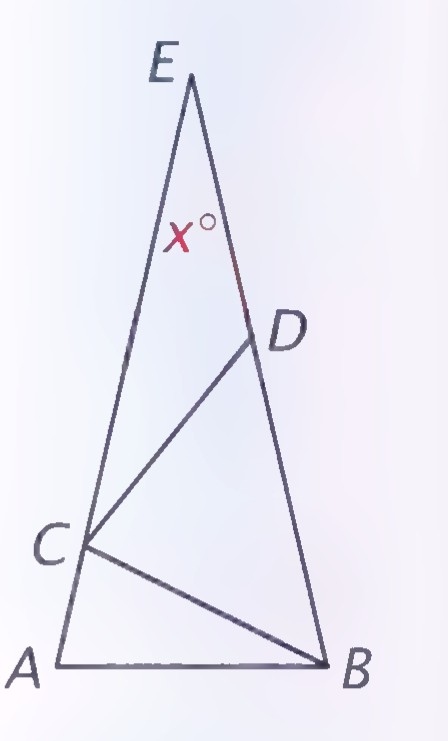
- Draw the figure and mark it as needed to answer each of the following.
Find the measures of the following angles in terms of x.
∠ECD.
∠CDB.
∠DBC.
∠ACB.
∠A.
∠ABE.
Write an equation and solve for x to find the measure of ∠E.
Stair Steps. In the figure at the right illustrating two stair steps, △ABC and △CDE are right triangles, AB = CD, and C is the midpoint of AE.
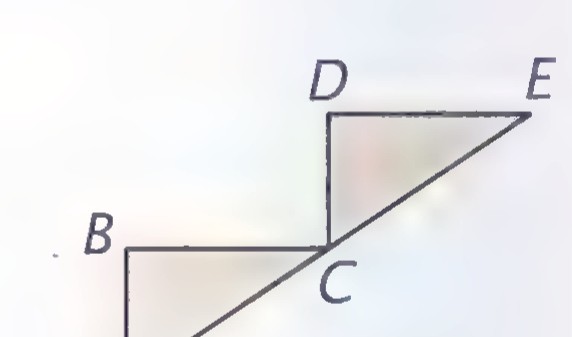
- Copy the figure and mark it as needed to explain why BC ∥ DE.
SAT Problem. The figure at the right appeared on an SAT exam.
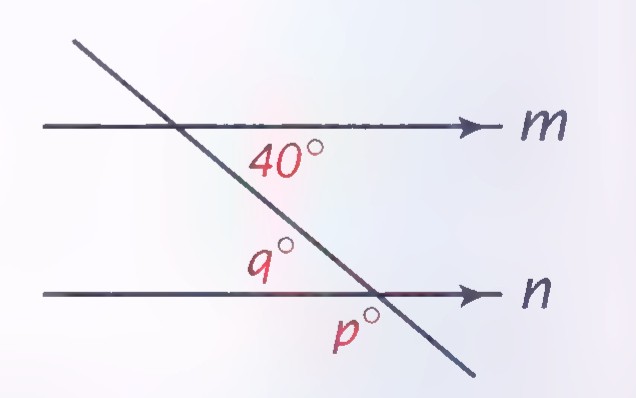
Three angles formed by parallel lines m and n and the transversal have been marked.
- The problem is to find p − q. Explain how this can be done.
* First Steps in Geometry, by G. A. Wentworth and G. A. Hill (Ginn, 1901).
p. 255
Algebra Review: Operations with Fractions
Addition and Subtraction
Recall that division is defined in terms of multiplication:
For fractions having the same denominator, it follows that
and that
Before fractions having different denominators can be added or subtracted, they must be expressed as fractions having a common denominator.
In general,
and
Example 1:
Solution:
Example 2:
Solution:
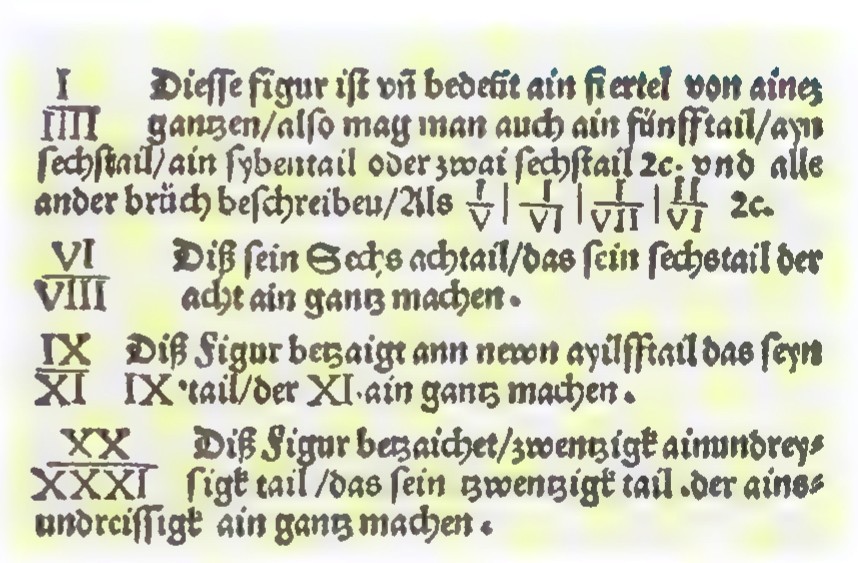
This excerpt from a popular arithmetic book published in Germany in 1514 shows Roman numerals being used to write fractions. The first fraction is . Do you recognize the others?
p. 256
Multiplication
Multiplying fractions is easy. In general,
Division
The definition of division expresses division as multiplication by the reciprocal; so, in general,
Example 3:
Solution:
Example 4:
Solution:
Exercises
Do the indicated operations. Express your answers in lowest terms.