p. 718
Final Review
Set I
German Terms. The figure below from a German geometry book names lines and line segments related to the circle.
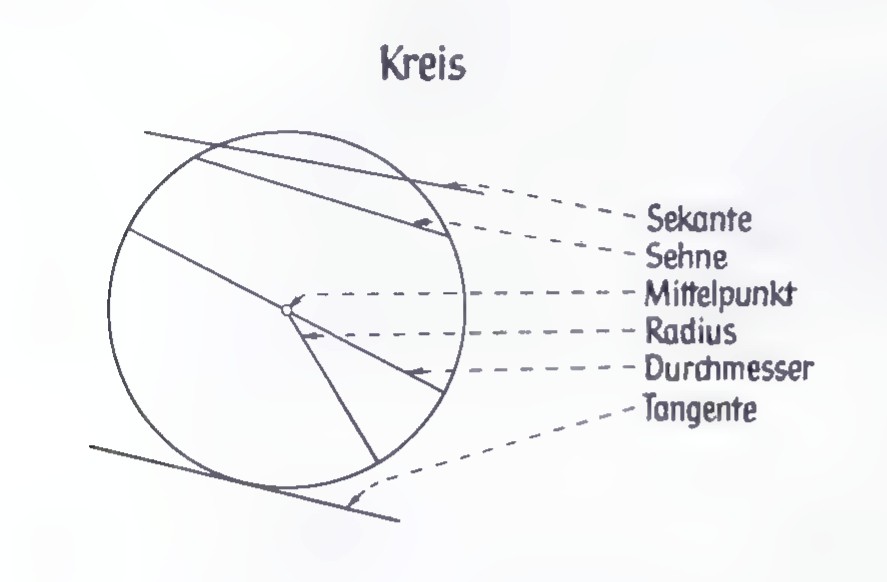
- Which word in the figure is identical in German and English?
- It appears from the figure that a durchmesser is a sehne of a kreis that contains its mittelpunkt. Explain.
- What is the difference between a sekante and a tangente?
Regular Polygons. The figure below consists of equilateral triangles and squares.
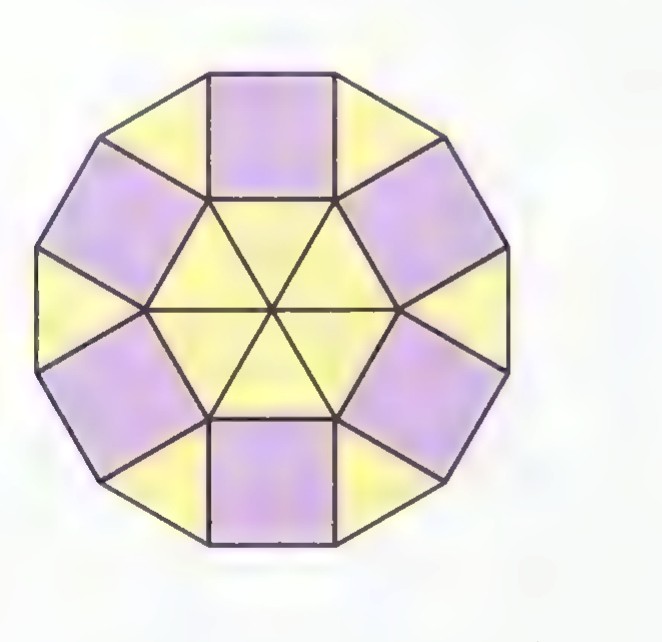
- What other regular polygons do you see in it?
- What properties do all regular polygons have in common?
- What are the measures of the angles of the rhombuses in the figure that are not squares?
- What other type of quadrilateral in the figure has angles of these measures?
- What is the sum of the measures of the angles of a regular hexagon?
- What is the sum of the measures of the angles of a regular dodecagon?
What Follows? Complete the statements of the following postulates and theorems.
- The area of a parallelogram is the product of . . .
- If a line through the center of a circle bisects a chord that is not a diameter, it . . .
- If two points lie in a plane, the line that contains them . . .
- If the square of one side of a triangle is equal to the sum of the squares of the other two sides, . . .
- Triangles with equal bases and equal altitudes . . .
- Two nonvertical lines are parallel iff their slopes . . .
- If a line is perpendicular to a radius at its outer endpoint, it is . . .
- If two planes intersect, they intersect in . . .
- The length of a diagonal of a cube with edges of length e is . . .
- If a line parallel to one side of a triangle intersects the other two sides in different points, it divides the sides . . .
- Each leg of a right triangle is the geometric mean between . . .
- The volume of a pyramid is one-third of the product of . . .
- The ratio of the perimeters of two similar polygons is equal to . . .
- Two nonvertical lines are perpendicular iff the product of their slopes . . .
- A secant angle whose vertex is outside a circle is equal in measure to . . .
p. 719
Pythagorean Squares. In the figure below, the squares on the legs of a right triangle have been moved so that they partly overlap the square on its hypotenuse. The letters represent the areas of the five regions that result.
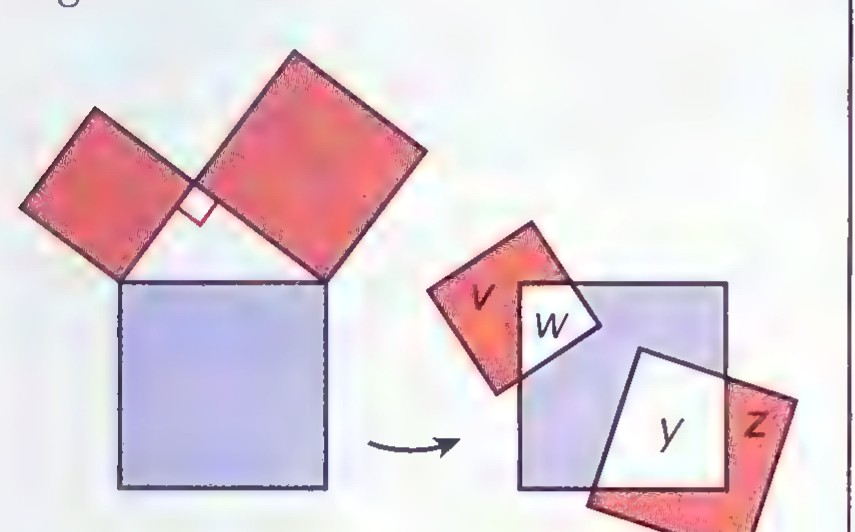
According to the Area Postulate, the area of a polygonal region is equal to the sum of the areas of its nonoverlapping parts.
- In terms of the letters, what is the area of the largest square?
- Which is greater: the area shaded red, v + z, or the area shaded blue, x? Explain.
The Value of Pi. Brahmagupta, a seventh-century Indian mathematician, proposed the following estimate for π.
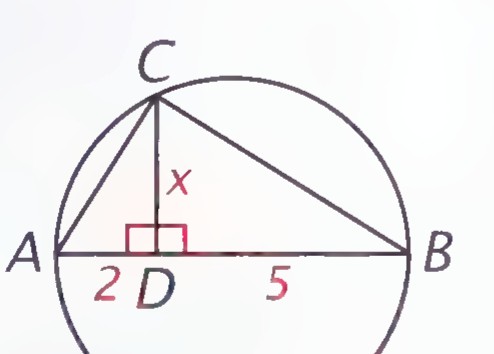
AB is a diameter of the circle and CD ⊥ AB.
- What can you conclude about △ABC? Explain.
- Write a proportion relating the lengths AD, CD, and DB.
- Using the fact that AD = 2 and DB = 5, find CD.
Brahmagupta’s estimate was CD = π.
- Is this estimate correct? Explain.
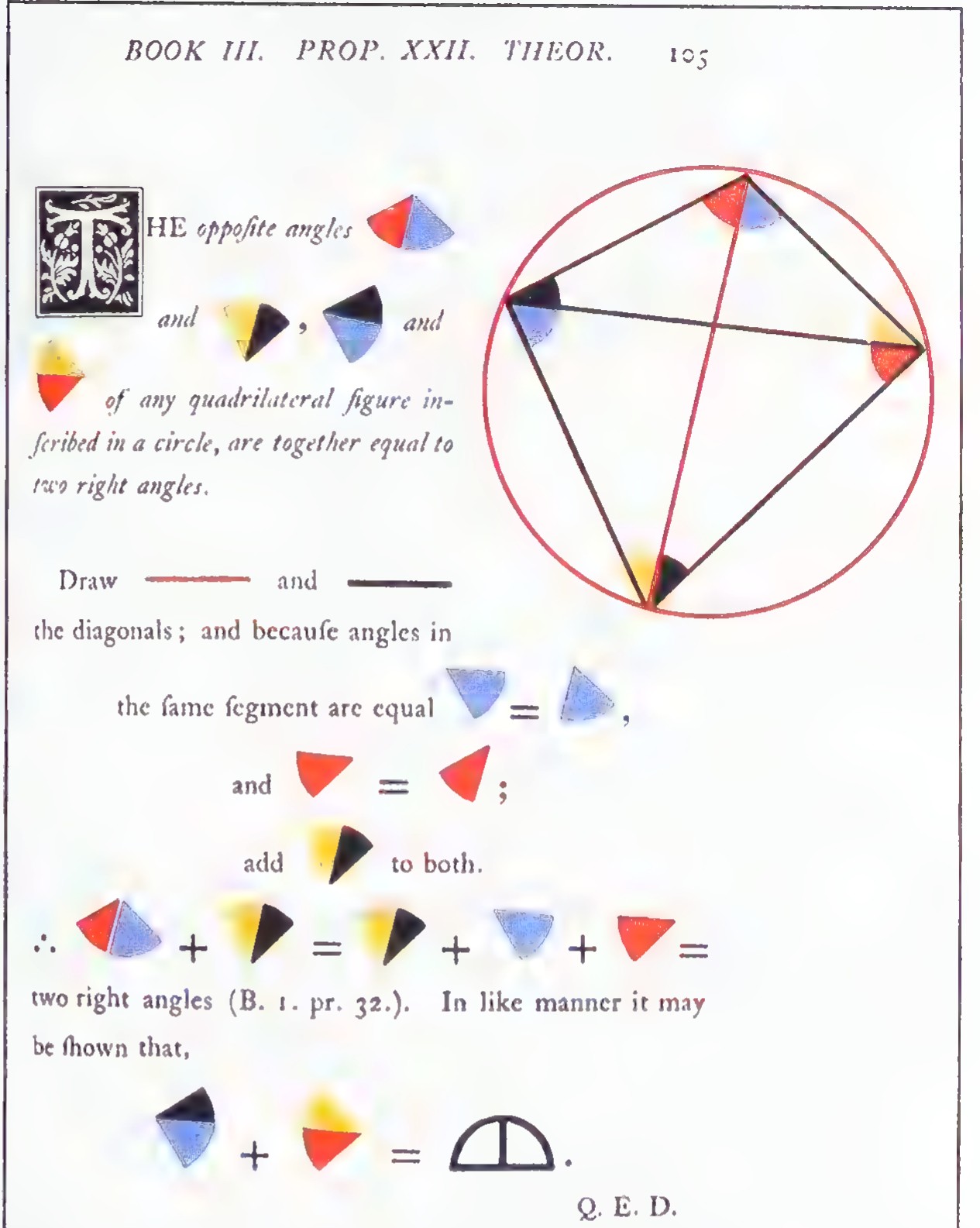
Euclid in Color. The most colorful edition of Euclid’s Elements was published in London in 1847. The figure above shows a page from this book.
- What theorem is being proved?
- Why are the angles that are labeled with the same color equal?
- Why is the part of the proof shown below true?
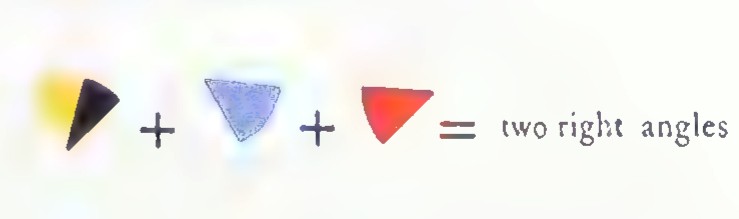
- What do you think the symbol
 means?
p. 720
Largest Package. The rule for the largest rectangular package that you can mail at the post office is:
The length of its longest side plus the distance around its thickest part is less than or equal to 130 inches.
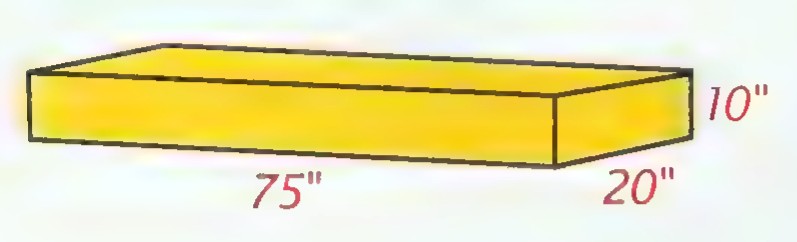
A package has dimensions 10 inches, 20 inches, and 75 inches.
- What is its volume?
- Would the post office accept it? Explain.
- What is the length of the edge of the largest cube that you can mail?
- What is its volume?
Four Centers. Points A, B, C, and D are the four centers of △XYZ.
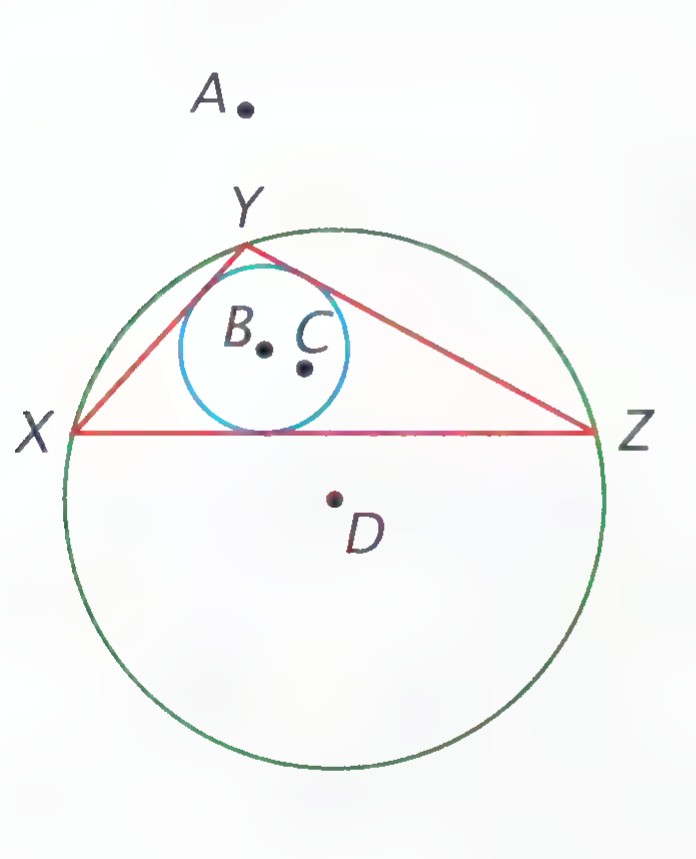
What is the name of
- point A, the point in which the lines containing the altitudes of △XYZ are concurrent?
- point B?
- point C, the point in which the medians of △XYZ are concurrent?
- point D?
Which of these points is
- equidistant from the sides of the triangle?
- equidistant from its vertices?
- the triangle’s balancing point?
- not collinear with the other three?
Formulas. What is each of the following formulas used for?
- .
- .
- .
- .
Kindergarten Toy. The photograph from the Milton Bradley catalog of 1889 shown below is of a toy for kindergarten children. Three basic geometric solids are suspended by strings.
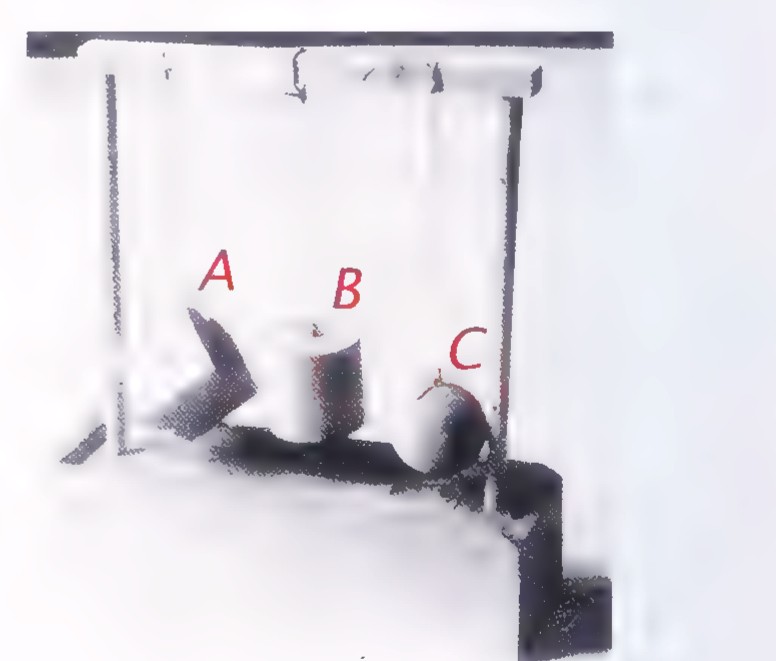
- What does each solid appear to be?
Write expressions for the volume and total surface area of
- solid A in terms of the length, e, of each of its edges.
- solid B in terms of its altitude, h, and the radius, r, of its bases.
- solid C in terms of its radius, r.
p. 721
Steep Roof. The steep roof of an A-frame house helps it to shed snow easily.
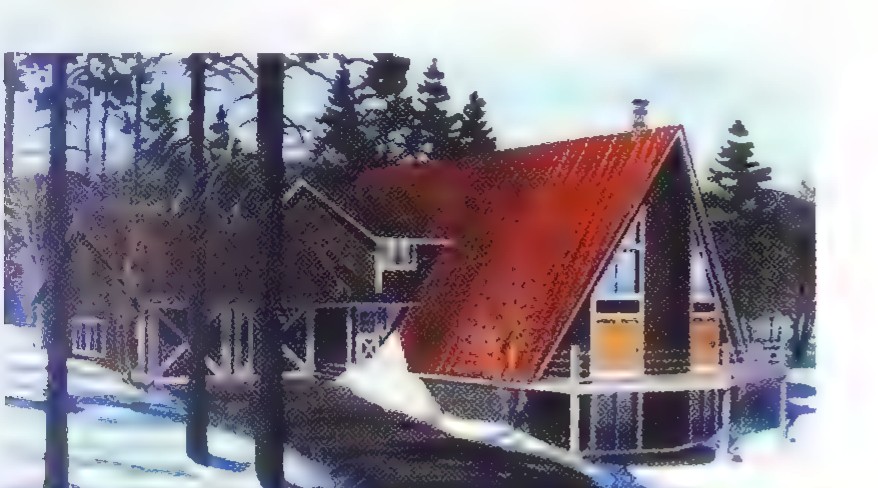
The figure below is a side view of an A-frame roof in a coordinate system; the units are in feet.
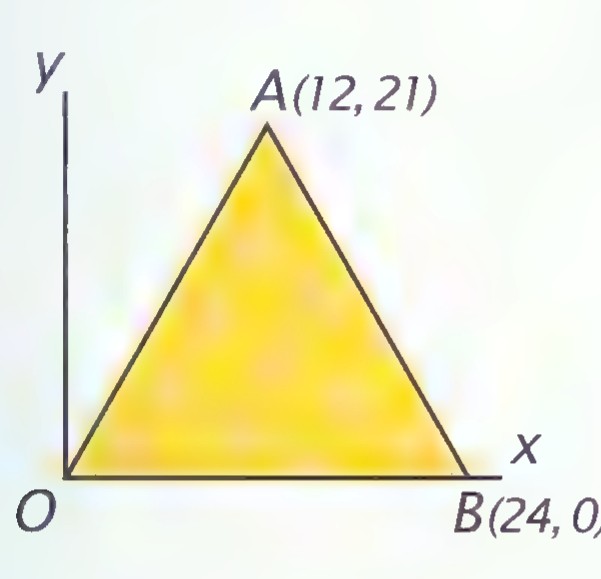
- Find the slopes of OA and AB.
- Find ∠AOB, the angle of inclination of the roof, to the nearest degree.
- Find OA and AB to the nearest foot.
- △OAB looks equilateral. Is it?
Greek Crosses. The figures below show how two congruent Greek crosses can be cut and put together to form a square.
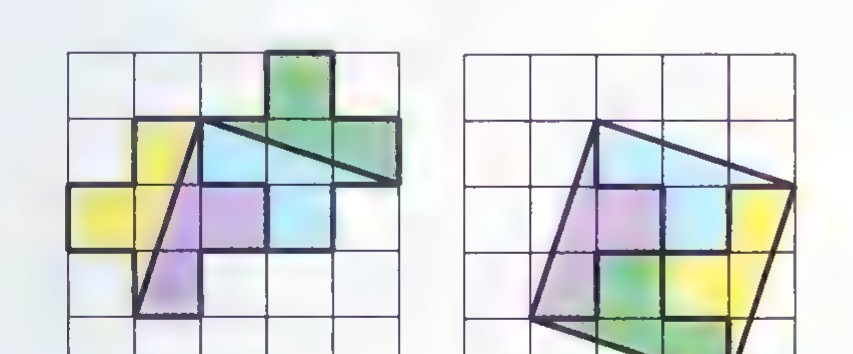
Given that the length of each side of one of the crosses is x units, find each of the following measures in terms of x.
- The perimeter of one of the crosses.
- The area of one of the crosses.
- The area of the square.
- The length of a side of the square.
- The perimeter of the square.
Baseball in Orbit. The smaller a planet, the weaker its gravity. If the radius of the earth were 22 miles, it would be possible to throw a baseball into orbit!*
- Given that the orbit is circular, find the distance that the ball would travel in going once around the earth.
To be put into this orbit, the ball would have to be thrown at a speed of 100 miles per hour, something that professional pitchers can easily do.
- Approximately how many minutes would it take the ball to return to the spot from which it was thrown?
Two Quadrilaterals. ABCD represents any convex quadrilateral. The four lines that bisect its angles intersect at E, F, G, and H to form quadrilateral EFGH.
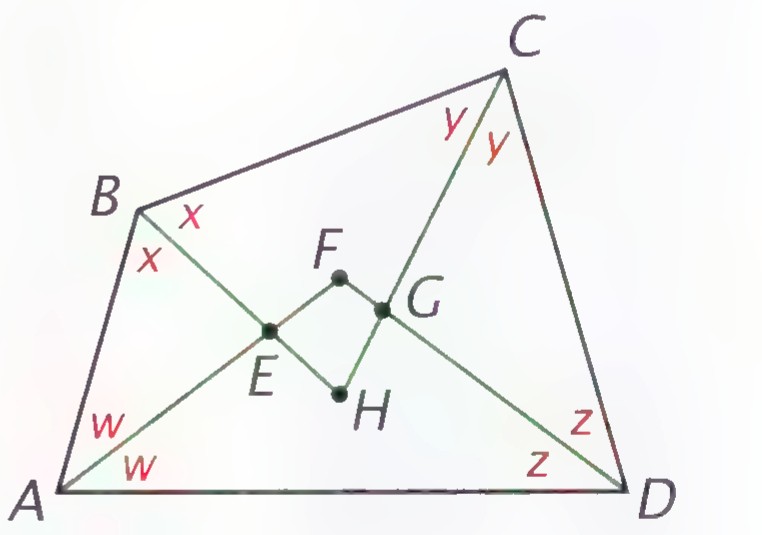
Letting the measures of the angles produced by the bisectors be w, x, y, and z as indicated, show why each of the following statements is true.
- w + x + y + z = 180°.
- ∠F = 180° − w − z and ∠H = 180° − x − y.
- ∠F + ∠H = 180°.
- Quadrilateral EFGH is cyclic.
* The Cosmological Milkshake, by Robert Ehrlich (Rutgers University Press, 1994).
p. 722
Long Shadows. Tall buildings cast long shadows. At 3 P.M. on the winter solstice, December 21, the Empire State Building casts a shadow more than a mile long.*
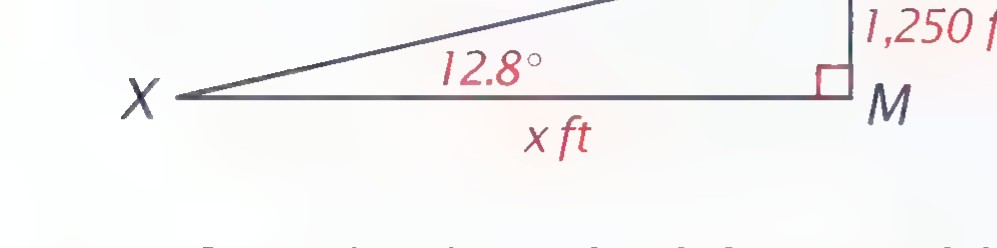
- Given that the angle of elevation of the sun at this time is 12.8° and that the Empire State Building is 1,250 feet tall, find the approximate length of its shadow.
- How long would the shadow cast by a person 6 feet tall be at the same time?
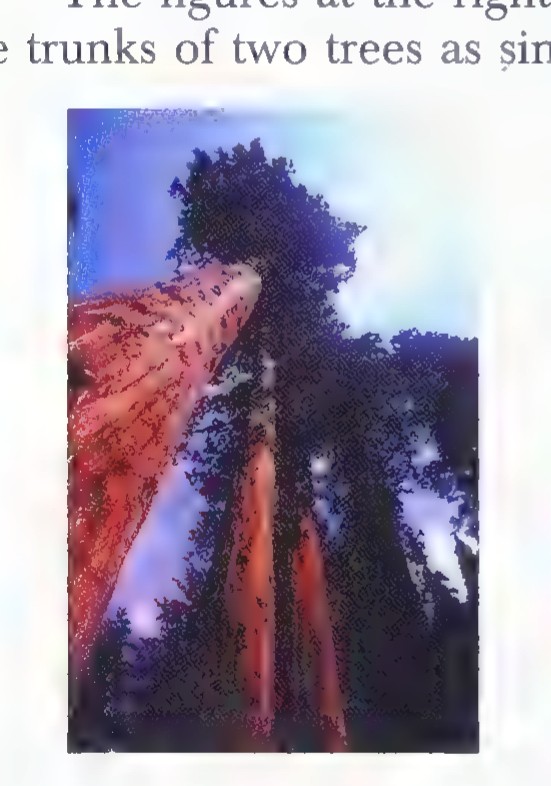
Tree Geometry. Galileo calculated that trees cannot grow beyond a certain size without collapsing from their own weight.
The figures at the right below represent the trunks of two trees as similar cylinders.
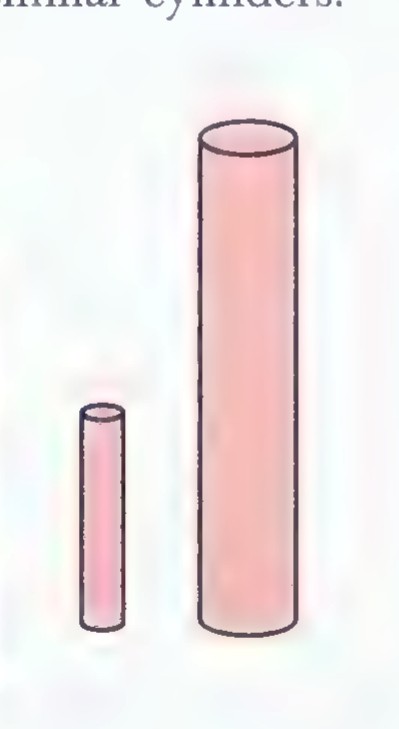
If the ratio of their diameters is k, what is the ratio of
- their heights?
- the areas of their bases?
- their volumes?
- their weights?
Suppose two trees are similar in shape and that one tree is 10 times as tall as the other.
- How would corresponding cross sections of their trunks compare in area?
- How would their trunks and branches compare in weight?
- On the basis of these comparisons, which tree trunk would be more likely to fail because of the load that it bears?
SAT Problem. The figure at the right appeared in a problem on an SAT test.
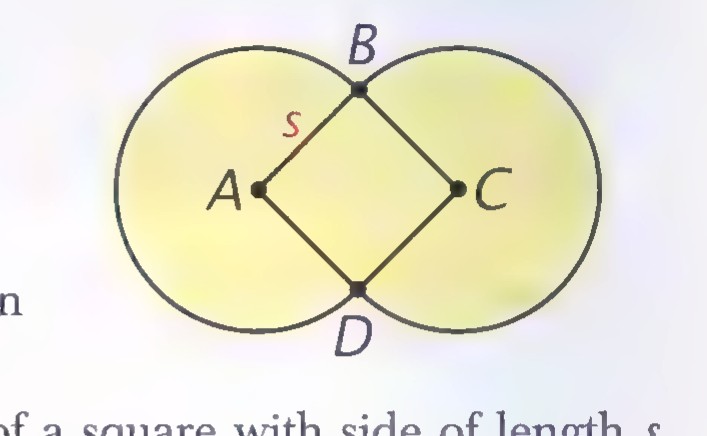
It consists of a square with side of length s and the arcs of two circles centered at A and C and having radius s.
Write an expression in terms of s for
- the perimeter of the figure.
- its area.
Sight Line. In the design of seating that enables each spectator to have a clear view, the sight line is projected 15 cm above the head of the spectator seated three rows below.†
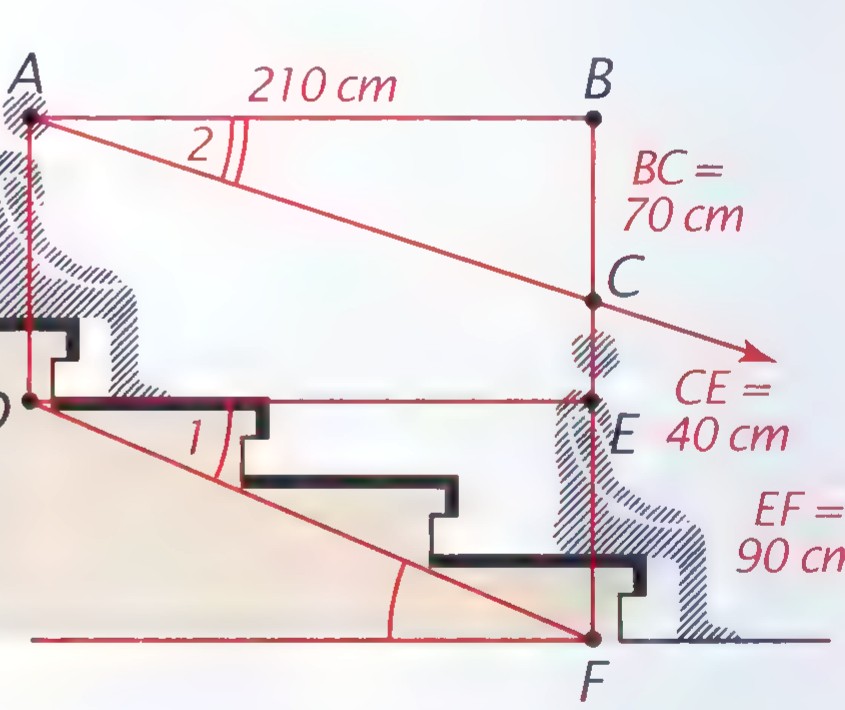
Given the measurements in the figure above, find
- ∠1, which equals the angle at which the seats rise with respect to the horizontal.
- ∠2, the angle of the sight lines with the horizontal.
* The Empire State Building, by John Tauranac (Scribner’s, 1995).
† Indoor Sports Spaces, by Robin Crane and Malcolm Dixon (Van Nostrand Reinhold, 1991).
p. 723
Set II
Dog Crates. Dog crates usually have the shape of rectangular solids.
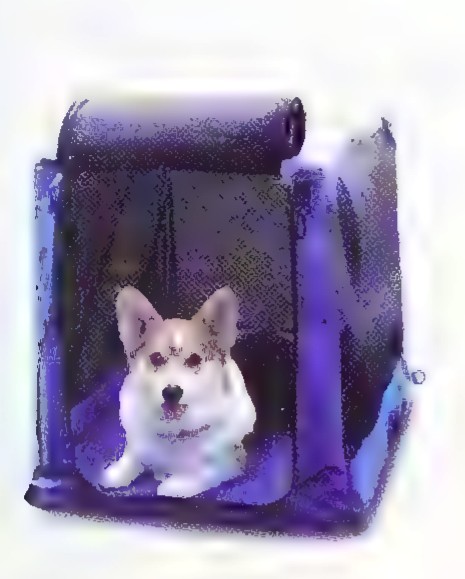
Crates for beagles are 30 inches long and 22 inches high and have a volume of 12,540 cubic inches.
- How wide are they?
Crates for boxers are 36 inches long, 26 inches high, and 23 inches wide.
- Are the crates for beagles and boxers similar? Explain why or why not.
Crates for Great Danes are 48 inches long.
- Given that these crates are similar to those for beagles, find the volume of such a crate to the nearest cubic inch.
Tangent Circles. The three circles in the figure below are centered on the vertices of △ABC and meet on its sides at points D, E, and F.
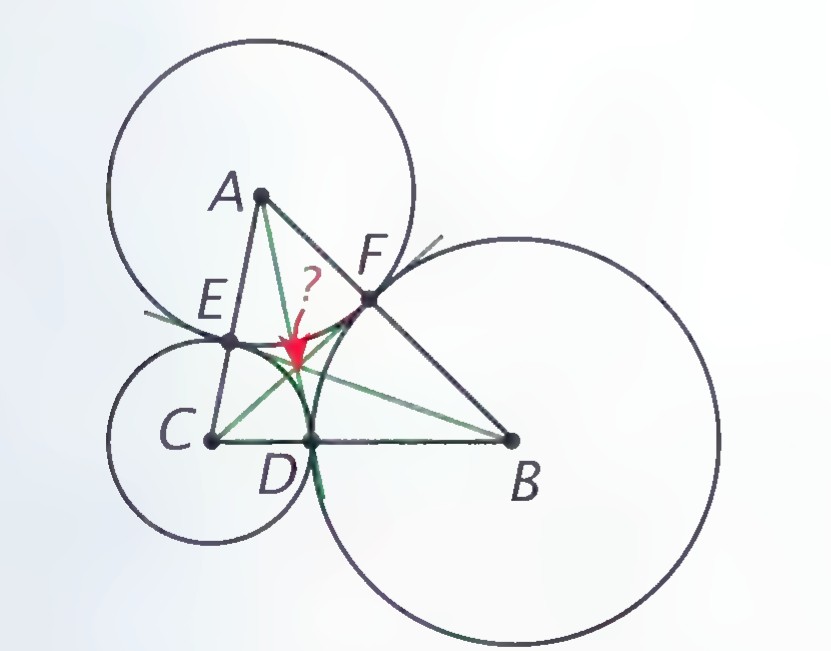
Lines AD, BE, and CF look as if they might be concurrent.
- Write an equation relating the lengths of the segments of the sides of △ABC that, if true, would show that lines AD, BE, and CF are concurrent.
- Would this equation be true if the three circles had equal radii? Explain.
- Is the equation true, given that the circles have radii of different lengths? Explain.
Squares on the Legs. In the figure below, squares ABEF and BCHG have been drawn on the legs of right △ABC, and BD is the altitude to its hypotenuse.
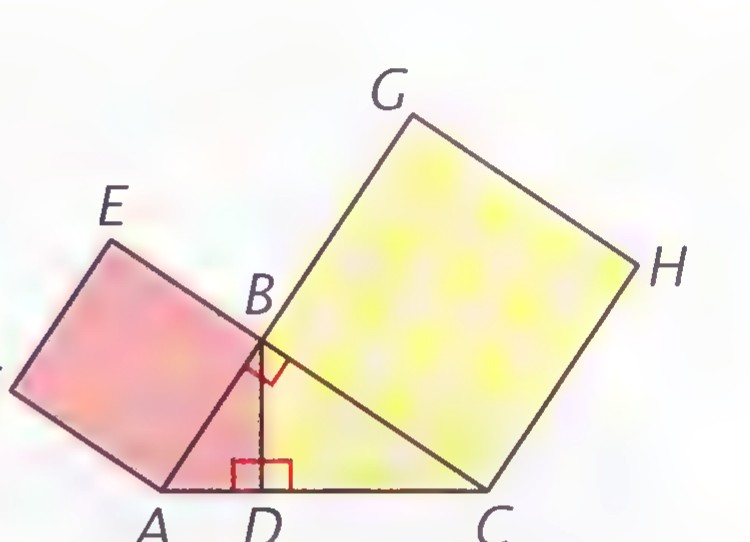
- △ABD ~ △BCD. Why?
- . Why?
- How does compare with ? Explain.
- Is the yellow region similar to the light red one? If so, write the similarity.
Formula Confusion. On the final exam, Obtuse Ollie started confusing different formulas with the one for the area of a triangle.
For the area of a circle, he wrote .
- If by r and c he meant the radius and circumference of the circle, how many points out of 5 would you give Ollie? Explain.
p. 724
For the volume of a sphere, Ollie wrote
- If by r and A he meant the radius and surface area of the sphere, should Ollie get any credit for this answer? Explain.
Ollie also wrote for the volume of a right cylinder.
- If by r and A he meant the radius and area of the lateral surface of the cylinder, should Ollie get any credit for this answer? Explain.
Regular 17-gon. The stamp shown below pictures the great German mathematician Carl Friedrich Gauss and a circle divided into 17 equal arcs. Gauss proved that this division could be done with just a straightedge and compass when he was 18 years old.
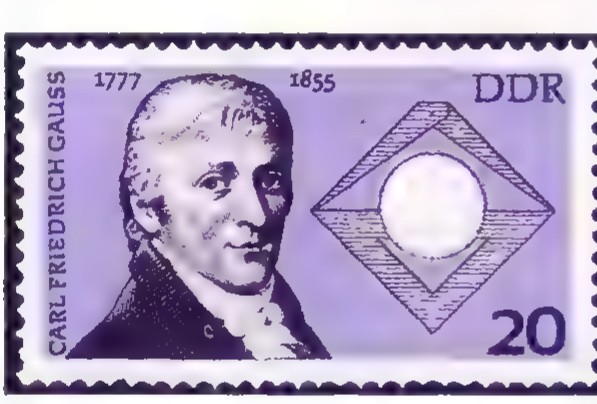
- Find the value of for a regular 17-gon to the nearest hundredth.
- Find the value of for the same polygon to the nearest hundredth.
Given that the radius of a regular 17-gon is 10 centimeters, use the formula
- to find its perimeter to the nearest centimeter.
- to find its area to the nearest square centimeter.
- Without calculating the numbers, how would you expect the corresponding measurements of a circle with the same radius to compare with those of the 17-gon?
- Check your answer to exercise 100 by calculating the circumference and area of the circle, each to the nearest square centimeter.
Packing Circles. When equal circles are packed together as closely as possible, their centers are at the vertices of equilateral triangles.
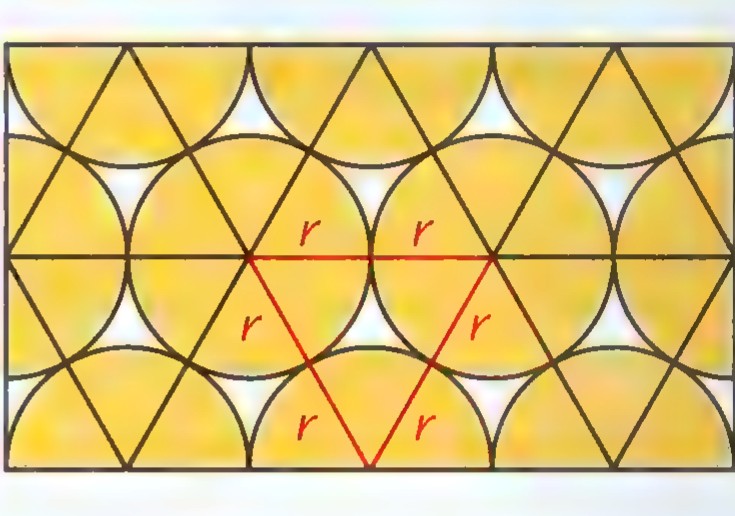
- Find the area of one of these triangles in terms of r, the radius of the circles.
- Find the area inside the triangle filled by the three sectors of the circles.
- Use your answers to exercises 102 and 103 to find the percentage of the plane filled by the circles.
Rain Gutter. A rain gutter is to be constructed from a metal sheet of width 30 cm by bending upward one-third of the sheet on each side through an angle of 60°.*
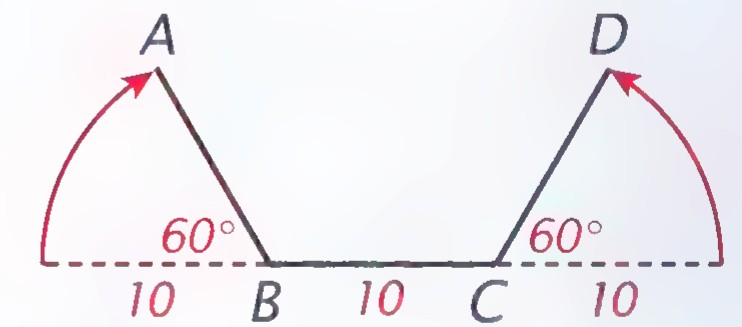
- Copy the figure and draw perpendicular line segments from A and D to line BC to form right △AEB and right △DFC. Also draw AD.
*From a problem in Calculus, by James Stewart (Brooks/Cole, 1995).
p. 725
- What can you conclude about △AEB and △DFC? Explain.
- Why is AE ∥ DF?
- Why is AE = DF?
- Why is AD ∥ EF?
- Find the length of AE.
- Find the area of ABCD (the cross section of the water when the rain gutter is full) to the nearest square centimeter.
Incircle. In right △ABC, the bisectors of ∠A and ∠B intersect in point O.
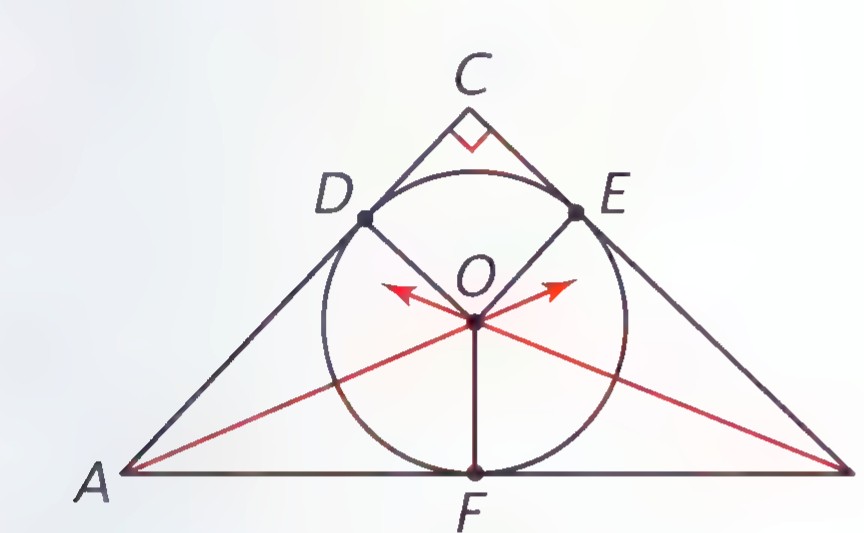
- Why does it follow that the bisector of ∠C also passes through point O?
- What is point O called with respect to the triangle?
The sides of the triangle are tangent to circle O at points D, E, and F.
- Why is CD = CE?
- Why is OD ⊥ AC and OE ⊥ CB?
- Why is OD ∥ EC and OE ∥ DC?
- Why does it follow that OD = EC and OE = DC?
- Given that CA = 20 and CB = 21, find AB.
Express each of the following lengths in terms of the given side lengths and r, the radius of the incircle.
- AD and AF.
- BE and BF.
- Use AB to write and solve an equation for r.
Angles and Sides. The sides opposite ∠A, ∠B, and ∠C of △ABC have lengths a, b, and c.
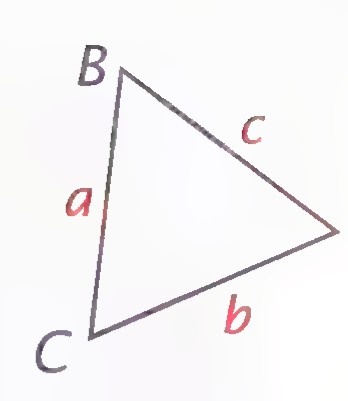
- Why does it follow that ?
- Solve this equation for cos C, given that .
- Use your calculator to find ∠C.
- Is the result the number that you would expect? Explain.
- Solve the equation of exercise 122 for cos C, given that .
- Use your calculator to find ∠C.
- Is the result the number that you would expect? Explain.
Circular Track. The figure below shows a circular race track bordered by two concentric circles.
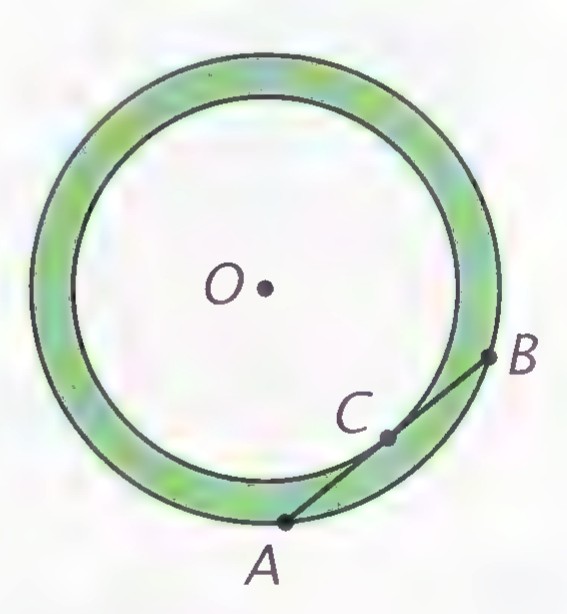
Chord AB represents one of the longest possible straight paths on the track. It is tangent to the inside of the track at C and is 200 meters long.*
- Copy the figure and draw OA and OC. Let R be the length of OA and r be the length of OC.
- AB ⊥ OC. Why?
- OC bisects AB. Why?
- . Why?
- Find the area of the track to the nearest square meter.
* Mathematical Nuts, by Samuel I. Jones (S. I. Jones Co., 1932).
p. 726
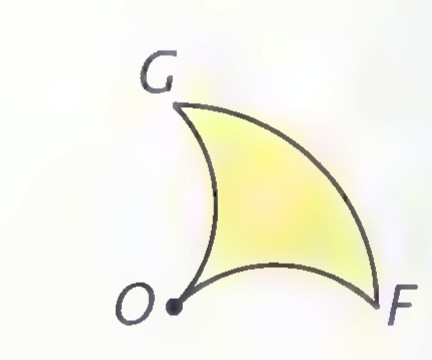
da Vinci Problem. Leonardo da Vinci dedicated a hundred pages of his notebooks to geometry. He made many drawings of figures bounded by circular arcs in which the areas of the parts were related in simple ways.*
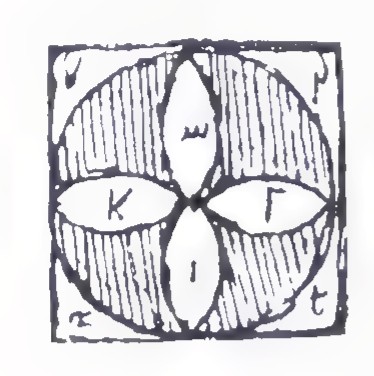
In the figure below, square ABCD is circumscribed about circle O, and square EFGH is inscribed in it. Four semicircles have been drawn with the sides of EFGH as their diameters; each diameter is 2 units long.
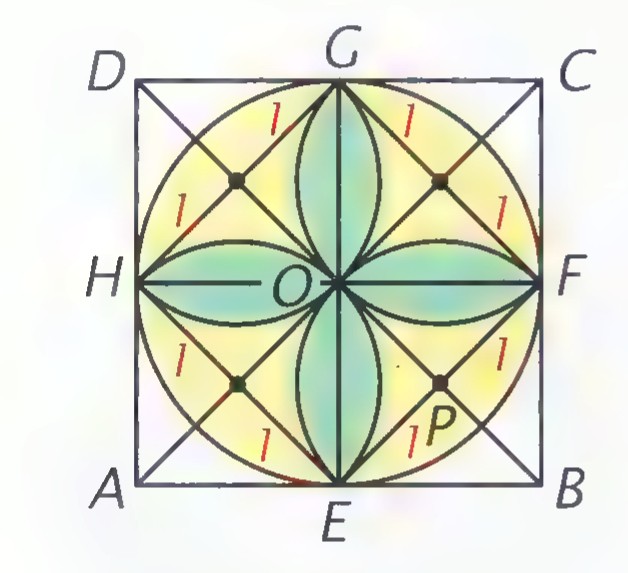
Find the area of each of the following parts of the figure.
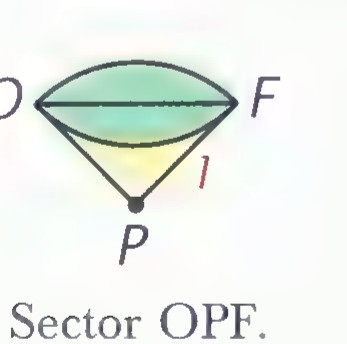
- Sector OPF.
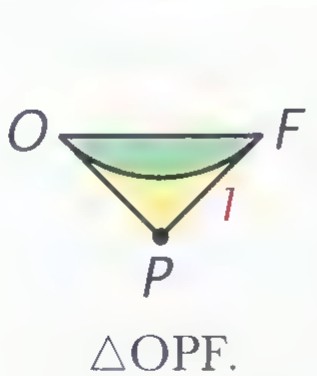
- △OPF.
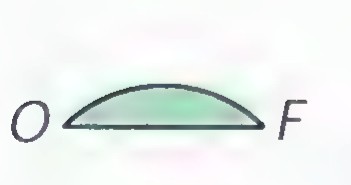
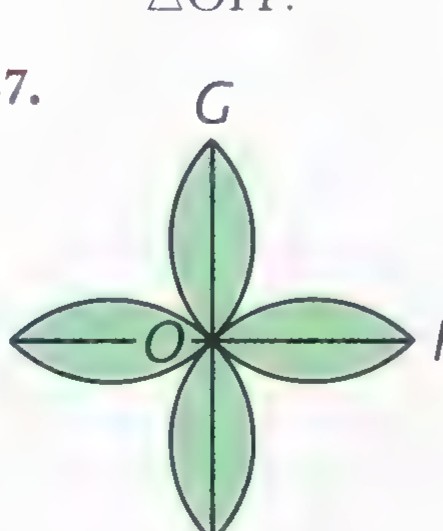
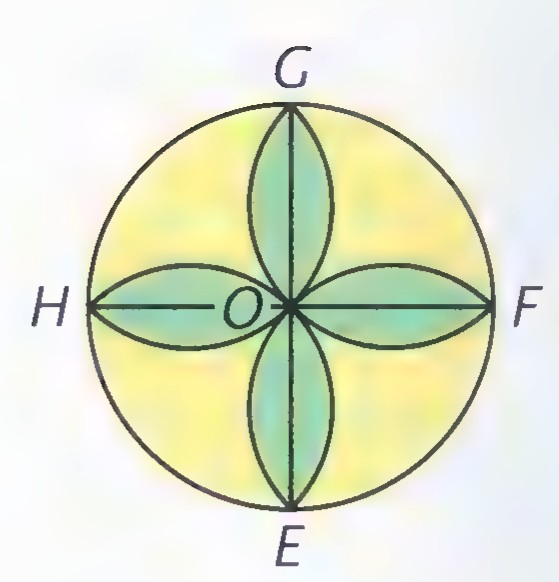
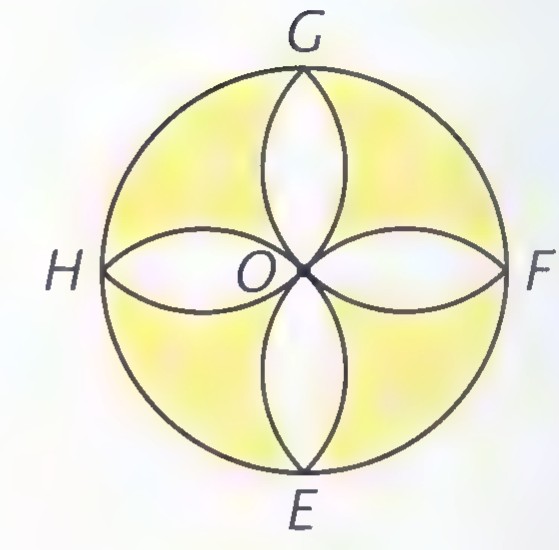
- (The yellow part only.)
A Problem from Ancient India.† A fish at corner F of a rectangular pool sees a heron at corner H looking at him. As the fish swims along FB, the heron walks along the shore from H to A to B, arriving at the same time.
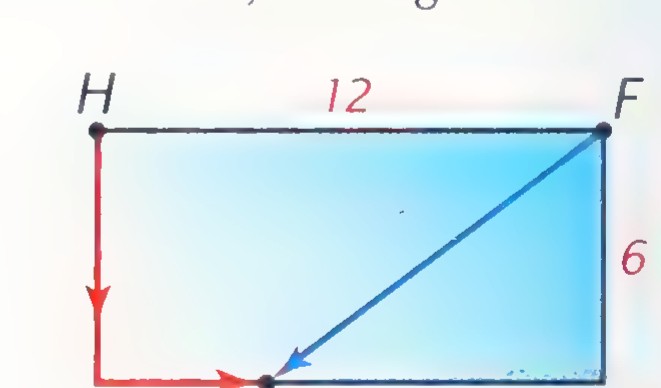
- Given that the pool is 12 units by 6 units and that the heron and the fish move at the same speed, find the distance that the fish swam.
* The Unknown Leonardo, edited by Ladislao Reti (McGraw-Hill, 1974).
† Geometry Civilized: History, Culture, and Technique, by J. L. Heilbron (Clarendon Press, 1998).
p. 727
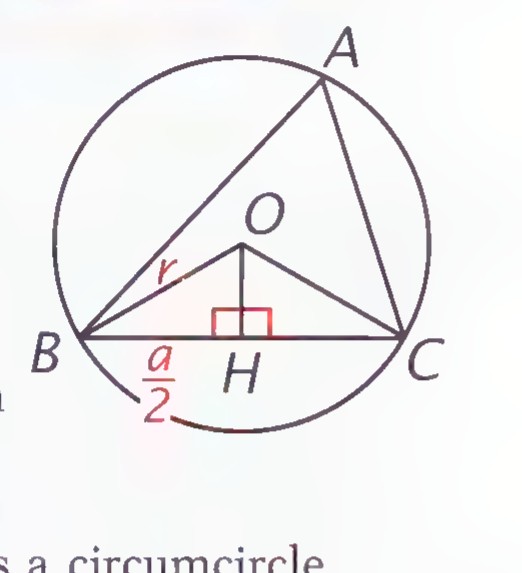
Circumradius. The figure on this stamp from Guinea-Bissau can be used to derive an equation relating a triangle and its circumcircle.

The figure at the right shows △ABC with circumcircle O; OH ⊥ BC, BC = a, and OB = r.
- State the theorem that tells us that, regardless of its shape, △ABC has a circumcircle.
- Why is BH = ?
- Why is ∠BOH = ∠BOC?
- Why is ∠BOC = mBC?
- Why is ∠A = mBC?
- Why is ∠BOH = ∠A?
- Why is sin ∠BOH = ?
- Why does it follow that ?
- Given that the sides of △ABC opposite ∠B and ∠C have lengths b and c, why does it follow that ?
- Use the equation of exercise 149 to find the radius of the circumcircle of a triangle for which a = 3 cm and ∠A = 30°.
- Draw a figure to show that your answer is reasonable.
Conical Mountain. The unusual mountain in Iran in the photograph below was shaped by a gaseous spring. Its crater once contained a lake.*
In the side view of the mountain below, the crater is represented as the lower part of a circular cone, and the bowl of the crater is represented as half of a sphere.
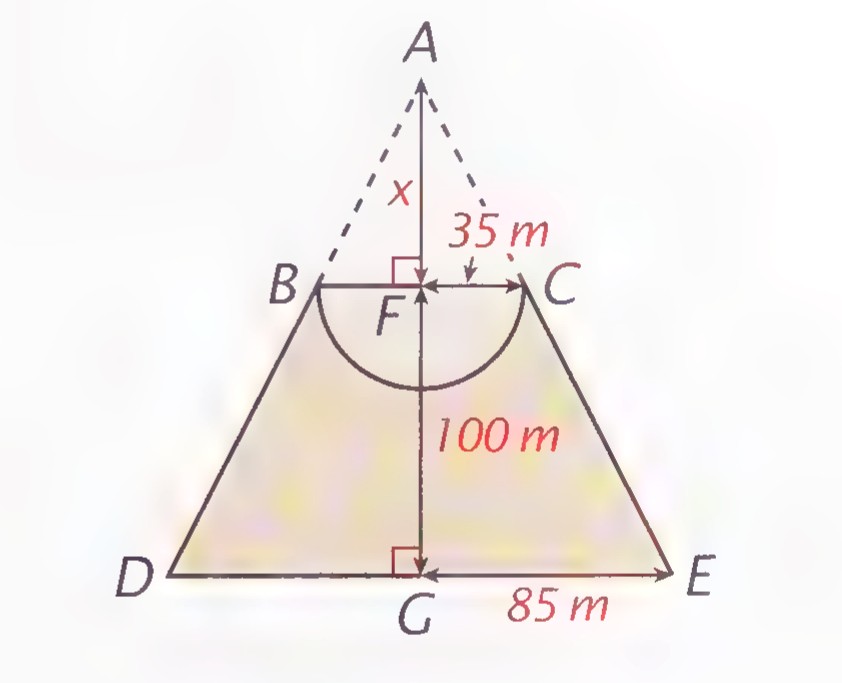
- Use the numbers in the figure to find x, the length of AF.
Find each of the following volumes to the nearest cubic meter.
- The volume of the solid cone whose altitude is AG.
- The volume of the solid cone whose altitude is AF.
- The volume of the bowl of the crater.
- Use your answers to exercises 154 through 156 to estimate the volume of material in the actual mountain to the nearest 100,000 cubic meters.
* Below from Above, by George Gerster (Abbeville Press, 1986).