p. 728
Appendices
Glossary
Acute angle: An angle whose measure is less than . (92)
Acute triangle: A triangle all of whose angles are acute. (158)
Altitude of a prism: (1) A line segment that connects the planes of the bases of a prism and that is perpendicular to both of them. (2) The length of that line segment. (640)
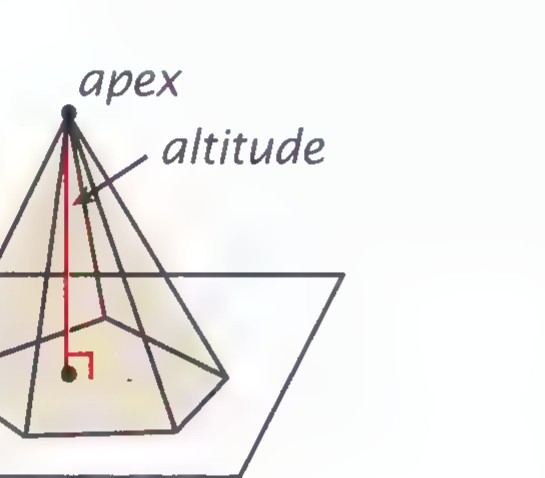
Altitude of a pyramid: (1) The perpendicular line segment from the apex of a pyramid to the plane of its base. (2) The length of that line segment. (648)
Altitude of a quadrilateral that has parallel sides: (1) A perpendicular line segment that connects points on the lines of the parallel sides. (2) The length of that line segment. (359)
Altitude of a triangle: (1) A perpendicular line segment from a vertex of a triangle to the line of the opposite side. (2) The length of that line segment. (352)
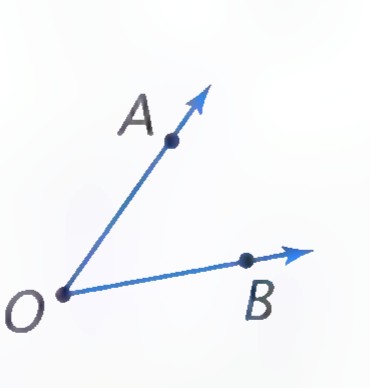
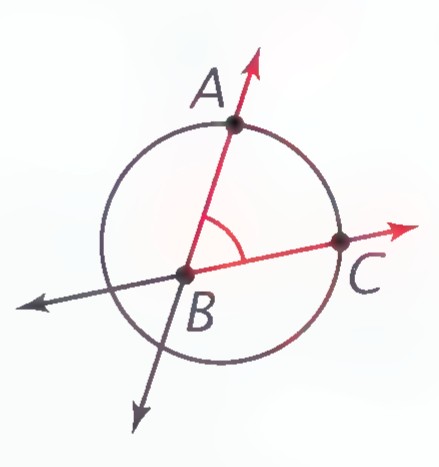
Angle: A pair of rays that have the same endpoint. The angle in the figure at the right can be named ∠O or ∠AOB or ∠BOA; this notation also stands for the measure of this angle. The measure might either be found by using a protractor or worked out by the geometry of a given problem. (13)
Angle of inclination: The angle that a line forms with the horizontal. (461)
Antipodal points: The two points of intersection of a sphere with a line through its center. (691)
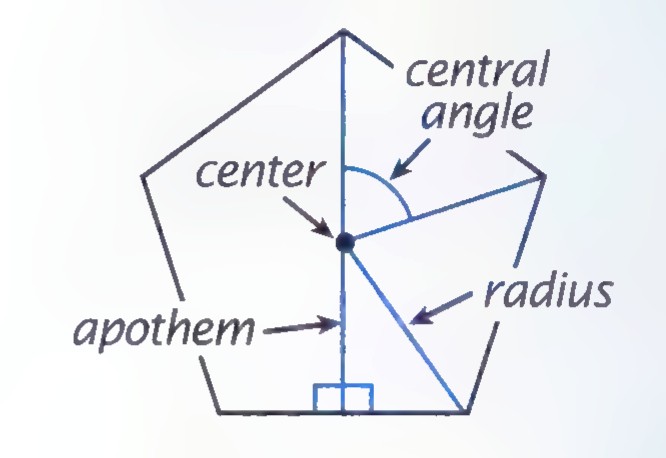
Apothem of a regular polygon: A perpendicular line segment from the center of the polygon to one of its sides. (574)
Area: Measure of extent for plane figures. Determined by using the Area Postulates for polygonal regions or as limits of the areas of polygons (as described for the area of the circle) for curved regions. The methods can be extended to finding the areas of surfaces in three dimensions, including the area of a sphere. (20, 664–665)
Area of a circle: The limit of the areas of inscribed regular polygons. Archimedes extended this method to find the areas of figures bounded by curves by using areas of inscribed and circumscribed polygons. (598)
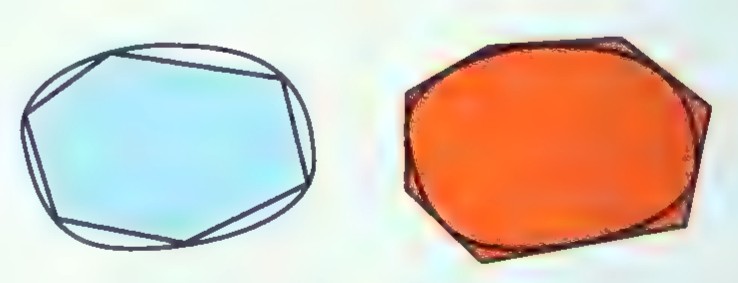
blue area < curved region area < red area
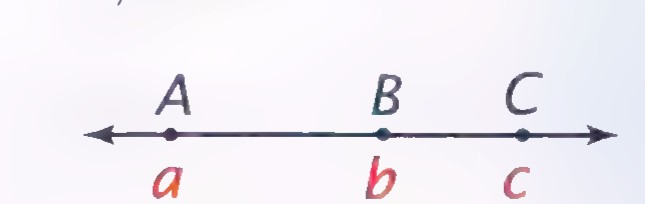
Betweenness of Points: An intuitive notion, formally defined as follows by using the Ruler Postulate. A point is between two other points on the same line iff its coordinate is between their coordinates. (More briefly, A-B-C iff or .) (85)
p. 729
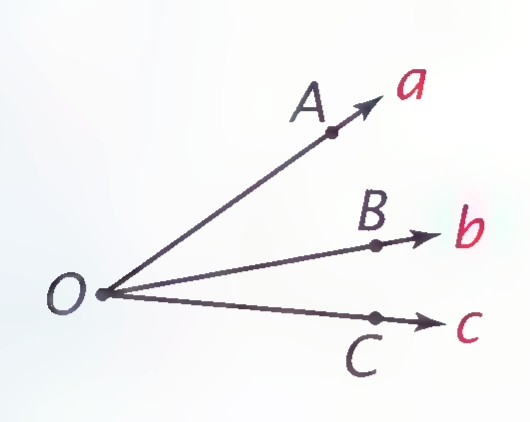
Betweenness of Rays: An intuitive notion, formally defined as follows by using the Protractor Postulate. A ray is between two others in the same half-rotation iff its coordinate is between their coordinates. (More briefly, OA-OB-OC iff or .) (93)
Birectangular quadrilateral: A quadrilateral that has two sides perpendicular to a third side. (697)
Bisector of an angle: A line or ray that divides an angle into two equal angles. (99)
Center of a regular polygon: The center of the circumscribed circle of the polygon. See Apothem of a regular polygon. (574)
Central angle of a circle: An angle whose vertex is the center of a circle. (498)
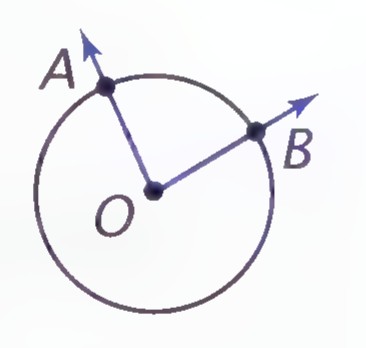
Central angle of a regular polygon: An angle formed by radii drawn to two consecutive vertices of the polygon. See Apothem of a regular polygon. (574)
Centroid of a triangle: The point in which the medians of a triangle are concurrent. Physically, a uniform triangular region balances perfectly in any position when supported at its centroid. (549)
Cevian of a triangle: A line segment that connects a vertex of a triangle to a point on the opposite side. (554)
Chord of a circle: A line segment that connects two points of a circle. (485)
Circle: The set of all points in a plane that are at a given distance from a given point in the plane. (484)
Circumcenter of a polygon: The center of the circle circumscribed about the polygon. (531)
Circumference of a circle: The limit of the perimeters of the inscribed regular polygons. (592)
Circumscribed circle about a polygon: The circle that contains all of the vertices of the polygon. (531)
Circumscribed polygon about a circle: A polygon each of whose sides is tangent to the circle. (542)
Collinear points: Points that are contained by the same line. (9)
Complementary angles: Two angles whose sum is . (105)
Concave polygon: A polygon that is not convex. (258)
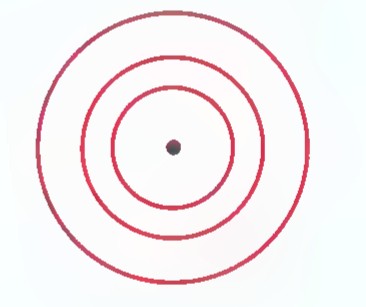
Concentric circles: Circles that lie in the same plane and have the same center. (484)
Concurrent lines: Lines that contain the same point. (9)
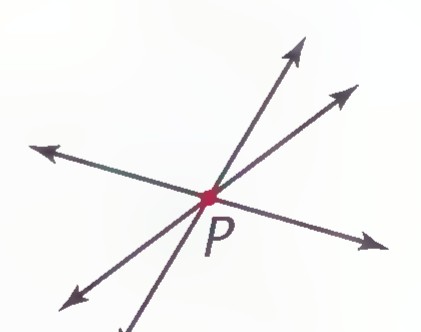
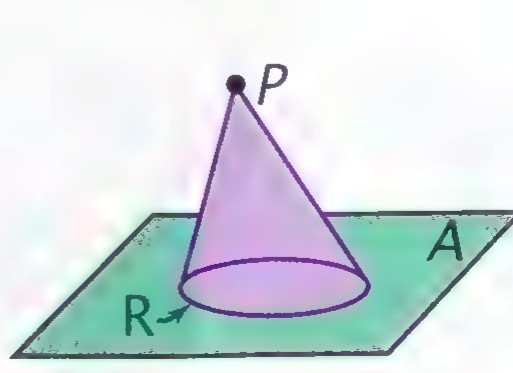
Cone: Suppose that is a plane, is a circular region in plane , and is a point not in plane . The solid made up of all segments that connect to a point of region is a cone. (654)
p. 730
Congruent figures: Informally, two figures are congruent if they have the same size and shape so that, if one is superimposed on the other, they match exactly. Formally, two figures are congruent if there is an isometry such that one figure is the image of the other. This definition of congruence for figures in general agrees with the definition of congruent triangles and extends the idea of same size and same shape to all plane and solid shapes. (140, 312)
Congruent triangles: Two triangles for which there is a correspondence between their vertices such that all of their corresponding sides and angles are equal. (140)
Converse of a conditional statement: The statement formed by interchanging the hypothesis and conclusion of the conditional statement. (47)
Convex polygon: A polygon such that every line segment that connects two points inside it lies entirely inside the polygon. More generally, a plane figure or a solid shape is convex iff every line segment connecting two points inside the figure or shape also lies inside it. (258)
Coplanar points: Points that are contained in the same plane. (9)
Corollary: A theorem that can be easily proved as a consequence of a definition, a postulate or another theorem. (99)
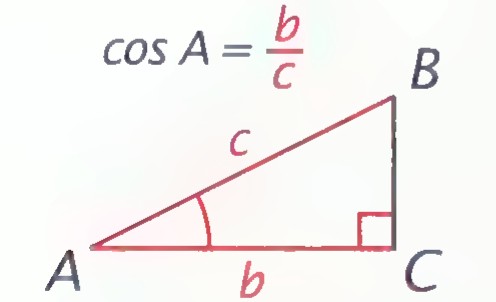
Cosine of an acute angle of a right triangle: The ratio of the length of the adjacent leg to the length of the hypotenuse. More generally, see Trigonometric functions. (455)
Cross section of a geometric solid: The intersection of a plane and the solid. (641)
Cube: A rectangular solid whose length, width, and height are equal. (629)
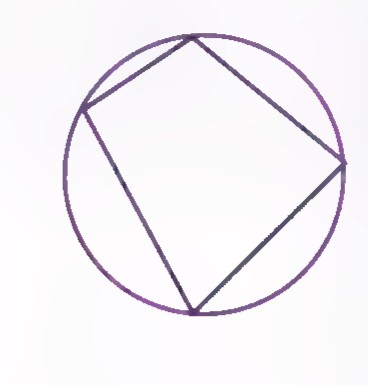
Cyclic polygon: A polygon for which there exists a circle that contains all of the vertices of the polygon. (530)
Cylinder: Suppose that and are two parallel planes, is a circular region in one plane, and l is a line that intersects both planes but not . The solid made up of all segments parallel to line l that connect a point of region to a point of the other plane is a cylinder. (655)
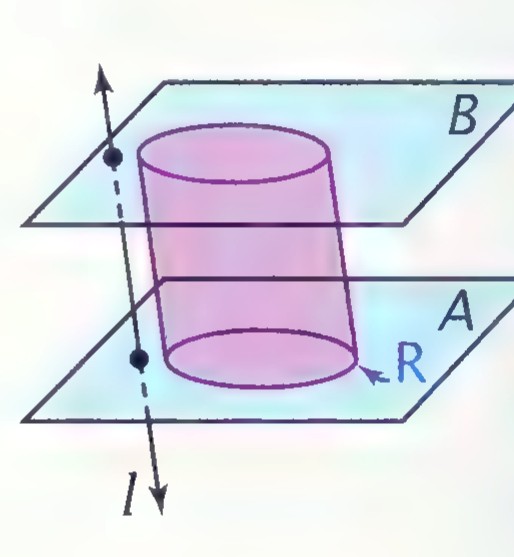
Decagon: A polygon that has 10 sides. (573)
Degree measure of an arc: The measure of the central angle of an arc. (498)
Diagonal of a polygon: A line segment that connects any two nonconsecutive vertices of a polygon. (259)
Diameter of a circle: (1) A chord that contains the center of a circle. (2) The length of a chord that contains the center. (485)
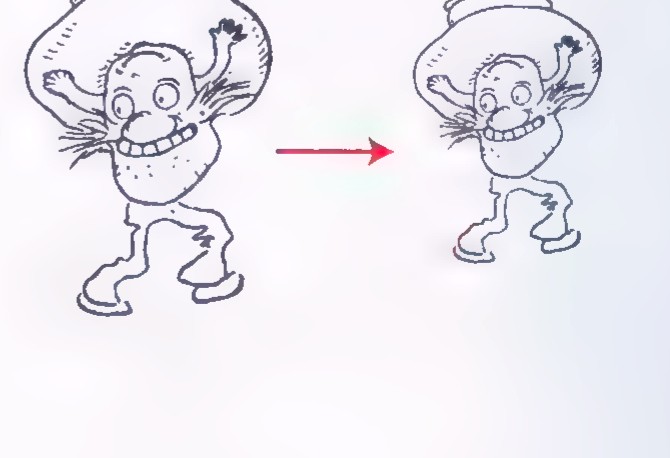
Dilation: Informally, a transformation in which a figure is reduced or enlarged. (300)
p. 731
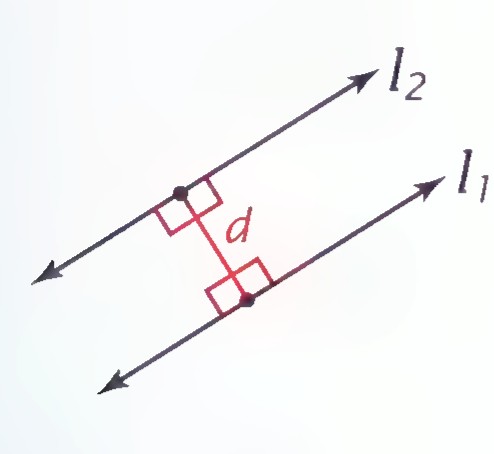
Distance between two parallel lines: In general, the length of any perpendicular segment connecting one line to the other.
Distance between two points: An intuitive idea of what we measure by using a ruler. Formalized by the Ruler Postulate. The distance between the endpoints of a line segment gives the length of the segment. (85)
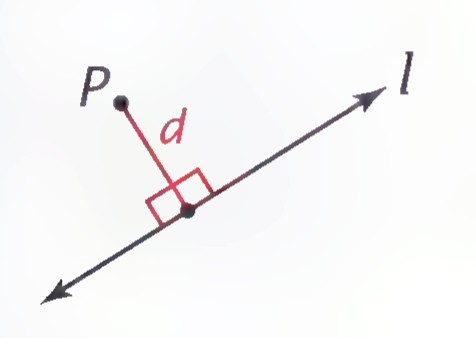
Distance from a point to a line: In general, the length of the perpendicular segment from the point to the line.
Dodecagon: A polygon that has 12 sides. (585)
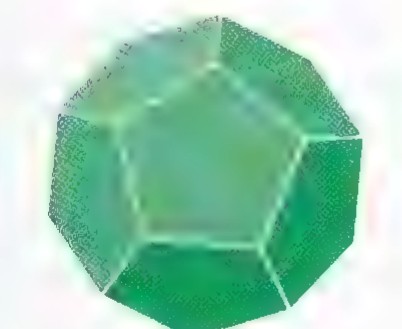
Dodecahedron: A polyhedron that has 12 faces. The faces of a regular dodecahedron are regular pentagons. (678)
Equiangular polygon: A convex polygon all of whose angles are equal. (572)
Equiangular triangle: A triangle all of whose angles are equal. (158)
Equilateral polygon: A polygon all of whose sides are equal. (572)
Exterior angle of a triangle: An angle that forms a linear pair with an angle of the triangle. (191)
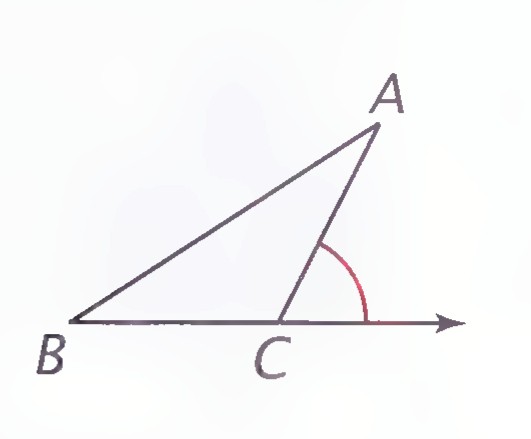
Geometric mean: The number is the geometric mean between the numbers and iff , , and are positive and . (380)
Glide reflection: A transformation that is the composite of a translation and a reflection in a line parallel to the direction of the translation. (313)
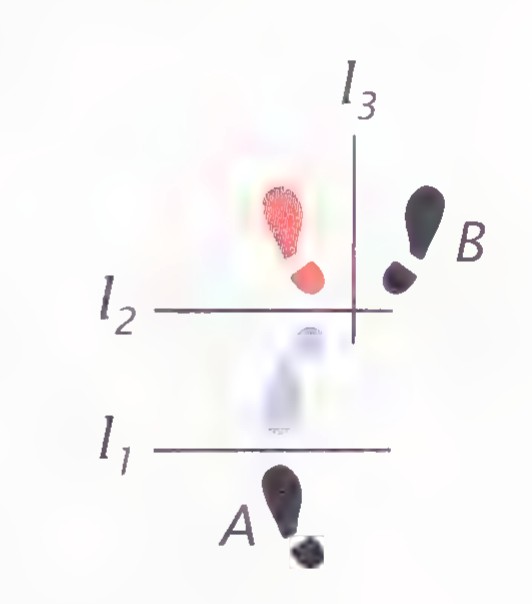
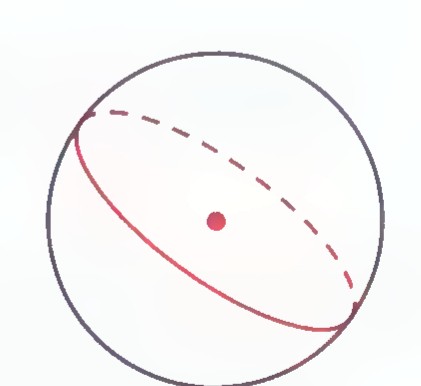
Great circle of a sphere: A set of points that is the intersection of the sphere and a plane containing its center. (690)
Heptagon: A polygon that has seven sides. (573)
Hexagon: A polygon that has six sides. (19)
Hypotenuse of a right triangle: The side opposite the right angle of the triangle. (66)
p. 732
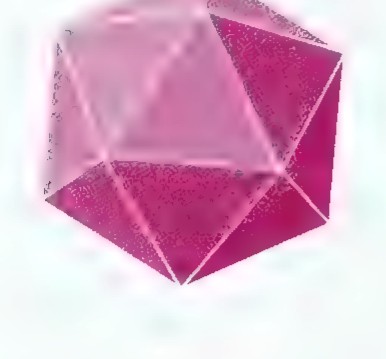
Icosahedron: A polyhedron that has 20 faces. The faces of a regular icosahedron are equilateral triangles. (678)
Incenter of a polygon: The center of the inscribed circle of the polygon. (542)
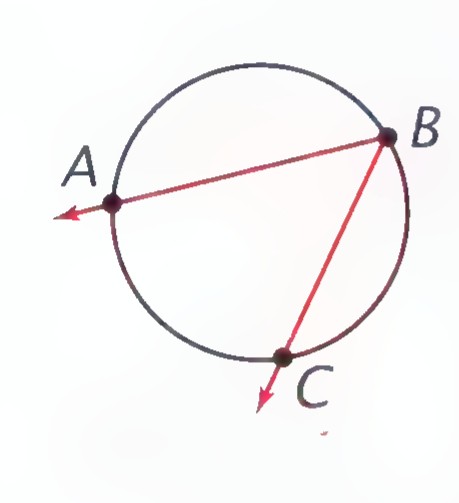
Inscribed angle of a circle: An angle whose vertex is on a circle and whose sides each intersect the circle in another point. (505)
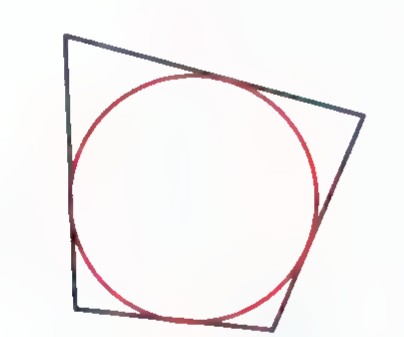
Inscribed circle in a polygon: A circle for which each side of the polygon is tangent to the circle. (542)
Inscribed polygon in a circle: A polygon each of whose vertices lies on the circle. (531)
Isometry: A transformation that preserves distance and angle measure. (300)
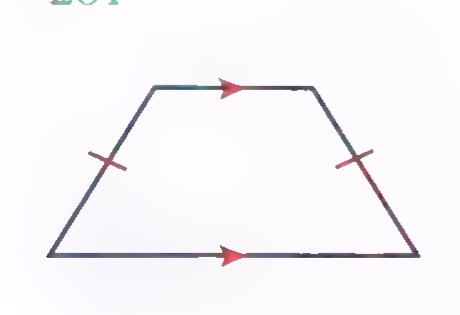
Isosceles trapezoid: A trapezoid whose legs are equal. (281)
Isosceles triangle: A triangle that has at least two equal sides. (157)
Lateral area of a prism: The sum of the areas of the lateral faces of a prism. Lateral area excludes the areas of the bases of a prism. (635)
Length of a line segment: The distance between its endpoints. (85)
Line segment: Part of a line bounded by two endpoints. If the endpoints are A and B, then the segment is written as AB (or BA). (9)
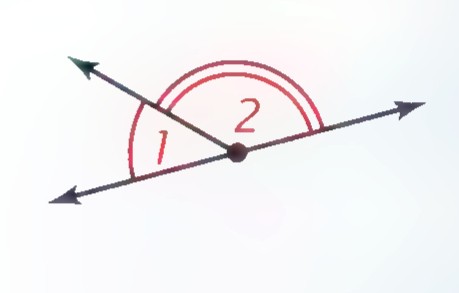
Linear pair: Two angles that have a common side and whose other sides are opposite rays. (111)
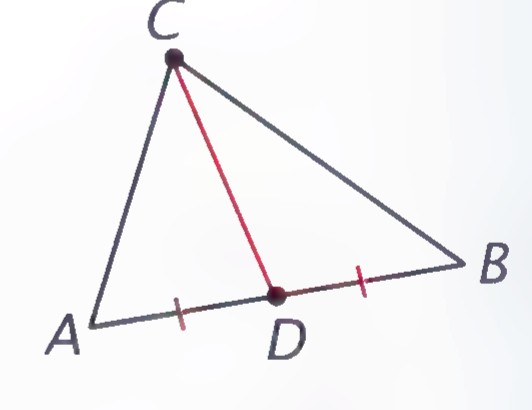
Median of a triangle: A line segment that connects a vertex of a triangle to the midpoint of the opposite side. (549)
Midpoint of a line segment: The point that divides a line segment into two equal segments. (98)
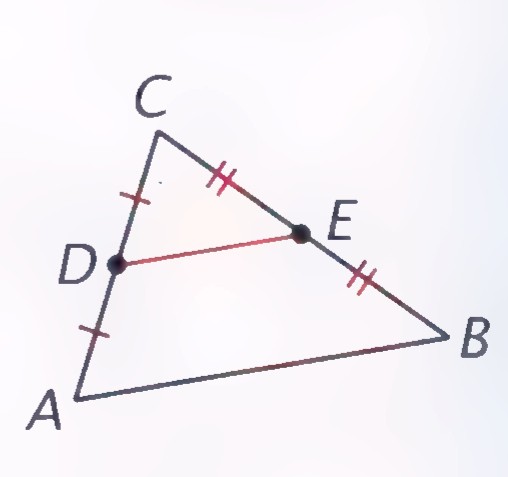
Midsegment of a triangle: A line segment that connects the midpoints of two of a triangle’s sides. (286)
p. 733
Net: A two-dimensional pattern of polygons that, when folded together, forms a polyhedron. (635)
Nonagon: A polygon that has nine sides. (573)
Noncollinear points: Points that do not lie on the same line. (9)
Oblique line and plane (or two planes): A line and a plane (or two planes) that are neither parallel nor perpendicular. (620)
Obtuse angle: An angle whose measure is more than but less than . (92)
Obtuse triangle: A triangle that has an obtuse angle. (158)
Octagon: A polygon that has eight sides. (19)
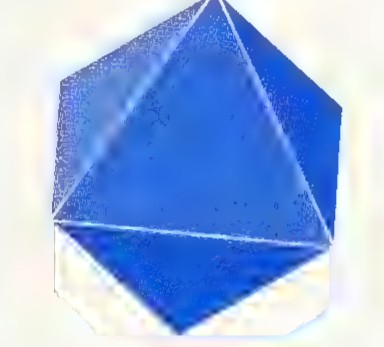
Octahedron: A polyhedron that has eight faces. The faces of a regular octahedron are equilateral triangles. (678)
Opposite rays: Informally, two rays are opposite rays if they have a common endpoint and point in opposite directions. Formally, rays AB and AC are opposite rays iff B-A-C. (19)
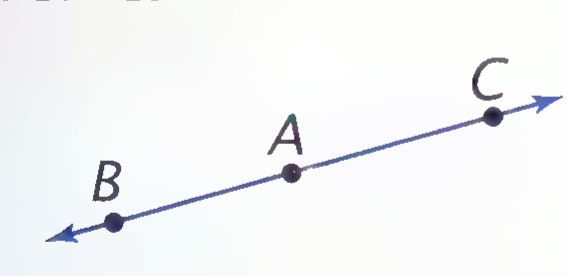
Orthocenter of a triangle: The point in which the lines containing the altitudes of a triangle are concurrent. (549)
Parallel line and plane: A line and a plane that do not intersect. (619)
Parallel lines: Lines that lie in the same plane and do not intersect. (118)
Parallel planes: Planes that do not intersect. (619)
Parallelogram: A quadrilateral whose opposite sides are parallel. (265)
Pentagon: A polygon that has five sides. (19)
Perimeter of a polygon: The sum of the lengths of the sides of a polygon. (20)
Perpendicular bisector of a line segment: The line that is perpendicular to the line segment and that divides the segment into two equal parts. (212)
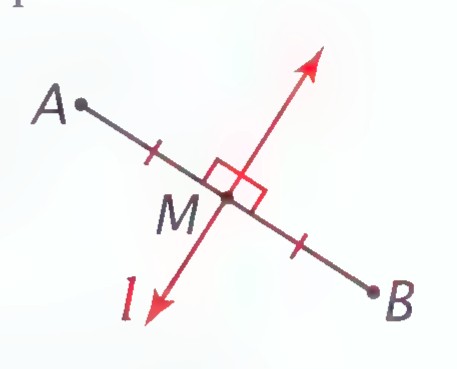
Perpendicular line and plane: A line and a plane that intersect such that the line is perpendicular to every line in the plane that passes through the point of intersection. (620)
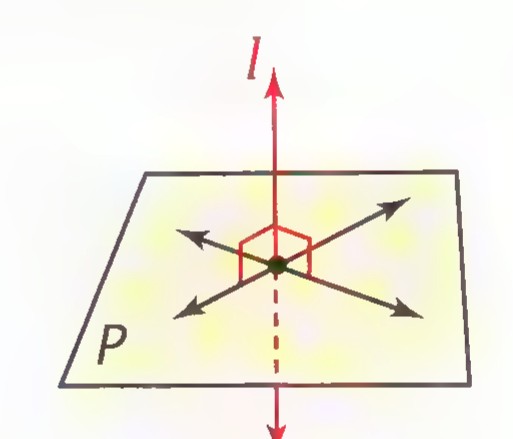
Perpendicular lines: Lines that form a right angle. (117)
Perpendicular planes: Two planes such that one plane contains a line that is perpendicular to the other plane. (620)
Plane: A flat unbounded surface. (9)
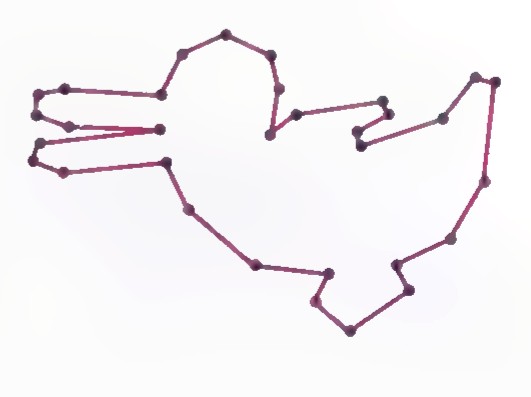
Polygon: A connected set of at least three line segments in the same plane such that each segment intersects exactly two others, one at each endpoint. (139)
p. 734
Polygonal region: The union of a polygon and its interior. (339)
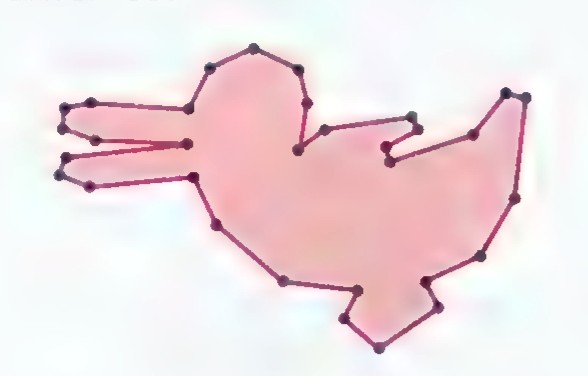
Polyhedron: A solid bounded by parts of intersecting planes. (628)
Postulate: A statement that is assumed to be true without proof. We choose our postulates for their natural intuitive appeal and for their ability to capture the basic properties of space from which the rest of geometry can be developed. (61)
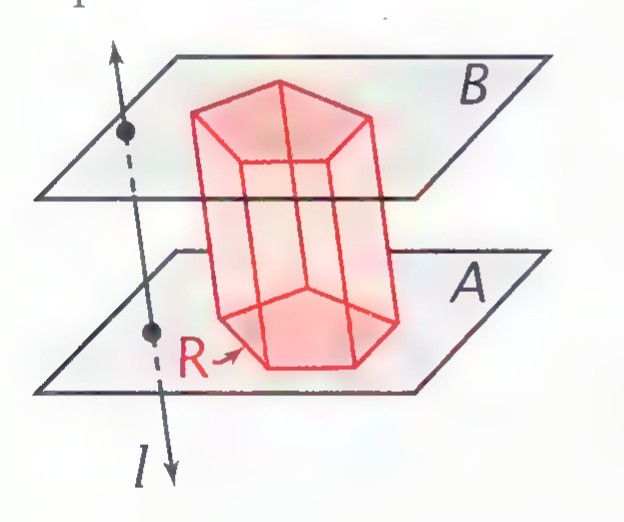
Prism: Suppose that and are two parallel planes, is a polygonal region in one plane, and l is a line that intersects both planes but not . The solid made up of all segments parallel to line l that connect a point of region to a point of the other plane is a prism. (634)
Proportion: An equality between two ratios. (379)
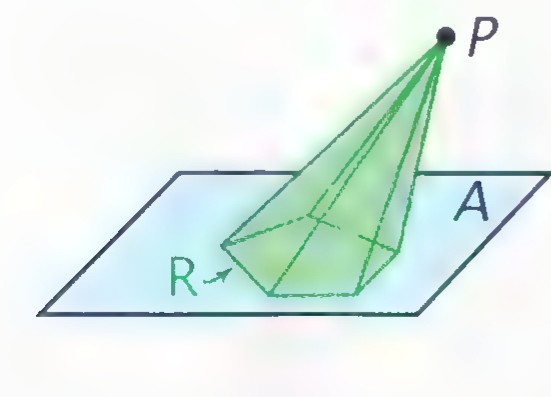
Pyramid: Suppose that is a plane, is a polygonal region in plane , and is a point not in plane . The solid made up of all segments that connect to a point of region is a pyramid. Point is the apex of the pyramid. (647)
Pythagorean triple: A set of three integers that can be the lengths of the sides of a right triangle. (437)
Quadrilateral: A polygon that has four sides. (19)
Radius of a circle: (1) The distance between the center of a circle and any point on it. (2) A line segment that connects the center of the circle to any point on it. (485)
Radius of a regular polygon: A line segment that connects the center of the polygon to a vertex of the polygon. See Apothem of a regular polygon. (574)
Ratio: The ratio of the number to the number is the number . (379)
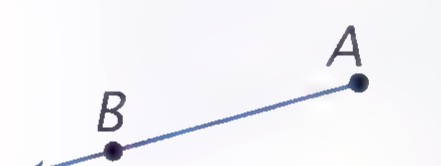
Ray: Part of a line that extends endlessly in one direction. If a ruler is placed on a line, points with coordinates that are zero or positive form a ray. The ray in the figure below is named ray AB. (13)
Rectangle: A quadrilateral each of whose angles is a right angle. (259)
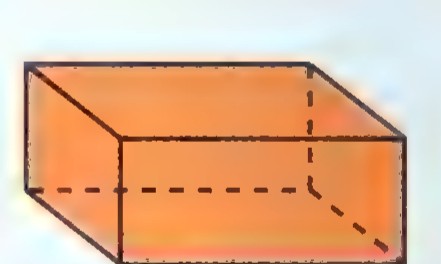
Rectangular solid: A polyhedron that has six rectangular faces. (628)
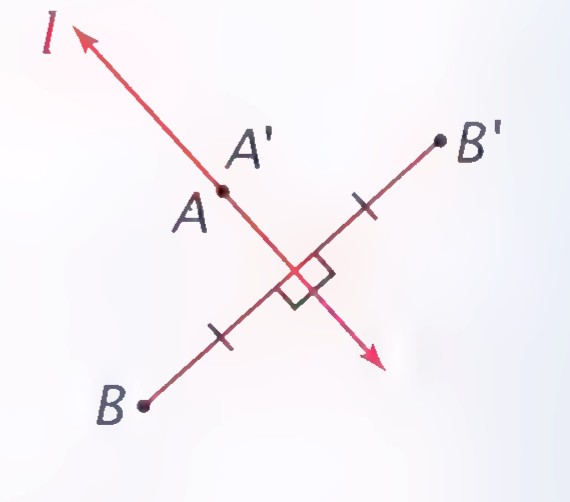
Reflection of a point through a line: The reflection of point P through line l is point P itself if P is on l. Otherwise, it is point P′ such that l is the perpendicular bisector of PP′. (305)
p. 735
Reflection symmetry: A figure has reflection (line) symmetry with respect to a line iff it coincides with its reflection image through the line. (320)
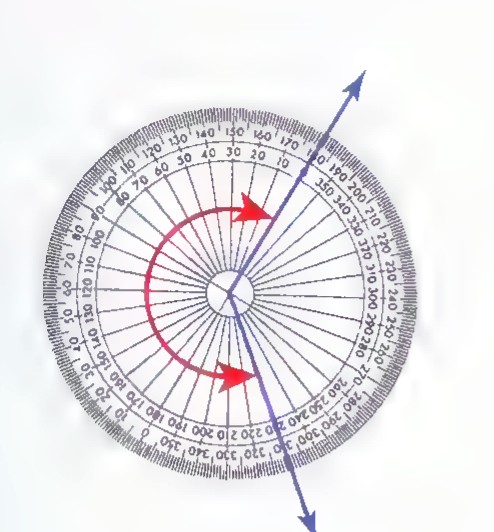
Reflex angle: An angle whose measure is more than . (498)
Regular polygon: A convex polygon that is both equilateral and equiangular. (572)
Regular polyhedron: A convex solid having faces that are congruent regular polygons and having an equal number of polygons that meet at each vertex. Euclid showed that there are five regular polyhedra: the tetrahedron, the cube, the octahedron, the dodecahedron, and the icosahedron. (678)
Rhombus: A quadrilateral all of whose sides are equal. (276)
Right angle: An angle whose measure is . (92)
Right triangle: A triangle that has a right angle. (158)
Rotation: Informally, a transformation in which a figure is rotated a certain number of degrees about a fixed point. Formally, a transformation that is the composite of two successive reflections through intersecting lines. (307)
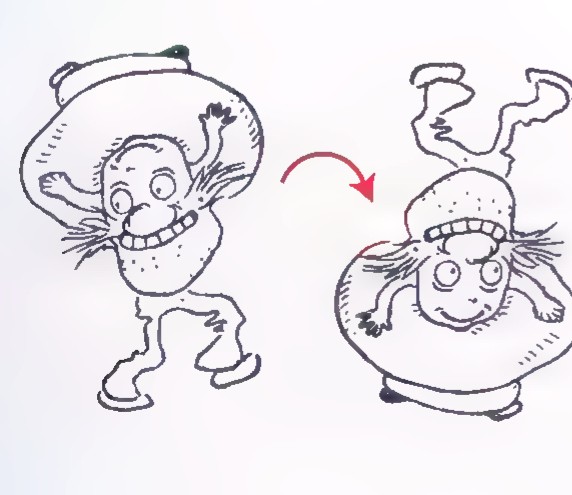
Rotation symmetry: A figure has rotation symmetry with respect to a point iff it coincides with its rotation image through less than about the point. (319)
Saccheri quadrilateral: A birectangular quadrilateral whose legs are equal. (697)
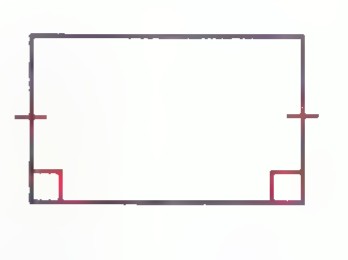
Scalene triangle: A triangle that has no equal sides. (157)
Secant: A line that intersects a circle in two points. (511)
Secant angle: An angle whose sides are contained in two secants of a circle so that each side intersects the circle in at least one point other than the angle’s vertex. (511)
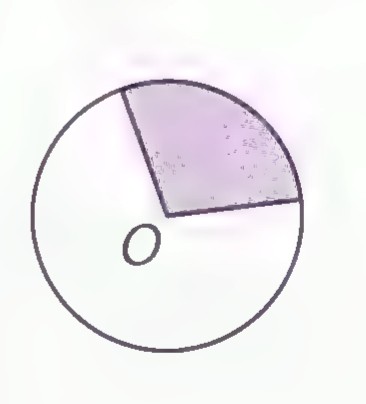
Sector of a circle: A region bounded by an arc of the circle and the two radii to the endpoints of the arc. (605)
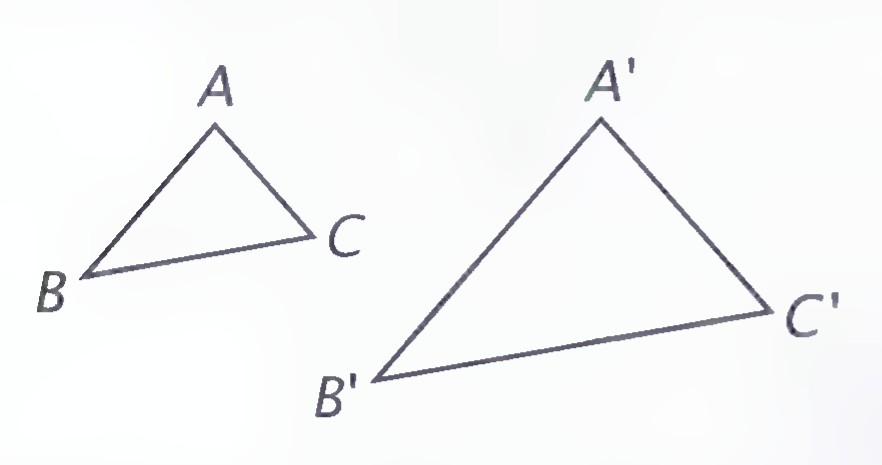
Similar figures: Informally, two figures are similar if they have the same shape, though they may differ in size. In similar figures, corresponding segments are proportional and corresponding angles are equal. (386–387)
Similar solids: See Similar figures. (670)
p. 736
Similar triangles: Two triangles for which there is a correspondence between their vertices such that their corresponding sides are proportional and their corresponding angles are equal. (386)
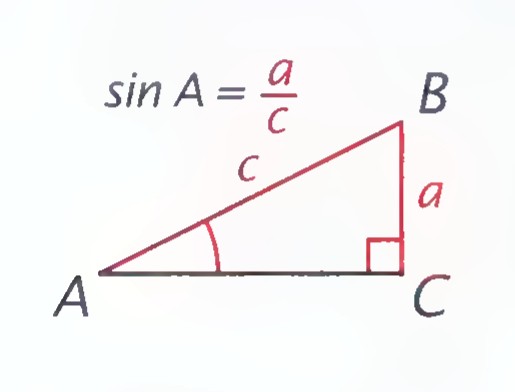
Sine of an acute angle of a right triangle: The ratio of the length of the opposite leg to the length of the hypotenuse. More generally, see Trigonometric functions. (455)
Skew lines: Two lines that are not parallel and do not intersect. (619)
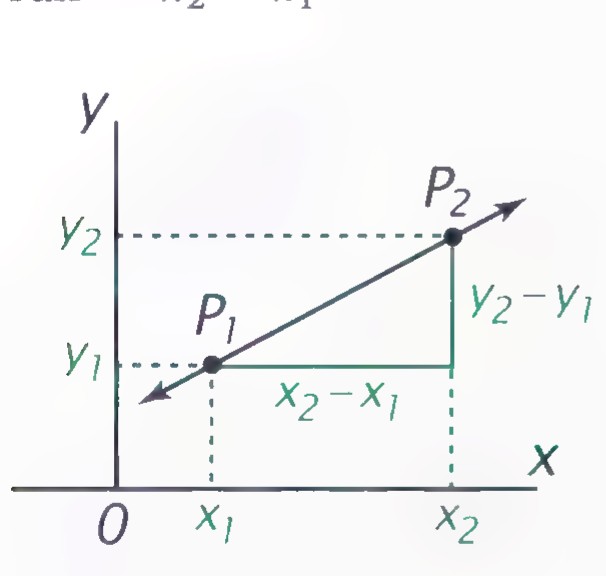
Slope: The slope of a nonvertical line that contains the points P(, ) and P(, ) is . (462)
Sphere: The set of all points in space that are at a given distance from a given point. (662)
Square: A quadrilateral all of whose sides and angles are equal. (276)
Straight angle: An angle whose measure is . (92)
Supplementary angles: Two angles whose sum is . (106)
Symmetry with respect to a line: Two points are symmetric with respect to a line iff the line is the perpendicular bisector of the line segment connecting the two points. See Reflection symmetry. (212)
Symmetry with respect to a point: Two points are symmetric with respect to a point iff the point is the midpoint of the line segment connecting the two points. A figure that has symmetry with respect to a point coincides with its rotation image through about the point. (266)
Tangent: A line in the plane of a circle that intersects the circle in exactly one point. (491)
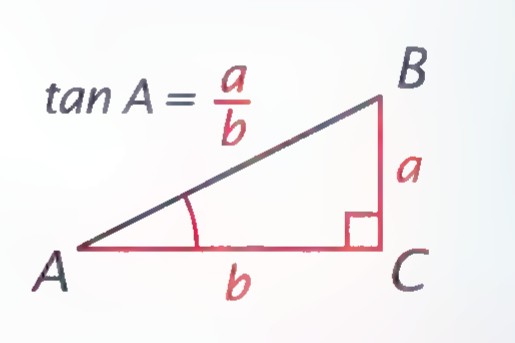
Tangent of an acute angle of a right triangle: The ratio of the length of the opposite leg to the length of the adjacent leg. More generally, see Trigonometric functions. (449)
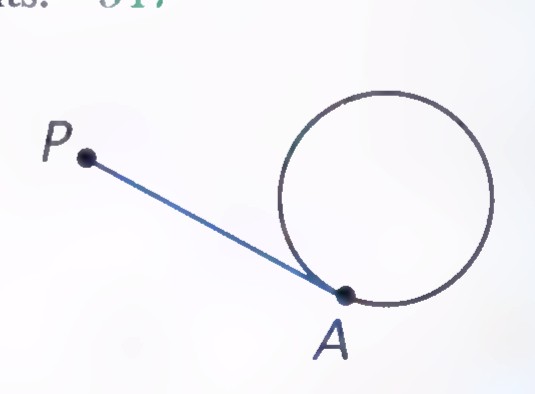
Tangent segment: Any segment of a line that is tangent to a circle that has the point of tangency as one of the segment’s endpoints. (517)
Tetrahedron: A polyhedron that has four faces. The faces of a regular tetrahedron are equilateral triangles. (678)
p. 737
Theorem: A statement that is proved by reasoning deductively from already accepted statements. (51)
Transformation: A one-to-one correspondence between two sets of points. Examples of transformations include isometries, which preserve the size and shape of figures. Isometries give us the general definition of congruent figures. Isometries include reflections, translations, rotations, and glide reflections. Also important are dilations, which preserve shape but may alter the size of figures. (299–300)
Translation: Informally, a transformation in which a figure is slid a certain distance in a given direction without being turned. Formally, a transformation that is the composite of two successive reflections through parallel lines. (307)
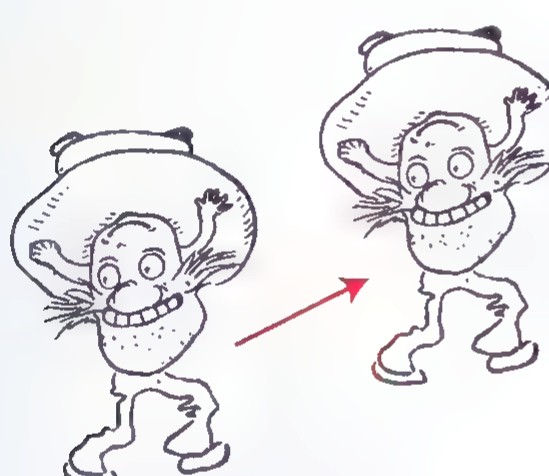
Translation symmetry: A pattern has translation symmetry if it coincides with a translation image. (320)
Transversal: A line that intersects two or more lines that lie in the same plane in different points. (219)
Trapezoid: A quadrilateral that has exactly one pair of parallel sides. (281)
Triangle: A polygon that has three sides. (19)
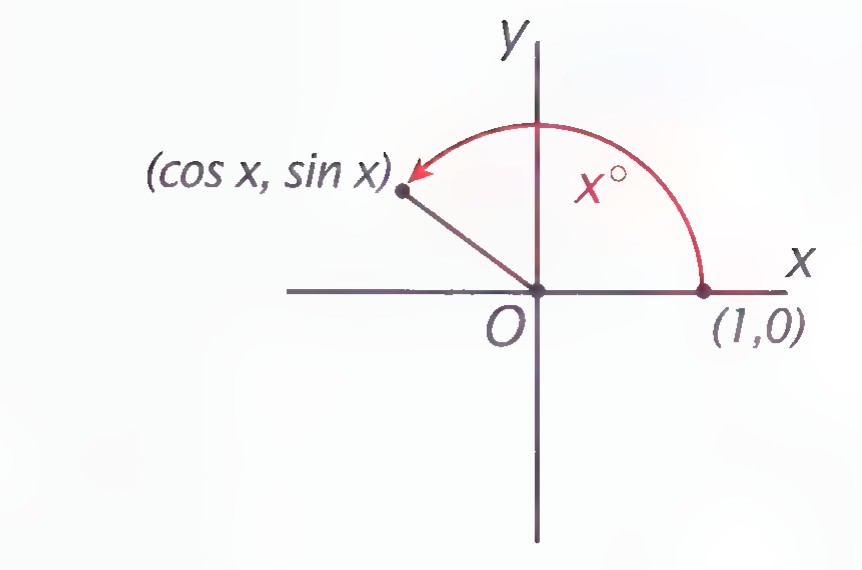
Trigonometric functions: For acute angles, see Cosine, Sine, and Tangent. More generally, you can discover by working with a calculator that you can find , , and where the number of degrees of ranges widely. The interpretation of these trigonometric functions is as follows. If a unit segment with one endpoint at the origin is rotated counterclockwise through an angle of degrees starting with its other endpoint at on the -axis, the other endpoint of this segment will end up at the point having coordinates . Other trigonometric functions such as the tangent can be defined for general angles by the equations that define them in terms of sines and cosines of acute angles; for example, .
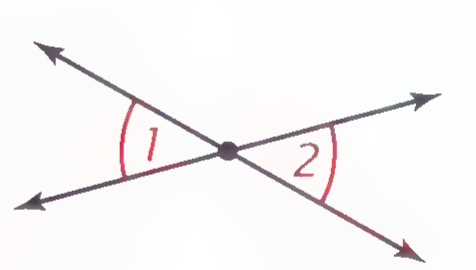
Vertical angles: Two angles such that the sides of one angle are opposite rays to the sides of the other. (111)
p. 738
Formulary
CIRCLE
Circumference:
Area:
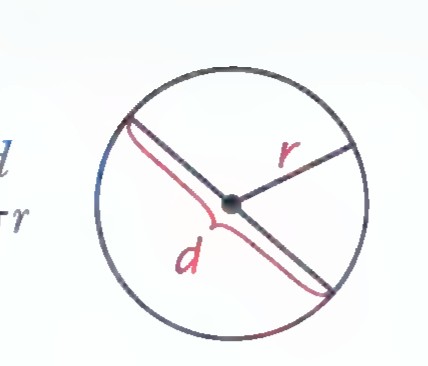
Central angle:
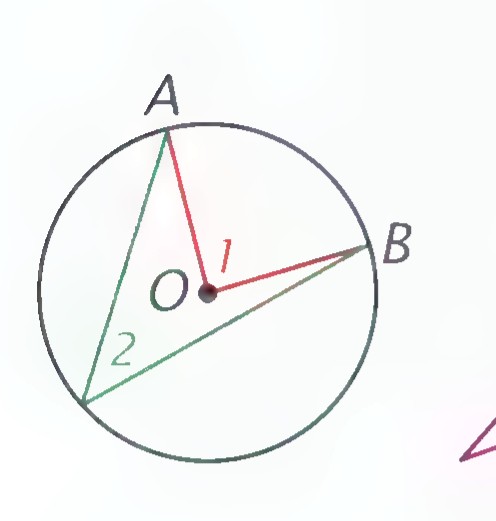
Inscribed angle:
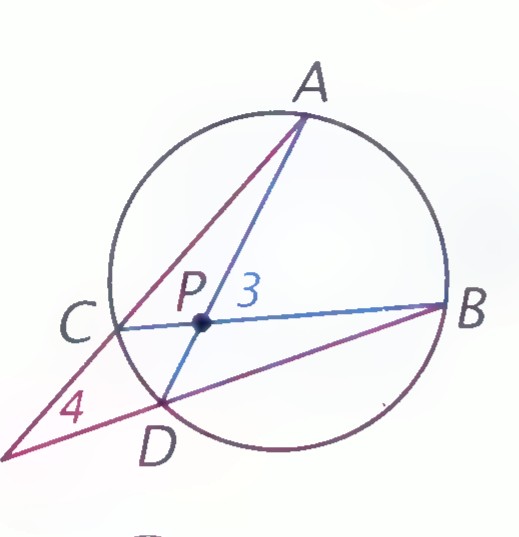
Secant angles:
DISTANCE AND SLOPE
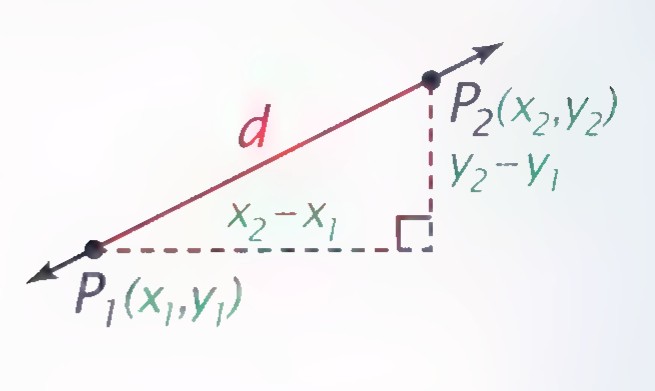
Distance:
Slope:
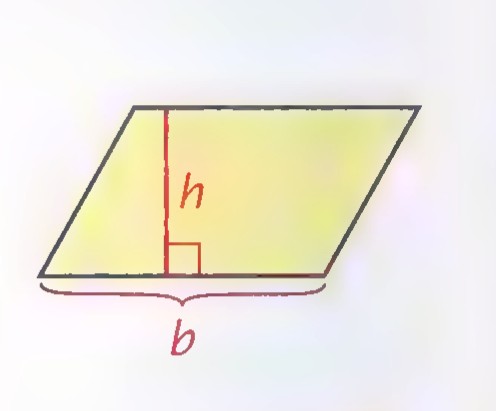
PARALLELOGRAM
Area:
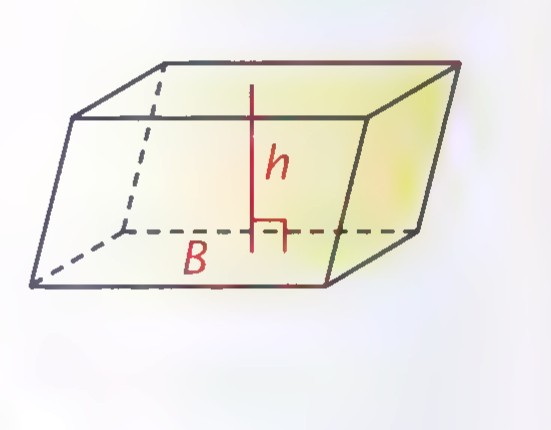
PRISM
Volume:
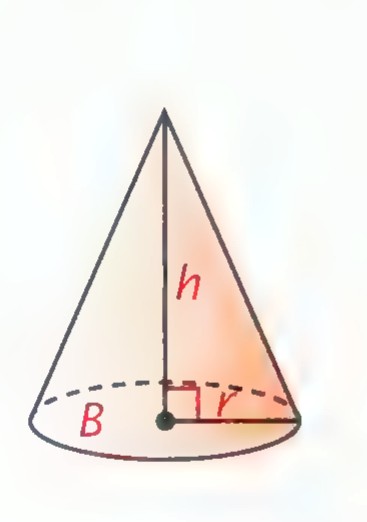
CONE (Circular)
Volume:
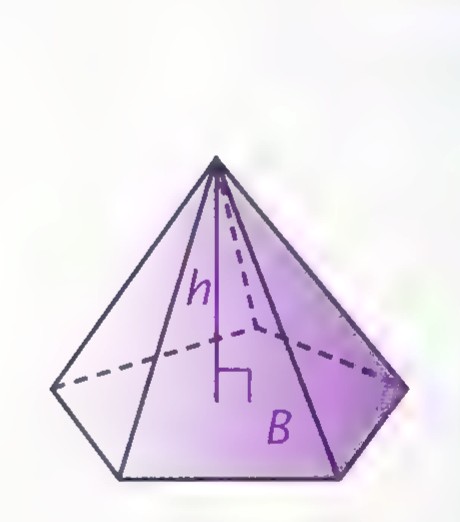
PYRAMID
Volume:
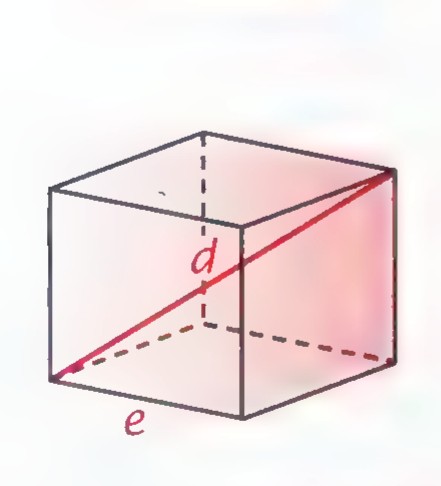
CUBE
Diagonal:
Area:
Volume:
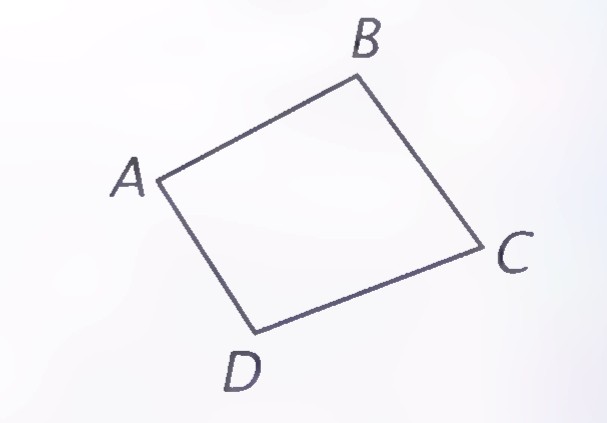
QUADRILATERAL (Convex)
Angle sum:
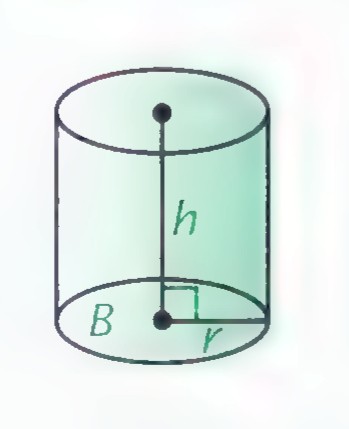
CYLINDER (Right circular)
Lateral area:
Total area:
Volume:
p. 739
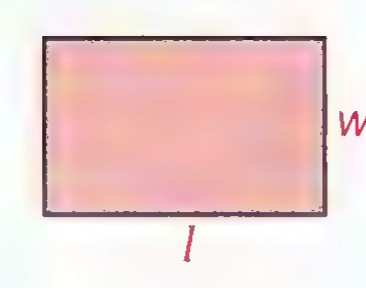
RECTANGLE
Perimeter:
Area:
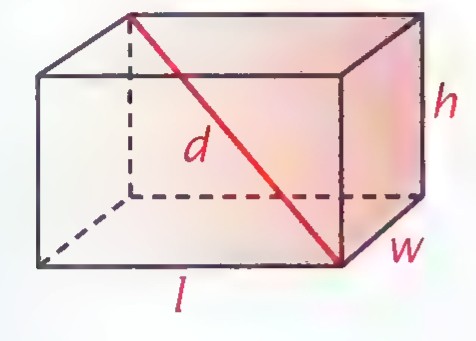
RECTANGULAR SOLID
Diagonal:
Area:
Volume:
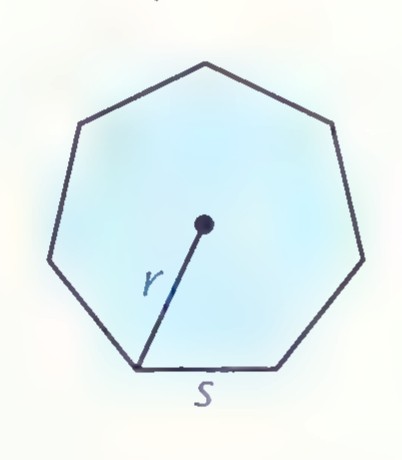
REGULAR POLYGON (n sides)
Perimeter:
Area:
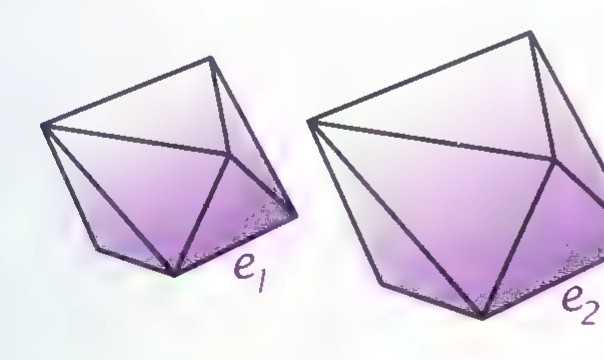
SIMILAR SOLIDS
Given the edge ratio,
Area ratio:
Volume ratio:
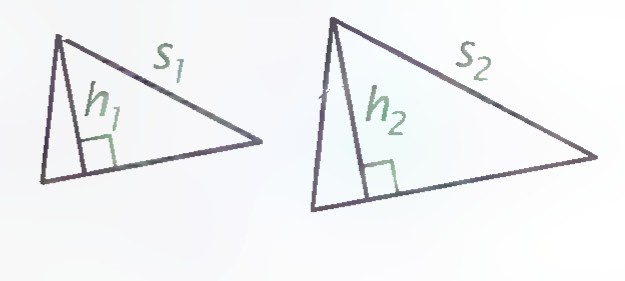
SIMILAR TRIANGLES (AND POLYGONS)
Given the side ratio,
Altitude ratio:
Perimeter ratio:
Area ratio:
SLOPE RELATIONS
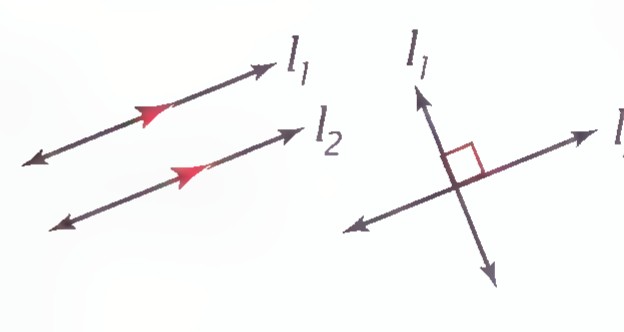
Parallel lines:
Perpendicular lines: ,
so
SPHERE
Area:
Volume:
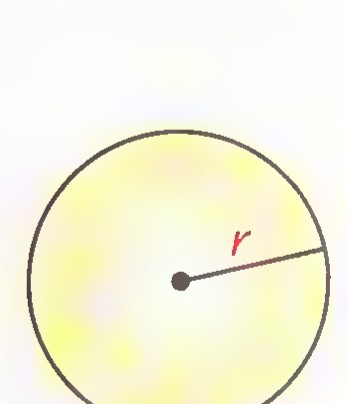
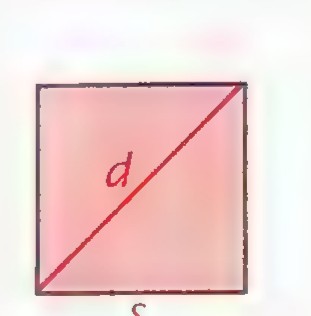
SQUARE
Diagonal:
Perimeter:
Area:
p. 740
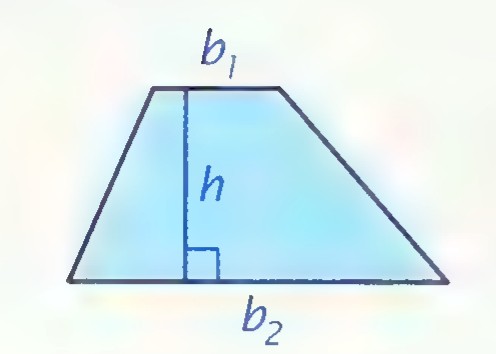
TRAPEZOID
Area:
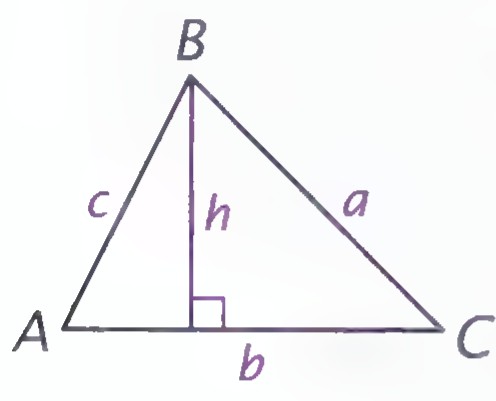
TRIANGLE
Perimeter:
Area:
Angle sum:
Law of sines:
Law of cosines:
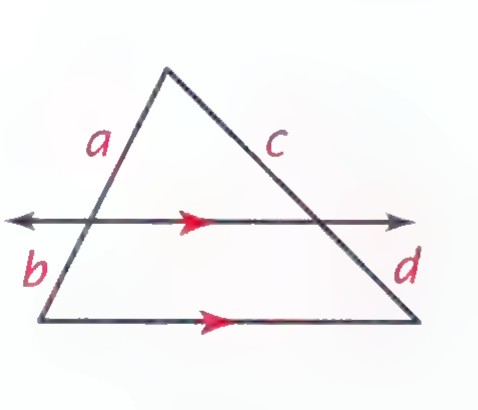
Side-Splitter Theorem:
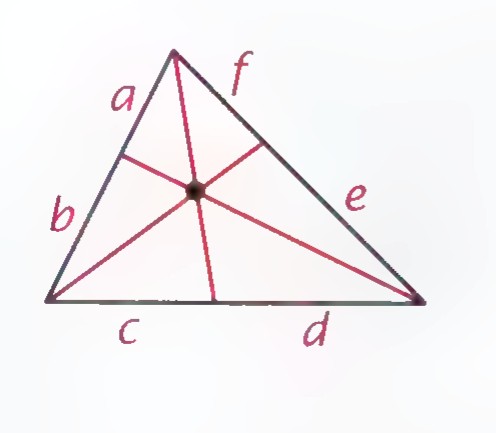
Ceva’s Theorem:
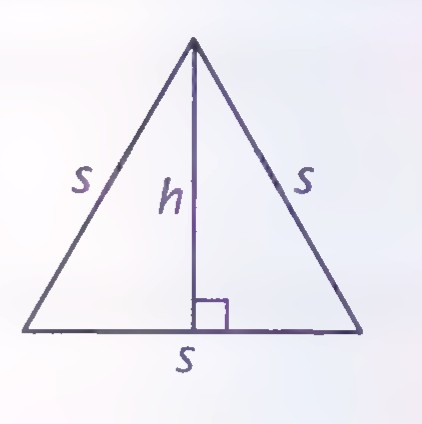
TRIANGLE, EQUILATERAL
Altitude:
Area:
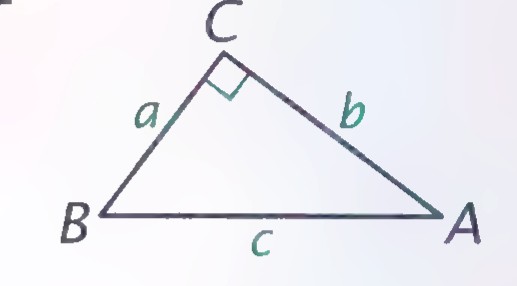
TRIANGLE, RIGHT
Area:
Pythagorean Theorem:
Sine ratio: ,
Cosine ratio: ,
Tangent ratio: ,
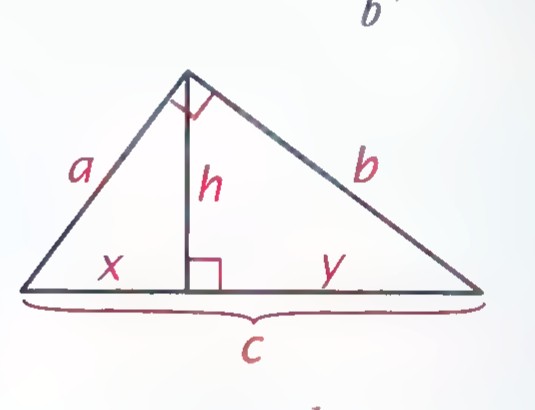
Altitude mean:
Leg means: ,
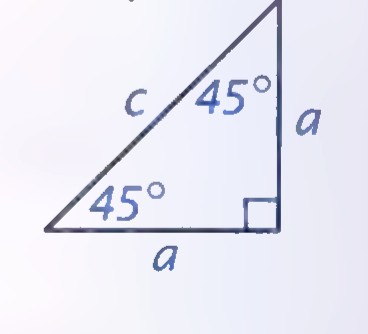
TRIANGLE, RIGHT (Isosceles)
Leg:
Hypotenuse:
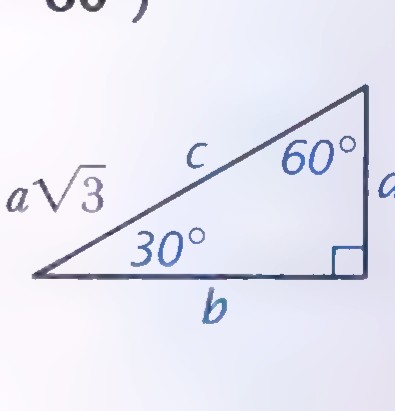
TRIANGLE, RIGHT (30°–60°)
Shorter leg:
Longer leg:
Hypotenuse:
p. 741
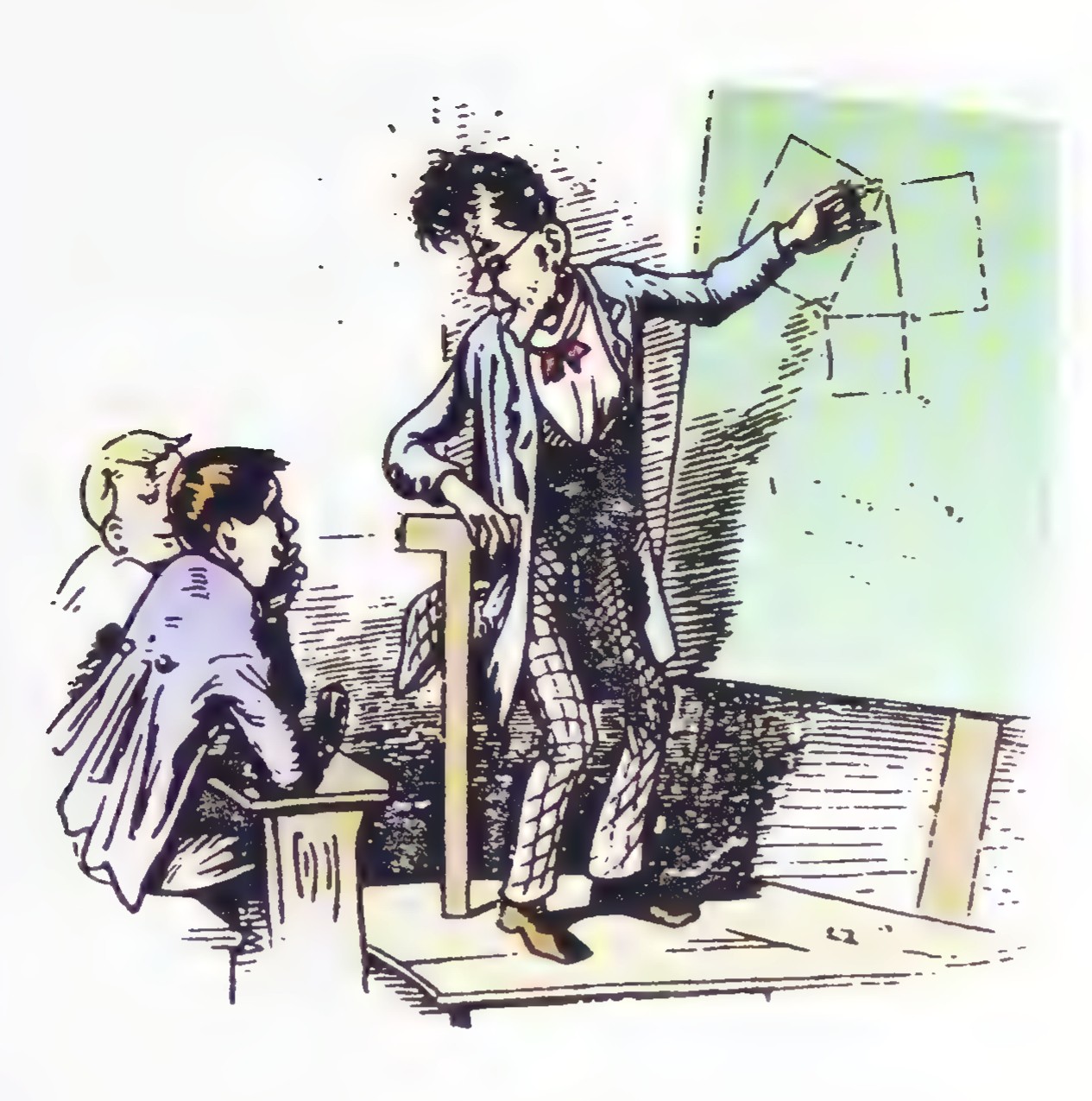
Teacher: “. . . and now I want to prove this theorem.” Pupil: “Why bother to prove it, teacher? I take your word for it.”
Postulates and Theorems
Chapter 2
Postulate 1 Two points determine a line. (61)
Postulate 2 Three noncollinear points determine a plane. (61)
Theorem The Pythagorean Theorem. The square of the hypotenuse of a right triangle is equal to the sum of the squares of the other two sides. (65)
Theorem The Triangle Angle Sum Theorem. The sum of the angles of a triangle is . (66)
Theorem If the diameter of a circle is , its circumference is . (66)
Theorem If the radius of a circle is , its area is . (66)
Chapter 3
Postulate 3 The Ruler Postulate. The points on a line can be numbered so that positive number differences measure distances. (85)
Postulate 4 The Protractor Postulate. The rays in a half-rotation can be numbered from 0 to 180 so that positive number differences measure angles. (92)
Theorem 1 The Betweenness of Points Theorem. If A-B-C, then AB + BC = AC. (86)
Theorem 2 The Betweenness of Rays Theorem. If OA-OB-OC, then ∠AOB + ∠BOC = ∠AOC. (93)
Corollary to the Ruler Postulate A line segment has exactly one midpoint. (99)
p. 742
Corollary to the Protractor Postulate An angle has exactly one ray that bisects it. (100)
Theorem 3 Complements of the same angle are equal. (106)
Theorem 4 Supplements of the same angle are equal. (106)
Theorem 5 The angles in a linear pair are supplementary. (111)
Theorem 6 Vertical angles are equal. (112)
Theorem 7 Perpendicular lines form right angles. (118)
Corollary to the definition of a right angle All right angles are equal. (118)
Theorem 8 If the angles in a linear pair are equal, then their sides are perpendicular. (118)
Chapter 4
The Distance Formula The distance between the points P(, ) and P(, ) is . (134)
Postulate 5 The ASA Postulate. If two angles and the included side of one triangle are equal to two angles and the included side of another triangle, the triangles are congruent. (147)
Postulate 6 The SAS Postulate. If two sides and the included angle of one triangle are equal to two sides and the included angle of another triangle, the triangles are congruent. (147)
Corollary to the definition of congruent triangles Two triangles congruent to a third triangle are congruent to each other. (141)
Theorem 9 If two sides of a triangle are equal, the angles opposite them are equal. (158)
Corollary An equilateral triangle is equiangular. (159)
Theorem 10 If two angles of a triangle are equal, the sides opposite them are equal. (159)
Corollary An equiangular triangle is equilateral. (159)
Theorem 11 The SSS Theorem. If the three sides of one triangle are equal to the three sides of another triangle, the triangles are congruent. (164)
Chapter 5
Theorem 12 The Exterior Angle Theorem. An exterior angle of a triangle is greater than either remote interior angle. (191)
Theorem 13 If two sides of a triangle are unequal, the angles opposite them are unequal in the same order. (196)
Theorem 14 If two angles of a triangle are unequal, the sides opposite them are unequal in the same order. (196)
Theorem 15 The Triangle Inequality Theorem. The sum of any two sides of a triangle is greater than the third side. (201)
Chapter 6
Postulate 7 The Parallel Postulate. Through a point not on a line, there is exactly one line parallel to the given line. (226)
Theorem 16 In a plane, two points each equidistant from the endpoints of a line segment determine the perpendicular bisector of the line segment. (212)
Theorem 17 Equal corresponding angles mean that lines are parallel. (220)
Corollary 1 Equal alternate interior angles mean that lines are parallel. (220)
Corollary 2 Supplementary interior angles on the same side of a transversal mean that lines are parallel. (220)
Corollary 3 In a plane, two lines perpendicular to a third line are parallel. (220)
Theorem 18 In a plane, two lines parallel to a third line are parallel to each other. (226)
Theorem 19 Parallel lines form equal corresponding angles. (231)
Corollary 1 Parallel lines form equal alternate interior angles. (231)
p. 743
Corollary 2 Parallel lines form supplementary interior angles on the same side of a transversal. (231)
Corollary 3 In a plane, a line perpendicular to one of two parallel lines is also perpendicular to the other. (231)
Theorem 20 The Angle Sum Theorem. The sum of the angles of a triangle is . (237)
Corollary 1 If two angles of one triangle are equal to two angles of another triangle, the third angles are equal. (237)
Corollary 2 The acute angles of a right triangle are complementary. (237)
Corollary 3 Each angle of an equilateral triangle is . (237)
Theorem 21 An exterior angle of a triangle is equal to the sum of the remote interior angles. (237)
Theorem 22 The AAS Theorem. If two angles and the side opposite one of them in one triangle are equal to the corresponding parts of another triangle, the triangles are congruent. (243)
Theorem 23 The HL Theorem. If the hypotenuse and a leg of one right triangle are equal to the corresponding parts of another right triangle, the triangles are congruent. (244)
Chapter 7
Theorem 24 The sum of the angles of a quadrilateral is . (259)
Corollary A quadrilateral is equiangular iff it is a rectangle. (259)
Theorem 25 The opposite sides and angles of a parallelogram are equal. (266)
Theorem 26 The diagonals of a parallelogram bisect each other. (266)
Theorem 27 A quadrilateral is a parallelogram if its opposite sides are equal. (271)
Theorem 28 A quadrilateral is a parallelogram if its opposite angles are equal. (271)
Theorem 29 A quadrilateral is a parallelogram if two opposite sides are both parallel and equal. (271)
Theorem 30 A quadrilateral is a parallelogram if its diagonals bisect each other. (271)
Theorem 31 All rectangles are parallelograms. (276)
Theorem 32 All rhombuses are parallelograms. (276)
Theorem 33 The diagonals of a rectangle are equal. (277)
Theorem 34 The diagonals of a rhombus are perpendicular. (277)
Theorem 35 The base angles of an isosceles trapezoid are equal. (282)
Theorem 36 The diagonals of an isosceles trapezoid are equal. (282)
Theorem 37 The Midsegment Theorem. A midsegment of a triangle is parallel to the third side and half as long. (287)
Chapter 9
Postulate 8 The Area Postulate. Every polygonal region has a positive number called its area such that (1) congruent triangles have equal areas and (2) the area of a polygonal region is equal to the sum of the areas of its nonoverlapping parts. (339)
Postulate 9 The area of a rectangle is the product of its base and altitude. (345)
Corollary to Postulate 9 The area of a square is the square of its side. (345)
Theorem 38 The area of a right triangle is half the product of its legs. (352)
Theorem 39 The area of a triangle is half the product of any base and corresponding altitude. (353)
Corollary Triangles with equal bases and equal altitudes have equal areas. (353)
Theorem 40 The area of a parallelogram is the product of any base and corresponding altitude. (359)
p. 744
Theorem 41 The area of a trapezoid is half the product of its altitude and the sum of its bases. (359)
Theorem 42 The Pythagorean Theorem. The square of the hypotenuse of a right triangle is equal to the sum of the squares of its legs. (366)
Theorem 43 Converse of the Pythagorean Theorem. If the square of one side of a triangle is equal to the sum of the squares of the other two sides, the triangle is a right triangle. (366)
Chapter 10
Theorem 44 The Side-Splitter Theorem. If a line parallel to one side of a triangle intersects the other two sides in different points, it divides the sides in the same ratio. (393)
Corollary If a line parallel to one side of a triangle intersects the other two sides in different points, it cuts off segments proportional to the sides. (394)
Theorem 45 The AA Theorem. If two angles of one triangle are equal to two angles of another triangle, the triangles are similar. (400)
Corollary Two triangles similar to a third triangle are similar to each other. (401)
Theorem 46 Corresponding altitudes of similar triangles have the same ratio as that of the corresponding sides. (408)
Theorem The SAS Similarity Theorem. If an angle of one triangle is equal to an angle of another triangle and the sides including these angles are proportional, then the triangles are similar. (412)
Theorem The SSS Similarity Theorem. If the sides of one triangle are proportional to the sides of another triangle, then the triangles are similar. (412)
Theorem 47 The ratio of the perimeters of two similar polygons is equal to the ratio of the corresponding sides. (415)
Theorem 48 The ratio of the areas of two similar polygons is equal to the square of the ratio of the corresponding sides. (416)
Chapter 11
Theorem 49 The altitude to the hypotenuse of a right triangle forms two triangles similar to it and to each other. (429)
Corollary 1 The altitude to the hypotenuse of a right triangle is the geometric mean between the segments into which it divides the hypotenuse. (429)
Corollary 2 Each leg of a right triangle is the geometric mean between the hypotenuse and its projection on the hypotenuse. (429)
Theorem 50 The Isosceles Right Triangle Theorem. In an isosceles right triangle, the hypotenuse is times the length of a leg. (442)
Corollary Each diagonal of a square is times the length of one side. (442)
Theorem 51 The 30°-60° Right Triangle Theorem. In a 30°-60° right triangle, the hypotenuse is twice the shorter leg and the longer leg is times the shorter leg. (442)
Corollary An altitude of an equilateral triangle having side is and its area is . (443)
Theorem 52 Two nonvertical lines are parallel iff their slopes are equal. (463)
Theorem 53 Two nonvertical lines are perpendicular iff the product of their slopes is . (463)
Theorem 54 The Law of Sines. If the sides opposite ∠A, ∠B, and ∠C of △ABC have lengths , , and , then . (469)
Theorem 55 The Law of Cosines. If the sides opposite ∠A, ∠B, and ∠C of △ABC have lengths , , and , then . (469)
p. 745
Chapter 12
Postulate 10 The Arc Addition Postulate. If C is on , then . (499)
Corollary to the definition of a circle All radii of a circle are equal. (485)
Theorem 56 If a line through the center of a circle is perpendicular to a chord, it also bisects the chord. (485)
Theorem 57 If a line through the center of a circle bisects a chord that is not a diameter, it is also perpendicular to the chord. (485)
Theorem 58 The perpendicular bisector of a chord of a circle contains the center of the circle. (485)
Theorem 59 If a line is tangent to a circle, it is perpendicular to the radius drawn to the point of contact. (492)
Theorem 60 If a line is perpendicular to a radius at its outer endpoint, it is tangent to the circle. (492)
Theorem 61 In a circle, equal chords have equal arcs. (499)
Theorem 62 In a circle, equal arcs have equal chords. (499)
Theorem 63 An inscribed angle is equal in measure to half its intercepted arc. (505)
Corollary 1 Inscribed angles that intercept the same arc are equal. (505)
Corollary 2 An angle inscribed in a semicircle is a right angle. (505)
Theorem 64 A secant angle whose vertex is inside a circle is equal in measure to half the sum of the arcs intercepted by it and its vertical angle. (511)
Theorem 65 A secant angle whose vertex is outside a circle is equal in measure to half the difference of its larger and smaller intercepted arcs. (511)
Theorem 66 The Tangent Segments Theorem. The tangent segments to a circle from an external point are equal. (517)
Theorem 67 The Intersecting Chords Theorem. If two chords intersect in a circle, the product of the lengths of the segments of one chord is equal to the product of the lengths of the segments of the other chord. (517)
Chapter 13
Theorem 68 Every triangle is cyclic. (531)
Corollary The perpendicular bisectors of the sides of a triangle are concurrent. (531)
Theorem 69 A quadrilateral is cyclic iff a pair of its opposite angles are supplementary. (536)
Theorem 70 Every triangle has an incircle. (543)
Corollary The angle bisectors of a triangle are concurrent. (543)
Theorem 71 The medians of a triangle are concurrent. (549)
Theorem 72 The lines containing the altitudes of a triangle are concurrent. (549)
Theorem 73 Ceva’s Theorem. Three cevians, AY, BZ, and CX, of △ABC are concurrent iff . (555)
Chapter 14
Theorem 74 Every regular polygon is cyclic. (573)
Theorem 75 The perimeter of a regular polygon having sides is , in which and is its radius. (581)
Theorem 76 The area of a regular polygon having sides is , in which and is its radius. (587)
Theorem 77 If the radius of a circle is , its circumference is . (592)
Corollary If the diameter of a circle is , its circumference is . (592)
Theorem 78 If the radius of a circle is , its area is . (599)
p. 746
Chapter 15
Postulate 11 If two points lie in a plane, the line that contains them lies in the plane. (619)
Postulate 12 If two planes intersect, they intersect in a line. (619)
Postulate 13 Cavalieri’s Principle. Consider two geometric solids and a plane. If every plane parallel to this plane that intersects one of the solids also intersects the other so that the resulting cross sections have equal areas, then the two solids have equal volumes. (641)
Postulate 14 The volume of any prism is the product of the area of its base and its altitude: . (642)
Theorem 79 The length of a diagonal of a rectangular solid with dimensions , , and is . (629)
Corollary The length of a diagonal of a cube with edges of length is . (629)
Corollary 1 to Postulate 14 The volume of a rectangular solid is the product of its length, width, and height: . (642)
Corollary 2 to Postulate 14 The volume of a cube is the cube of its edge: . (642)
Theorem 80 The volume of any pyramid is one-third of the product of the area of its base and its altitude: . (648)
Theorem 81 The volume of a cylinder is the product of the area of its base and its altitude: . (655)
Theorem 82 The volume of a cone is one-third of the product of the area of its base and its altitude: . (656)
Theorem 83 The volume of a sphere is times the cube of its radius: . (664)
Theorem 84 The surface area of a sphere is times the square of its radius: . (665)
Theorem 85 If the ratio of a pair of corresponding dimensions of two similar solids is , then the ratio of their surface areas is . (672)
Theorem 86 If the ratio of a pair of corresponding dimensions of two similar solids is , then the ratio of their volumes is . (672)
Chapter 16
Theorem 87 The summit angles of a Saccheri quadrilateral are equal. (698)
Theorem 88 The line segment connecting the midpoints of the base and summit of a Saccheri quadrilateral is perpendicular to both of them. (698)
Theorem 89 If the legs of a birectangular quadrilateral are unequal, the summit angles opposite them are unequal in the same order. (698)
Theorem 90 If the summit angles of a birectangular quadrilateral are unequal, the legs opposite them are unequal in the same order. (698)
The Lobachevskian Postulate The summit angles of a Saccheri quadrilateral are acute. (703)
Lobachevskian Theorem 1 The summit of a Saccheri quadrilateral is longer than its base. (703)
Lobachevskian Theorem 2 A midsegment of a triangle is less than half as long as the third side. (703)
Lobachevskian Theorem 3 The sum of the angles of a triangle is less than . (708)
Corollary The sum of the angles of a quadrilateral is less than . (708)
Lobachevskian Theorem 4 If two triangles are similar, they must also be congruent. (708)
p. 747
Answers to Selected Exercises
Chapter 1, Lesson 1 (pages 10–11)
2. 12 cm.
5. About 1.3 cm.
7. 3 mi.
14. Line segments.
21. Three.
25. Six; AB, AG, AC, AF, AD, AI.
Chapter 1, Lesson 2 (pages 15–17)
2. ∠C.
6. Rays AC and AB.
10. ∠B = 30°.
13. Collinear.
16. ∠1 = 67°.
22. ∠I = 117°.
25. Approximately ft.
28. Approximately ft.
30. 34°.
Chapter 1, Lesson 3 (pages 21–22)
2. 9 in².
3. 12 in.
4. 36 in².
5. 24 in.
13. Piece I because it has four sides.
16. Ranch A.
23. Polygons.
25. Eight.
28. Three.
30. A line.
32. 75.6 ft.
Chapter 1, Lesson 4 (pages 26–29)
5. Noncollinear.
11. The bisecting lines seem to be concurrent.
16. No.
17. West.
21. About 6 A.M. and 6 P.M.
23. OI bisects ∠HOJ.
25. ∠DOB and ∠EOA.
31. 60°.
33. 180°.
Chapter 1, Lesson 5 (pages 31–34)
1. 100 square units.
6. It contains 80 square units.
8. 54 square units.
11. It contains 84 square units.
Chapter 1, Review (pages 36–38)
2. Polygons (or squares).
5. 12.
8. Coplanar.
10. PQ.
13. T.
18. Constructions.
20. ∠DAB = 110°.
25. ∠DCF = ∠FCE = 40°.
Chapter 1, Algebra Review (page 40)
1. Associative for addition.
2. Commutative for multiplication.
3. Definition of subtraction.
4. Identity for addition.
5. Definition of division.
6. Inverse for multiplication.
7. 1,728.
8. 12,000.
9. 20.
10. −75.
11. 225.
12. 81.
13. .
14. .
15. .
16. .
17. .
18. .
19. .
20. .
21. .
22. .
23. .
24. .
25. .
26. .
27. .
28. .
29. .
30. .
31. .
32. .
33. .
34. .
35. .
36. .
37. .
38. .
39. .
40. .
41. 0.
42. 1.
43. .
44. .
45. .
46. .
47. .
48. .
49. .
50. .
Chapter 2, Lesson 1 (pages 43–45)
1. A conditional statement.
4. You live in the Ozarks.
6. Yes.
14. If an animal is a koala bear, then it eats only eucalyptus leaves.
16. If I don’t understand, then I ask questions.
21. If at first you don’t succeed, then try again.
24. Regions 1 and 2.
28. The second.
35. Statements c and d.
Chapter 2, Lesson 2 (pages 47–49)
3. If a creature has two legs, then it is a goose.
5. You are not more than six feet tall.
9. If you do not know how to reason deductively.
13. They have the same meaning.
21. Yes. The converse must be true because this is a definition.
26. No.
28. It is the converse.
32. Sentence 2.
35. It is the converse.
Chapter 2, Lesson 3 (pages 52–54)
2. If you keep quiet, others will think you are wise.
4. All Greeks are humans. All humans are mortals. Therefore, all Greeks are mortals.
7. No.
8. The hypothesis.
12. It also may be false.
16. A theorem.
18. If you go to Dallas, you will see the yellow rows of taxis.
22. 21.
26. Red. Because the label is wrong.
Chapter 2, Lesson 4 (pages 57–59)
1. Contradiction.
3. Suppose that it would not speak foul language.
6. No.
10. It is the opposite of the theorem’s conclusion.
11. The earth is not flat.
14. That it is false.
p. 748
15. Beginning assumption: Suppose that the pupils can obey the teacher. Contradiction: There are 13 pupils at the black desks but only 12 brown desks. Conclusion: The pupils can’t obey the teacher.
Chapter 2, Lesson 5 (pages 61–64)
3. You go around in circles.
6. Two points determine a line.
8. Theorems.
12. The points.
18. Converse.
20. True.
22. False.
26. A picul is 1,600 taels.
32. Statements 1 and 3.
37. Two points determine a line.
Chapter 2, Lesson 6 (pages 67–70)
1. The length of the hypotenuse of a right triangle.
5. The area of a circle.
9. No.
12. , , , , and units.
13. square units.
18. 30°.
21. 70°.
24. No.
26. Approximately 50 mm².
32. Yes, because the sum of the other two angles could be 1°.
34. .
38. To the left.
Chapter 2, Review (pages 71–74)
1. If something is a limerick, then it has five lines.
9. Collinear.
11. A postulate.
13. If it rains, then it pours.
18. 50°.
20. Three noncollinear points determine a plane.
23. Square.
32. Theorems.
34. 144 square units.
37. 20 ft.
41. Direct.
44. .
48. .
Chapter 2, Algebra Review (page 76)
1. .
2. .
3. .
4. .
5. .
6. .
7. .
8. .
9. .
10. .
11. .
12. .
13. .
14. .
15. .
16. .
17. 10.
18. 8.
19. 3.
20. 6.
21. 13.
22. 9.
23. −7.
24. −5.
25. 60.
26. 0.
27. −12.
28. 37.
29. −2.
30. 4.5.
31. 12.
32. Any number.
Chapter 3, Lesson 1 (pages 80–82)
1. Subtraction.
2. Substitution.
10. Addition.
14. No number (because there is no number when multiplied by 0 that gives 6).
19. If and , then . If , then by substitution.
21. Substitution.
25. and .
26. .
28. .
32. Substitution.
38. Division.
41. A direct proof.
Chapter 3, Lesson 2 (pages 86–90)
4. The definition of betweenness of points.
7. 52.
9. BC + CD = BD, or 5 + 6 = 11.
15. 92,760,000 mi.
17. 18.
20. 9 − 2 = 7.
26. A, −25; B, 15.
30. B.
35. AB + BC is greater than AC.
38. AC = AB + BC.
Chapter 3, Lesson 3 (pages 93–97)
6. The definition of betweenness of rays.
8. Rays.
11. The coordinates.
13. Acute.
16. 15.
22. Obtuse.
25. 14.4°.
26. Yes.
29. 28.8°.
31. ∠SCP + ∠PCK = ∠SCK.
35. 27.
38. They are the same.
41. Betweenness of Rays Theorem.
44. 20°.
50. 360.
51. 15.
Chapter 3, Lesson 4 (pages 100–104)
3. Figures that can be made to coincide (or fit exactly together).
7. Then it divides it into two equal segments.
9. Each is the converse of the other.
15. No.
19. 45°.
22. 67.5°.
26. The midpoint of a line segment divides it into two equal segments.
28. 1.5.
31. 2 cm.
32. (or about 6.28).
42. 180.
44. They are each 36°.
Chapter 3, Lesson 5 (pages 107–109)
1. 90°.
4. 87°.
8. 30°.
9. 150°.
16. ∠DOW + ∠WOF = ∠DOF.
19. 27°.
26. Betweenness of Rays Theorem.
28. Substitution.
35. 75°.
37. ∠S seems to be 90° larger than ∠C.
42. They are supplementary.
Chapter 3, Lesson 6 (pages 112–115)
1. Because they are vertical angles.
7. They are a linear pair and they are supplementary.
12. 80°.
14. They are vertical angles.
16. No.
23. Two.
26. 180°.
30. These angles are linear pairs; so they are supplementary.
36. Vertical angles are equal.
37. ∠3 = ∠1 + 90°.
45. 179°59′58.25″.
p. 749
Chapter 3, Lesson 7 (pages 119–121)
1. Two angles are complementary if their sum is 90°.
4. Supplements of the same angle are equal.
6. If the angles in a linear pair are equal, then their sides are perpendicular.
10. Vertical angles are equal.
14. DH, AE, and, if perspective is taken into account, HG, EF.
17. They are a linear pair.
21. They are perpendicular.
24. ∠1 and ∠3 look like vertical angles, yet they are not equal.
30. ∠BOX, 25°; ∠BOY, 65°.
33. 180°.
37. They are perpendicular.
Chapter 3, Review (pages 124–128)
1. Yes. E-F-H because 6.1 < 7.7 < 10.8.
5. .
8. The handle is perpendicular to the blade.
11. CE-CS-CD.
13. 41.5.
18. 110.
23. They would be perpendicular.
28. Any number is equal to itself.
34. ft.
38. ∠AOB = .
43. Hexagons.
46. Six.
50. 150.
53. 120 steps per minute.
56. 6,480 inches per minute.
Chapter 3, Algebra Review (page 130)
1. .
2. .
3. .
4. .
5. .
6. .
7. .
8. .
9. .
10. .
11. .
12. .
13. .
14. .
15. .
16. .
17. .
18. .
19. .
20. .
21. −49.
22. .
23. .
24. .
Chapter 4, Lesson 1 (pages 134–138)
3. A and E.
5. B.
7. A(4, 3), C(−3, −4).
9. On the y-axis.
12. Two.
16. The fourth (IV).
19. The hummingbirds.
23. Point A.
27. A(4, 1), B(6, 6). AB = .
31. A(5, 2), A(15, 2).
35. (900, 200).
37. 250 mm.
41. or .
Chapter 4, Lesson 2 (pages 141–144)
2. The vertices.
4. A 32-gon.
6. That they are congruent.
8. They are right angles (and equal).
11. Line segments AB and EF intersect two others but not at their endpoints.
12. △AEG.
17. CBEG.
25. An octagon (an 8-gon).
27. D.
31. H.
34. HBCFIE ↔︎ MNIEHK.
40. Convex.
45. No.
48. 21 square units.
53. No.
Chapter 4, Lesson 3 (pages 148–150)
1. BF and BP.
3. ∠B.
5. SAS.
10. TR = AN.
11. ∠I = ∠G.
15. Two triangles congruent to a third triangle are congruent to each other.
17. All the angles are acute.
20. None of the sides are equal.
22. All three.
29. 35°.
31. They get larger.
34. About 5.9 cm.
38. Perpendicular lines form right angles.
41. ASA.
44. Both are pairs of opposite rays.
Chapter 4, Lesson 4 (pages 153–155)
2. The midpoint of a line segment divides it into two equal segments.
7. Corresponding parts of congruent triangles are equal.
10. ASA.
17. If the angles in a linear pair are equal, then their sides are perpendicular.
19. Hexagons.
20. △ABX ≅ △CBX.
26. No. △BDC is larger than △ADB.
35. AB = 7, AC = 4, BC = .
37. △ABC and △DEF would coincide.
38. The x-coordinates are equal; the y-coordinates are opposites.
40. SAS.
44. Yes.
Chapter 4, Lesson 5 (pages 159–162)
3. ∠ABD and ∠ADB.
4. BD.
6. No.
8. If two sides of a triangle are equal, the angles opposite them are equal.
12. That it has at least two equal sides.
21. Addition.
22. Betweenness of Rays Theorem.
23. Substitution.
28. They appear to be parallel.
30. ∠S = ∠B = 72°.
38. 92.2°.
39. Obtuse.
43. A pentagon.
44. Because its sides intersect in points other than their endpoints.
50. They seem to be congruent.
52. It seems to be equilateral (and equiangular).
p. 750
Chapter 4, Lesson 6 (pages 165–167)
1. SSS.
2. Corresponding parts of congruent triangles are equal.
5. They are a linear pair.
10. Five.
11. No.
16. CA = CB and AD = BD.
18. SSS.
24. SAS.
29. ∠ADC = ∠CBA because they are corresponding parts of congruent triangles.
38. SSS.
40. OC bisects ∠AOB.
42. Because an angle has exactly one ray that bisects it (the corollary to the Protractor Postulate).
Chapter 4, Lesson 7 (pages 172–175)
1. A compass.
2. Distances between pairs of points.
5. A line segment is bisected.
11. ∠2 is complementary to ∠1.
12. Copying an angle.
18. It means equally distant.
25. Addition.
26. Substitution.
36. SSS.
37. Height = 7.5 in; width = 10 in.
Chapter 4, Review (pages 176–180)
2. Because they have the same size and shape (they can be made to coincide).
4. They are all equal.
8. Statement 4.
13. An equilateral triangle is equiangular.
15. Substitution.
17. 60°.
19. 120°.
21. 30°.
25. SSS.
29. 90°.
33. 45°.
38. (or ).
40. At (−5, 3).
46. Seven.
Chapter 4, Algebra Review (page 182)
1. .
2. .
3. .
4. .
5. .
6. .
7. .
8. .
9. .
10. .
11. or .
12. .
13. .
14. .
15. .
16. .
17. .
18. .
19. or .
20. .
21. .
22. .
23. .
24. .
25. .
Chapter 5, Lesson 1 (pages 186–189)
1. Either , , or .
6. The transitive property.
8. Multiplication.
11. Addition.
14. AB > BC.
15. Substitution.
20. ∠APB > ∠HPI.
22. ∠PIH < ∠PBA.
26. Transitive.
30. The “whole greater than part” theorem.
34. ∠A ≈ 83°, ∠B ≈ 56°, ∠C ≈ 41°.
37. 9 units.
41. That the line is “upright” (contains the center of the earth).
Chapter 5, Lesson 2 (pages 192–194)
1. ∠BCY, ∠BAX, ∠CAD (∠YAD).
3. It gets smaller.
6. An exterior angle of a triangle is greater than either remote interior angle.
9. ∠2, ∠5, ∠8.
10. Two.
16. Two.
19. ∠ROS.
20. ∠ROA > ∠SRO and ∠ROA > ∠S.
25. No. It does not form a linear pair with an angle of the triangle.
26. 360°.
28. 180°.
32. A line segment has exactly one midpoint.
37. The “whole greater than part” theorem.
39. Two points determine a line.
41. The angles in a linear pair are supplementary.
43. An exterior angle of a triangle is greater than either remote interior angle.
Chapter 5, Lesson 3 (pages 197–199)
3. Each is the converse of the other.
4. BC < AC.
8. ∠A > ∠B.
10. If two sides of a triangle are unequal, the angles opposite them are unequal in the same order.
14. ∠B.
18. ∠A ≈ 29°, ∠B ≈ 104°, ∠C ≈ 47°.
19. DE.
22. DF ≈ 4.5 cm, EF ≈ 5.4 cm.
23. ∠X > ∠Y.
30. ∠BDE.
34. BE bisects ∠ABC.
36. Yes. They are congruent by ASA.
42. FG < GH because both are sides of △FGH in which GH is the longest side.
45. An equilateral triangle is equiangular.
47. The “whole greater than part” theorem.
Chapter 5, Lesson 4 (pages 202–204)
2. DP + PH > DH.
6. They are collinear.
7. Yes; 160 million miles.
10. PA + PB > 12, PA + PC > 12, and PB + PC > 12.
17. A, B, and C are not collinear.
19. AB + BC = AC.
24. An angle has exactly one line that bisects it.
27. Substitution.
28. If two angles of a triangle are unequal, the sides opposite them are unequal in the same order.
33. The sum of any two sides of a triangle is greater than the third side.
35. Substitution.
44. 5.5 m.
p. 751
Chapter 5, Review (pages 206–209)
5. The “three possibilities” property.
7. Both dimensions are 2.5 in.
12. One angle has a measure of 179°, and the other two angles are each less than 1°.
16. The midpoint of a line segment divides it into two equal segments.
17. Reflexive.
20. If the angles in a linear pair are equal, their sides are perpendicular.
22. If two sides of a triangle are unequal, the angles opposite them are unequal in the same order.
24. Transitive.
26. The small angles each appear to be equal to 10°.
29. An exterior angle of a triangle is greater than either remote interior angle.
34. .
37. One.
39. Yes.
41. SSS.
43. Betweenness of Rays Theorem.
Chapter 5, Algebra Review (page 210)
1. .
2. .
3. .
4. .
5. .
6. .
7. .
8. .
9. .
10. .
11. .
12. .
13. .
14. and .
15. and .
16. and .
17. and .
18. or and or .
19. and .
Chapter 6, Lesson 1 (pages 214–217)
4. Yes, because W and E are equidistant from the endpoints of NS.
12. 6 cm.
13. 90 ft.
15. In the west.
19. Seven.
21. Line l is the perpendicular bisector of ST.
22. If a line segment is bisected, it is divided into two equal segments.
31. 9.5 in.
34. C and E; D and F.
36. Because they are corresponding parts of congruent triangles (△ABC ≅ △ADC by SSS).
39. N.
43. Three.
Chapter 6, Lesson 2 (pages 221–224)
1. (1) ∠1 = ∠2. (2) ∠2 = ∠3. (3) ∠1 = ∠3. (4) .
4. Alternate interior angles.
6. In a plane, two lines perpendicular to a third line are parallel.
7. Corresponding angles.
9. Equal corresponding angles mean that lines are parallel.
14. No.
18. .
27. No. These angles are not formed by a transversal. They could be equal and yet lines and could intersect either to the left or to the right.
32. Four.
35. SAS.
38. No.
Chapter 6, Lesson 3 (pages 226–229)
1. 12.
2. If they form a right angle.
5. ∠3.
6. Equal corresponding angles mean that lines are parallel.
12. At least, no more than, exactly.
14. No more than.
20. They form equal corresponding angles with a transversal.
22. They seem to be supplementary.
25. All four of them.
27. Down, below the figure.
30. One.
33. In a plane, two lines perpendicular to a third line are parallel.
36. Through a point not on a line, there is exactly one line parallel to the line.
37. Yes. (SAS.)
42. and are not parallel.
43. Given.
Chapter 6, Lesson 4 (pages 232–235)
1. They are equal.
2. Parallel lines form equal corresponding angles.
5. (1) Given. (2) Parallel lines form equal corresponding angles. (3) Vertical angles are equal. (4) Substitution.
9. Betweenness of Rays Theorem.
12. Equal corresponding angles mean that lines are parallel.
13. ∠1 = 115°, ∠2 = 65°, ∠3 = 115°.
17. They must be perpendicular because, in a plane, a line perpendicular to one of two parallel lines is also perpendicular to the other.
20. 67°, 113°, 67°, and 113°.
22. ∠1 and ∠2 are supplementary because parallel lines form supplementary interior angles on the same side of a transversal.
24. ∠3 = ∠4 because parallel lines form equal alternate interior angles.
30. Through a point not on a line, there is exactly one line parallel to the line (the Parallel Postulate).
31. Parallel lines form equal alternate interior angles.
37. Two points determine a line.
39. In a plane, two lines perpendicular to a third line are parallel.
p. 752
44. The length of a perpendicular segment between them.
46. 70°.
Chapter 6, Lesson 5 (pages 238–241)
1. The sum of the angles of a triangle is 180°.
2. Substitution.
3. Substitution.
4. Subtraction.
9. An equilateral triangle is equiangular.
10. An equiangular triangle has three equal angles.
14. Through a point not on a line, there is exactly one line parallel to the line.
16. Parallel lines form equal corresponding angles.
19. ∠2 > ∠1 and ∠2 > ∠A.
24. An equilateral triangle.
27. It is a right triangle.
28. They are complementary.
34. ∠2 and ∠3 are complementary.
36. Complements of the same angle are equal.
40. An exterior angle of a triangle is equal to the sum of the remote interior angles.
41. Substitution.
Chapter 6, Lesson 6 (pages 245–248)
1. ASA.
5. HL.
6. Parallel lines form equal corresponding angles.
9. Three.
12. Yes.
19. HL.
21. If two angles of a triangle are equal, the sides opposite them are equal.
24. In a plane, two lines perpendicular to a third line are parallel.
27. Substitution.
29. AAS.
32. AB = AC, AD = AE, and ∠A = ∠A.
40. Because ∠DAP = ∠EAP (corresponding parts of congruent triangles are equal).
42. SSS.
44. 45°.
50. Substitution.
Chapter 6, Review (pages 250–254)
1. Fold the figure along the proposed line of symmetry and see if the two halves coincide.
5. It is the perpendicular bisector of AB.
7. Equal corresponding angles mean that lines are parallel.
9. To the sum of the remote interior angles.
12. They are perpendicular.
14. Are equal, their sides are perpendicular.
16. In a plane, two points each equidistant from the endpoints of a line segment determine the perpendicular bisector of the line segment.
26. Equilateral.
30. In a plane, two lines perpendicular to a third line are parallel.
33. In a plane, a line perpendicular to one of two parallel lines is also perpendicular to the other.
35. Concurrent.
39. ∠B = ∠CAD = 45°.
42. BA = CD by substitution.
48. ∠CDB = 2x°.
50. ∠ACB = 3x°.
Chapter 6, Algebra Review (page 256)
1. .
2. .
3. .
4. .
5. .
6. .
7. .
8. .
9. .
10. .
11. .
12. .
13. .
14. .
15. .
16. or .
17. .
18. .
19. 1.
20. .
Chapter 7, Lesson 1 (pages 260–264)
1. Two points determine a line.
3. Addition.
6. The sum of the angles of a quadrilateral is 360°.
9. A quadrilateral each of whose angles is a right angle is a rectangle.
10. Each angle of a rectangle is a right angle.
14. Lines that form right angles are perpendicular.
17. They seem to be parallel and equal.
21. They are equiangular (or each of their angles is a right angle).
26. .
29. 144°.
31. SSS.
37. Triangles, quadrilaterals, and an octagon.
40. Six sides, three diagonals, and four triangles.
43. .
46. 720°.
47. 120°.
50. .
52. Their sum is 360°.
54. They all appear to be smaller.
Chapter 7, Lesson 2 (pages 267–269)
2. Point.
3. See if the figure looks exactly the same when it is turned upside down.
4. Three.
5. Yes. The opposite sides of a parallelogram are equal.
8. An exterior angle of a triangle is greater than either remote interior angle.
11. The opposite sides of a parallelogram are parallel.
15. A line segment is bisected if it is divided into two equal segments.
17. The diagonals of a parallelogram bisect each other.
18. Two points are symmetric with respect to a point if it is the midpoint of the line segment connecting them.
p. 753
26. 10.
30. About 24°.
32. ∠AEB = , ∠CED = .
35. AD = 2DC.
37. 180.
45. All three.
Chapter 7, Lesson 3 (pages 272–275)
1. A quadrilateral is a parallelogram if its opposite sides are equal.
3. Parallel lines form equal corresponding angles.
4. In a plane, if a line is perpendicular to one of two parallel lines, it is also perpendicular to the other.
8. Supplementary interior angles on the same side of a transversal mean that lines are parallel.
13. SAS.
15. A quadrilateral is a parallelogram if its opposite sides are equal.
20. Equal alternate interior angles mean that lines are parallel.
21. A quadrilateral is a parallelogram if two opposite sides are both parallel and equal.
22. Line symmetry. The figure can be folded along a vertical line so that the two halves coincide.
26. No. Line symmetry (one vertical line).
29. They seem to be parallel.
32. The pairs of opposite angles.
37. A quadrilateral is a parallelogram if its diagonals bisect each other.
39. SSS.
43. A quadrilateral is a rectangle if all of its angles are equal.
47. 12.
53. They are the sides of the quadrilaterals above and below the braced square.
Chapter 7, Lesson 4 (pages 277–280)
1. 12.
2. Three.
5. 15.
7. All of the angles of a rectangle are equal.
10. A quadrilateral is a parallelogram if its opposite sides are equal.
12. All rectangles are parallelograms.
17. All of the sides of a rhombus are equal.
19. Two consecutive sides.
24. No. It must be a rectangle.
31. A quadrilateral is a parallelogram if its opposite sides are equal.
34. A quadrilateral all of whose angles are equal is a rectangle.
36. False.
39. True.
43. Its opposite sides are parallel.
Chapter 7, Lesson 5 (pages 282–285)
1. A trapezoid.
2. That it has exactly one pair of parallel sides.
4. That all of its angles are right angles (or that they are equal).
5. Yes. All rectangles are parallelograms.
8. Point.
10. They seem to be congruent.
11. Trapezoids.
13. No. The legs of a trapezoid must be equal for it to be isosceles.
16. The bases of a trapezoid are parallel.
17. Through a point not on a line, there is exactly one line parallel to the line.
19. The opposite sides of a parallelogram are equal.
22. If two sides of a triangle are equal, the angles opposite them are equal.
25. Parallel lines form supplementary interior angles with a transversal.
30. The base angles of an isosceles trapezoid are equal.
36. 75°.
40. Parallel lines form equal corresponding angles.
41. 105°.
46. AC and DB bisect each other.
47. A quadrilateral is a parallelogram if its diagonals bisect each other.
49. A trapezoid has only one pair of opposite sides parallel.
Chapter 7, Lesson 6 (pages 288–291)
2. A midsegment.
5. , and .
8. A midsegment of a triangle is parallel to the third side.
9. In a plane, two lines parallel to a third line are parallel to each other.
10. A midsegment of a triangle is half as long as the third side.
13. MNPQ is a parallelogram because two opposite sides are both parallel and equal.
17. Addition.
18. Substitution.
20. The sum of its diagonals.
24. ∠A = ∠C because the base angles of an isosceles trapezoid are equal.
28. (4, 7).
29. (8, 10).
32. 5.
35. They should be parallel.
38. They are congruent by SSS.
43. A rhombus.
49. MN seems to be parallel to AB and DC, the bases of the trapezoid.
Chapter 7, Review (pages 292–295)
2. Both pairs of its opposite sides are parallel.
4. AAS.
7. Substitution.
9. Four.
13. All of the sides and angles of a square are equal.
16. If a line divides an angle into two equal parts, it bisects the angle.
21. True.
27. True.
31. The sum of the angles of a quadrilateral is 360°.
33. The opposite angles of a parallelogram are equal.
36. D, E, and F.
42. GI ⊥ HM and ML ⊥ HM. In a plane, two lines perpendicular to a third line are parallel.
45. .
p. 754
49. A trapezoid.
51. No, because a trapezoid has two parallel sides.
56. IJKL is a trapezoid because .
Chapter 7, Algebra Review (page 296)
1. 2.236.
2. 22.36.
3. 223.6.
4. 7.07.
5. 70.7.
6. .
7. .
8. .
9. .
10. .
11. .
12. .
13. .
14. .
15. .
16. .
17. .
18. .
19. .
20. 14.
21. 10.
22. .
23. 11.
24. .
25. 63.
26. .
27. 10.
28. 23.
29. .
30. .
31. .
32. .
Chapter 8, Lesson 1 (pages 300–304)
1. A translation.
3. A rotation.
6. A reflection.
16. Exercises 9, 11, and 14.
17. Each has a vertical line of symmetry.
20. Yes.
25. A translation.
28. They are parallelograms because they have two sides that are both parallel and equal.
31. The opposite sides of a parallelogram are equal.
36. Betweenness of Rays Theorem.
37. Substitution.
43. A dilation.
44. They seem to be twice as long.
52. A translation.
56. A rotation.
Chapter 8, Lesson 2 (pages 308–311)
4. units.
5. It is the segment’s perpendicular bisector.
7. A rotation.
9. 180°.
14. Its image looks the same.
18. B.
22. A reflection.
24. Yes, because it is the composite of two reflections in intersecting lines.
27. C and E.
28. 120°.
30. No. The figure does not look exactly the same upside down.
32. E.
35. E.
37. A translation.
41. A rotation.
44. If a point is reflected through a line, the line is the perpendicular bisector of the segment connecting the point and its image.
46. Its magnitude.
48. SAS.
Chapter 8, Lesson 3 (pages 314–316)
3. A reflection.
5. A glide reflection.
8. ∠PAB and ∠PCD.
10. The opposite sides of a parallelogram are equal.
14. A reflection.
17. The magnitude of the rotation.
18. The lines bisect these angles.
22. They are the perpendicular bisectors of these line segments.
25. Two figures are congruent if there is an isometry such that one figure is the image of the other.
27. D.
29. G.
35. No, because the two dogs are not mirror images of each other.
39. A translation and a reflection.
42. B′(14, 9), C′(9, 6).
43. .
46. M(11, 4), N(12, 5), P(8, 1).
Chapter 8, Lesson 4 (pages 321–324)
1. Rotation (or point) symmetry.
6. It has reflection (line) symmetry with respect to a line through home plate and second base.
12. The point itself.
14. A line looks the same if it is rotated 180°.
16. A line has reflection symmetry because it can be reflected (folded) onto itself.
19. That rays OA and OD are opposite rays and that rays OB and OC are opposite rays.
22. In a plane, two points each equidistant from the endpoints of a line segment determine the perpendicular bisector of the line segment.
25. They bisect each other.
30. Translation.
33. 22.5°.
34. No.
36. 16.
38. The y-axis.
42. Even.
45. Because it can be translated (in various directions) and look exactly the same.
Chapter 8, Review (pages 325–329)
6. No.
8. A glide reflection.
9. A rotation.
11. That it can be rotated so that it looks the same in three positions.
17. Yes.
20. A reflection.
24. Two figures are congruent if there is an isometry such that one figure is the image of the other.
29. A translation.
31. About 47°.
36. Because △ADC is the reflection image of △ABC.
37. It has reflection (line) symmetry with respect to line AC.
41. 45°.
47. No.
Chapter 9, Lesson 1 (pages 340–342)
3. Its area is equal to the sum of the areas of its nonoverlapping parts.
7. True, because △ADC ≅ △ABC.
9. True, because .
14. square units.
16. square units.
20. They are both concave octagons.
23. .
26. They are congruent (SSS)
p. 755
and therefore equal in area.
30. No.
31. Yes. Each one contains two of the four triangles, all of whose areas are equal.
35. square unit.
37. 2 square units.
42. It is equilateral and equiangular.
43. BFED contains four of the congruent triangles, and ABCD contains two of them.
44. 4 square units.
49. They are both equal to AB.
50. Because DF = DC + CF = CF + FE = CE.
Chapter 9, Lesson 2 (pages 345–349)
1. 20 ft.
4. 3,600 in².
8. Four.
11. .
12. and .
14. .
19. Two congruent triangles.
22. .
25. No.
28. 2,592 nails.
30. 66 ft.
34. 6,400 square chains.
37. 84 cm².
38. 17.5%.
40. 21.6 ft long.
43. The total surface area of the walls.
47. 1,728 in².
48. 189 in².
Chapter 9, Lesson 3 (pages 353–357)
1. 6 square units.
5. .
6. The area of a right triangle is half the product of its legs.
7. The area of a polygonal region is equal to the sum of the areas of its nonoverlapping parts (the Area Postulate).
9. Substitution.
15. They seem to be equal.
17. △ABC, 40 units; △DEF, 80 units.
21. They seem to stay the same.
27. square chains.
29. The area of a triangle is half the product of any base and corresponding altitude.
31. Substitution.
33. Division.
35. 84 square units.
36. 11.2 units.
41. In a plane, two points each equidistant from the endpoints of a line segment determine the perpendicular bisector of the line segment.
42. Betweenness of Points Theorem.
48. in²; in²; in².
52. About 1,200 shingles.
Chapter 9, Lesson 4 (pages 360–364)
1. That they are equal.
2. 2,800 ft².
6. Area = .
8. 260 square units.
14. 1,369 square units.
17. A parallelogram. (Two of its opposite sides are both parallel and equal.)
18. 1 unit. .
23. 30,794 ft².
26. 4.5 ft².
28. 8.25 ft².
32. 675 m².
35. 3,696 m².
41. Its area is .
43. In a plane, two lines perpendicular to a third line are parallel.
46. 165 square units.
50. △EBH, FHCG (and FHCD).
Chapter 9, Lesson 5 (pages 367–370)
2. 2, 2, and 4 units.
4. The Ruler Postulate.
5. The Protractor Postulate.
8. The square of the hypotenuse of a right triangle is equal to the sum of the squares of its legs.
9. Substitution.
12. Substitution.
15. 12.
16. 1,225.
18. 37.
26. No. .
33. 6 units.
35. 25 units.
37. .
38. .
43. The acute angles of a right triangle are complementary (so the sum of these angles is 90°).
45. A trapezoid.
49. It appears to bisect ABDE (that is, divide it into two congruent parts having equal areas).
Chapter 9, Review (pages 371–375)
1. 125 m².
3. 525.
4. Camp A, 68 paces; camp B, 64 paces; camp C, 60 paces.
8. 16 units.
12. The area of a polygonal region is equal to the sum of the areas of its nonoverlapping parts.
14. ∠DEY.
16. AAS.
18. Corresponding parts of congruent triangles are equal.
20. Triangles with equal bases and equal altitudes have equal areas.
23. 11.
27. .
29. .
30. or .
34. 216 ft².
38. 332.5 ft².
40. It would be four times as great.
44. (because AF = 2AC and BH = EG).
46. .
47. .
51. It would be rectangular.
Chapter 9, Algebra Review (page 376)
1. 500.
2. or 0.2.
3. 2.5.
4. ±10.
5. −3.
6. 42.
7. 15.
8. 20.
9. 41.
10. 3.5.
11. 0.
12. 8.
13. 5.
14. 5.
15. −36.
p. 756
Chapter 10, Lesson 1 (pages 380–384)
1. 2.25.
4. The geometric mean.
5. .
8. ft.
9. .
15. Division.
19. Rectangles 2 and 4.
22. 30.
28. 36 in; .
31. .
36. The width of one stripe.
37. Approximately 12.3 ft.
39. Approximately 122 ft.
41. .
42. .
48. The means are interchanged.
50. Division.
Chapter 10, Lesson 2 (pages 387–391)
1. They are proportional.
2. They are equal.
3. ∠DAC = ∠FBC.
6. .
9. OE = 4 and OG = 8.
13. 24.2.
15. The center of the dilation.
18. .
20. Corresponding sides of similar polygons are proportional.
24. A midsegment of a triangle is parallel to the third side.
28. Division.
30. Betweenness of Points Theorem.
34. Two triangles are similar if their corresponding angles are equal and their corresponding sides are proportional.
35. OC = 56 mm; .
37. BF = 24 mm; .
42. Approximately 840 mm.
44. Approximately 1 m².
47. .
49. .
Chapter 10, Lesson 3 (pages 394–398)
2. If a line parallel to one side of a triangle intersects the other two sides in different points.
7. The area of the rectangle.
8. As lengths: AC = 3, AD = 2, and AE = 6.
13. .
17. Substitution. (Both are equal to .)
18. .
22. Reasonable because in △OCF (the Side-Splitter Theorem).
26. It is a parallelogram because and DF = EB.
29. If a line parallel to one side of a triangle intersects the other two sides in different points, it divides the sides in the same ratio.
36. EO.
39. Point G is the same point as point A.
41. EF = FG; so by division.
43. In a plane, two lines perpendicular to a third line are parallel.
45. The opposite sides of a parallelogram are equal.
Chapter 10, Lesson 4 (pages 401–405)
1. Parallel lines form equal corresponding angles.
3. AA.
6. Yes. Two triangles similar to a third triangle are similar to each other.
10. 30°, 30°, and 120°.
14. Corresponding sides of similar triangles are proportional.
17. They are not collinear.
19. That they are parallel.
21. △AHK ∼ △ABD and △AKL ∼ △ADE.
23. .
27. Addition.
28. Multiplication.
31. △ABD ∼ △CBA.
34. , , and .
39. AA (∠A = ∠EFA and ∠FHA = ∠A).
45. .
Chapter 10, Lesson 5 (pages 409–413)
1. CG and CF.
4. Corresponding altitudes.
7. CG, the distance of the fish from the camera.
10. 7.5 cm.
12. 2.5.
15. 0.4.
18. is the reciprocal of .
21. Yes. Corresponding sides of similar triangles are proportional.
23. No. These areas cannot be equal if △AGB is larger.
26. B′(7, 2), C′(17, 8).
27. △A′B′C′ appears to be an enlargement of △ABC. (Also, the corresponding sides of the two triangles appear to be parallel.)
31. 555.4 ft.
34. Corresponding altitudes of similar triangles have the same ratio as that of the corresponding sides.
35. ASA.
36. AA.
40. Ruler Postulate.
41. Through a point not on a line, there is exactly one line parallel to the given line.
47. Parallel lines form equal corresponding angles.
49. AA.
53. Reflexive.
55. Corresponding sides of similar triangles are proportional.
58. SSS Congruence Theorem.
p. 757
Chapter 10, Lesson 6 (pages 416–419)
1. .
2. .
10. 8 m.
11. 32 m.
12. 64 m².
19. .
21. .
25. They must be proportional.
28. 440.
30. .
32. Yes. △ADE ∼ △ABC by AA.
34. No.
37. Six.
40. .
44. Because all circles have the same shape.
46. ft and ft.
48. .
53. 921 ft.
Chapter 10, Review (pages 421–424)
1. .
4. .
9. 2.5.
10. It is 6.25 times as great.
12. 6.4.
14. 12.8.
17. Concave pentagons.
18. ABHIG ≅ EKJGI.
20. GFEI is a parallelogram. Both pairs of its opposite sides are equal because GFEKJ ≅ EIGJK.
25. It increases.
30. 2.
32. They are multiplied by 3.
34. . Approximately 7.1 cm.
36. .
41. In a plane, two lines parallel to a third line are parallel to each other.
46. 30 ft.
48. 70 ft.
53. ; EF = 15.
55. .
56. 80.
58. .
Chapter 10, Algebra Review 1 (page 425)
1. 4 and −7.
2. 1 and .
3. and .
4. 7 and −7.
5. and .
6. .
7. and −3.
8. 2 and 5.
9. −1 and −8.
10. and .
Chapter 10, Algebra Review 2 (page 426)
1. .
2. .
3. .
4. .
5. .
6. .
7. .
8. or .
9. .
10. .
11. or .
12. or .
13. .
14. .
15. .
16. or .
17. .
18. .
19. .
20. .
21. .
22. .
23. or or or .
24. .
25. .
Chapter 11, Lesson 1 (pages 430–432)
2. The altitude to the hypotenuse.
3. AP and PC.
5. EP.
6. EP and EG.
11. Their projections on the hypotenuse.
12. AC.
15. 4.
17. (or about 6.32).
18. 4.05.
21. 16.
26. .
29. False.
33. .
35. (or ).
37. 113 in².
38. .
41. .
42. .
48. 5.
p. 758
Chapter 11, Lesson 2 (pages 436–440)
1. 30 ft.
2. About 95 ft.
5. About 101 ft.
8. 8 cubits.
12. 20 ft.
15. About 8.7 ft.
18. .
21. Each number in 14-48-50 is twice the corresponding number in 7-24-25.
23. 6-8-10 and 9-12-15.
28. AB.
29. .
31. .
33. 8.4 in by 11.2 in.
35. or about 1.9.
38. OH = or , OP = , PH = or .
42. The length of AP.
43. ; .
53. .
Chapter 11, Lesson 3 (pages 443–447)
1. Yes. They are similar by AA.
2. .
3. .
4. .
5. In an isosceles right triangle, the hypotenuse is times the length of one leg.
11. .
15. .
16. .
17. , .
19. , .
23. .
24. .
27. ft.
30. ft.
31. About 23 in.
34. 21 square units.
39. .
43. OA = , AP = .
44. .
53. or 0.5.
54. .
Chapter 11, Lesson 4 (pages 450–453)
1. .
3. .
4. 0.445.
6. 57.290.
7. 5.711°.
11. .
13. ∠A > 45°.
14. .
18. .
22. A right triangle because .
24. .
25. 37°.
27. ∠A < ∠B; ∠A and ∠B are complementary.
29. 16.5.
32. 20°.
35. 58°.
39. 197 ft.
43. About 22 ft.
46. 3.7°.
48. 26.565051°.
51. AB = , BC = , and AC = .
53. 40.8°.
55. About 4,172 mi.
Chapter 11, Lesson 5 (pages 456–460)
1. or .
2. or .
3. or .
7. 0.996.
10. 82.935°.
11. 45.000°.
14. .
15. 67°.
20. .
23. 5.3.
25. 61°.
26. 36.5.
29. BH = 2.6 cm, CI = 5.0 cm, DJ = 7.1 cm, EK = 8.7 cm, and FL = 9.7 cm.
36. The sine of an acute angle of a right triangle is the ratio of the length of the opposite leg to the length of the hypotenuse.
38. In a 30°-60° right triangle, the side opposite the 30° angle is half the hypotenuse.
40. Approximately 14,500 ft, or more than 2.7 mi.
43. About 806 ft.
46. About 4°.
48. Parallel lines form equal alternate interior angles.
49. AAS.
51. .
57. .
Chapter 11, Lesson 6 (pages 463–467)
1. .
3. The x-axis.
5. .
6. , ; , −4.
11. The slope is .
13. −60 m.
16. About 3.4°.
18. (or about 0.56).
23. .
27. .
36. Its run is 550 m, and its rise is −10 m.
39. m above the ground.
40. 16,500 m.
42. Run = ; rise = .
43. .
47. From the start to about 2.5 seconds.
52. .
56. Corresponding sides of similar triangles are proportional.
58. Division.
60. .
62. The altitude to the hypotenuse of a right triangle is the geometric mean between the segments of the hypotenuse.
Chapter 11, Lesson 7 (pages 471–474)
2. They are opposite each other.
4. The Law of Sines.
7. They include ∠A.
12. 40°.
13. 17.0.
15. 60°.
16. 32.0.
p. 759
18. .
21. 108°.
25. 56°.
26. 27.7 mi.
28. 34.6 mi.
32. 238,000 mi.
34. .
35. .
40. By multiplication.
44. .
Chapter 11, Review (pages 476–480)
1. 2.
5. .
8. HF ⊥ BG.
11. .
15. 28 ft.
16. About 24.2 ft.
19. About 195 ft.
21. About 5.7°.
26. Two.
30. 100 ft.
31. About 137.6 ft.
34. About 408 ft.
35. 0.87.
40. 7 units.
43. AF = BF.
47. About 44 ft.
53. About 380 times as far.
55. Approximately in.
57. About 600 ft.
62. .
Chapter 11, Algebra Review (page 482)
1. .
2. ; .
3.
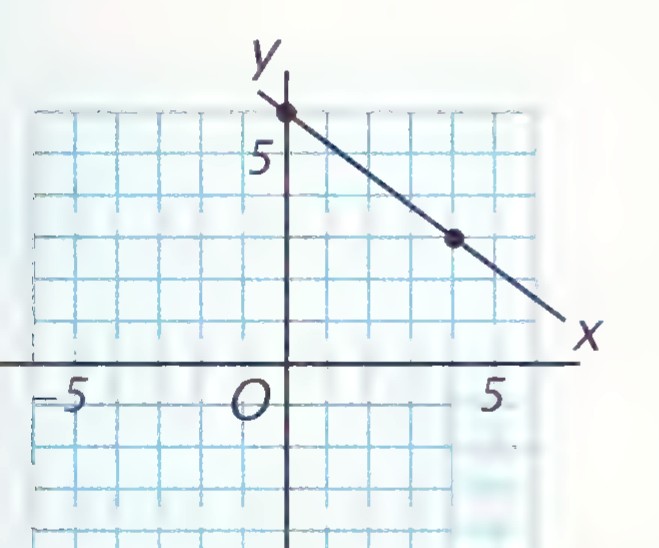
4.
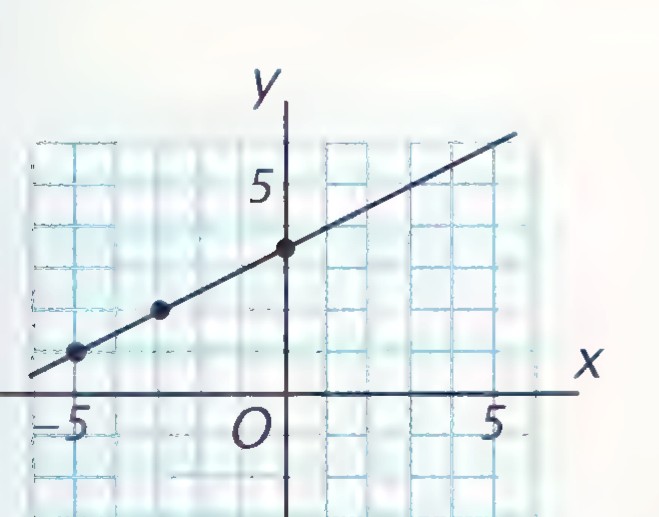
5. .
6. .
7. (or 3.5).
8.
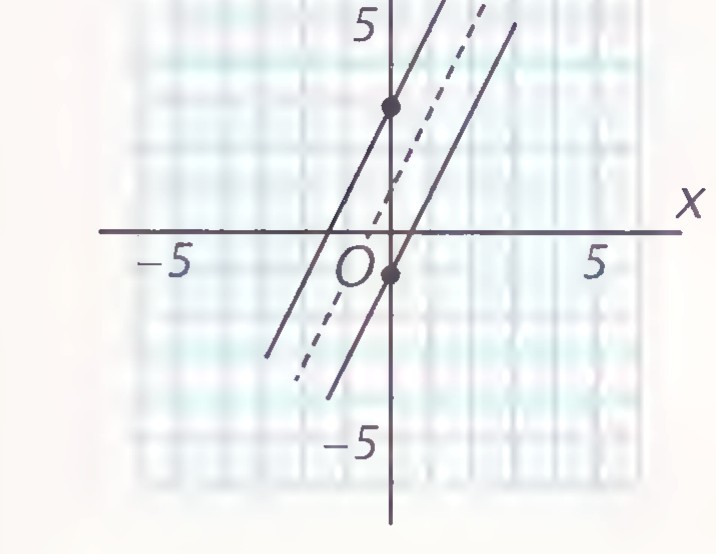
9. They have the same slope, 2.
10. .
11. ; .
12.
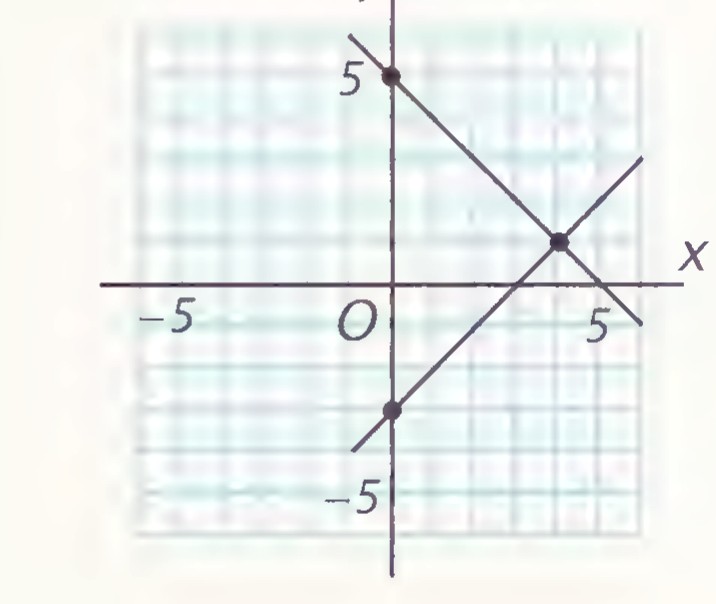
13. −1 and 1.
14. The product of their slopes is −1.
15. .
16. −6.
17.
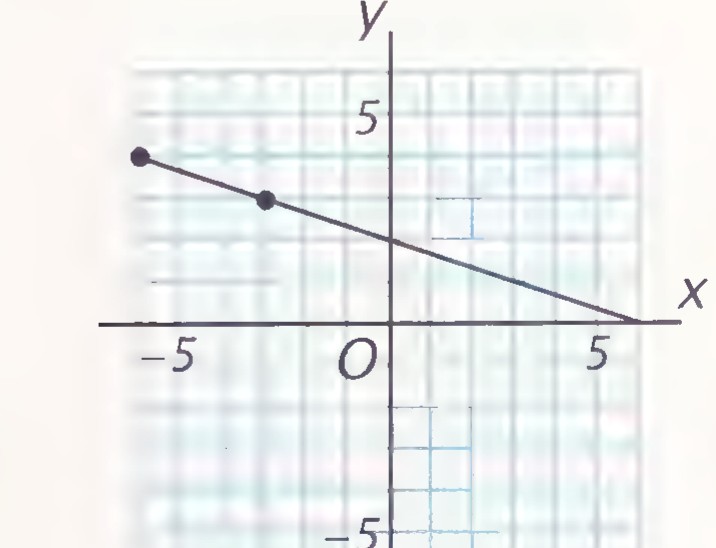
18. .
19. x-intercept, 6; y-intercept, 2.
20. .
p. 760
21.
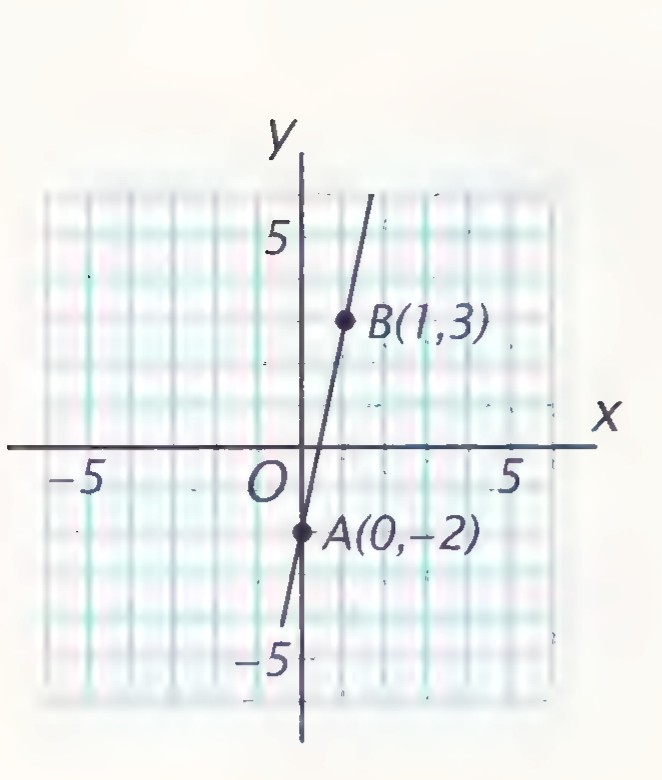
22. 5.
23. .
24. .
25. .
26. (or ).
27. ; .
28.
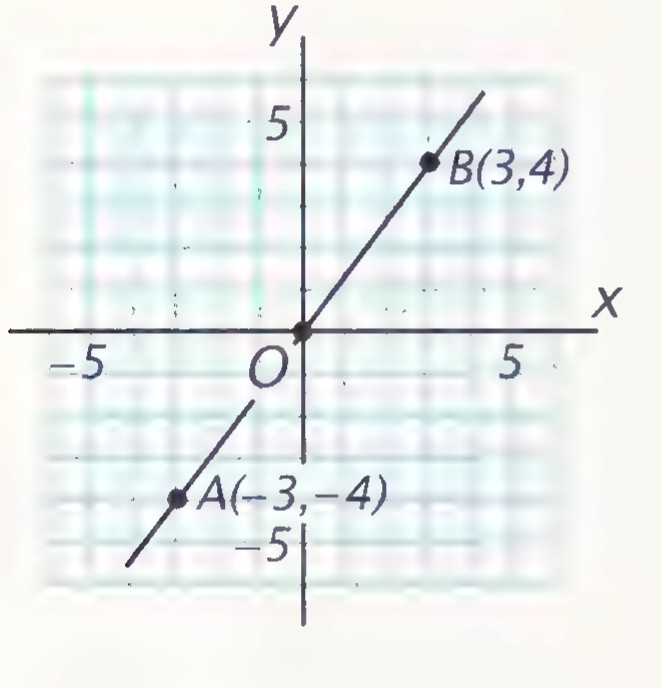
29. 0.
30. 10.
Chapter 12, Lesson 1 (pages 486–490)
2. Chords.
3. A diameter.
6. Five.
9. Six.
10. Concentric.
14. They are perpendicular.
17. Two points determine a line.
18. All radii of a circle are equal.
22. If a line divides a line segment into two equal parts, it bisects the segment.
26. In a plane, two points each equidistant from the endpoints of a line segment determine the perpendicular bisector of the line segment.
27. If a line through the center of a circle bisects a chord that is not a diameter, it is also perpendicular to the chord.
28. Through a point on a line, there is exactly one line perpendicular to the line.
34. An isosceles right triangle.
35. About 46 mm.
38. 1,000 seconds.
40. , or about 0.37.
45. They are rhombuses because all of their sides are equal.
Chapter 12, Lesson 2 (pages 493–496)
2. In a plane, two lines perpendicular to a third line are parallel to each other.
4. OB ⊥ AC.
5. If a line through the center of a circle bisects a chord that is not a diameter, it is also perpendicular to the chord.
9. .
10. .
15. AB is tangent to circle O.
16. If a line is perpendicular to a radius at its outer endpoint, it is tangent to the circle.
18. , or AB.
32. Because ∠FDE is a right angle and corresponding parts of congruent triangles are equal.
34. Line AB.
36. If a line is tangent to a circle, it is perpendicular to the radius drawn to the point of contact.
41. AD = 4 cm and AF = AB = 8 cm.
42. cm.
44. A 3-4-5 right triangle.
48. A parallelogram (also, a rectangle).
Chapter 12, Lesson 3 (pages 500–503)
1. Central angles.
2. .
3. .
5. 283°.
7. 77°.
8. Two points determine a line.
10. An arc is equal in measure to its central angle.
16. The Arc Addition Postulate.
19. A semicircle.
24. No. The sum of any two sides of a triangle is greater than the third side.
27. AB = , BC = , AC = .
31. △ABC and △ABD are equilateral and congruent.
33. Line l is tangent to circle A. If a line is perpendicular to a radius at its outer endpoint, it is tangent to the circle.
41. All of the arcs have the same measure.
Chapter 12, Lesson 4 (pages 506–509)
2. 147°.
3. 24.5°.
4. 33°.
7. All radii of a circle are equal.
9. An exterior angle of a triangle is equal to the sum of the remote interior angles.
12. A central angle is equal in measure to its intercepted arc.
15. Betweenness of Rays Theorem.
17. Arc Addition Postulate.
20. An inscribed angle is equal in measure to half its intercepted arc.
p. 761
22. The measure of a semicircle is 180°.
25. A 90° angle is a right angle.
28. Inscribed angles.
30. , , and .
33. 9°.
36. They are complementary.
37. It is a right angle. An angle inscribed in a semicircle is a right angle.
43. .
44. .
50. It is an altitude (to the hypotenuse) of the triangle.
52. BF = in.
Chapter 12, Lesson 5 (pages 512–515)
2. An exterior angle of a triangle is equal to the sum of the remote interior angles.
3. An inscribed angle is equal in measure to half its intercepted arc.
5. 36.
7. 54° and 126°.
10. Subtraction.
14. 40°.
15. 75°.
18. 55°.
19. A secant angle.
20. It is less than 55°.
23. .
27. 72°.
29. 36°.
34. 20°.
40. If a line through the center of a circle bisects a chord that is not a diameter, it is also perpendicular to the chord.
42. 17 ft.
45. Each angle is 90°.
48. About 92.5 days.
51. 6°.
Chapter 12, Lesson 6 (pages 517–521)
3. HL.
7. Inscribed angles that intercept the same arc are equal.
9. Corresponding sides of similar triangles are proportional.
12. The tangent segments to a circle from an external point are equal.
19. Right angles. An angle inscribed in a semicircle is a right angle.
24. CFOE is a square.
31. PA is tangent to circle O because it is perpendicular to radius OA at its outer endpoint.
33. PA = PB = 10.
35. 20 units.
41. (12, 10).
45. If a line through the center of a circle is perpendicular to a chord, it also bisects the chord.
46. BP.
Chapter 12, Review (pages 523–526)
2. A central angle.
7. 60°.
9. 35°.
10. 16.5.
15. 30°.
18. 60°.
25. AB = AD. The tangent segments to a circle from an external point are equal.
27. They are similar to △ABC.
29. .
34. PB ⊥ AC.
36. Isosceles. (In the figure, they are also obtuse.)
40. 4 cm.
42. Approximately 3.7 cm.
44. Approximately 68°.
46. 53°.
47. 74°.
51. C is the midpoint of AB.
52. Approximately 9.7 in.
53. Approximately 75.5°.
56. .
58. .
Chapter 12, Algebra Review (page 528)
1. (8, 8).
2. (7, 14).
3. (11, 9).
4. (3, −4).
5. (0, −1).
6. (5, 14).
7. (14, 5).
8. (3.5, 10.5).
9. (45, 9).
10. (−2, 1).
11. (−19, −2).
12. (0, −5).
13. (51, −16).
14. (3, −11).
15. (18.5, 0.9).
16. (−1, −10).
17. (11, −4).
18. (7, 1).
19. (7, 3).
20. (9, 2).
21. (4, 0).
22. (−1, 5).
23. (8, −2).
24. (0, −8).
Chapter 13, Lesson 1 (pages 532–535)
4. Its circumcircle.
5. △ABC is inscribed in circle O.
6. They are equidistant from it.
7. Minor arcs.
13. A diameter (or a chord).
17. The lines are the perpendicular bisectors of the sides of △ABC, and the perpendicular bisectors of the sides of a triangle are concurrent.
19. No.
24. Three.
28. OA = 2OD because, in a 30°-60° right triangle, the hypotenuse is twice the shorter leg.
32. The circumcenter of the triangle with A, B, and C as its vertices.
36. It is approximately 6.4 cm.
39. They are concurrent on the hypotenuse of the triangle.
40. 7.5 cm.
42. Both ∠E and ∠ABD intercept . Inscribed angles that intercept the same arc are equal.
47. Approximately 31 mm.
48. 31.25 mm.
51. .
Chapter 13, Lesson 2 (pages 538–541)
1. By seeing if a pair of opposite angles are supplementary.
4. They must be concurrent.
8. Inscribed angles that intercept the same arc are equal.
10. Substitution.
14. They are isosceles because all radii of a circle are equal.
18. because they are bases of a trapezoid.
21. ∠B and ∠D are supplementary.
24. They intersect in a common point, P.
30. ABCD is not cyclic, because its opposite angles are not supplementary.
33. Vertical angles are equal.
34. Supplements of the same angle are equal.
40. 1,764.
42. The Protractor Postulate.
46. Multiplication.
54. Substitution.
p. 762
Chapter 13, Lesson 3 (pages 544–547)
1. The angle bisectors of a triangle are concurrent.
3. Two.
4. They are perpendicular bisectors of the sides.
5. The vertices of the triangle.
7. Two angle bisectors.
10. Its incircle.
11. Its incenter.
13. They are perpendicular to the sides. If a line is tangent to a circle, it is perpendicular to the radius drawn to the point of contact.
15. They must be concurrent.
17. Only if the rectangle is a square.
21. They are the perpendicular bisectors of the sides.
25. and units.
28. EF seems to be tangent to the incircle.
32. Exterior angles.
38. It proves that AP bisects ∠DAE.
40. FDEO is a square.
42. units.
46. .
49. .
51. .
55. square units.
59. The area of a triangle is half the product of its base and altitude.
61. .
Chapter 13, Lesson 4 (pages 550–553)
4. The fact that the altitudes of a triangle form right angles with the lines of its sides.
5. Two points determine a line.
6. The Ruler Postulate.
8. A midsegment of a triangle is parallel to the third side.
11. A line segment that connects a vertex of a triangle to the midpoint of the opposite side is a median.
14. Through a point not on a line, there is exactly one line parallel to the line.
18. In a plane, a line perpendicular to one of two parallel lines is also perpendicular to the other.
23. GD and EH bisect each other. The diagonals of a parallelogram bisect each other.
28. △ABC is obtuse.
29. No. The altitude segments do not intersect.
32. GE, AF, and CD.
33. At point B.
41. Corresponding sides of similar triangles are proportional.
42. Substitution.
49. PD and EC are altitudes of △APE.
Chapter 13, Lesson 5 (pages 557–560)
1. CF.
5. No. GF is not a cevian, because neither of its endpoints is a vertex of the triangle.
6. 3.2.
8. Not concurrent.
11. 2.
15. That this product is 8.
18. That this sum is 2.
21. 3.
24. AX = 4; XB = 6.
28. △AXZ ∼ △CPZ and △BXY ∼ △CPY.
32. Division (and substitution).
34. If a line parallel to one side of a triangle intersects the other two sides in different points, it divides the sides in the same ratio.
41. (by Ceva’s Theorem).
45. In a plane, a line perpendicular to one of two parallel lines is also perpendicular to the other.
52. △AXC ∼ △AZB.
Chapter 13, Lesson 6 (pages 562–565)
1. AB and DC.
2. .
4. units.
7. M(9, 0); L(3, 6).
8. (8, 4).
11. CN = NB = or .
16. and .
18. (9, 3).
24. At V.
27. (6, 6).
36. 48 units.
38. 150°.
45. No. AC and CB are not perpendicular, because the product of their slopes is not −1.
46. G(3, 14); I(17, 14).
53. AB = DC = 6; AD = BC = .
57. ; .
Chapter 13, Review (pages 566–570)
2. △ABC is inscribed in the circle.
6. △ABC is a right triangle because ∠ACB is inscribed in a semicircle.
12. F.
14. IJKL.
18. Midsegments.
24. AX = 4, YB = 3, and ZC = 2.
28. Cyclic.
34. in.
36. ∠AED + ∠AGD = 180°. ∠AED and ∠AGD are supplementary because they are opposite angles of a cyclic quadrilateral.
38. ∠EGD = ∠EAD because they are inscribed angles that intercept the same arc.
39. ∠EGD = 60° because ∠EGD = ∠EAD.
42. ∠BHC = 120° because it is supplementary to ∠BFC.
48. 125°.
53. They appear to bisect its angles.
55. DB and FB.
61. ABCD is concave.
Chapter 14, Lesson 1 (pages 574–578)
3. The radii of the polygons.
5. Yes. If a triangle is equilateral, it is also equiangular.
8. No.
10. Yes. (All regular polygons are cyclic.)
13. 60°.
14. Equilateral.
p. 763
18. Three squares.
20. They are factors of it.
21. Equilateral triangles and regular pentagons.
27. Regular polygons having an even number of sides.
31. If it isn’t regular, it must not be equiangular.
33. Isosceles right triangles.
39. 22.5°.
41. 135°.
45. Apothems.
47. 30°-60° right triangles.
52. They are equal because the sides of the pentagon are chords of the circle, and equal arcs in a circle have equal chords.
54. 72°.
Chapter 14, Lesson 2 (pages 581–584)
2. The number of sides.
4. 3.0902.
10. Radii.
14. PB bisects ∠ABC.
16. .
17. 3.078.
21. The radius of the hexagon appears to be longer.
22. 108°.
26. .
28. Approximately 2.13 angstroms.
31. 74 mm.
37. .
39. .
41. 2.
44. By the Law of Sines.
45. Approximately 1.9.
48. Approximately 2.2.
49. 18°.
52. 3.0901699….
Chapter 14, Lesson 3 (pages 587–590)
3. 0.
5. 1.30.
9. The perimeter of the nonagon.
14. .
16. .
18. .
22. 628 units.
28. 31,359 square units.
31. 30°-60° right triangles.
32. .
34. .
42. They are isosceles.
43. That they are 15°.
47. All are .
49. .
54. 7.1 cm.
57. 38 cm.
Chapter 14, Lesson 4 (pages 593–597)
2. .
5. The circumference of the hat.
7. Approximately 1,500,780 mi.
10. .
16. 704 ft/minute.
17. ft.
20. 10 units.
21. 8 units.
24. AC = AB. If a line through the center of a circle is perpendicular to a chord, it also bisects the chord.
26. 3.1415927.
28. .
29. 2.83.
35. Approximately 24,880 mi.
36. Approximately 1,040 mi.
37. 1,040 mi/hour.
42. Approximately 19 mi/second.
45. .
46. .
49. .
52. 825 ft.
53. in.
Chapter 14, Lesson 5 (pages 600–604)
1. 300 mi.
2. 940 mi.
3. 71,000 mi².
4. 15 mi.
5. 90 mi.
9. .
12. 100 circular inches.
14. cm².
15. cm.
19. square units.
23. .
25. 6 units.
27. 3.1425.
31. .
33. .
35. .
36. .
42. 72.6.
43. 290.
47. .
48. or .
Chapter 14, Lesson 6 (pages 606–611)
1. A sector.
2. 45°.
3. .
4. .
5. The length of in meters.
8. 15,700 m².
9. About 6,220 mi.
12. 2,009 ft².
13. 887 ft².
16. .
18. 60°.
19. .
22. .
23. About 9 in.
25. About 0.0007 second.
27. 360°.
28. .
30. 57.3°.
31. 46 in.
32. 469 in².
34. About 53°.
37. About 93 square units.
39. About 45 square units.
41. 63.66 m.
43. 103.77 m.
45. About 188 m.
47. .
49. .
50. 8.
51. .
53. .
58. 1,256.64 in².
62. 34.64 in.
64. 246 in².
66. .
67. .
Chapter 14, Review (pages 612–616)
2. It must be convex, equilateral, and equiangular.
4. 120°.
6. 48°.
9. 3.12.
10. 3.05.
12. .
15. About 420 turns.
18. .
20. .
21. , , and .
24. .
28. .
29. .
31. .
33. 45°.
34. 0.79.
35. .
37. 0.98.
39. About 1,037 mi.
40. About 3,034 mi.
42. About 794 mi.
45. (or about 1.414).
47. 8.78.
52. or .
55. .
58. .
59. .
63. About 83 ft.
p. 764
Chapter 15, Lesson 1 (pages 620–624)
1. The second.
7. It appears to be oblique to the ground.
8. A vertical plane.
10. That they lie in a horizontal plane.
11. No. AB is perpendicular to the floor if it is perpendicular to every line in the floor that passes through point B.
13. Parallelograms.
15. EFGH.
21. They intersect in line l (or they both contain it).
23. One plane must contain a line that is perpendicular to the other plane.
25. CF is perpendicular to plane EFGH.
27. If a plane intersects two parallel planes, it intersects them in parallel lines.
32. Three noncollinear points determine a plane.
33. If two points lie in a plane, the line that contains them lies in the plane.
34. They lie in it.
40. No. Two horizontal lines can be skew. They can also intersect.
42. About 91 cm.
43. About 62°.
45. SAS.
47. A quadrilateral is a parallelogram if its diagonals bisect each other.
55. Nine.
Chapter 15, Lesson 2 (pages 630–633)
1. Six.
2. Eight.
3. 12.
4. F.
7. CG, DH, EH, and FG.
10. 0.025 cm.
12. 0.225 cm².
14. 185 units.
15. 697 units.
18. .
20. A regular hexagon.
21. △HEM and △HEN are congruent right triangles.
25. ∠EAC is a right angle.
28. An isosceles trapezoid.
30. 6 cm.
32. 45°.
33. 60°.
35. About 35°.
39. cm.
44. .
46. 54.74°.
49. One. The structure appears to contain cubes.
Chapter 15, Lesson 3 (pages 635–638)
1. L, I, and E.
3. Prisms.
5. Two.
6. Three.
10. The bases.
12. .
13. .
18. 1,624 ft².
19. A parallelogram.
20. BAB′C.
23. EDE′F.
26. They appear to be parallel and equal.
29. Pentagons.
33. 1,458 ft².
35. They are rectangles.
38. Yes. The bases of every prism are congruent.
44. AX > AE.
46. A right triangular prism.
50. .
Chapter 15, Lesson 4 (pages 642–646)
2. “x cubed.”
4. Its volume.
5. 27.
7. 36.
8. 1,296.
12. About 1.6 ft³.
14. 1,518,750 ft³.
16. 1 m³.
17. 6 m².
20. 12 m².
27. A right hexagonal prism and an oblique hexagonal prism.
31. 108 cubic units.
33. 288 cubic units.
34. 79 cm³.
36. 55 cm³.
38. 0.004 in.
40. 187.156 in².
41. .
43. Two of them.
44. .
49. .
51. 3 cm.
54. 236.5 ft².
55. 4,730 ft³.
57. 9 ft³.
Chapter 15, Lesson 5 (pages 649–653)
1. A pyramid.
2. Its apex.
4. A cross section.
5. A lateral face.
10. 128 cubic units.
12. 70 cubic units.
13. They are equal.
19. 576 yd³.
22. .
23. 55.125 square units.
25. 385.875 cubic units.
28. .
30. .
33. 231,000 ft².
34. 612 ft.
35. 231,000 ft².
37. 92,000,000 ft³.
38. .
43. It is a pyramid.
45. Isosceles right triangles.
46. .
47. .
48. .
51. OM = and PN = .
52. Corresponding sides of similar triangles are proportional.
53. .
Chapter 15, Lesson 6 (pages 656–661)
6. Product.
10. Its axis.
11. The altitude.
12. The lateral surface.
13. The bases.
15. in³.
19. 7 in².
22. 4,800 m³.
25. They have equal volumes.
26. Cavalieri’s Principle.
27. cm³.
28. 110 cm³.
31. 65%.
34. That they have the same length.
38. The diameter of its base.
41. 352 in³.
42. .
44. It is multiplied by four.
48. 285 in³.
52. .
54. A sector of a circle.
55. .
57. .
p. 765
Chapter 15, Lesson 7 (pages 665–669)
1. They are equal.
2. It is four times as large.
3. About 12.6 km².
4. About 4.2 km³.
7. .
11. All radii of a sphere are equal.
12. If a line is perpendicular to a plane, it is perpendicular to every line in the plane that passes through the point of intersection.
18. It decreases.
19. 212 cm³.
21. 0.7 gram/cm³.
28. .
30. .
33. Either leg of a right triangle is the geometric mean between the hypotenuse and its projection on the hypotenuse.
35. 3,895 mi.
38. About 15 hours.
39. About 13 hours.
44. 325,000,000 mi³.
47. The second expression.
Chapter 15, Lesson 8 (pages 672–676)
2. Two cubes are always similar.
6. It is multiplied by 9.
7. It is multiplied by 27.
10. It is multiplied by .
11. It is multiplied by .
13. 10.24.
14. 32.768.
17. That Gulliver’s body was similar to their bodies.
20. About 3.6 times.
23. About 22 mm.
25. About 1.8 times.
30. .
32. .
35. The square.
38. ; .
39. PA, 1; PB, 2; PC, 4; PD, 8.
40. It is twice as large.
45. Eight.
51. About 47 pounds.
52. About 93 pounds.
Chapter 15, Lesson 9 (pages 678–682)
1. Eight.
3. Quadrilateral.
6. Yes.
9. The area of the larger triangle is four times the area of the smaller one.
10. The surface area of the larger tetrahedron is times the surface area of the smaller one.
14. 12.
16. Three.
18. 20.
20. An icosahedron.
26. 12.
29. That they are congruent.
30. 180°.
34. 270°.
38. .
41. .
44. ∠ABP = 54° and ∠BAP = 36°.
45. 1.618.
46. About 1.8.
52. 0.714 unit.
53. 10.5 square units.
58. 2.8 cubic units.
Chapter 15, Review (pages 684–688)
1. 4 and 8.
3. They appear to be perpendicular.
10. 16 ft.
13. A prism and a pyramid.
15. 80,000 ft³.
18. It is four times as large.
21. 250,000.
23. 1,250,000,000.
25. .
27. A regular tetrahedron.
29. .
30. .
36. .
37. .
40. .
45. 40 square units.
50. The area of the horizontal cross section halfway up the barrel.
51. .
58. Four.
59. Six.
Chapter 16, Lesson 1 (pages 692–695)
1. At the center of the sphere.
2. A radius of the sphere.
3. Two hemispheres.
7. Euclidean geometry.
10. Both geometries.
16. 186°.
18. ∠A = 72°, ∠B = ∠C = 60°; ∠A + ∠B + ∠C = 192°.
22. Yes.
25. Arcs of great circles.
30. Both curves cannot correspond to lines.
31. One.
32. No.
40. No. The sum of the angles of △ABC is greater than 180°.
45. It has three right angles rather than one.
46. It is four times as long.
Chapter 16, Lesson 2 (pages 698–700)
1. Its legs.
2. The base angles.
3. The summit.
5. WY and MO.
6. ∠Y and ∠O.
7. Two points determine a line.
9. All right angles are equal.
14. The Ruler Postulate.
16. It is a birectangular quadrilateral whose legs are equal.
17. The summit angles of a Saccheri quadrilateral are equal.
20. An exterior angle of a triangle is greater than either remote interior angle.
23. A Saccheri quadrilateral.
25. The fact that ∠D > ∠C.
26. If the legs of a birectangular quadrilateral are unequal, the summit angles opposite them are unequal in the same order.
29. CD.
31. DM = CM because △ADM ≅ △BCM (SAS).
33. In a plane, two points each equidistant from the endpoints of a line segment determine the perpendicular bisector of the line segment.
38. DA.
40. The line segment connecting the midpoints of the base and summit of a Saccheri quadrilateral is perpendicular to both of them.
p. 766
42. In a plane, two lines perpendicular to a third line are parallel.
44. The opposite angles of a parallelogram are equal.
Chapter 16, Lesson 3 (pages 704–706)
1. The summit angles of a Saccheri quadrilateral are acute in Lobachevskian geometry.
3. Substitution.
4. A line segment has exactly one midpoint.
6. The line segment connecting the midpoints of the base and summit of a Saccheri quadrilateral is perpendicular to both of them.
7. A quadrilateral that has two sides perpendicular to a third side is birectangular.
9. The Addition Theorem of Inequality.
14. A birectangular quadrilateral whose legs are equal is a Saccheri quadrilateral.
15. The summit of a Saccheri quadrilateral is longer than its base in Lobachevskian geometry.
20. Through a point not on a line, there is more than one line parallel to the line.
28. Birectangular.
34. In Riemannian geometry, the summit of a Saccheri quadrilateral is shorter than its base.
37. They are all half as long.
42. They are congruent squares.
Chapter 16, Lesson 4 (pages 709–712)
2. ∠D and ∠E.
4. A Saccheri quadrilateral.
5. The summit angles of a Saccheri quadrilateral are acute in Lobachevskian geometry.
8. Substitution.
10. The sum of the angles of a triangle is less than 180° in Lobachevskian geometry.
14. Corresponding angles of similar triangles are equal.
17. The angles in a linear pair are supplementary.
21. No. The sums of the angles of the two triangles may not be equal.
26. ∠A + ∠B + ∠C > 180°.
27. Riemannian geometry.
31. ∠1 = ∠A + ∠B.
35. △ADE ∼ △ABC (AA).
41. ∠F is a right angle.
42. CFDE is a birectangular quadrilateral (in two different ways).
43. ∠FDE is acute.
46. DE > 2BC.
Chapter 16, Review (pages 714–717)
1. A great circle.
2. False.
4. True (because antipodal points are considered to be identical).
7. AD.
12. 360°.
16. ∠ABC = 90°; ∠BCD = 120°; ∠CDA = 90°; ∠DAB = 120°.
17. The quadrilateral is a parallelogram.
19. It is a rhombus.
23. No.
26. Saccheri quadrilaterals.
27. Acute.
32. Substitution.
34. A midsegment of a triangle is less than half as long as the third side.
37. Two points determine a line.
40. The sum of the angles of a triangle is less than 180°.
p. 767
Illustration Credits
Introduction
p. 1: From Collected Poems by Vachel Lindsay (Macmillan, 1914) copyright renewed 1942 by Elizabeth C. Lindsay.
Chapter 1
p. 17: (upper right) Lowell Observatory; p. 18: (top) Adam C. Sylvester/Photo Researchers; p. 24: Courtesy of http:www.indias-best.com; p. 30: Georg Gerster/Photo Researchers; p. 35: Dido Purchases Land for the Foundation of Carthage (1630). Engraving by Matthäus Merian in Historische Chronica, Frankfurt a.M. 1630. Staats und Stadtbibliothek Augsburg; p. 36: (left) Department of Anthropology, Smithsonian Institution.
Chapter 2
p. 41: The Art of Optical Illusions by Al Seckel (Illusion Works, 2000), © Jos De Mey; p. 42: Photofest; p. 45: (top and bottom) From The Animal Mind by James L. Gould and Carol Grant Gould © 1994 by Scientific American Library; p. 46: Los Angeles Times, 8/15/91, (left) Stockbyte/Picture Quest, (center) Gemma Giannini/Grant Heilman Photography, (right) Peggy Koyle/Index Stock Imagery; p. 50: (left) Classic Comics Commemorative Series (1995), (right) From Scientific American, April 1998, Vol. 278, No. 4; pp. 55 and 56: From Anno’s Hat Tricks by Akihiro Nozaki and Mitsumasa Anno. Published by Philomel Books, 1985. Used with permission of Anno/Dowaya Ltd., Japan; p. 58: (top right) Modified from The Architecture of Molecules by Linus Pauling and Roger Hayward. © 1964 by W. H. Freeman and Company; p. 62: (left) Photofest, (right) From The Complete Manual of Woodworking by Albert Jackson, David Day, and Simon Jennings (Alfred A. Knopf, 1996); p. 69: (top left) From Light and Vision by Conrad Mueller and Mae Rudolph (Life Science Library, 1966). Photo by John Murello; p. 70: (right) From Dissections, Plane and Fancy by Greg N. Frederickson (Cambridge University Press, 1997). Reprinted with the permission of Cambridge University Press; p. 72: (top) W. H. Freeman and Company, (bottom) Courtesy of Bogen Photo Corp., Ramsey, NJ.
Chapter 3
p. 83: Drawing by Harry Furniss. National Portrait Gallery, London; p. 86: Modified from Rules of the Game, Diagram Group (St. Martin’s Press, 1990); p. 87: Joel Simon/Stone; p. 88: (bottom left) Harold Edgerton; p. 94: (bottom left) Dutton’s Navigation and Piloting, 14th ed., Elbert S. Maloney (Naval Institute Press, 1985), (bottom right) G. C. Kelley/Photo Researchers; p. 95: Numbers: Facts, Figures and Fiction by Richard Phillips (Cambridge University Press, 1994); p. 96: (top left) Alex S. McLean/Landslides, (right) The NBC® peacock is a registered trademark of NBC Broadcasting, Inc.; p. 98: (top) Lester Lefkowitz/Corbis; p. 102: (top and middle left) W. H. Freeman and Company, (bottom left) Modified from The Architecture of Molecules by Linus Pauling and Roger Hayward. © 1964 by W. H. Freeman and Company; p. 103: (top right) James W. Richardson/Visuals Unlimited; p. 105: (top) Joseph Daniel; p. 107: (right) Adapted from The Physics of Skiing by David Lind and Scott P. Sanders (AIP Press/Springer-Verlag, 1996); p. 108: (left) From Sports: The Complete Visual Reference by Francois Fortin (Firefly Books, 2000); p. 110: (top right) Alex S. McLean/Landslides; p. 117: Historical Atlas of the United States: Centennial Edition (National Geographic Society, 1988); p. 119: (top right) From Rules of the Game, Diagram Group (St. Martin’s Press, 1990);
p. 768
p. 120: (top left) From Mathematical Snapshots by Hugo Steinhaus (Oxford University Press, 1969); p. 121: (top right) Photo courtesy of Elizabeth Bryarly; p. 122: (left) From New Book of Puzzles by Jerry Slocum and Jack Botermans (W. H. Freeman and Company, 1992); p. 124: (top left) James A. Sugar/Corbis, (bottom left) From The Complete Manual of Woodworking by Albert Jackson, David Day, and Simon Jennings (Alfred A. Knopf, 1996); p. 126: (top left) Colin Garratt/Corbis, (bottom left) Francisco Jose de Goya Lucientes, “The Still Waters,” 1791–1792. © Archivo Iconografico/Corbis, (middle right) From The Complete Manual of Woodworking by Albert Jackson, David Day, and Simon Jennings (Alfred A. Knopf, 1996); p. 127: (left) Chip Clark.
Chapter 4
p. 132: (middle left) Detail from Addams cartoon (at top of page). © The New Yorker Collection 1974, Charles Addams, from cartoonbank.com. All rights reserved; p. 137: (top) From Architecture: Form, Space, and Order by Francis D. K. Ching (Wiley, 1996); p. 139: (top) Alex S. McLean/Landslides; p. 160: (top left) Dwayne Newton/PhotoEdit; p. 161: Modified from The Architecture of Molecules by Linus Pauling and Roger Hayward. © 1964 by W. H. Freeman and Company; p. 162: (top right) M. C. Escher’s “Lizard E25” © 2002 Cordon Art B. V.–Baarn-Holland. All rights reserved, (bottom right) Detail from “Lizard E25” courtesy of Cordon Art B. V.–Baarn-Holland; p. 163: (top) Smithsonian Institution; p. 176: (top right) Detail of “La Symetrie Bidimensionnelle et le Canada” courtesy of Francois Brisse, (bottom right) “La Symetrie Bidimensionnelle et le Canada” by Francois Brisse, The Canadian Mineralogist, Vol. 19, p. 217, 1981. Used by permission of the author; p. 179: The Rock Art Museum of Tanum, Sweden. Gerhard Milstreu.
Chapter 5
p. 183: From The Playful Eye by Julian Rothenstein and Mel Gooding (Chronicle Books, 1999). Used with permission of Redstone Press, UK; p. 184: (top left) Photography by William Vandivert and Scientific American; p. 186: (middle left) The Snark Puzzle Book by Martin Gardner (Simon & Schuster, 1973). Used with permission of the author; p. 187: (top) Pictor International/PictureQuest; p. 190: (top) From Industrial Light and Magic: The Art of Special Effects by Thomas G. Smith (Ballantine Books, 1986); p. 195: (top and top right) William Scrots, Edward VI, 1546, National Portrait Gallery, London; p. 197: (bottom right) Kip Peticolas/Fundamental Photographs; p. 200: (top) Lowell Observatory; p. 206: (right) Vladimir Pcholkin/Taxi.
Chapter 6
p. 211: The Art of Optical Illusions by Al Seckel (Illusion Works, 2000), Sandro Del Prete; p. 215: (top left) From Wild Animal Paper Chains by Stewart and Sally Walton (Tupelo Books/Wm. Morrow & Co., 1993); p. 217: (left) Used with permission of Scott Kim; p. 222: Michael and Patricia Fogden; p. 225: (top left and top right) From Laughing Camera II (Hill & Wang, New York, 1969); p. 228: (bottom left) Rendered from Architecture: Form, Space, and Order by Francis D. K. Ching (Wiley, 1996); p. 230: (top) Tom Bean/Corbis; p. 232: (top left) Adapted from Challenge! by Charles Rice (Hallmark Editions, 1968); p. 233: (top left) The Photo Works; p. 234: (top left) From Puzzles: Old and New by Jerry Slocum and Jack Botermans (University of Washington Press–Seattle, 1986), (middle right) Terrence Moore/USGS; p. 236: (top) Historical Atlas of the United States: Centennial Edition (National Geographic Society, 1988), (bottom left) Map courtesy of U.S.C.G.S.; pp. 242 and 243: (top) From Visualization by Richard Mark Friedhoff and William Benzon (Harry N. Abrams Inc., 1989); p. 245: (top left) Steve Satushek/Getty;
p. 769
p. 246: (top right) Courtesy of DSH Inc., manufacturer of quality hardware for sliding and bifold mirror doors; p. 250: (top right) Alex S. McLean/Landslides.
Chapter 7
p. 258: (top) Courtesy of the Marvin Company; p. 260: (right) Georg Gerster/Photo Researchers; p. 267: (top left) Courtesy of the Margaret Woodbury Strong Museum, Rochester, New York; p. 269: (right) From Games of the World, Frederic V. Grunfeld, ed. (Holt, Rinehart & Winston, 1975), p. 126. Dutch Tax Museum, Rotterdam; p. 270: (top) From The Mind by John Rowan Wilson (Time-Life Books, 1969). Three Photographs: Norman Snyder, courtesy Animal Talent Scouts Inc., NY; p. 272: (top left) From Mathematics Meets Technology by Brian Bolt (Cambridge University Press, 1991). Reprinted with the permission of Cambridge University Press; p. 276: Neil Leifer/Sports Illustrated; p. 278: (middle right) Georg Gerster/Photo Researchers; p. 279: (top left) Gary Russ/Getty; p. 281: (top) Maya murals from Bonampak, Chiapas, 9th c. A.D., paintings copied by Antonio Tejeda for the Carnegie Institution of Washington, DC (Robert Kafka); p. 282: (bottom left) Adapted from Architecture: Form, Space, and Order by Francis D. K. Ching (Wiley, 1996); p. 288: (bottom) Modified from The Hammond-Doubleday Illustrated World Atlas; p. 290: (top left) Detail from an ad published in Scientific American, November 1990, for Envisioning Information by Edward R. Tufte (Graphics Press, 1990); p. 292: (left) Modified from Geometry from Africa by Paulus Gerdes (The Mathematical Association of America, 1999); p. 294: (top left) From Mathematics Meets Technology by Brian Bolt (Cambridge University Press, 1991). Reprinted with the permission of Cambridge University Press, (top right) From Creative Puzzles of the World by Pieter van Delft and Jack Botermans (Abrams, 1978).
Chapter 8
p. 300: (bottom) M. C. Escher’s “Fish E20” © 2002 Cordon Art B. V.–Baarn-Holland. All rights reserved; p. 301: (top left) Rendered from The Galactic Club by Ronald N. Bracewell (W. H. Freeman and Company, 1975), (bottom right) Adobe Illustrator 9.0 User Guide (Adobe, 2000); p. 302: (top left) Douglas Hofstadter design adapted from Games Column by Scot Morris, Omni, June 1988; p. 305: (bottom) and p. 307: (top and bottom) Adapted from Charles Addams cartoon, courtesy of Charles Addams © 1957, 1985, The New Yorker Magazine, Inc.; p. 308: (top left) Bob Carey/Los Angeles Times, 1/8/87; p. 309: (bottom left) Can You Believe Your Eyes? by J. R. Block and Harold E. Yuker (Brunner/Mazel, 1992). Courtesy of David Moser, (top and bottom right) Al Freni; p. 310: (bottom right) and p. 311: (top left) From The Boomerang Book by John Cassidy (Klutz Press, 1985); p. 312: “Turning the Tables,” modified from Mind Sights by Roger N. Shepard (W. H. Freeman and Company, 1990); p. 314: (bottom left) Stuart Westmorland/Corbis, (top right) From Can You Believe Your Eyes? by J. R. Block and Harold E. Yuker (Brunner/Mazel, 1992). Courtesy of Paul Agule; p. 316: (top left) M. C. Escher’s “Bull Dog E97” © 2002 Cordon Art B. V.–Baarn-Holland. All rights reserved, (bottom left and top right) Details from Escher drawing; p. 321: (top left) Algebra is adapted from Wordplay by John Langdon (Harcourt Brace Jovanovich, 1992), (lower right) Bettmann/Corbis; p. 323: (bottom right) and p. 324: (top right) Georg Gerster/Photo Researchers; p. 324: (middle left, middle right, and bottom) Thinking Upside Down: An Activity Guide for Inversions by Scott Kim (Dale Seymour Publications, 1984); p. 325: Kaiser Porcelain Ltd.; p. 326: (top left) From Masterpieces of Western Textiles by C. C. Mayer (The Art Institute of Chicago, 1969); p. 327: (top left) M. C. Escher’s “Two Fish E41” © 2002 Cordon Art B. V.–Baarn-Holland. All rights reserved, (middle and bottom left) Details from Escher drawing, (right) Keep Your Eye on the Ball by Robert G. Watts and A. Terry Bahill (W. H. Freeman and Company, 1990); p. 329: (left) Wordplay by John Langdon (Harcourt Brace Jovanovich, 1992).
p. 770
Midterm Review
p. 332: © 1997–2001 Andrew Bayuk.
Chapter 9
p. 337: © 1968, W. A. Elliott Co., Toronto, Canada; p. 344: (top) Alex S. McLean/Landslides; p. 345: (bottom) Artist: Ad Reinhardt, in Museum of Modern Art; p. 347: (top right) From The Cosmological Milkshake by Robert Ehrlich (Rutgers University Press, 1994). Drawing by Gary Ehrlich, (bottom right) Arnold E. Palmer/Arrowhead Images; p. 348: (bottom left) From The Thomas Guide: Los Angeles County Street Guide and Directory (Thomas Bros. Maps, Irvine, CA); p. 349: (top) From Wood Handbook, Forest Products Laboratory (U. S. Department of Agriculture, 1974), (top right) From The Best of Better Homes and Gardens Home Plans, Fall 1997; p. 350: (top) Painting by Mary Russel; p. 351: British Museum; p. 354: (top right) By permission of Vahan Shirvanian; p. 357: (top right) Modified from The Best of Better Homes and Gardens Home Plans, Fall 1997; p. 360: (left top and bottom) Georg Gerster/Photo Researchers; p. 361: (top right) Thomas A. Heinz/Corbis; p. 367: (left) Annagret Haake, University of Frankfurt; p. 369: (bottom left) Bettmann/Corbis; p. 374: (top left) NASA Dryden Flight Research Center.
Chapter 10
p. 378: Roy Lichtenstein, Mural with Blue Brushstroke, 1984–86. Photographed by Robert McKeever; p. 380: (top left) PhotoDisc/Getty; p. 381: (top left) From Architecture: Form, Space, and Order by Francis D. K. Ching (Wiley, 1996), (bottom left) Peter Raedschelders, Turtles Forever; p. 383: (left) J. Pat Carter/AP; p. 384: (top) Yann Arthus-Bertrand/Corbis; pp. 385 and 386: (top and top left) Photofest; p. 387: (bottom left) ESO/ESA, (bottom right) John Chumack/Photo Researchers; p. 390: (top left) Adapted from On Size and Life by Thomas A. McMahon and John Tyler Bonner. © 1983 by Thomas A. McMahon and John Tyler Bonner; p. 391: (bottom left) Francis G. Mayer/Corbis, (top right) From Architecture: Form, Space, and Order by Francis D. K. Ching (Wiley, 1996); p. 397: (bottom left) Courtesy of the HNTB Companies; p. 398: (middle left) Courtesy of Rockler.com; p. 403: (top left) Piero della Francesca, Il trionfo di Federico di Montefeltro. Alinari/Art Resource; p. 409: (top left) Photography by Andrew Brilliant, © 1983; p. 410: (right) and p. 413: (top right) PhotoDisc/Getty; p. 414: (top) Joseph Sohm, Visions of America/Corbis; p. 418: (top left) Barbara Dean, Chantilly, VA, (top right) Alex S. McLean/Landslides; p. 419: (top left) Don S. Montgomery, USN (Ret.)/Corbis, (right) Granger Collection; p. 421: (top left) Adapted from Cat’s Paws and Catapults by Steven Vogel (W. W. Norton, 1998), (bottom left) Detail from B.C. Cartoon. Used by permission of Johnny Hart and Creators Syndicate, Inc.
Chapter 11
p. 428: (top left) From Rutherford Platt, (bottom left) Jonathan Blair/Corbis; p. 430: (top left) Peter Lilja/Getty; p. 434: (top) By permission of the British Library, 1007628.011; p. 438: (top left) Bettmann/Corbis; p. 439: (top right) Adapted from Why Buildings Fall Down: How Structures Fail by Matthys Levy and Mario Salvador (W. W. Norton, 1992); p. 440: (top left) Adapted from Energy by Mitchell Wilson and the editors of LIFE (Life Science Library, 1963); p. 441: (top) Yale Babylonian Collection (YBC 7289); p. 445: (top left) Modified from Traffic Engineering for Better Roads, Military Traffic Management Command, Washington, DC, 1978, (bottom left) Drawing by J. Bertolli, (top right) Modified from Sports: The Complete Visual Reference by Francois Fortin (Firefly Books, 2000); p. 448: Galen Rowell/Corbis; p. 451: Sport Science: Physical Laws and Optimum Performance by Peter Brancazio (Simon & Schuster, 1984). Used with permission of the author; p. 452: (top left) Painting by Mario Larrinaga, (bottom left)
p. 771
Reconstruction by A. Thiersch. Plate taken from his book Der Pharos von Alexandrien (1909), (top right) Olympus Trooper Zoom DPS R 7-15x35 Binocular. Courtesy of Olympus America, Inc.; p. 453: (bottom right) Georg Gerster/Photo Researchers; p. 454: (left) Nick Bergkessel, (right) Adapted from Exploring Biomechanics by R. McNeill Alexander © 1992 by Scientific American Library; p. 458: (bottom left) © Richard P. Synergy, (bottom right) Adapted from Invention by Design by Henry Petroski (Harvard University Press, 1996); p. 459: (bottom left) Corbis; p. 461: (top) Courtesy of Erwin Purucker; p. 464: (top left) ImageState, (bottom left) From Environmental Geology by Dorothy J. Merritts et al. (W. H. Freeman and Company, 1998). Used with permission, (right) Pictor International/PictureQuest; p. 465: (top right) Stock Boston; p. 468: (top) Adapted from Los Angeles Times 10/11/99; p. 472: (right) Modified from The Great Arc by John Keay (HarperCollins, 2000); p. 473: (bottom left) NASA; p. 477: (top left) Modified from Sport Science: Physical Laws and Optimum Performance by Peter Brancazio (Simon & Schuster, 1984). Used with permission of the author; p. 479: (middle right) Courtesy of American Optical Company; p. 480: (right) Plimpton 322, Rare book and manuscript library, Columbia University.
Chapter 12
p. 483: The Science of Illusions by Jacques Ninio (Cornell University Press, 2001); p. 484: T. C. Schneirla, Army Ants, H. R. Topoff (ed.) (W. H. Freeman and Company, 1971); p. 486: (right) Gary W. Carter/Corbis; p. 488: (middle left) The CBS and CBS Eye Design are registered trademarks of CBS Broadcasting Inc., (top right) From The Book of Ingenious and Diabolical Puzzles by Jerry Slocum and Jack Botermans (Times Books, 1994); p. 489: (left) Rex Elliot; p. 490: (left) Hulton Getty Picture Collection; p. 491: (top) From Sports: The Complete Visual Reference by Francois Fortin (Firefly Books, 2000); p. 494: (top left) Mark Meinders; p. 496: NASA (right) GSFC/NASA; p. 497: (top) Raymond Gehman/Corbis; p. 501: (bottom right) Corbis; p. 502: (top right) Douglas Kirkland/Corbis; p. 504: (top) U.S. Library of Congress/Hulton Getty Picture Collection; p. 506: (top left) Adapted from Rules of the Game, Diagram Group (St. Martin’s Press, 1990); p. 508: (top left) From Pioneers of Science by Sir Oliver Lodge (Macmillan, London, 1893); p. 510: M. C. Escher’s “Circle Limit IV” © 2002 Cordon Art B. V.–Baarn-Holland. All rights reserved; p. 514: (top left) Photography by Kathryn Abbe, © 1979; p. 515: (bottom right) Detail from B. C. Cartoon. Used by permission of Johnny Hart and Creators Syndicate, Inc.; p. 516: (top) Fred Espenak; p. 521: (left) From Edward Everett Hale’s story “The Brick Moon” published originally in Atlantic Monthly in 1869–1870; p. 522: Courtesy of Elmer Atkins © 1963 Saturday Review, Inc.; p. 523: (top) Friedrich von Martens/George Eastman House; p. 525: (top left) Corbis.
Chapter 13
p. 529: Exhibition by Four Graphic Designers. Shigeo Fukuka, 1975; p. 530: (top) Jason Hawkes/Corbis; p. 542: (top) Courtesy of Professor H. Hashimoto, Okayama University of Science, Ohtsu, Japan; p. 561: (top) “The Shade of Napoleon,” A popular print, UK, 1831 (pub. R. Ackermann).
Chapter 14
p. 571: D. H. Thompson/Oxford Scientific Films; p. 574: (bottom left) Fifteen Variations on a Single Theme, Variation 14, 1934–38. © Artists Rights Society (ARS), New York. Prolitheris, Zurich, (bottom right) Fifteen Variations on a Single Theme, Variation 8, 1934–38. © Artists Rights Society (ARS), New York. Prolitheris, Zurich; p. 575: (top left) From Dr. Benjamin M. Shaub, (bottom left) Chip Clark, (top right) Manuel Velarde, Universidad Complutense, Madrid; p. 577: (right) Museo Diocesano, Mantua, Italy, Scala/Art Resource;
p. 772
p. 579: (top) Stone/Getty, (right) From Euclid: The Creation of Mathematics by Benno Artman (Springer, 1999); p. 582: (bottom left) Modified from The Architecture of Molecules by Linus Pauling and Roger Hayward © 1964 by W. H. Freeman and Company, (bottom right) The U.S. Mint; p. 583: (top left) Adapted from National Geographic’s How Things Work by John Langone (National Geographic, 1999); p. 584: (top right) Jeff Lepore/Photo Researchers; p. 588: (top right) Treat Davidson/Photo Researchers; p. 591: (top) Rod Planck; p. 594: (bottom left) Granger Collection; p. 596: (right) Adapted from Scientific American: How Things Work Today by Michael Wright and M. N. Patel (Crown, 2000); p. 597: (right) Auto Math Handbook by John Lawlor (HP Books, a division of Price Stern Sloan, 1991); p. 600: (top left) Science VU/GSFC/NASA, (top right) PhotoDisc/Getty; p. 601: (middle left) Alex S. McLean/Landslides; p. 606: (bottom) Travis Amos; p. 606: (middle) and p. 609: (bottom right) Adapted from Sports: The Complete Visual Reference by Francois Fortin (Firefly Books, 2000); p. 610: Courtesy of G. S. Furniture, Mira Loma, CA; p. 613: (left) Courtesy of Hans-Erich Dechant; p. 614: (bottom left) Elio Ciol/Corbis.
Chapter 15
p. 617: The Art of Optical Illusions by Al Seckel (Illusion Works, 2000), © Bruno Ernst; pp. 618–620: M. C. Escher’s “Ascending and Descending” © 2002 Cordon Art B. V.–Baarn-Holland. All rights reserved.; p. 621: (left) From Architecture: Form, Space, and Order by Francis D. K. Ching (Wiley, 1996), (top right) Adapted from Science, Vol. 262, pp. 2042–2044 (Fig. 3A), “Perceptual Organization and the Judgment of Brightness,” Edward H. Adelson, by permission of Edward H. Adelson and © 1993 The American Association for the Advancement of Science; p. 622: (bottom left) “Illusions of the Third Dimension” by Martin Gardner (Psychology Today, August 1983), reprinted in Gardner’s Whys and Wherefores (University of Chicago Press, 1989); p. 623: (left) The Unique World of Mitsumasa Anno—Selected Works (1968–1977) by Mitsumasa Anno (Philomel Books, 1980); p. 624: (top right) José Yturralde; p. 625: M. C. Escher’s “Belvedere” © 2002 Cordon Art B.V.–Baarn-Holland. All rights reserved; p. 628: (top) Photofest; p. 630: (top left) From Mathematical Circus by Martin Gardner (Knopf, 1979). Used with permission of the author; p. 631: (top left) Susan Schwartzberg/Exploratorium; p. 632: (right) Modified from The Architecture of Molecules by Linus Pauling and Roger Hayward. © 1964 by W. H. Freeman and Company; p. 634: (top) George D. Lepp/Corbis; p. 637: (left) From Architecture: Form, Space, and Order by Francis D. K. Ching (Wiley, 1996); p. 639: (top left) Mark A. Schneider/Photo Researchers; pp. 640 and 644: (top right) Mark Petrich; p. 646: (top left) Modified from 200% of Nothing by A. K. Dewdney (Wiley, 1993), (bottom left) PhotoDisc/Getty, (bottom right) From The Frog Book by Mary C. Dickerson (Doubleday, Page, 1906), (right) Michael Ambrosino; p. 649: (top left) Adapted from Scientific American: How Things Work Today by Michael Wright and M. N. Patel (Crown, 2000), (bottom left) From The Architecture of Molecules by Linus Pauling and Roger Hayward. © 1964 by W. H. Freeman and Company; p. 650: Codex Atlanticus, folio 1058, Drawing from “Il Codice Atlantico di Leonardo da Vinci,” Biblioteca Ambrosiana di Milano. Editore Milano Hoepli 1894–1904; p. 652: (top left) Modified from Geometry from Africa by Paulus Gerdes (The Mathematical Association of America, 1999); p. 654: (top) René Magritte, “Euclidean Promenade,” 1955, William Hood Dunwoody Fund, Minneapolis Museum of Arts; p. 657: (bottom right) QA Photos; p. 658: Courtesy of Culphalok; p. 659: (left) Auto Math Handbook by John Lawlor (HP Books, Price Stern Sloan, 1991), (bottom right) Photo courtesy of Elizabeth Bryarly; p. 661: Alex S. McLean/Landslides; p. 662: NASA; p. 665: (left) The Unique World of Mitsumasa Anno—Selected Works (1968–1977) by Mitsumasa Anno (Philomel Books, 1980); p. 667: (bottom right) Fractal Music, Hypercards and More by Martin Gardner (W. H. Freeman and Company, 1992). Used with permission of the author, (bottom left) Courtesy of Ferrero USA, Inc.; p. 668: Koreshan State Historic Site; p. 669 (top right) and
p. 773
p. 670: Photofest; p. 672: (right) Corbis; p. 673: (left) Gougeon Brothers, Inc., (bottom right) Hubble Heritage Team/NASA; p. 674: (bottom left) Michael DiBella/Words & Pictures/Picture Quest; p. 676: Courtesy of the Vermont Teddy Bear Company; p. 679: (right) From Science and Society; p. 680: (top left) M. C. Escher’s “Verblifa Tin” © 2002 Cordon Art B. V.–Baarn-Holland. All rights reserved; p. 684: (top left) Symmetry: A Unifying Concept by I. Hargittai and M. Hargittai (Shelter Publications, 1994), (bottom right) © Photofest; p. 685: (top left) Photo taken from The Victorian Gift Boxes by Jane Thomson (Hearst Books, 1992), (bottom left) MaryAnn & Bryan Hemphill/Index Stock.
Chapter 16
p. 692: (left) Paul Katz/Index Stock; p. 701: Alex S. McLean/Landslides; p. 703: (top) Boyer-Viollet, (bottom) Courtesy of AIP/Niels Bohr Library; p. 706: From Mathematical Models by Gerd Fischer (Vieweg-Verlag, 1986); p. 707: (top) AURA/STScI/NASA, (bottom) Bettmann/Corbis; p. 711: (top right) Photo courtesy of Elizabeth Bryarly; p. 714: (left) By permission of the British Library; p. 716: (top) M. C. Escher’s “Circle Limit III” © 2002 Cordon Art B. V.–Baarn-Holland. All rights reserved. Silvio Levy, computer graphics, 1991.
Final Review
p. 721: (top left) Image compliments of Homeplans.com; p. 722: (bottom left) David Lorenz/Brand X Pictures/PictureQuest; p. 723: (top left) Dogbedworks; p. 727: (top right) Georg Gerster/Photo Researchers.
p. 774
Index
- AA Similarity Theorem, 399–400
- AAS Congruence Theorem, 243
- Acute Alice and Obtuse Ollie problems, 108, 125, 155, 178–179, 215, 239, 251–252, 280, 317–318, 356, 368, 384, 503, 535, 558, 611, 616, 624, 631, 635, 644, 676, 694
- Acute angle, 92
- Acute triangle, 158
- Addition properties
- of equality, 79
- of inequality, 185, 188
- Alternate interior angles, 220
- Altitude (as a segment or length)
- of a cone, 655
- of an equilateral triangle, 443
- of a prism, 640
- of a pyramid, 648
- of a quadrilateral, 359
- of a triangle, 352
- Ambigrams, 321
- Angle, 13
- bisector of, 99
- construction of, 170–171
- inscribed, 504–505
- measure of, 92
- reflex, 498
- trisection of, 33–34, 252, 495
- Angle of inclination, 461
- Angle of repose, 177
- Angles
- formed by a transversal, 220
- in trigonometry, 446
- of an equiangular polygon, measure of, 263
- of a polygon, sum of, 263
- types of, 92
- Anno’s Hat Tricks, 55–56
- Antipodal points, 691, 695
- Apex
- of a cone, 655
- of a pyramid, 647
- Apothem, 574
- Arc, 497–499
- degree measure of, 498
- length of, 606
- Arc Addition Postulate, 499
- Archimedes and volumes of solids, 666, 686
- Area, 20, 338–339
- of a circle, 66, 598–599
- of an equilateral triangle, 443
- of a parallelogram, 359
- of a prism, 635
- of a rectangle, 345
- of a regular polygon, 585–587
- of a right triangle, 352
- of similar polygons, 416
- of a sector, 606
- of a sphere, 664–665
- of a square, 345
- of a trapezoid, 359
- of a triangle, 351–353
- Area Postulate, 339
- ASA Congruence Postulate, 147
- Aspect ratio, 385
- Associative properties, 39
- Axes, 133
- Axiom of algebra, 78–79
- Axis
- of a cone, 655
- of a cylinder, 655
- of symmetry, 320
- Base angles
- of a birectangular quadrilateral, 697
- of a trapezoid, 281
- Bases of a trapezoid, 281
- Betweenness
- of points, 85–86
- of rays, 93
- Betweenness of Points Theorem, 86
- Betweenness of Rays Theorem, 93
p. 775
- Binomial cube, 645
- Binomial square, 346
- Birectangular quadrilateral, 697–698
- Bisection
- of an angle, 25, 99–100
- of a line segment, 25, 98
- Brahmagupta’s Theorem, 540
- Camera obscura, 407, 413
- Cavalieri’s Principle, 641
- Center
- of a circle, 484
- of a regular polygon, 574
- of rotation, 299
- of a sphere, 663
- Central angle
- in a circle, 498
- of a regular polygon, 574
- Centroid
- of a quadrilateral, 553
- of a triangle, 548–549
- Ceva’s Theorem, 554–556
- Cevian, 554
- Chessboard paradox, 364, 402
- Chord, 485
- Circle, 24, 484
- area of, 66, 598–599
- central angle in, 498
- circumference of, 66, 592
- diameter of, 66, 485
- radius of, 66, 484–485
- Circumcenter, 531
- Circumcircle, 531
- Circumference, 66–67, 592
- Circumscribed circle, 531
- Circumscribed polygon, 542
- Collinear points, 9
- Commutative properties, 39
- Compass, 24, 169
- Complementary angles, 105
- Concave polygon, 258
- Concentric circles, 484
- Conclusion
- of an argument, 51
- of a conditional statement, 43
- Concurrent lines, 9
- Conditional statement, 42–43
- Cone, 654–656
- altitude of, 655
- apex of, 655
- area of, 660
- axis of, 655
- lateral surface of, 654
- oblique, 655
- right, 655
- volume of, 656
- Congruent figures, 99, 312–313
- Congruent polygons, 140
- Constructions, 2, 24, 169–171
- Converse, 47
- Convex polygon, 258
- Convex polyhedron, 628
- Coordinate(s)
- of a point, 85, 133
- of a ray, 92
- Coordinate systems, 132–133, 627
- Coplanar points, 9
- Corollary, 99
- Corresponding altitudes, 407
- Corresponding angles with a transversal, 220
- Cosine (ratio), 455
- Cosines, Law of, 469–470
- Cross section, 631, 641
- Cube, 629
- doubling of, 674–675
- length of diagonal of, 629
- volume of, 642
- Cyclic polygon, 530
- Cylinder, 655
- area of, 660
- axis of, 655
- bases of, 655
- lateral surface of, 655
- oblique, 655
- right, 655
- volume of, 655
- Decagon, regular, 573
- Deductive reasoning, 6, 60–61
- Definitions, 46–47
- Degree, 91
- Degree measure of an arc, 498
- Density, 384, 667
- Diagonal
- of a cube, length of, 629
- of a polygon, 259
- of a square, length of, 442
- of a rectangular solid, length of, 629
p. 776
- Diameter (as a segment or length)
- of a circle, 66, 485
- of a sphere, 663
- Dilation, 300, 408
- center of, 386–387
- magnitude of, 387
- Dimensions of a solid, 629
- Direct proof, 50–51
- Distance
- between two parallel lines, 731
- between two points, 85
- from a point to a line, 731
- Distance Formula, 134, 437
- Distributive property, 75, 346
- Division property
- of equality, 79
- of inequality, 185
- Dodecagon, 277
- Dodecahedron, 678
- Egyptian tax assessor formula, 31–32, 360–361
- Einstein, 707
- Elements, The (by Euclid), 1–2
- Equality, 79
- Equations
- solving fractional, 376
- solving linear, 75
- solving quadratic, 425
- solving systems of, 527
- Equiangular polygon, 572
- Equiangular triangle, 158
- Equidistant points, 173
- Equilateral polygon, 572
- Equilateral triangle, 157
- altitude, length of, 443
- area of, 443
- construction of, 2
- Eratosthenes, 13–15
- Euclid, 1–2
- Euler characteristic, 638, 651, 688
- Euler diagram, 43
- Euler Line, 562–563
- Exterior angle of a triangle, 191
- Exterior Angle Theorem, 191, 237
- Fermat’s Last Theorem, 440
- Flatland, 666
- Formulary, 738–740
- Formulas, solving, 426
- Fractional equations, solving, 376
- Fractions
- operations with, 255–256
- simplifying, 210
- Frustum
- of a cone, 727
- of a pyramid, 652
- Gauss, Karl Friedrich
- and non-Euclidean geometry, 707–708
- and regular 17-gon, 724
- Geometric mean, 380
- Gergonne Point, 560
- Glide reflection, 313
- Golden ratio, 433, 526
- Golden rectangle, 433
- Great circle, 690
- Great icosahedron, 157
- Great Pyramid, 18, 22, 399
- Half-rotation of rays, 91
- Hemisphere, 691
- Heptagon, regular, 573, 578
- Heron’s Theorem, 357
- Hexagon, 19
- HL Congruence Theorem, 244
- Hypercube, 624
- Hypotenuse, 66
- Hypothesis, 43
- Icosahedron, 678
- Identity elements, 39
- If and only if (iff), 47
- If-then, 43
- Incenter, 542
- Incircle, 542
- Inclination, angle of, 461
- Included sides and angles, 147
- Indirect proof, 55–57
- Inductive reasoning, 6
- Inequality, properties of, 184–186
- Inscribed angle, 504–505
- Inscribed circle, 542
- Inscribed polygon, 531
- Interior angles, 220
- Intersecting Chords Theorem, 517
- Inverse elements, 39
- Isometry, 300
- Isosceles right triangle, lengths of sides, 442
p. 777
- Isosceles trapezoid, 281
- Isosceles triangle, 157
- Kim, Scott, 324
- Kochansky’s construction, 597
- Kürschák figure, 585, 589
- Language and mathematics
- Chinese problem, 116
- French problem, 148
- German problem, 718
- Greek problem, 471
- Hebrew problem, 590
- Italian problems, 332, 656
- Korean problems, 246, 517
- Portuguese problems, 207, 288
- Spanish problem, 72
- Turkish problems, 177, 394
- Lateral area of a prism, 635
- Lateral surface
- of a cone, 654
- of a cylinder, 655
- Law of Cosines, 469–470
- Law of Sines, 469
- Legs of a trapezoid, 281
- Length
- of an arc, 606
- of a line segment, 85
- Lewis Carroll’s algebra paradox, 83
- Limit, 592
- Line, 8–9
- Line and plane
- parallel, 619
- perpendicular, 620
- Line segment, 9
- construction of, 170
- length of, 85
- midpoint of, 98
- Line symmetry, 212, 320
- Linear combination method, 527
- Linear equation
- graphing a, 481–482
- point–slope form, 481
- slope–intercept form, 481
- solving a, 75
- Linear pair, 111
- Lines
- concurrent, 9
- parallel, 118, 219
- perpendicular, 4, 117
- skew, 619
- Lobachevskian geometry, 703
- Magic playing card, 343
- Magnitude
- of a dilation, 387
- of a rotation, 307
- of a translation, 307
- Major arc, 497
- Map coloring problem, 6
- Mascheroni construction, 404–405
- Means and extremes, 379
- Measure of an angle, 91–92
- Median, 549
- Menelaus, Theorem of, 559
- Midpoint of a line segment, 98
- coordinates of, 289
- Midsegment of a triangle, 286
- Midsegment Theorem, 287
- Minor arc, 497
- Minutes and seconds, 96
- Mirror image, 313
- Mirror of reflection, 299
- Multiplication properties
- of equality, 79
- of inequality, 185
- Napoleon’s Theorem, 561–562, 565
- Net (polyhedral)
- for cube, 36–37, 624, 633
- for hypercube, 624
- for prism, 635, 636, 685
- n-fold rotation symmetry, 320
- n-gon, 139
- Nonagon, regular, 573
- Noncollinear points, 9
- Oblique cone, 655
- Oblique cylinder, 655
- Oblique line and plane, 620
- Oblique prism, 635
- Obtuse angle, 92
- Obtuse triangle, 158
- Octagon, 19
- Octahedron, 678
- Opposite rays, 110
- Opposite sides and angles, 147, 259
- Origin, 132–133
p. 778
- Orthocenter, 549
- Orthogonal circles, 716
- Pantograph, 398
- Parallel lines, 118, 219
- and planes, 619
- construction of, 225
- slope of, 463
- Parallel Postulate, 226
- Parallelogram, 265
- area of, 359
- Penrose tiles, 262
- Pentagon, 19
- Pentominoes, 21
- Perimeter
- of a polygon, 20
- of a regular polygon, 579–581
- of similar figures, 414–415
- Perpendicular bisector of a line segment, 212
- Perpendicular lines, 4, 117
- and planes, 620
- construction of, 213
- slope of, 463
- Perspective, 396, 421
- Pi ()
- as limit, 592, 599
- as number, 67, 593
- Plane, 9
- determining a, 626–627
- Planes
- parallel, 619
- perpendicular, 620
- Platonic solids, 678
- Poincaré model, 716–717
- Point, 8
- Point symmetry, 265–266
- Points
- collinear, 9
- coplanar, 9
- noncollinear, 9
- Point–slope equation of a line, 466, 481
- Polygon(s), 18–19, 139
- concave, 258
- convex, 258
- cyclic, 530
- names of, 19, 573
- regular, 572
- Polygonal region, 339
- Polyhedron, 18–19, 628
- Polynomials
- factoring, 181–182
- operations with, 129–130
- Postulate, 61
- Postulates, list of, 741–746
- Premises of an argument, 51
- Prism, 634–635
- altitude of, 640
- bases of, 634
- lateral surface (area) of, 635
- volume of, 640–642
- Projection of leg on hypotenuse, 429
- Proof
- direct, 50–51
- indirect, 55–57
- Proportion, 379
- Protractor, 13, 91–92
- Protractor Postulate, 92
- Pseudosphere, 706, 710
- Ptolemy’s Theorem, 541
- Pyramid, 647–648
- altitude of, 648
- apex of, 647
- base of, 647
- frustum of, 652
- lateral faces and edges of, 647
- volume of, 648
- Pythagorean Theorem, 65–66, 365–366, 434–435
- converse of, 366
- Pythagorean triple, 437
- Quadrants, 133
- Quadratic equations, solving, 425
- Quadratic formula, derivation of, 82
- Quadrilateral, 19
- cyclic, 536
- Radian, 608
- Radius (as a segment or length)
- of a circle, 24, 484–485
- of a regular polygon, 574
- of a sphere, 663
- Ratio, 379
- Ray, 13
- Reasoning, types of, 6
- Rectangle, 259
- area of, 20, 345
- base and altitude of, 345
p. 779
- Rectangular solid, 628
- dimensions of, 629
- length of diagonal of, 629
- volume of, 642
- Reflection of a point, 305–306
- Reflection symmetry, 320
- Reflection transformation, 299
- Reflex angle, 498
- Reflexive property, 79
- Regular polygon, 572
- apothem of, 574
- area of, 585–587
- center of, 574
- central angle of, 574
- perimeter of, 579–581
- radius of, 574
- Regular polygons, names of, 573
- Regular polyhedra, names of, 680
- Regular polyhedron, 677–678
- Remote interior angles, 191
- Reuleaux Triangle, 608
- Rhombus, 276
- Riemannian geometry, 703
- Right angle, 92
- Right prism, 635
- Right triangle, 158
- proportions of, 428–429
- Rise and run (slope), 461
- Rotation, 299
- as composite of two reflections, 307
- Rotation of rays, 91
- Rotation symmetry, 319–320
- Ruler Postulate, 85
- Rusty compass constructions, 104
- Saccheri, Girolamo, 696–697, 702–703
- Saccheri quadrilateral, 696–698
- SAS Congruence Postulate, 147
- SAS Similarity Theorem, 412
- SAT problems, 72, 88, 115, 125, 127, 162, 178, 187, 203, 209, 235, 254, 261, 336, 342, 364, 375, 417, 432, 488, 596, 613, 630, 645, 653, 687, 722
- Scalene triangle, 157
- Scaling
- of areas, 415–416, 671–672
- of lengths, 408, 414–415
- of volumes, 671–672
- Schlegel diagrams, 688
- Secant, 511
- Secant angle, 510–511
- Sector, 605–606
- Semicircle, 497
- Side-Splitter Theorem, 392–394
- Sierpinski polygons, 144–145
- Similar figures, 385–387
- areas of, 414–415
- perimeters of, 414–415
- Similar solids, 670
- ratio of surface areas of, 671–672
- ratio of volumes of, 671–672
- Similar triangles, 386
- Simple radical form, 296
- Sine (ratio), 454–455
- from a circle, 457
- Sines, Law of, 469
- Skew lines, 619
- Slope, 461–463
- and rise and run, 461
- and x-intercept, 465
- Slope–intercept form, 481
- Solid geometry as a deductive system, 626–627
- Solid of revolution, 656–657
- Solids, similar, 670
- Soma puzzles, 633
- Sphere, 662–665
- in different dimensions, 669
- surface area of, 664–665
- volume of, 663–664
- Sphere geometry, 690–691
- Spotter problem, 3–4, 202
- Square, 276
- area of, 345
- length of diagonal of, 442
- Square root, 296
- construction of, 508–509
- SSS Congruence Theorem, 163–164
- SSS Similarity Theorem, 412
- Straight angle, 92
- Straightedged, 24, 169
- Substitution method, 527
- Substitution property, 79
- Subtraction property
- of equality, 79
- of inequality, 185
- Summit of birectangular quadrilateral, 697
- Supplementary angles, 106
- Surfer problem, 4–5, 199, 355
p. 780
- Syllogism, 51
- Symmetry
- line, 212
- point, 265–266
- reflection, 320
- rotation, 319–320
- translation, 320
- Systems of equations, solving of, 527–528
- Tangent (ratio), 448–449
- Tangent line, 491
- construction of, 518–519
- Tangent segment, 516–517
- Tangent Segments Theorem, 517
- Tangrams, 372
- Terms of a proportion, 379
- Tetrahedron, 178, 290, 678
- Theorem, 51
- Theorems and corollaries, list of, 741–746
- 30°-60° right triangle, lengths of sides of, 442
- Three possibilities property, 185
- Torus (doughnut), 669
- Transformation, 298–300
- dilation, 300, 408
- glide reflection, 313
- isometry, 300
- reflection, 299
- rotation, 299, 307
- translation, 299, 306–307
- Transitive property, 185
- Translation, 299
- as composite of two reflections, 306–307
- Translation symmetry, 320
- Transversal, 219
- Trapezoid, 281
- area of, 359
- Trapezoidal rule, 363, 375
- Triangle, 19
- area of, 351–353, 459
- classification of, 157–158
- construction of, 171
- equilateral, construction of, 2
- side and angle inequalities, 195–196
- Triangle Angle Sum Theorem, 66, 237, 707–708
- Triangle Inequality Theorem, 200–201
- Triangulation, 236, 473
- Trigonometric angles, 446
- Trigonometric functions, 737
- Trisection problems, 32–34
- Undefined terms, 60–61
- Vectors
- force components, 458
- force triangles, 165
- gliding bird, 68
- parallelogram rule, 268
- skier forces, 107
- tidal current, 136
- Vertical angles, 110–111
- Vertical lines, 110, 188
- Vertices of a polygon, 139
- Volume, 640
- of a cone, 656
- of a cube, 642
- of a cylinder, 655
- of a prism, 642
- of a pyramid, 648
- of a rectangular solid, 642
- of a sphere, 663–664
- “Whole greater than part” theorem, 185, 188