Introduction: Euclid, the Surfer and the Spotter
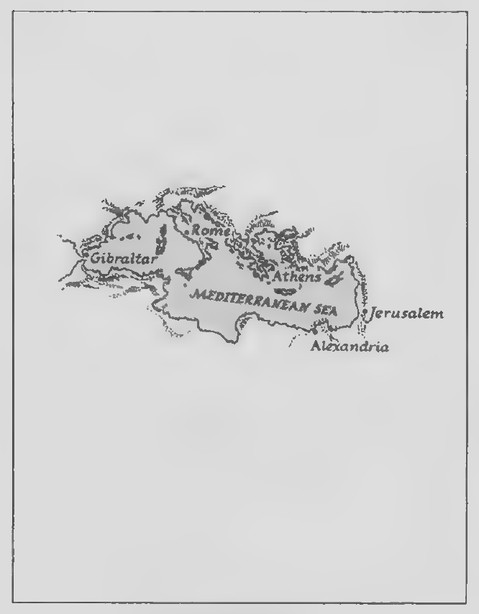 Transparency 0-1: Map around the Mediterranean
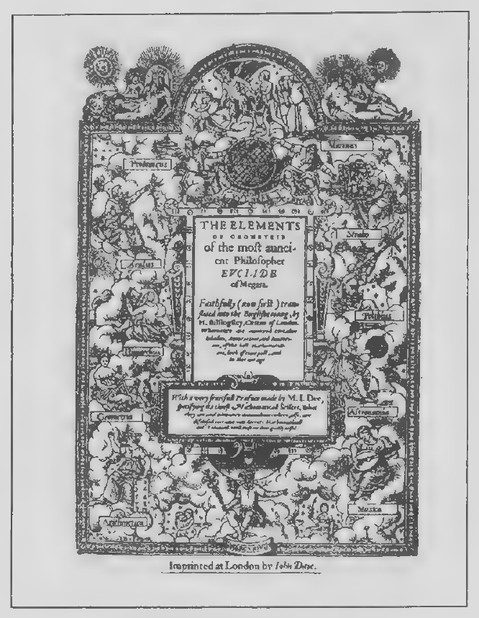 Transparency 0-2: Title page of Euclid’s Elements
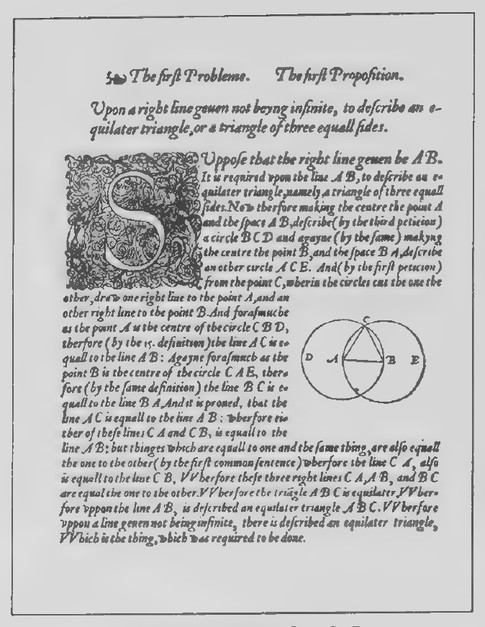 Transparency 0-3: Proposition 1 from the Elements
Introduction: Euclid, the Surfer and the Spotter
Transparencies
- 0-1 Map around the Mediterranean
- 0-2 Title page of Euclid’s Elements
- 0-3 Proposition 1 from the Elements
- 0-4 The surfer and the spotter
- 0-5 The spotter’s puzzle
- 0-6 The surfer’s puzzle
The introductory section includes a brief commentary on Euclid and the Elements, the construction of an equilateral triangle, and the puzzles of the surfer and the spotter. Although this material could be assigned as homework, I recommend doing and discussing it in class. You will probably need to provide your students with rulers and compasses.
The puzzle of the spotter is to find the location of the point inside or on an equilateral triangle for which the sum of the distances from that point to the vertices of the triangles is a minimum. After some experimentation, your students should conclude that this point is at the “center” of the triangle. The three paths from the center to the vertices would have the same length: their sum is about 20.8 km. The worst place on the island for the spotter to locate is at the point for which the sum of its distances to the vertices of the triangle is a maximum. There are actually three of these points—namely, the vertices themselves. The sum of the lengths of the paths from one vertex to the other two is 24.0 km.
The surfer’s puzzle consists of trying to find the
location of the point inside or on an equilateral triangle for which the sum of the distances from that point to the sides of the triangle is a minimum. Before they try any points, your students will probably assume that the answer to this puzzle is the same as before. It is a remarkable fact, however, that the sum of the three distances is the same for every point either inside or on the triangle! It is about 10.4 km. Hence, there is no best or worst place for the surfer to locate.
My students are generally content with their analysis of the spotter’s puzzle. Although they haven’t proved why the center is the best place and the corners are the worst, these answers seem reasonable.
The result of the surfer’s puzzle, on the other hand, is surprising and hence disconcerting. Why should the sum of the three distances be independent of the position of the point? Certainly no amount of experimentation is capable of either proving or explaining this claim. This realization suggests that, to be confident of the conclusions that we may draw in geometry, we must have some basis for understanding them and for convincing others that they are correct. Deductive reasoning provides this basis, and it is the subject of the second chapter of the course.
Transparencies 0-1 through 0-4 are for use in presenting the introductory lesson. Transparencies 0-5 and 0-6 and their overlays illustrate many dif-
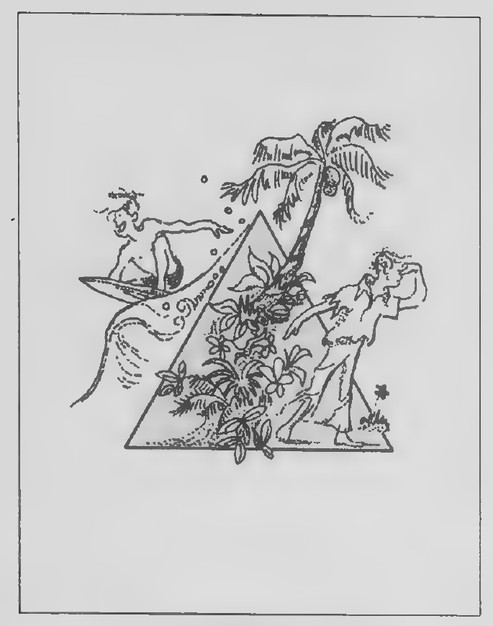 Transparency 0-4: The surfer and the spotter
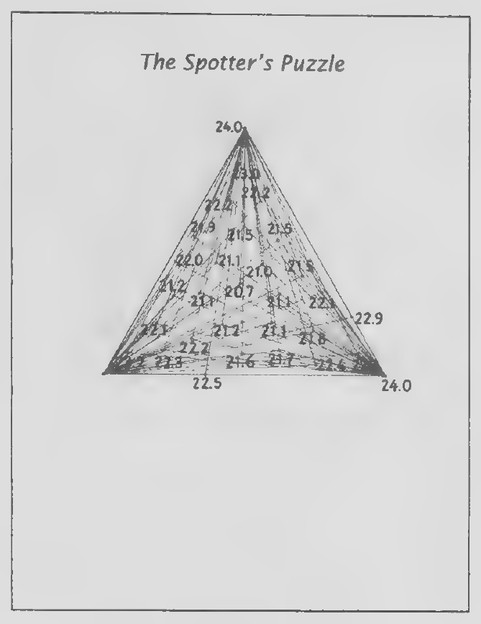 Transparency 0-5: The spotter’s puzzle
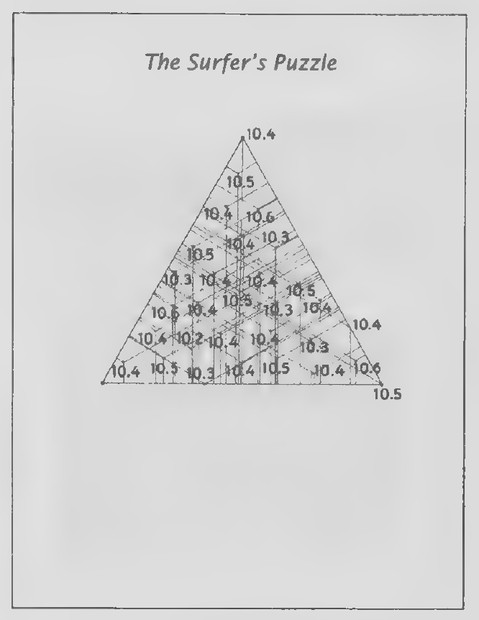 Transparency 0-6: The surfer’s puzzle
ferent points for each puzzle and the distance sums that correspond to the points.
The spotter’s puzzle is a special case of a problem proposed by Pierre Fermat; its solution is based on the fact that the perpendicular segment from a point to a line is the shortest segment connecting them. The solution to the surfer’s puzzle can be understood by means of the theory of area. Both puzzles will be reconsidered later in the course.*
*An explanation of the surfer’s puzzle is developed in Chapter 9, Lesson 3, exercises 29-34 of the text. The spotter’s, puzzle is discussed in the second review lesson for Chapter 13 of the Teacher’s Guide.
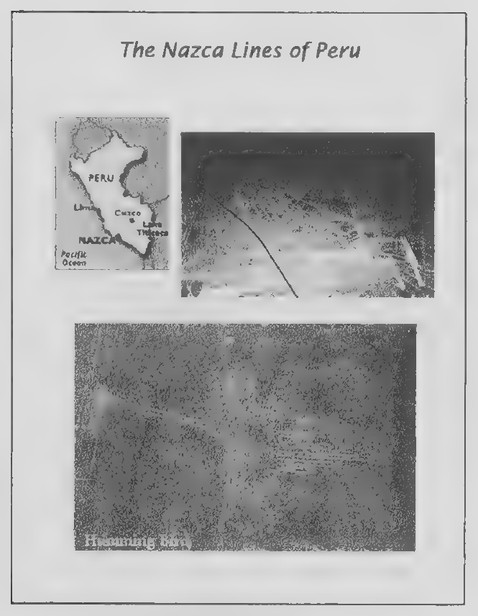 Transparency 1-1-1: The Nazca lines of Peru
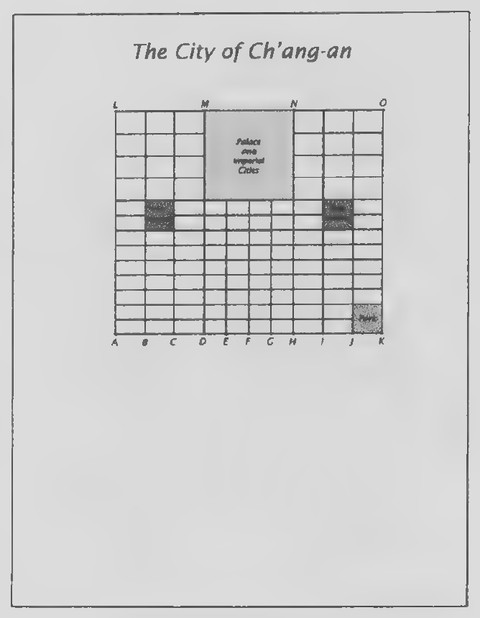 Transparency 1-1-2: The city of Ch’ang-an (Set I)
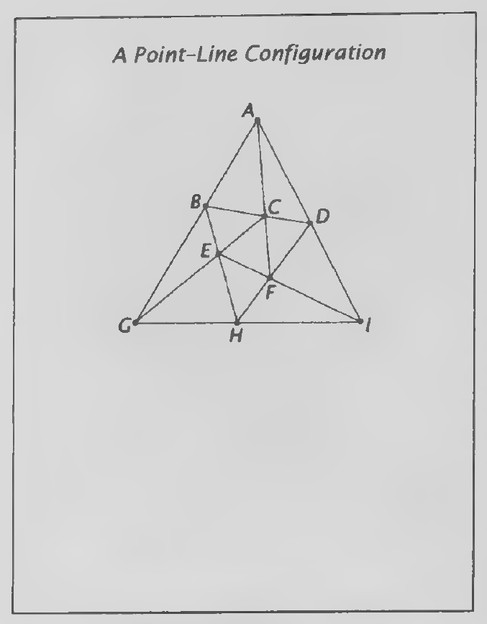 Transparency 1-1-3: A point-line configuration (Set II)
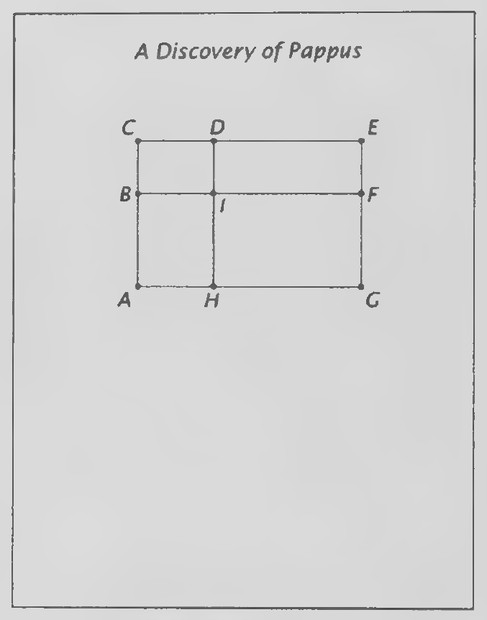 Transparency 1-1-4: A discovery of Pappus (Set III)