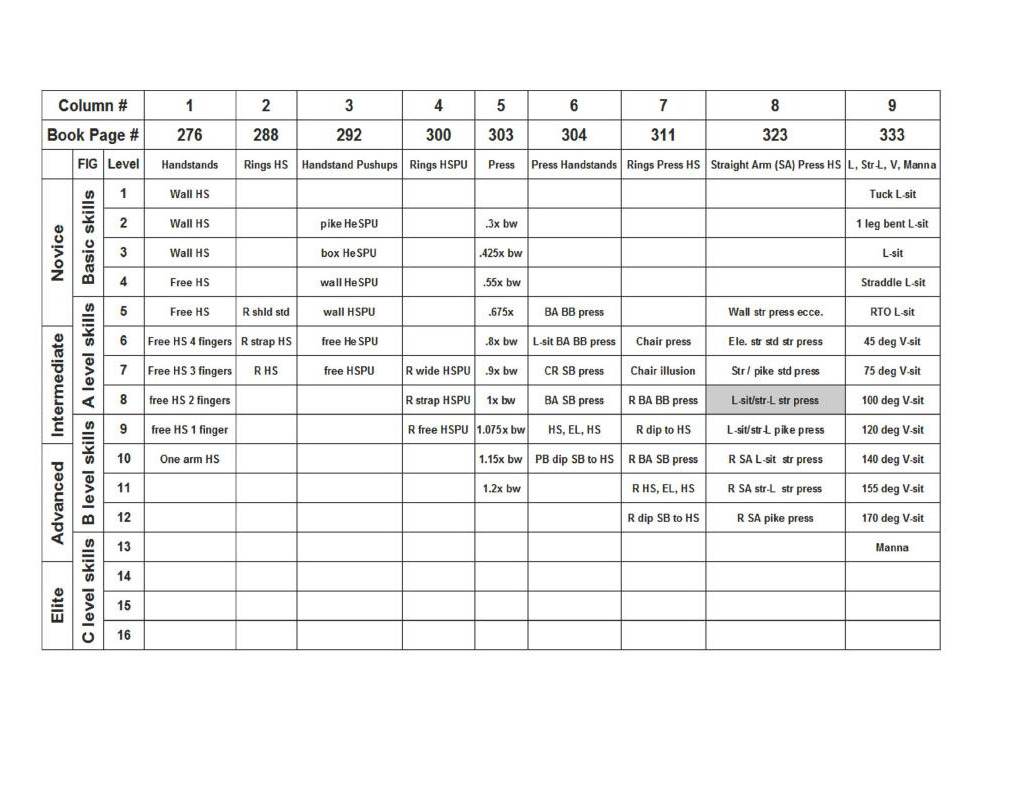
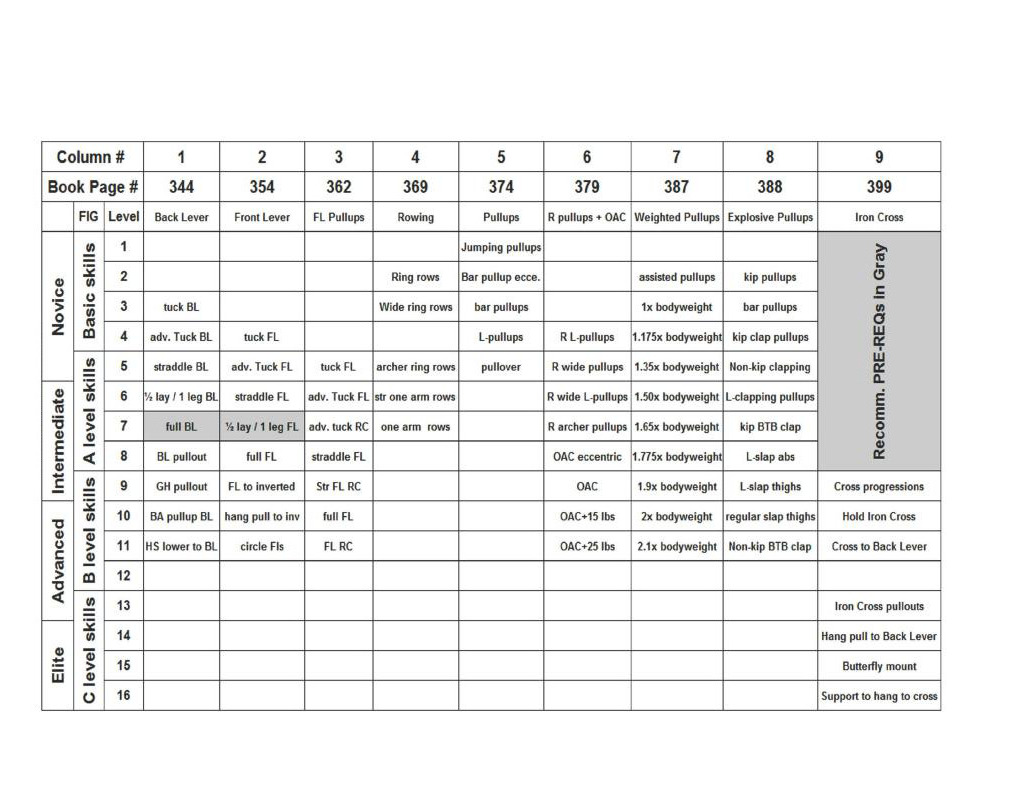
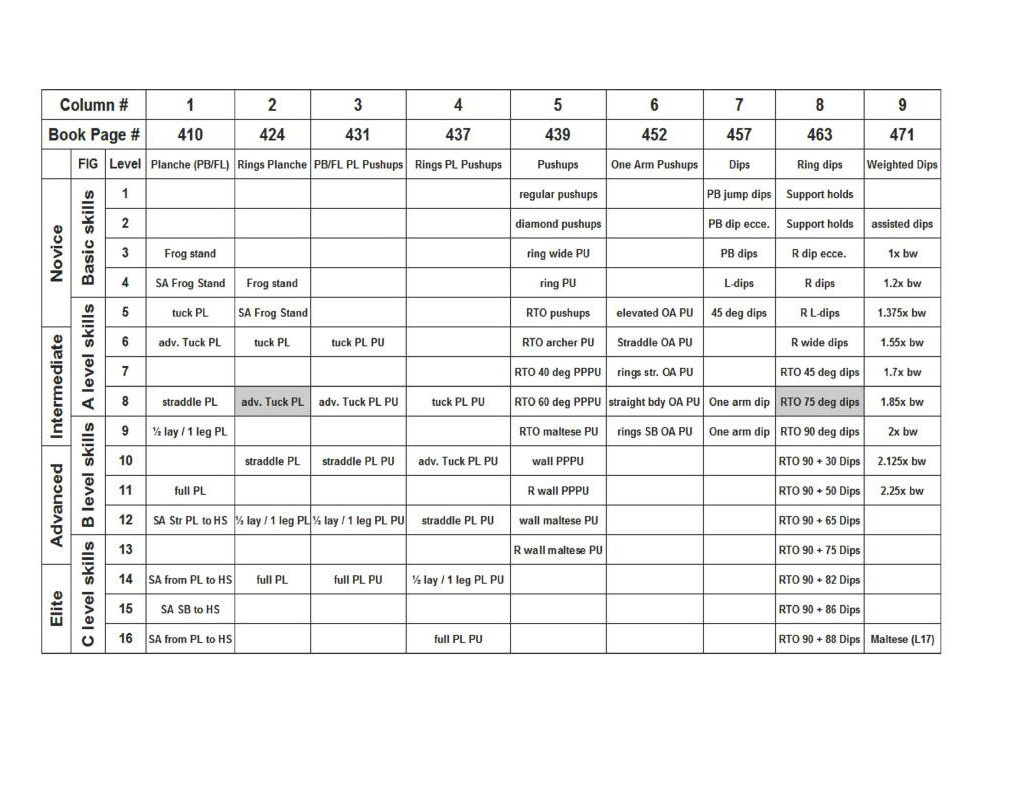
These extra charts at the end of the book are for you to rip out or mark with a pencil or pen if you do not have access to a photo copier. There are two extra copies of each.
Also in this index is the modified Prilepin's charts for regular concentrics, isometrics, and eccentrics. Use them to help program your specific repetitions and sets for exercises.
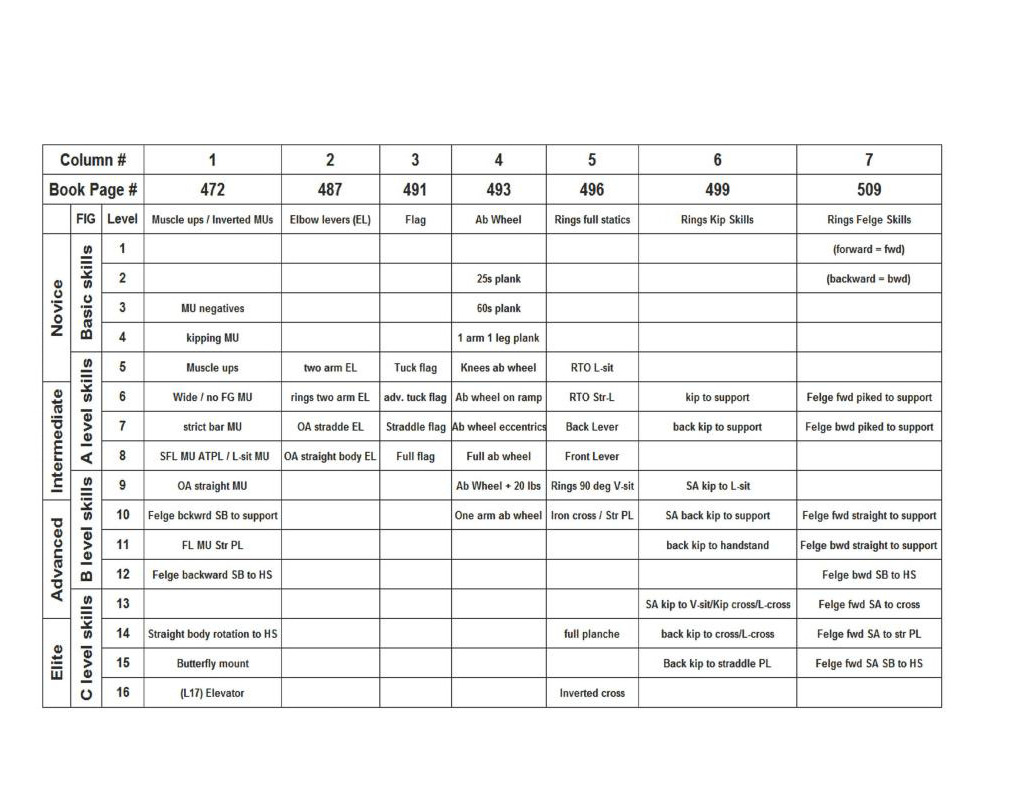
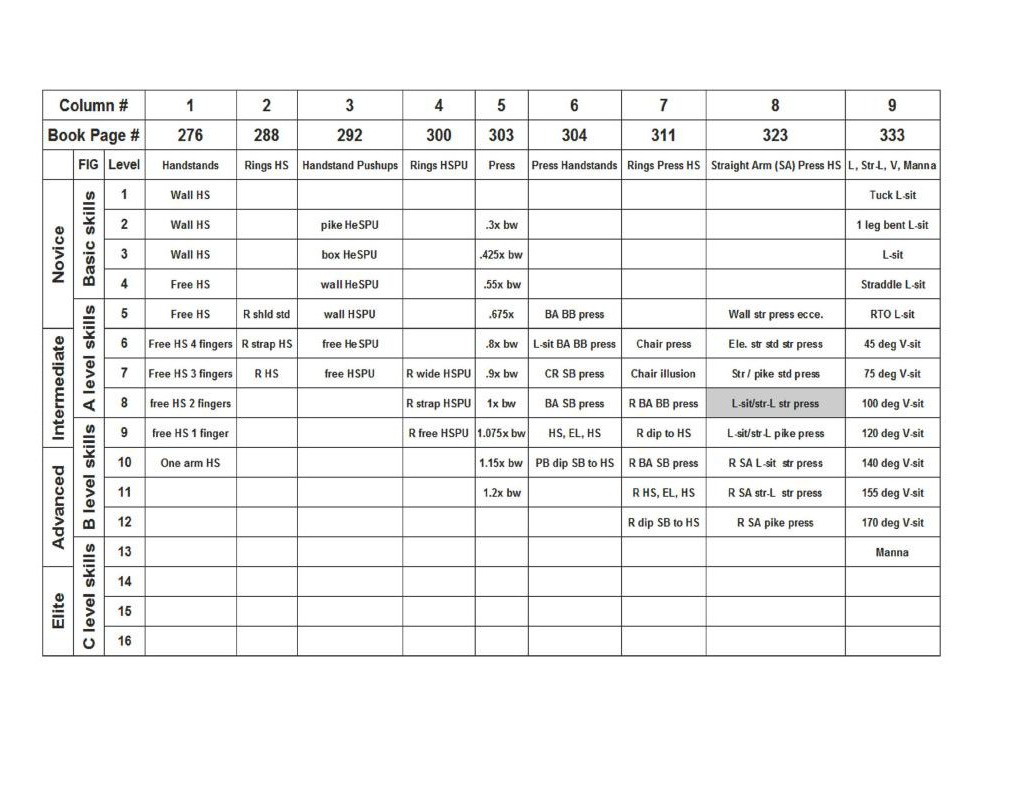
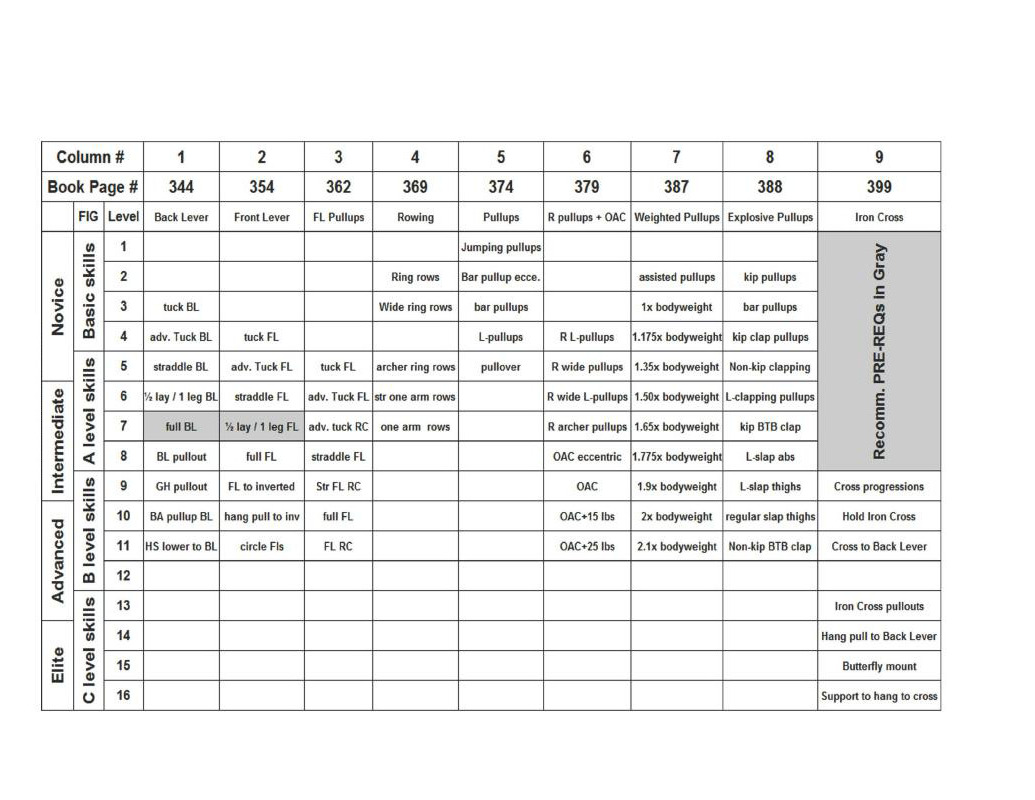
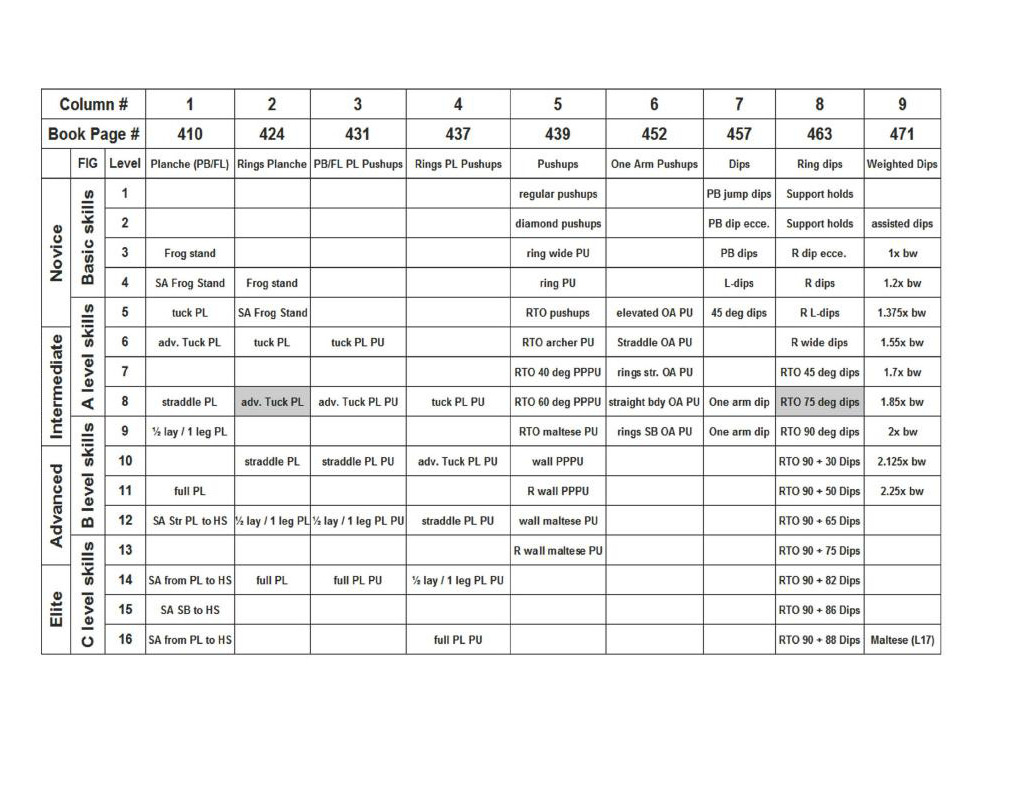
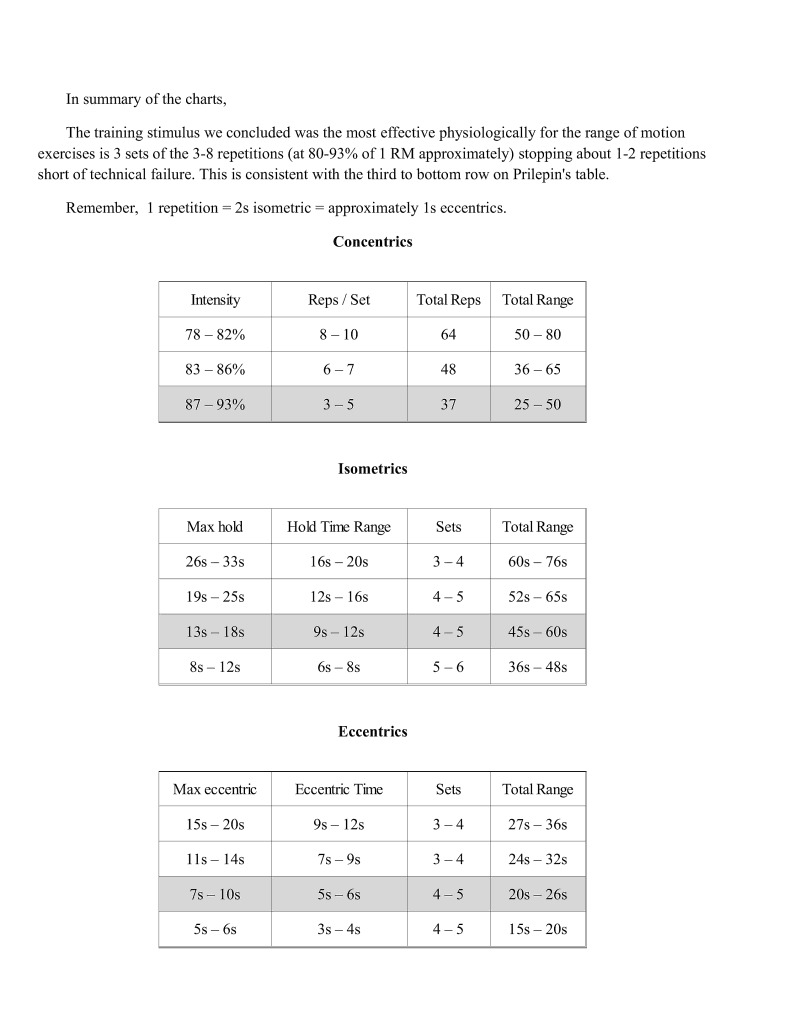
The training stimulus we concluded was the most effective physiologically for the range of motion exercises is 3 sets of the 3-8 repetitions (at 80-93% of 1 RM approximately) stopping about 1-2 repetitions short of technical failure. This is consistent with the third to bottom row on Prilepin's table.
Remember, 1 repetition = 2s isometric = approximately 1s eccentrics.
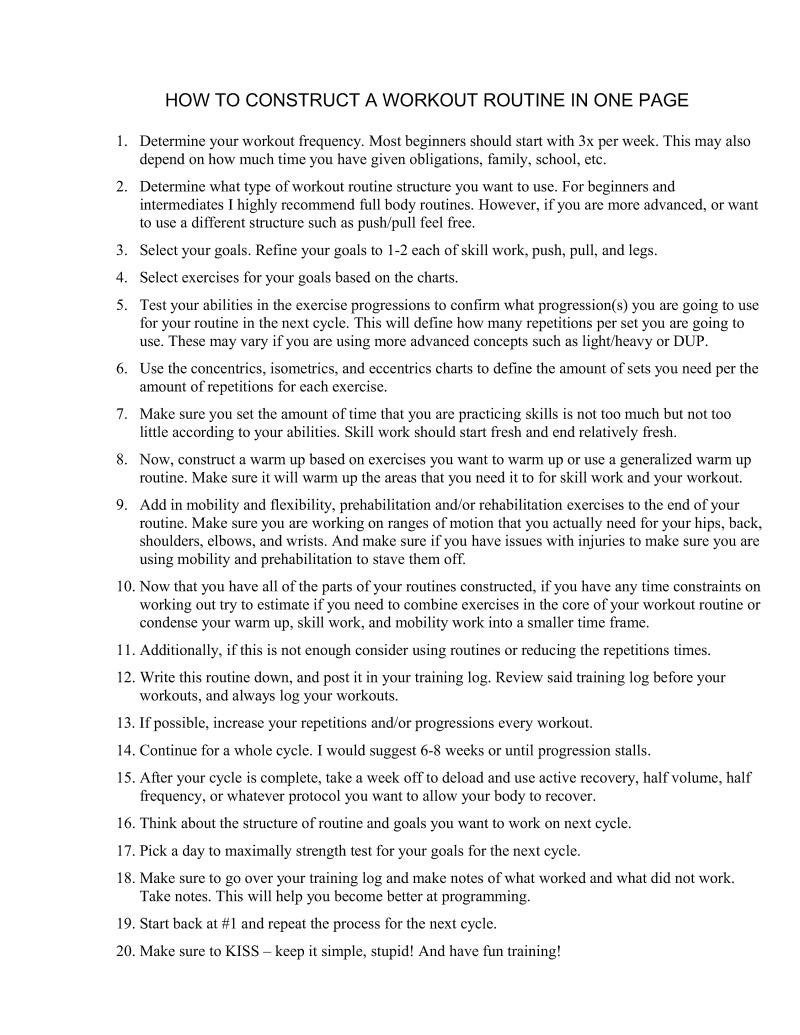
Determine your workout frequency. Most beginners should start with 3x per week. This may also depend on how much time you have given obligations, family, school, etc.
Determine what type of workout routine structure you want to use. For beginners and intermediates I highly recommend full body routines. However, if you are more advanced, or want to use a different structure such as push/pull feel free.
Select your goals. Refine your goals to 1-2 each of skill work, push, pull, and legs.
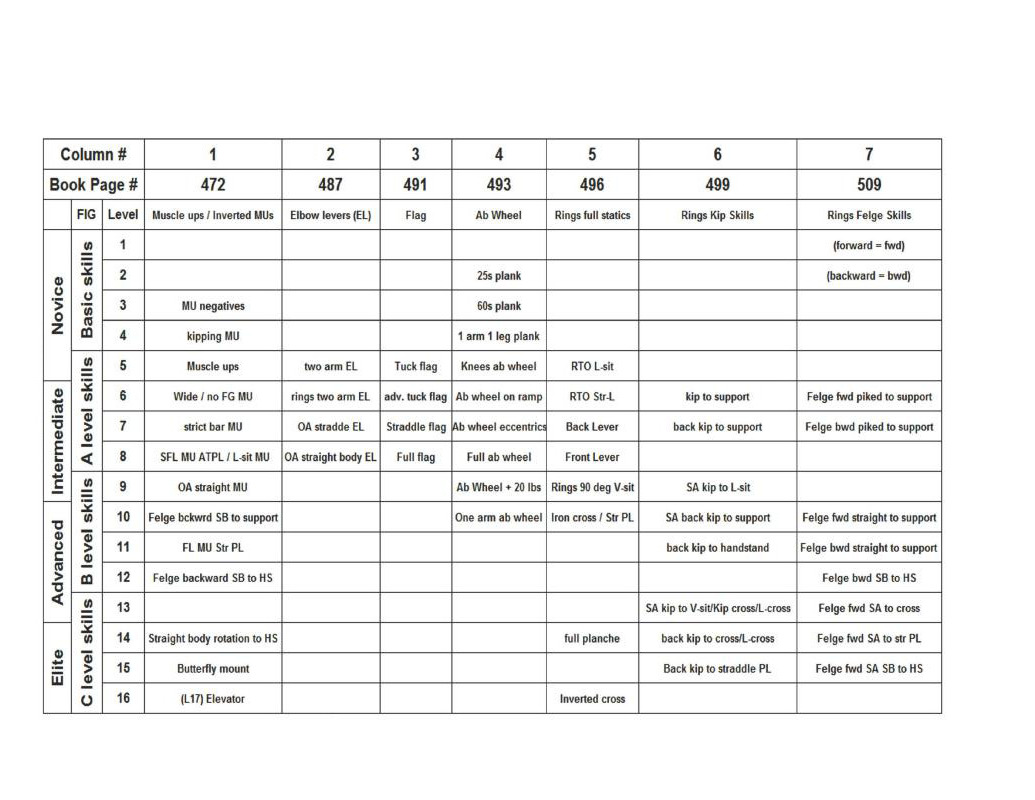
Select exercises for your goals based on the charts.
Test your abilities in the exercise progressions to confirm what progression(s) you are going to use for your routine in the next cycle. This will define how many repetitions per set you are going to use. These may vary if you are using more advanced concepts such as light/heavy or DUP.
Use the concentrics, isometrics, and eccentrics charts to define the amount of sets you need per the amount of repetitions for each exercise.
Make sure you set the amount of time that you are practicing skills is not too much but not too little according to your abilities. Skill work should start fresh and end relatively fresh.
Now, construct a warm up based on exercises you want to warm up or use a generalized warm up routine. Make sure it will warm up the areas that you need it to for skill work and your workout.
Add in mobility and flexibility, prehabilitation and/or rehabilitation exercises to the end of your routine. Make sure you are working on ranges of motion that you actually need for your hips, back, shoulders, elbows, and wrists. And make sure if you have issues with injuries to make sure you are using mobility and prehabilitation to stave them off.
Now that you have all of the parts of your routines constructed, if you have any time constraints on working out try to estimate if you need to combine exercises in the core of your workout routine or condense your warm up, skill work, and mobility work into a smaller time frame.
Additionally, if this is not enough consider using routines or reducing the repetions times.
Write this routine down, and post it in your training log. Review said training log before your workouts, and always log your workouts.
If possible, increase your repetitions and/or progressions every workout.
Continue for a whole cycle. I would suggest 6-8 weeks or until progression stals.
After your cycle is complete, take a week off to deload and use active recovery, half volume, half frequency, or whatever protocol you want to allow your body to recover.
Think about the structure of routine and goals you want to work on next cycle.
Pick a day to maximally strength test for your goals for the next cycle.
Make sure to go over your training log and make notes of what worked and what did not work.
Take notes. This will help you become better at programming.
Start back at #1 and repeat the process for the next cycle.
Make sure to KISS — keep it simple, stupid! And have fun training!

Steven is a former competitive gymnast who, in recent years, has been heavily involved in the gymnastics performance troupe, Gymkana. He has coached Gymkana Summer Camp for 4 years, and has served as an assistant coach of the Gymkana Troupe for 3 years. With his degree from the University of Maryland College Park in Biochemistry, Steven has spent thousands of hours independently researching the scientific foundations of health, fitness and nutrition. Currently Steven is pursuing a doctorate of Physical Therapy from the University of Maryland Baltimore which provides him with insights into practical care for common injuries. His training is varied and intense with a focus on gymnastics, parkour, and sprinting. He currently resides in his home state of Maryland.
Overcoming Gravity takes the reader on a journey trough logically and systematically constructing a strength oriented bodyweight workout routine. Additionally, the book delves into how to adequately prepare the body for the rigors of bodyweight training and specifies avenues to pursue concerning health and injury management. Finally, it provides information about the proper execution of the exercises and techniques along with sample programming to assist with designing well-bal- anced routines.
Lack of activity destroys the good condition of every human being, while movement and methodical physical exercise save it and preserve it. Plato (427-347 BC)