Once India and Pakistan had been partitioned, India held its first elections.
Gandhi—who had led the fight for freedom for so many years—was dead. In India’s first elections, Gandhi’s friend and ally Jawaharlal Nehru became the prime minister.
Under Nehru, India ripped off the very last rags of European power. France, which still held territories in India, agreed to give this land back. Portugal, which also claimed Indian land, refused. But in 1961, soldiers from the Indian army marched into the Portuguese territories and took them back by force. Not long after, Prime Minister Nehru died. He had served as the first prime minister of an independent India for thirteen years.
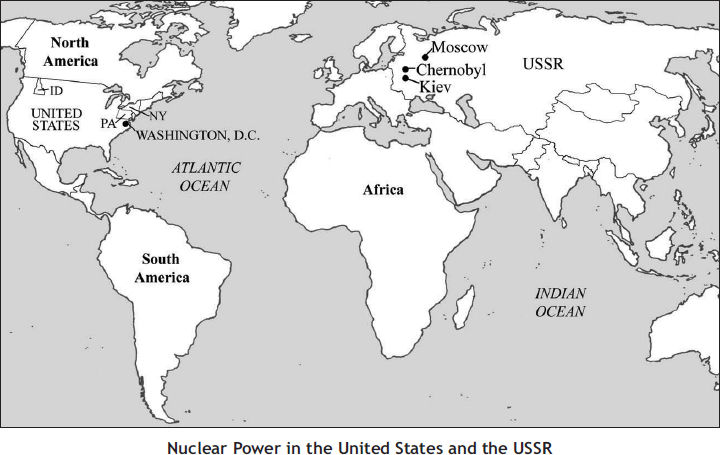
Two years later, Nehru’s daughter, Indira, became prime minister in his place.
Indira had married a man whose last name was Gandhi, so she went by the name “Indira Gandhi.” But she was no relation to Mohandas Gandhi. Gandhi is a common name in India, a little bit like “Baker” or “Johnson” in some parts of the United States. Between 1966 and 1980, Indira Gandhi battled to keep her position as the first female prime minister of India. In one of her addresses to the Indian government, she quoted a popular Indian song: “We are the women of India. Don’t imagine that we are flower-maidens. No, we are the sparks in the fire!”
Indira Gandhi needed the energy of a spark to govern India. After independence, India went through difficult times. People lost their jobs; many were hungry. Indira tried to make India’s farms more productive. She convinced the United States to help India out with money and with exports of grain to feed the hungry of India.
In 1971, when she had been prime minister for five years, Indira had to deal with Pakistan.
At the time of partition, in 1947, Pakistan had been divided into two parts, East Pakistan and West Pakistan. But it was never a very good arrangement, because the two halves of this one country lay on either side of India—separated from each other by thousands of miles. The government offices and the army headquarters were in West Pakistan. As time went on, East Pakistan became poorer and poorer, while West Pakistan prospered.
In 1970, East Pakistan announced that it wanted to be free from West Pakistan.
West Pakistani troops marched east, ready to occupy East Pakistan. In the fighting that followed, millions of civilians from East Pakistan, afraid of being caught in the war, left their country and crossed over into India. West Pakistan was afraid that India might sympathize with these refugees, and join with East Pakistan against West Pakistan. So West Pakistani planes dropped bombs on eight Indian airports. Now Indian military planes couldn’t use those airports to launch attacks on West Pakistan.
Instead of stopping India, the bombing made India angry—angry enough to join in the war. Under Indira Gandhi’s direction, Indian troops allied themselves with East Pakistan and drove the West Pakistani soldiers out.
Now, East Pakistan could declare itself independent from West Pakistan. It changed its name to Bangladesh. West Pakistan became known, simply, as Pakistan.
The people of India gave Indira Gandhi most of the credit for success in the Pakistani war. She became more and more popular.
But then two catastrophes struck India.
The first came in 1984. For several years, Sikhs in India had been asking for their own independent country. Hindus governed India; the Muslims had gotten Pakistan. Now the Sikhs, who were neither Muslim nor Hindu, wanted to control their own part of India, an area called the Punjab.
Sikhs, who believed in one God and followed five holy rules of life, had once been warrior princes. For many centuries, they had served as the royal bodyguard for India’s emperor because of their skill at fighting. When India became an independent country with a prime minister, Sikhs kept their traditional job. They now acted as the prime minister’s bodyguard.
When the Sikhs in the Punjab began to ask for control of their own land, Indira agreed to make Punjabi, the language Sikhs spoke among themselves, the official language of the Punjab. But this made the Hindus who also lived in the Punjab angry. So Indira divided off a separate area in the Punjab, just for Hindus to live in.
This angered the Sikhs! They wanted all of the Punjab for themselves. They began to fight with the Hindus—not just in the Punjab, but all through India.
One group of warlike Sikhs went to the Golden Temple, in the holy city of Amritsar, and made it their headquarters. By tradition, the Golden Temple was off limits to Indian police because it was a religious shrine. The Sikhs who were using the Golden Temple as their headquarters started to make terrorist attacks on Indians, and then retreated to the Golden Temple—sure that the police would not come after them.
Indira ordered the Golden Temple invaded. On June 5, 1984, Indian army soldiers stormed into the Golden Temple to fight against the terrorists hiding there. Nearly a thousand Sikhs were killed.
Indira’s advisors suggested that she might want to get rid of her Sikh bodyguard, since they might be angry with her over her treatment of other Sikhs. Indira refused. She insisted that her bodyguard was trustworthy.
She was wrong. On October 31, 1984, two of the Sikh guards killed the prime minister as they walked with her to her office.
A month later, a second catastrophe hit the country.
An American company called the Union Carbide Corporation had built a factory in the center of India, at a city called Bhopal. At its factory, Union Carbide made pesticides—chemicals to kill insects on crops and grasses. Just after midnight on December 3, 1984, poisonous gases began to leak out of the storage tanks at the Union Carbide factory.
No one in Bhopal knew what was happening. At first, some people thought the Sikhs were to blame again!
But what was to blame was a faulty tank at Union Carbide. Twenty-seven tons of a poison called methyl isocyanate escaped from the tank. According to Union Carbide, at least three thousand people died that night from the poisonous gases. People from Bhopal say that the number was much greater—that as many as fifteen thousand died.
No one knows exactly how many people died later, from sicknesses caused by the gasses. But at least another 150 thousand people, and maybe over half a million, were made horribly sick by the gases. Thousands never recovered. The Bhopal gas leak was the worst “industrial disaster” (a disaster caused by factories or manufacturing) in all of history, before or since. Even now, over twenty years later, the ground and water at Bhopal are still full of poison. Union Carbide never cleaned the mess up.
Indian investigators blamed the gas leak on sloppy safety procedures, and said that Union Carbide had not made sure that the storage tanks were secure because it would have cost too much money. None of the warning systems or safety systems at the plant were actually working at the time of the leak! Union Carbide, which is now part of an even bigger American company called Dow Chemical, insisted (and still insists) that the Bhopal tragedy had been caused by sabotage. Someone had deliberately arranged for the gas leak.
The highest court of Bhopal demanded that the American CEO come to Bhopal and take part in a court hearing. He refused. He is still considered a fugitive by Indian law, even today. And even today, twenty years later, many groups of protestors still campaign for justice for Bhopal.
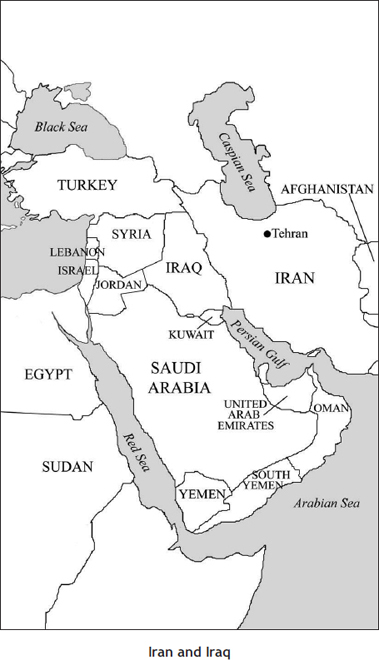
We’ve read about Israel and Egypt, their wars, and their attempts at peace. Now we come to two other Middle Eastern countries that were often at odds with each other: Iran and Iraq.
In Chapter Eighteen, we read about the country of Persia, which fell under Russian control before World War I. In the twentieth century, Persia became widely known by its other name: Iran.
After the two World Wars, Iran had become an independent country, ruled by a shah (king) along with the help of an elected assembly, the Majles, and a prime minister. In 1953, the shah of Iran was named Mohammad Reza Shah Pahlavi. His prime minister was also named Mohammad—Mohammad Mosaddeq.
Mohammad Mosaddeq was a strange but powerful man. Sometimes he wore pajamas to official state gatherings. He tended to burst into tears, in public, for no apparent reason. Once, when he had to give a speech to the Majles, he ordered his bed carried into the room where the Majles met, and gave his speech lying down.
Mosaddeq thought that Iranians, not foreigners (like the Anglo-Persian Oil Company, owned by the British) should control the oil that was being pumped out of Iran’s ground. The Majles agreed. So Mosaddeq seized control of the oil fields in Iran.
The British, who had spent a lot of money pumping this oil out, protested—but could not change Mosaddeq’s mind. So the British refused to buy any oil from Iran. At the same time, other countries started pumping more oil than ever. All of a sudden, there was too much oil in the Middle East, and too few buyers in the rest of the world. Since Iran couldn’t sell its oil to Great Britain, it was having trouble selling oil at all. One of Iran’s biggest sources of wealth was no longer producing any money for the country.
As you can imagine, this made Mosaddeq very unpopular. The shah tried to dismiss Mosaddeq as prime minister. Mosaddeq refused to go! His supporters rioted in the streets—until the shah, afraid for his safety, fled from the city.
Mosaddeq had held onto his power. But not for long.
Together, the United States and Great Britain plotted to get rid of Mosaddeq and bring the shah back to Iran. Mohammad Reza Shah Pahlavi was willing to keep on good terms with Great Britain and the U.S. He hadn’t wanted to take the oil industry away from the British. Mosaddeq, on the other hand, was too independent, and too determined to keep Iran’s oil under the control of Iran. (The United States also suspected that Mosaddeq might be a little too friendly with the Soviet Union, which was another good reason to get rid of him.)
The plan to get rid of Mosaddeq was called “Operation Ajax.” The Americans and British trained Iranian soldiers to take over the government and sent these soldiers into Iran along with American and British “helpers.” Mosaddeq was arrested, accused of treason, and put into jail. The shah returned triumphantly to the capital city of Tehran, with American and British forces ready to put down any opposition to him. (You might wonder what happened to the American worry about interfering in the affairs of other countries!)
Although the shah had the power of two large countries behind him, he knew that his rule over Iran was shaky. Many Iranians disliked the shah because he was so rich. During the 1960s, the shah kept on getting richer and richer from the oil that Iran sold to the world, while the common people of Iran didn’t prosper all that much. And the conservative Muslims of Iran hoped that the shah would pass strict laws, making Muslim regulations against drinking and gambling part of Iran’s legal code.
Instead, the shah worked on making Iran more modern—more “Western.” He gave women in Iran the right to vote. He tried to improve schools and give more Iranians the chance to get an education. Instead of making religious laws, the shah tried to make religion less powerful in Iran. He changed Iran’s calendar, so that it no longer followed the traditional Muslim calendar, and told religious newspapers and magazines to stop criticizing the government.
All of these changes became known as the “White Revolution.” The White Revolution was supposed to make Iran stronger—but it made the shah even less popular with the religious Muslims of Iran. The shah was also growing unpopular with some of the educated men and women of Iran, because of his tyrannous power. His secret police, called the SAVAK, was infamous for its cruelty. SAVAK members had complete power to arrest, torture, and kill anyone who opposed the shah. Even Iranians who were caught reading forbidden books were likely to be tortured and imprisoned.
Those forbidden books included writings authored by Ruhollah Khomeini. He was an ayatollah, an Islamic religious leader. Ayatollah Khomeini’s followers hated the shah’s White Revolution because it went against Muslim religious practices. They believed that Khomeini could make Iran into a truly Muslim country—a country free of corrupt Western ideas and foreign influences.
The shah had always been afraid of Khomeini’s power to gather loyal disciples around him. As a matter of fact, he had ordered Khomeini arrested and exiled several years before. Khomeini had gone to the neighboring country of Iraq—until the leader of Iraq, Saddam Hussein, also told him to leave. So Khomeini went to France. There, he made speeches onto tapes and sent them into Iran, encouraging Iranians to reject the shah’s anti-Muslim White Revolution.
By 1978, Khomeini had managed to convince Iranians to riot against the shah. Mohammad Reza Shah Pahlavi tried to send his soldiers to put down the riots, but it was too late. Millions of people took to the streets, shouting for the shah to leave. In January of 1979, the shah fled his country and went to Panama. The “Iranian Revolution” had driven out Iran’s shah.
Ayatollah Khomeini arrived in Iran two weeks later. His followers welcomed him. Now, they hoped, Iran would become a truly Muslim country. Before too long, Khomeini had managed to get his followers to declare him leader of Iran—for life. He set about making Iran into a theocracy, a state ruled according to strict religious law. Women could no longer hold certain jobs reserved for men. Everyone had to dress according to Muslim law—covering their ankles and elbows. Women also had to cover their hair whenever they went outside. Drinking alcohol and gambling were illegal throughout Iran.
As soon as he took power, Khomeini had to fight a war—against his neighbor, the country of Iraq.
Until 1919, there was no country called Iraq. As part of the Peace of Versailles, the Allied nations created Iraq on the land that had been taken away from the Ottoman Turks. Great Britain was given the right to control Iraq until it was able to govern itself.
Britain chose a king for Iraq. This king and his relatives ruled the new country until the 1950s—when a group of revolutionaries decided that the time had come for Iraq to become a republic. They led a revolt, murdered the king of Iraq, and announced that Iraq would now be a republic. In 1963, the Iraqi republic was taken over by a political party called the Ba'th Party, which wanted all Arab countries to rule themselves without any help from the West. One of the Ba'th Party members was a young man named Saddam Hussein.
For many years, Iran and Iraq had argued over the control of a river called the Shatt Al-Arab, or the “Stream of the Arabs.” The Shatt Al-Arab is formed by the meeting place of the Tigris and the Euphrates River. Boats sailing on the Shatt can go straight into the Persian Gulf.
Both Iran and Iraq wanted to use the Shatt. In 1975, the shah of Iran had signed a treaty with Saddam Hussein—who had now been elected vice president of Iraq. The treaty agreed that the Shatt Al-Arab would be controlled by Iran, not by Iraq.
By the time that the shah fled from Iran and Ayatollah Khomeini took over, Saddam Hussein had become president of Iraq. When Hussein saw how much chaos Iran was in, he thought that Iraq might be able to reclaim control over the Shatt.
On September 22, 1980, Iraq invaded Iran. The Iraqis hoped for a short war. Their army had almost two hundred thousand soldiers in it. They were well armed with Soviet weapons and tanks, and with guns from China, Germany, France, and England. Even the United States had agreed to support Iraq’s attack against Iran and Khomeini. (The United States still wanted the shah back in Iran!)
Even though the Iranians were taken by surprise, they fought back—ferociously! Instead of ending quickly, the Iran-Iraq war dragged on for eight years. Saddam Hussein’s planes bombed Iran’s oil wells. Khomeini’s planes bombed Iraq’s oil wells. No one knows for sure, but perhaps as many as one and a half million people died during the eight years of fighting. And the oil wells and pipelines in both countries were so badly damaged that it took years after the war ended to rebuild them.
In 1988, Iran and Iraq agreed to stop fighting. Neither country had won. And who now controlled the Shatt Al-Arab?
The Iranians controlled it—just as they had in 1975, when the treaty was signed, and before any of the fighting began.