Two years after the Cuban Missile Crisis, Nikita Khrushchev, the Russian leader who had threatened to “bury” the United States, had been forced out of his position. The new leader, or premier, of the Soviet Union was Leonid Brezhnev.
Brezhnev kept just as tight a watch on his people as Khrushchev had. The KGB, the Russian secret police, guarded the borders of the Soviet Union so that the Soviet people could not get out. Almost no one was given permission to leave the Soviet Union. Some Soviets did manage to escape and get to Western Europe or the United States. There, these “defectors” asked for permission to stay, called “asylum.”
Why would people want to leave the Soviet Union? Because life under communism, for many people, was not as good as they had hoped it would be. It was difficult for people to buy the things that they needed; they had to stand in line for many hours for food, clothing, and other necessities. If you got married and wanted a house of your own, you couldn’t just go and buy one. You had to ask the government to help you get a place to live. That might take a few weeks, or a few years.
When Brezhnev became premier, some parts of life in Russia improved. It became a little bit easier to get food, clothes, and work. More Russians were able to go to school. But like Stalin and Khrushchev, Brezhnev didn’t let Russians speak their minds about communism. Anyone who said, or wrote, or published anything critical of the Soviet government might be arrested by the KGB.
The real name of the KGB was the Komitet Gosudarstvennoy Bezopasnosti, which was Russian for the “Committee for State Security.” The KGB’s job was to stamp out any opposition to Brezhnev’s government. If you were arrested by the KGB, you might go to jail. Or you might be sent to Siberia, the huge, cold, northern wastelands of Russia, where in winter the temperature drops to more than a hundred degrees below zero—and in summer, never even gets above freezing. You might go to a labor camp—a concentration camp where you spend your days working at difficult tasks. You might even be executed.
The Soviet Union had not given up its hopes of spreading communism around more of the world. By 1968, Russia had drawn the small countries all around its western border into the Union of Soviet Socialist Republics, the USSR. Soviet soldiers had invaded Poland and Hungary and added those countries to the Soviet Empire as well.
In 1968 and 1979, the Soviet Union made two more bids to increase its territory. But the two invasions were very different.
The first bid took place during peace time. It was summer in Czechoslovakia, warm and peaceful: August 20, 1968. Many Czech citizens were on vacation. Some were on holiday in other parts of Europe. Others were lazing around, enjoying the cool of the mountains or simply the quiet of the summer night.
At eleven at night, when many Czechs were already asleep, Soviet tanks rolled across the Czechoslovakian border at four different places. Behind them marched thousands of soldiers. Jet fighters roared overhead; paratroopers jumped from airplanes and landed in the center of Czechoslovakian cities, armed and ready to fight. Prague, the capital of Czechoslovakia, was filled with Soviet soldiers in just hours. By the time the sun rose, the two most powerful men in the Czech government, Premier Cernik and Secretary Dubcek, had been arrested, put on a plane, and taken to Moscow.
The Czechs were so unprepared for the invasion that no one had any weapons. As tanks rolled in, young Czechs pulled up cobblestones from the streets to throw at the huge Soviet tanks. Others tried to set tanks on fire. In a desperate attempt to slow the invasion, Czechs with paint buckets and brushes painted over as many road signs as possible and relabelled them, so that almost all of the signs read, “To Moscow.”
But the Czech resistance to the surprise invasion of their country failed. The Soviets forced both Premier Cernik and Secretary Dubcek to resign. In their place, the Soviets appointed a leader who would govern Czechoslovakia for the Soviet Union, and do as the Soviet government ordered.
The second bid for territory was much bloodier.
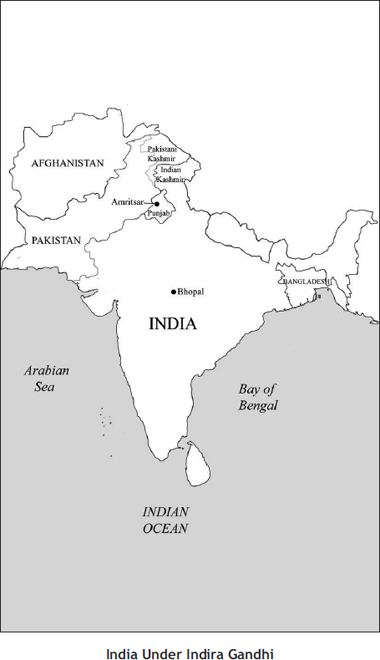
In 1979, the USSR invaded Afghanistan. Do you remember reading about Afghanistan? It lies south of Russia and north of India—and for a hundred years, Russian diplomats and Russian generals had tried to add Afghanistan to Russia’s empire. Afghanistan survived, free of Russia, only because the British in India also wanted Afghanistan. Because both countries wanted it, neither country got it. Both Russia and Great Britain knew that claiming Afghanistan once and for all might start a war with the other powerful empire.
After World War I, Afghanistan had managed to become completely independent. Since 1919, Afghanistan had been ruled by Afghan kings who governed under a constitution.
But Afghanistan knew that its huge, powerful, neighbor to the north remained a threat. The Soviet Union wanted Afghanistan as much as the Russian Empire had. After World War II, the Soviets sent money to Afghanistan to help the country build schools, roads, and factories.
But so did the United States—hoping to keep Afghanistan from becoming a communist country. Once again, Afghanistan lay balanced between two huge and hostile countries.
In 1978, a rebel group sympathetic to Soviet ideas rose up and killed the king of Afghanistan. They took over the government and announced that Afghanistan would now be governed by ideas very much like communist ideas. Many Afghans saw this as the first step towards losing independence. They didn’t want Soviet influence in their country! And they knew that communism’s hatred of Christianity extended to all religious faiths. If Afghanistan slowly became communist, Islam—the religion followed by most Afghans—might be outlawed.
A civil war broke out between the new rebel government, and Afghans—who called themselves “righteous warriors”—Muslims fighting to preserve their faith. The Arabic word for them was Mujaheddin.
At this, the Soviet Union decided it was time to invade. Thousands of Soviet soldiers marched south, across the border, into Afghanistan.
But Afghanistan wasn’t an easy country to conquer. The Mujaheddin knew how to stage guerilla warfare, attacking from the rough wild mountains of their country and then disappearing again. Instead of making Afghanistan part of the Soviet Union, the USSR had to treat it as an occupied country, filled with hostile rebels.
The takeover of Czechoslovakia had been simple and quick. But in Afghanistan, war between the Soviet army and the Mujaheddin would go on, for years and years.
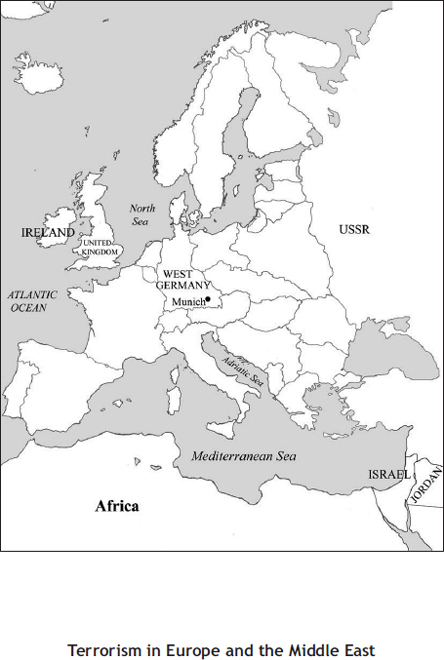
Just before sunrise, the city of Munich, West Germany lay almost asleep. The 1972 Olympics had been going on for ten days already. American swimmer Mark Spitz had won seven gold medals. Seventeen-year-old Olga Korbut, the Russian gymnast, had fallen off the uneven bars—but then had earned two golds and a silver in her other competitions. Now, on the morning of September 5, there were only four days of competition left.
Inside the Olympic Village, where the athletes lived for the two weeks of the Summer Games, a few athletes were up, stretching, eating, worrying about the day’s events. Security guards around the outside of the Village saw a small group of men in sweatshirts, carrying gym bags, climbing over the fence. But for the last ten days, athletes who didn’t want their coaches to know that they’d been out late at night had been climbing over the fence at all hours of the night. The guards ignored them.
Less than half an hour later, the sound of shots, fired from automatic weapons, broke the dawn quiet. The guards ran into the village, drawing their weapons. But it was too late. The men climbing the fence had broken into the rooms where the Israeli Olympic team slept. Two Israelis had already been killed. Nine more were being held hostage.
The men weren’t athletes at all. They belonged to a group called Black September—a new kind of revolutionary group. These men were terrorists. Instead of fighting directly against their enemies, like most of the revolutionary groups we’ve read about, they fought against civilians. They carried out random, violent acts against people who weren’t involved in governments or armies. Terrorists set out to get what they wanted, not by defeating an enemy army, but by creating so much terror among the people of a country that the people would force their government to do what the terrorists wanted.
Black September was a group that had broken off from yet another terrorist group, the Palestine Liberation Organization, or PLO. Both groups wanted the same thing: Israel should get out of the land that had once belonged to Arabs.
There were eight Black September terrorists in the Munich Olympic Village. They threatened to kill their nine Israeli hostages unless two hundred Arab guerilla fighters, taken prisoner by the Israeli army, were released from Israeli prison. But the Israeli government would not even listen to the terrorist demands. The German government, desperate to end this Olympic nightmare, asked other Arab countries if they would talk to the terrorists.
They all refused.
Finally, the Germans offered to fly the Black September terrorists and the Israeli hostages out of Munich, to anywhere the terrorists wanted. The terrorists agreed. But when they stepped out to walk to the airplane that the Germans had provided, German police opened fire on them.
By the time the shooting was over, five Black September terrorists and all nine Israeli hostages were dead.
Terrorism was in the world to stay. Over the next thirty years, different terrorists, hoping for different kinds of change, would launch many campaigns of terror.
The most well-known terrorist groups in the world came from the Middle East. In 1964, the Palestine Liberation Organization was formed in the Arab state of Jordan. At first, the PLO was a political organization. It wanted to form a new homeland for the Palestinian Arabs who had been forced to leave their homes in Palestine when their land was claimed by Israel.
After the Six-Day War, when Israel took land away from three other Arab nations, the PLO realized that Israel would never give up any land to form a country for Palestinian Arabs. Israel seemed much more likely to claim as much land as possible, and to keep it for Israelis.
So members of the PLO formed other groups—terrorist groups. Their goal was to attack crowds of Israelis; not just crowds of soldiers, but also civilian men, women, and children. If enough Israelis died, perhaps the Israeli people would force the Israeli government to give land to the Arabs.
These terrorist groups also wanted the rest of the world to know what they were doing. They hoped that other countries would recognize their demands and help pressure the Israelis into giving up land. So the terrorists didn’t just make attacks. They called international newspapers and explained who had carried out the attack, and what they wanted—something called “claiming responsibility.” If the terrorists could get their demands in newspapers and on television, people all over the world might see, understand, and sympathize.
The Black September attack at the Olympics was an attempt to get international attention. The Olympics was one of the most famous events in the world. Camera crews, newspaper reporters, TV anchors, and thousands of other news-gatherers attended the Games. When the Black September attack was broadcast on television, half a billion people watched it. Afterwards, a spokesman for the PLO-related group called the Popular Front for the Liberation of Palestine told a reporter, “The choice of the Olympics. … was like painting the name of Palestine on a mountain that can be seen from the four corners of the earth.”
Another group that gave birth to terrorism was the IRA—the Irish Republican Army. You may remember that the Irish Republican Army was organized by the Irish nationalist group Sinn Féin to fight for an Ireland independent of Great Britain.
When most of Ireland was made into the Republic of Ireland, Northern Ireland remained part of the British Empire. Hoping to reunite Northern Ireland with the rest of the Irish Republic, the IRA turned from being an army to being a terrorist group. Instead of attacking or challenging the British government alone, the IRA planted bombs in England to terrify the English into wanting to get rid of Northern Ireland.
By 1969, the IRA had begun to reject terrorism. But some of its members thought that terrorism was the only way to ever get Northern Ireland back for the Irish Republic. They split off and formed a new organization, called the Provisional Irish Republican Army. The PIRA attacked the English in Northern Ireland. But it also planted bombs in English pubs and businesses, along London streets, and in subways. The bombs killed innocent men, women, and teenagers.
In 1979, the PIRA managed to put a bomb on a fishing boat that belonged to Lord Mountbatten, the cousin of Queen Elizabeth. Lord Mountbatten was nearly eighty years old. He had fought in both World War I and World War II, and he had even been the Viceroy of India, back when India was still British. When the bomb blew up the boat, Lord Mountbatten, his grandson, and two other people were killed.
Irish and Palestinian terrorist groups planned many of the terrorist attacks of the 1970s. But every country in the world has had its terrorists. Before 1948, Jewish terrorists killed British civilians in Palestine, to try to scare Britain out of occupying Palestine. Terrorists in Spain have tried to get the Spanish government to declare a territory in the north, where a people called the Basque live, free of Spanish rule. Greek terrorists, Italian terrorists, Indian terrorists, and American terrorists have all killed and set off bombs to try to get their way.
Invasion of another country begins one kind of war. After invasions, armies and leaders clash with each other, trying to decide who will finally have power. But terrorism is another kind of war—one that changes forever the lives of those who have nothing to do with politics.